Why Plastic Bowls Can Cause Problems for Some Pets

A plastic bowl is not automatically unsafe, but scratches, rough edges, and inadequate cleaning can create avoidable problems. Cats with chin acne and pets that chew their dishes may be especially affected.
Plastic pet bowls are inexpensive, lightweight, and available almost everywhere. For many animals, a clean, undamaged, food-safe bowl may never cause an obvious problem.
Trouble can begin when the surface becomes scratched, chewed, or difficult to clean. In some cats and dogs, the bowl’s condition—or repeated contact with it—may contribute to skin irritation and other preventable issues.
Tiny scratches can change the bowl
A new plastic bowl may feel smooth, but daily use can gradually leave marks that are difficult to see. Teeth, abrasive cleaning pads, utensils, and ordinary wear can all damage the surface.
Those grooves can hold moisture, food residue, and microorganisms more readily than an intact surface. Washing still matters, but a deeply scratched bowl may be harder to clean thoroughly.
The bowl is also repeatedly exposed to saliva and food. Wet food and oily residue can cling to the sides, while a water dish may develop a slippery layer if it is only refilled instead of washed.
This is not exclusively a plastic-bowl problem. Ceramic dishes can develop cracks, and any poorly maintained bowl can become dirty. The practical difference is that inexpensive plastic tends to scratch easily and may remain in use long after its surface has deteriorated.
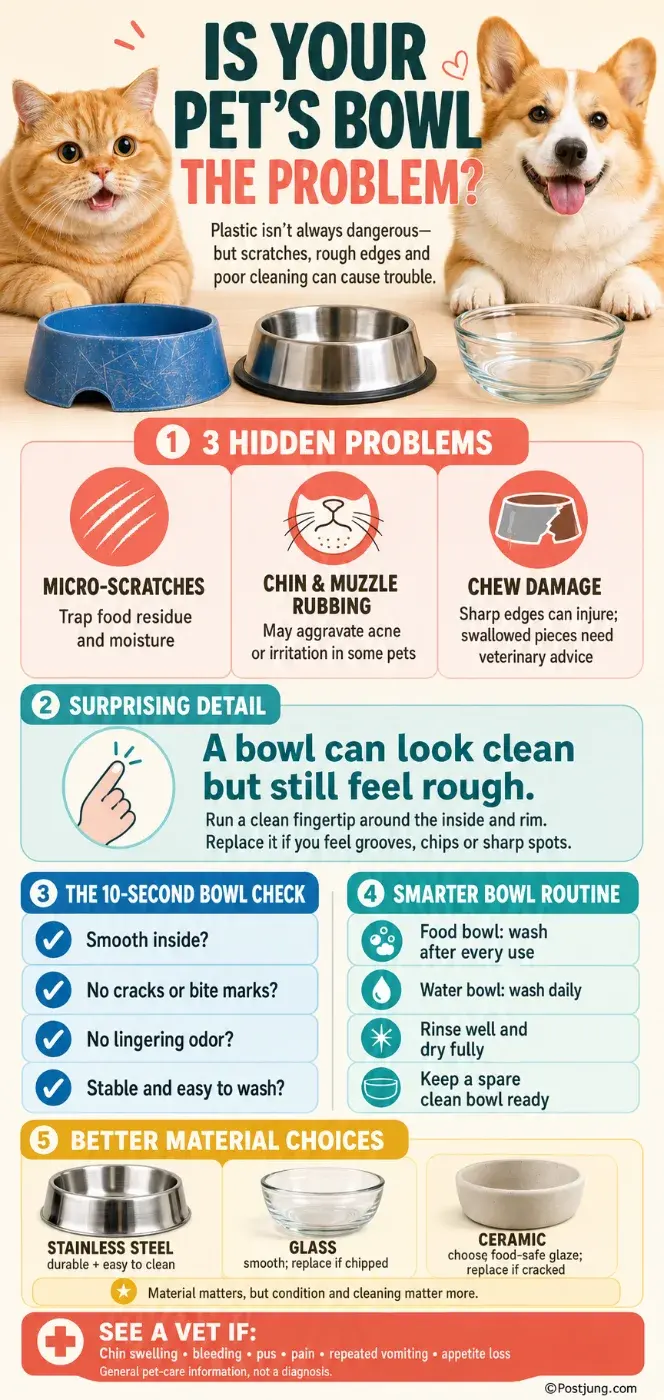
Cats with chin acne may benefit from a change
One of the most discussed concerns is feline chin acne. It can appear as black specks, clogged follicles, redness, swelling, crusting, or sore skin around a cat’s chin and lips.
The condition has several possible contributing factors, and the bowl alone should not automatically be blamed. Still, veterinary guidance notes a possible association between plastic dishes and chin acne. Irregularities or scratches in plastic may increase bacterial contamination, while the cat’s chin repeatedly touches the bowl during eating.
Switching to a smooth, nonporous glass or stainless-steel dish and washing it daily may help some affected cats, according to VCA Animal Hospitals.
A bowl change is a sensible experiment, but chin lesions are not always simple acne. Parasites, fungal infections, allergies, dental problems, and other skin diseases can produce similar signs. Persistent, painful, swollen, bleeding, or infected-looking areas should be examined by a veterinarian.
Rough edges can irritate a dog’s muzzle
Dogs can create a different problem by pushing, licking, or chewing their bowls. A damaged rim or rough plastic edge may repeatedly rub against the muzzle.
For dogs prone to canine acne, that physical trauma can aggravate inflamed hair follicles. VCA identifies eating from a plastic bowl with rough edges as one possible source of muzzle trauma.
Chewing raises another concern: broken pieces can be swallowed. A missing chunk of plastic, vomiting, appetite loss, lethargy, abdominal discomfort, or difficulty passing stool warrants prompt veterinary advice because swallowed material can sometimes cause an intestinal obstruction.
Retire any bowl with cracks, sharp edges, deep scratches, or bite damage. Its low replacement cost is not worth extending its use once the surface has broken down.
Cleaning matters whatever material you choose
Replacing plastic with stainless steel will not compensate for a bowl that is rarely washed. Food residue and saliva accumulate on every material.
The U.S. Food and Drug Administration advises washing pet food bowls with soap and hot water after each use. Water bowls should be washed and dried daily rather than simply topped up. The agency also recommends using a separate, clean scoop instead of dipping the pet’s bowl into a food container.
Homes serving raw or moist food need to be particularly attentive to surfaces and utensils because contaminated pet food can expose both animals and people to harmful bacteria.
A straightforward routine is usually enough:
- Keep at least two bowls so a clean one is always available.
- Wash food dishes after meals and water dishes every day.
- Rinse away all soap and allow bowls to dry.
- Inspect rims, bases, and interior surfaces for damage.
- Replace any dish that retains odor, feels rough, or no longer comes completely clean.
Pet bowls should be washed separately from human dishes when someone in the household is very young, pregnant, elderly, or immunocompromised, or when a pet is fed raw food.
Stainless steel is practical, but shape matters too
Stainless steel is a common alternative because it is durable, smooth, and generally easy to wash. Choose a stable, food-grade bowl without rust, peeling coatings, sharp seams, or a rubber base that traps moisture underneath.
Glass can also provide a smooth surface, provided it is thick, stable, and free of chips. Glazed ceramic may work well, but cracked or chipped dishes should be replaced.
Material is only part of the decision. A shallow, wide dish may reduce contact with a cat’s whiskers and chin. A nonslip base can help dogs that push their bowls, while an appropriately heavy dish may discourage tipping.
The best choice is therefore not simply “metal instead of plastic.” It is a smooth, intact bowl that suits the animal and can be cleaned easily.
There is no need to panic if a pet has used plastic dishes without trouble. Inspect what you already have, improve the cleaning routine, and watch for changes around the mouth and chin. For pets with recurring irritation—or bowls showing years of wear—a simple replacement may remove one avoidable source of trouble.
This information is general and cannot diagnose a skin condition or swallowed object. Contact a veterinarian if your pet has painful lesions, swelling, discharge, repeated vomiting, appetite loss, or signs of abdominal discomfort.
U.S. Food and Drug Administration, American Veterinary Medical Association, VCA Animal Hospitals, Merck Veterinary Manual
REFERENCES:
https://www.fda.gov/animal-veterinary/animal-health-literacy/tips-safe-handling-pet-food-and-treats
https://www.avma.org/resources-tools/pet-owners/petcare/safe-handling-pet-food-and-pet-treats
https://vcahospitals.com/know-your-pet/chin-acne-in-cats
https://vcahospitals.com/know-your-pet/acne-in-dogs

เขียนโดย Postjung Insights
 รู้หรือไม่? เปิดรายได้พนักงานส่งพัสดุของแต่ละแอป วันหนึ่งได้เท่าไร
 โรงเรียนที่มีนักเรียนมากที่สุดในไทย
 ซาบีดา” เรียกถกด่วน ปมภาพ “ชุดไทย” ถูกนำไปอ้างเป็นชุดกัมพูชา
 แปลปกสลาก งวด 1 ต.ค. 69 ส่องตัวเลขจากภาพปกสลากกินแบ่งรัฐบาล
 เปิดรายชื่อ 5 โรงเรียนเป้าหมาย เด็กสอบเข้าต้องเตรียมตัวให้พร้อม
 อำเภอที่มีชื่ออำเภอสั้นที่สุด 3 อำเภอเท่านั้นในประเทศไทย
 'สควีชชี่'ของเล่นที่กำลังเป็นไวรัลอาจถูกเจ้าหน้าที่ของสนามบินยึดได้ ตรวจสอบให้ดีก่อนนำขึ้นเครื่อง
 โรสแมรี่ แฮร์ริส ‘ป้าเมย์’ แห่ง Spider-Man ฉบับโทบีย์ แม็คไกวร์ อายุครบ 99 ปี
 เรียก “ป๋อง สุพรรณ” เซียนพระดัง แจงปมมูลนิธิฯ วัดพุทไธศวรรย์
 Ctrip แพลตฟอร์มการท่องเที่ยวของจีน เปิดขายตั๋วสำหรับทริปท่องเที่ยวอวกาศ ของ Virgin Galactic 6 วัน ในราคาประมาณ 24 ล้านบาท
 หนุ่มขับ Porsche ใจหล่อสุดๆ ติดประกาศเด็กหายไว้รอบคัน..หวังช่วยเผยแพร่ข้อมูลให้ตามหาได้เร็วขึ้น
 ส่องเลข 3 สำนักพิมพ์ งวด 1 ต.ค. 69 ตัวไหนมีข้อมูลตรงกันซาบีดา” เรียกถกด่วน ปมภาพ “ชุดไทย” ถูกนำไปอ้างเป็นชุดกัมพูชาเปิดรายชื่อ 5 โรงเรียนเป้าหมาย เด็กสอบเข้าต้องเตรียมตัวให้พร้อมหนุ่มขับ Porsche ใจหล่อสุดๆ ติดประกาศเด็กหายไว้รอบคัน..หวังช่วยเผยแพร่ข้อมูลให้ตามหาได้เร็วขึ้น
 วาบิ-ซาบิ (Wabi-Sabi) ปรัชญาญี่ปุ่นที่สอนให้เราโอบกอดความไม่สมบูรณ์แบบ
 English Edition