Why Your Pet May Refuse to Eat From a New Bowl

The food has not changed, but the smell, sound, shape, or location of its container may be enough to make a cautious pet step away. A gradual introduction often helps—but continued appetite loss deserves attention.
You replaced a scratched or aging food bowl with a clean new one. The meal is unchanged, yet your dog or cat sniffs it, backs away, or waits as though dinner has disappeared.
That reaction is not necessarily stubbornness. A food bowl is part of the meal, and changing it can alter several sensory and environmental cues at once.
The new bowl may smell unfamiliar
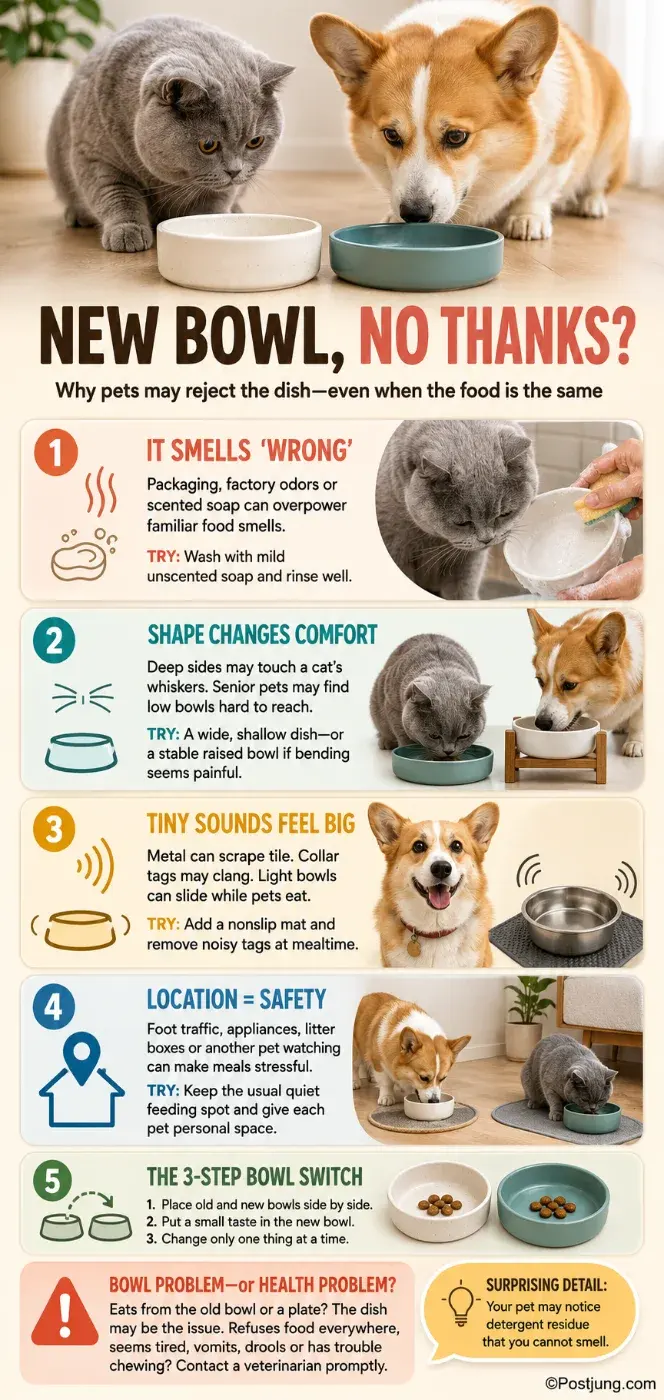
Dogs and cats experience their surroundings heavily through scent. A new bowl can carry odors from packaging, a store shelf, manufacturing materials, dish soap, or the hands that handled it.
Those smells may be faint or undetectable to a person but still noticeable to an animal. The familiar bowl also carried the scent of countless previous meals, making it a predictable part of the feeding routine.
Wash a new bowl thoroughly before using it. Choose a mild, unscented cleaning product, rinse carefully, and allow the bowl to dry. Strong fragrances and lingering detergent residue may make the eating surface less appealing.
Material can matter as well. Plastic may retain odors and develop scratches over time. VCA Animal Hospitals notes that replacing plastic dishes with smooth, nonporous options such as glass or stainless steel may help some cats with chin acne. Whatever the material, the bowl should be intact, easy to clean, and free of sharp or rough edges.
Shape and sound can change the experience
A replacement may look similar to you while feeling completely different to your pet.
A deep or narrow dish can bring a cat’s face and whiskers into frequent contact with its sides. Feline veterinary guidance suggests that some cats, particularly seniors, may prefer wide, low-sided bowls. An elevated dish may also be more comfortable for an older animal that finds bending painful.
“Whisker fatigue” is often used online to describe discomfort from whiskers touching a bowl, but it should not be treated as a confirmed diagnosis for every reluctant cat. The practical test is simple: offer the same food on a wide, shallow plate and observe whether the cat appears more comfortable.
Noise can be another problem. A metal bowl may scrape across tile, clatter when a collar tag hits the rim, or shift whenever the animal takes a bite. A lightweight dish can also slide forward, forcing a pet to chase its meal across the floor.
A stable, quiet bowl often feels safer. A nonslip base or feeding mat may solve the problem without any change to the food.
Location may matter as much as the bowl
Sometimes the new dish arrives with a new feeding station. That can introduce distractions the owner did not anticipate: foot traffic, noisy appliances, another pet watching, or a nearby litter box.
Cats generally benefit from being able to eat in a quiet place without competition. FelineVMA guidance recommends separate food bowls and feeding locations when social tension or food guarding is possible in a multicat home.
Dogs can also hesitate when another animal crowds the feeding space. A timid pet may appear uninterested in food when the real problem is that it does not feel secure enough to approach.
Keep the new bowl in the pet’s usual feeding location during the transition. If the location itself must change, consider changing the bowl and feeding spot on separate days rather than introducing both changes at once.
Make the switch without turning it into a contest
If the old bowl is still safe to use, place the new one beside it for a few days. Let your pet investigate it without pressure. You can then serve a small amount of familiar food in the new dish while leaving the regular meal in the old one.
Another option is to transfer a little of the pet’s usual food scent to the clean new bowl before serving. Avoid repeatedly pushing the animal toward the dish or hovering over it, since added attention can make a cautious pet more uneasy.
Keep the food, portion, schedule, and location consistent while introducing the bowl. Change one part of the routine at a time so you can identify what is causing the hesitation.
If your pet eats normally from a plate or the old bowl but refuses only the new dish, the container is a reasonable suspect. If the animal refuses the same food regardless of how or where it is served, the problem is less likely to be the bowl.
Do not assume every refusal is behavioral
A new bowl can create a convenient explanation for appetite loss, but the timing may be coincidental. Dental pain, nausea, infection, digestive problems, stress, and other medical conditions can all reduce a pet’s interest in food.
Watch for vomiting, diarrhea, drooling, difficulty chewing or swallowing, unusual thirst, low energy, hiding, apparent pain, or weight loss. Senior pets and animals with existing medical conditions deserve particular care because discomfort or illness may first appear as a subtle change in eating behavior.
Refusing all food is different from rejecting one bowl. Contact a veterinarian promptly if your pet continues to avoid food, refuses water, develops other symptoms, or seems unwell. Cats require special attention because prolonged inadequate food intake can become medically serious.
A bowl may look like a simple household object, but to a pet it is also a collection of smells, textures, sounds, and memories. Respecting those details can turn a confusing mealtime standoff into an easy transition—and keep a small preference from hiding a larger health concern.
Feline Veterinary Medical Association, Cornell University College of Veterinary Medicine, VCA Animal Hospitals, American Veterinary Medical Association
REFERENCES:
https://catvets.com/wp-content/uploads/2025/02/FelineVMAHowtoFeedCat_BW.pdf
https://catvets.com/wp-content/uploads/2024/12/FelineVMA_Sr.-Care-Guideline_Web.2.pdf
https://www.vet.cornell.edu/departments-centers-and-institutes/cornell-feline-health-center/health-information/feline-topics/special-needs-senior-cat
https://vcahospitals.com/know-your-pet/recognizing-signs-of-illness-in-cats

เขียนโดย Postjung Insights
 อำเภอที่มีชื่ออำเภอสั้นที่สุด 3 อำเภอเท่านั้นในประเทศไทย
 หนุ่มขับ Porsche ใจหล่อสุดๆ ติดประกาศเด็กหายไว้รอบคัน..หวังช่วยเผยแพร่ข้อมูลให้ตามหาได้เร็วขึ้น
 แปลปกสลาก งวด 1 ต.ค. 69 ส่องตัวเลขจากภาพปกสลากกินแบ่งรัฐบาล
 ซาบีดา” เรียกถกด่วน ปมภาพ “ชุดไทย” ถูกนำไปอ้างเป็นชุดกัมพูชา
 รู้หรือไม่? เปิดรายได้พนักงานส่งพัสดุของแต่ละแอป วันหนึ่งได้เท่าไร
 เปิด 5 โรงเรียนหญิงล้วนเก่าแก่ของไทย ที่มีประวัติยาวนานกว่าศตวรรษ
 เปิดรายชื่อ 5 โรงเรียนเป้าหมาย เด็กสอบเข้าต้องเตรียมตัวให้พร้อม
 ส่องเลข 3 สำนักพิมพ์ งวด 1 ต.ค. 69 ตัวไหนมีข้อมูลตรงกัน
 โรงเรียนที่มีนักเรียนมากที่สุดในไทย
 ตาราง “เด่นเหนือเด่นใต้” งวด 1 ต.ค. 69 เปิดข้อมูลตามโพย เลขไหนอยู่ตรงไหน
 โรสแมรี่ แฮร์ริส ‘ป้าเมย์’ แห่ง Spider-Man ฉบับโทบีย์ แม็คไกวร์ อายุครบ 99 ปี
 สถิติย้อนหลัง 10 ปี ออกเลขไหนบ้างมาดูกันซาบีดา” เรียกถกด่วน ปมภาพ “ชุดไทย” ถูกนำไปอ้างเป็นชุดกัมพูชาเปิดรายชื่อ 5 โรงเรียนเป้าหมาย เด็กสอบเข้าต้องเตรียมตัวให้พร้อมหนุ่มขับ Porsche ใจหล่อสุดๆ ติดประกาศเด็กหายไว้รอบคัน..หวังช่วยเผยแพร่ข้อมูลให้ตามหาได้เร็วขึ้น
 วาบิ-ซาบิ (Wabi-Sabi) ปรัชญาญี่ปุ่นที่สอนให้เราโอบกอดความไม่สมบูรณ์แบบ
 English Edition