What Your Pet’s Gum Color Can Reveal About Their Health
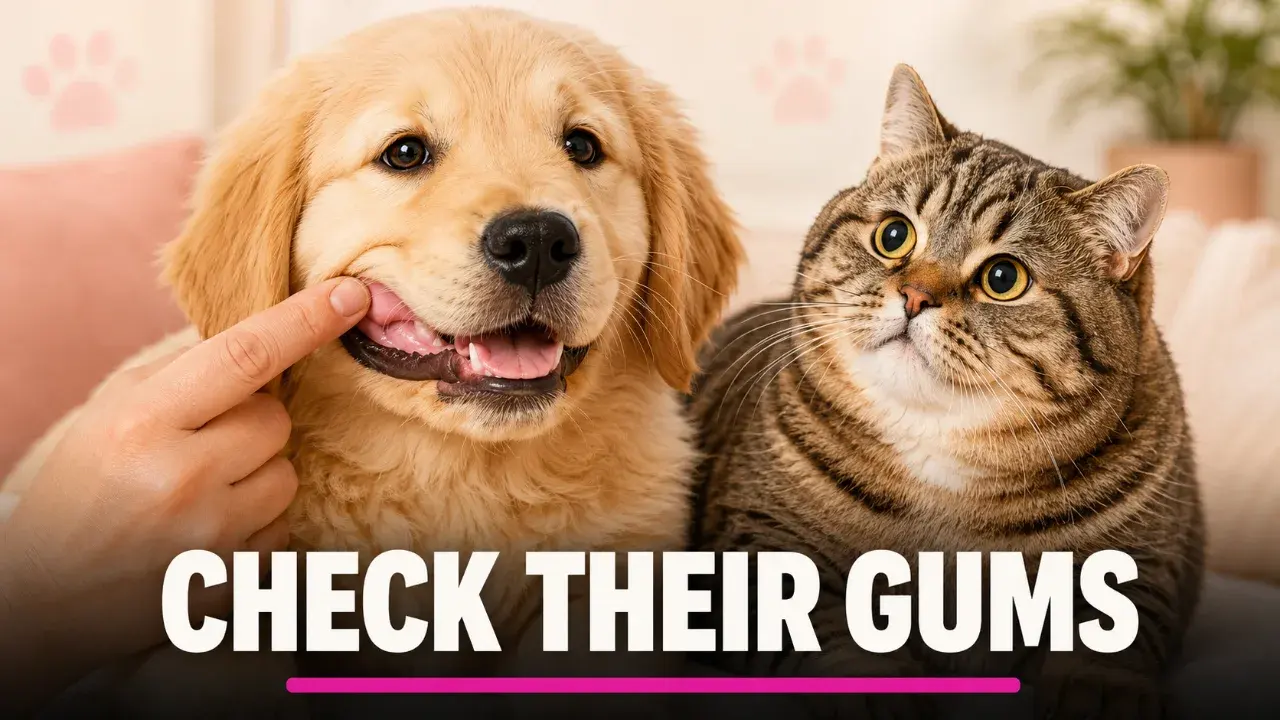
Healthy gums are often pink, but pale, blue, yellow, unusually red, or muddy-colored tissue can accompany serious health problems. Here is what owners should look for—and when to seek urgent veterinary help.
A pet’s mouth can reveal more than the condition of their teeth. Veterinarians routinely examine the gums because their color, moisture, and refill response provide useful clues about circulation, oxygen delivery, and overall health.
For owners, knowing what their dog’s or cat’s gums normally look like can make an unexpected change easier to recognize. Gum color cannot diagnose an illness at home, but certain changes—especially when accompanied by breathing difficulty, weakness, or collapse—should never be ignored.
What do healthy gums look like?
In many healthy dogs and cats, the gums are moist and some shade of pink. The exact shade varies between animals and may change temporarily with excitement, exercise, heat, or stress.
Some pets naturally have black, brown, spotted, or otherwise pigmented gums. This pigmentation can make color assessment difficult. Owners may be able to examine an unpigmented area inside the lip, but they should never assume that a dark patch is abnormal if it has always been present.
The most useful first step is to become familiar with the pet’s normal appearance. Check the gums occasionally when the animal is calm, in good health, and standing in natural or neutral indoor light. A photograph may provide a helpful baseline to show a veterinarian later.
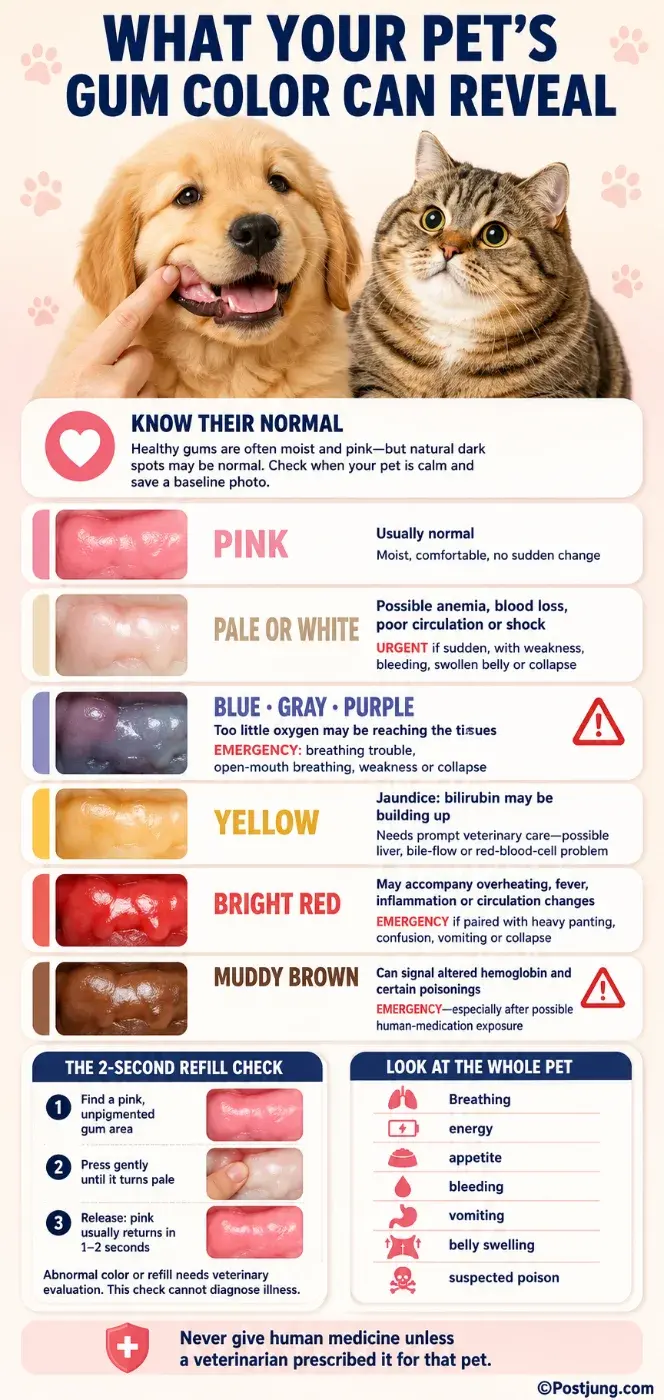
Pale pink or white gums
Gums that have lost their usual pink color may be associated with anemia, blood loss, poor circulation, or shock. A severely affected animal may also appear weak, unusually tired, cold, short of breath, or unable to stand normally.
Pale gums do not reveal the cause. Anemia, for example, can result from bleeding, destruction of red blood cells, parasites, toxins, immune-related disease, or reduced production of blood cells. Veterinarians generally need an examination and blood testing to determine what is happening.
Suddenly white or markedly pale gums—particularly with collapse, a swollen abdomen, rapid breathing, bleeding, or extreme weakness—warrant emergency veterinary attention.
Blue, purple, or gray gums
A blue or gray tint can indicate that the tissues are not receiving enough oxygen. It may occur with severe breathing problems, airway obstruction, or advanced heart or lung disease.
By the time blue discoloration is clearly visible, an animal may already be in serious respiratory distress. Other warning signs include noisy or labored breathing, open-mouth breathing, an extended neck, exaggerated abdominal movement, weakness, or collapse.
This is an emergency. Keep the animal as calm as possible, minimize activity, and go to the nearest emergency veterinary hospital. Calling ahead can help the staff prepare for the pet’s arrival.
Yellow gums
Yellow discoloration is known as jaundice or icterus. It results from an excessive accumulation of bilirubin, a yellow pigment produced during the breakdown of red blood cells.
Possible underlying problems include liver disease, impaired bile flow, and abnormal destruction of red blood cells. Yellow coloring may also be visible in the whites of the eyes, inside the ears, or on lightly pigmented skin.
Yellow gums require prompt veterinary evaluation. They are not something that owners can safely diagnose or treat by changing food or giving supplements at home.
Bright red or unusually dark pink gums
Gums can become temporarily pinker after exercise, excitement, or heat. Persistent bright-red or very dark-pink gums, however, may accompany fever, overheating, inflammation, certain toxic exposures, or circulatory problems.
The rest of the animal’s condition matters. Heavy panting, vomiting, confusion, weakness, collapse, or a high body temperature alongside intensely red gums can indicate an emergency.
Redness limited to the tissue around individual teeth is more suggestive of an oral problem. Gingivitis commonly causes gums to become red, swollen, tender, or prone to bleeding. Bad breath, drooling, difficulty eating, or pawing at the mouth are additional reasons to schedule a dental examination.
Brown or muddy-looking gums
Brown, muddy, or chocolate-colored mucous membranes can occur when hemoglobin is chemically altered and cannot carry oxygen normally. Certain toxic exposures, including acetaminophen poisoning in cats, can produce this kind of discoloration.
Do not give human medication to a pet unless a veterinarian has specifically prescribed it for that animal. If poisoning is suspected, contact an emergency veterinarian or animal poison service immediately. Do not wait for more symptoms to appear and do not induce vomiting unless a veterinary professional instructs you to do so.
Spots, bleeding, swelling, or localized discoloration
Color is not the only feature worth noticing. Small red or purple spots, unexplained bleeding, ulcers, swelling, tissue damage, or a new dark area should be examined by a veterinarian.
A localized change may arise from dental disease, injury, infection, a foreign object, a blood-clotting problem, chemical or electrical burns, or an oral growth. A new area that enlarges, bleeds easily, smells unpleasant, or interferes with eating deserves particular attention.
How to check capillary refill time
Veterinarians sometimes assess circulation by measuring capillary refill time. Owners can perform a basic check only if the pet is calm and can be handled safely.
- Find a naturally pink, unpigmented section of gum.
- Gently press it with one finger until the area briefly turns pale.
- Release the pressure and observe how quickly the pink color returns.
A typical refill time is approximately one to two seconds. A clearly delayed return can be associated with poor circulation, while an unusually rapid refill may occur in certain high-circulation states.
This test has important limitations. Lighting, gum pigmentation, stress, cold temperatures, pressure technique, and an owner’s color perception can affect the result. It should never be used to rule out an emergency or replace a veterinary examination.
Look at the whole pet, not just the color
One quick gum check cannot confirm that a pet is healthy. A concerning color becomes more significant when it appears with other changes, including:
- Difficulty breathing
- Weakness, disorientation, or collapse
- Unusual sleepiness or poor responsiveness
- Persistent vomiting or diarrhea
- Blood in vomit, urine, or stool
- A swollen or painful abdomen
- Refusal to eat
- Unexplained bruising or bleeding
- Suspected poisoning or trauma
If gum color changes suddenly or the pet appears seriously unwell, contact a veterinarian immediately. When breathing is labored or the gums are blue, gray, white, or muddy brown, go directly to emergency care.
Learning what is normal for an individual pet is the real value of checking the gums. The color is not a diagnosis—but a meaningful change can be an early warning that the animal needs professional help.
MSD Veterinary Manual, Cornell University College of Veterinary Medicine, VCA Animal Hospitals
REFERENCES:
https://www.msdvetmanual.com/multimedia/table/parameters-to-evaluate-during-triage
https://www.msdvetmanual.com/emergency-medicine-and-critical-care/emergency-medicine-introduction/first-aid-and-transport-of-small-animals
https://www.vet.cornell.edu/departments-centers-and-institutes/riney-canine-health-center/canine-health-topics/recognizing-and-responding-canine-respiratory-distress
https://vcahospitals.com/know-your-pet/anemia-in-dogs

เขียนโดย Postjung Insights
 อำเภอที่มีชื่ออำเภอสั้นที่สุด 3 อำเภอเท่านั้นในประเทศไทย
 รู้หรือไม่? เปิดรายได้พนักงานส่งพัสดุของแต่ละแอป วันหนึ่งได้เท่าไร
 Google ยอมรับแล้ว! Gemini AI เข้าถึงระบบบริษัทจริง 3 แห่ง ระหว่างการทดสอบความปลอดภัย
 จุฬาฯ มหาวิทยาลัยแห่งแรกของไทย มีจุดเริ่มต้นในสมัยรัชกาลที่ 5
 สถิติย้อนหลัง 10 ปี ออกเลขไหนบ้างมาดูกัน
 เลขเด็ดปฏิทิน "หลวงปู่โต๊ะ" งวดวันที่ 1 ตุลาคม 69..ส่องเลย เลขไหนให้โชค!
 5 คณะที่เรียนจบมาแล้ว มีอาชีพรองรับมากกว่าที่คิด
 โรงเรียนที่มีนักเรียนมากที่สุดในไทย
 เปิดรายชื่อโรงเรียนในไทยที่ “ว่ายน้ำ” อยู่ในหลักสูตร เรียนจริงตั้งแต่อนุบาลถึงมัธยม
 ตาราง “เด่นเหนือเด่นใต้” งวด 1 ต.ค. 69 เปิดข้อมูลตามโพย เลขไหนอยู่ตรงไหน
 ส่องเลข 3 สำนักพิมพ์ งวด 1 ต.ค. 69 ตัวไหนมีข้อมูลตรงกัน
 เปิด 5 โรงเรียนหญิงล้วนเก่าแก่ของไทย ที่มีประวัติยาวนานกว่าศตวรรษ
 😃 ชวนเข้ามาดูกันอีกกับคนที่มีร่างกายพิเศษจนเหมือนมีกล่องสมบัติที่หายาก 😯5 คณะที่เรียนจบมาแล้ว มีอาชีพรองรับมากกว่าที่คิดเปิดรายชื่อโรงเรียนในไทยที่ “ว่ายน้ำ” อยู่ในหลักสูตร เรียนจริงตั้งแต่อนุบาลถึงมัธยมGoogle ยอมรับแล้ว! Gemini AI เข้าถึงระบบบริษัทจริง 3 แห่ง ระหว่างการทดสอบความปลอดภัยเลขเด็ดปฏิทิน "หลวงปู่โต๊ะ" งวดวันที่ 1 ตุลาคม 69..ส่องเลย เลขไหนให้โชค!
 ทำไมของพลาสติกเก่าบางชิ้นถึง “เหนียว” ขึ้นมาเอง ทั้งที่ไม่ได้เปื้อนอะไร?
 English Edition