How Often Should You Replace a Cat Litter Scoop?
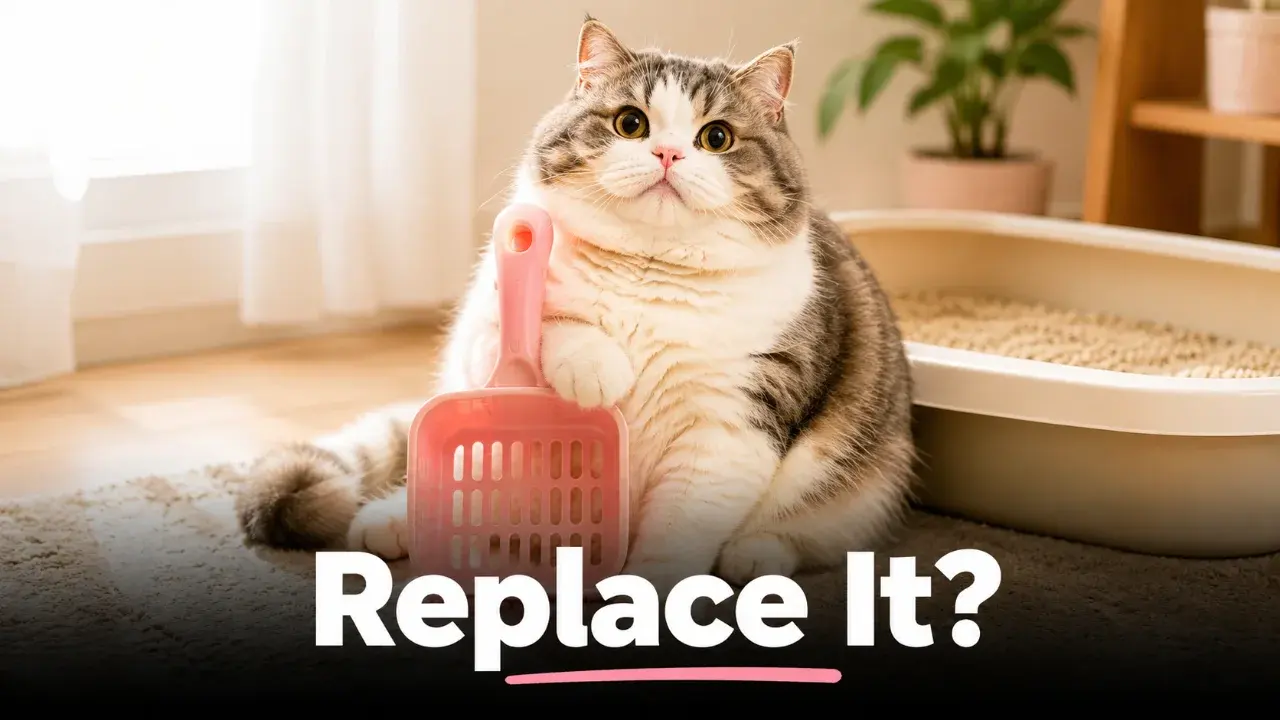
A litter scoop can look harmless long after it has become scratched, smelly, or hard to clean. The best replacement schedule depends less on the calendar and more on the material, condition, and how many cats use the box.
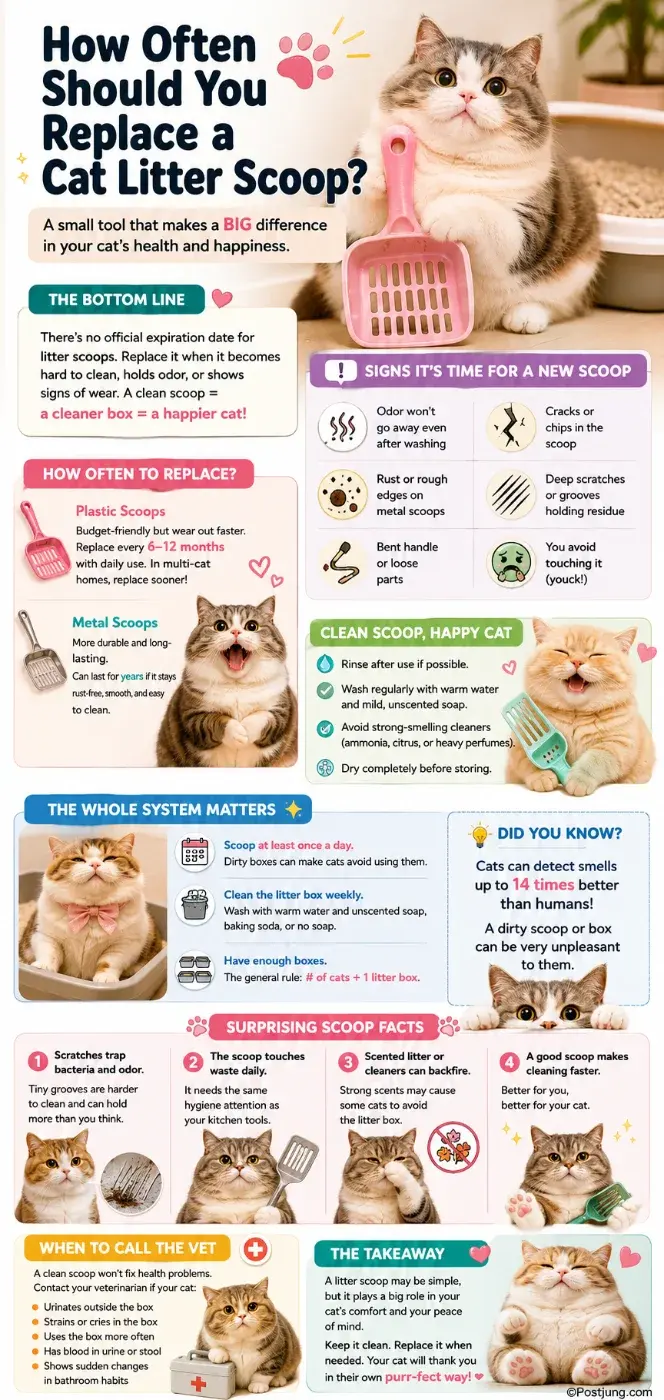
A cat litter scoop is one of the most-used pet tools in the home, but it is easy to forget that it wears out. The safest rule is simple: replace it when it becomes hard to clean, starts holding odor, cracks, rusts, bends, or has deep scratches where residue can cling.
There is no universal veterinary rule that says every litter scoop must be replaced after a fixed number of months. What matters more is whether the scoop can still do its job cleanly and comfortably.
For many homes, a cheap plastic scoop may need replacing about once a year, especially if it is used daily. A sturdy metal scoop can last much longer, sometimes several years, as long as it does not rust, develop sharp edges, or trap residue.
The real question is not only “How old is it?” It is “Would you still consider this tool clean after washing it?”
Why the scoop matters more than people think
Most cat owners know the litter box should be cleaned regularly. The ASPCA advises scooping at least once a day and cleaning the box weekly with warm water and unscented soap, baking soda, or no soap. It also notes that cats generally prefer clean litter boxes and may avoid dirty ones.
That makes the scoop part of the larger litter box system. If the box is clean but the scoop is grimy, cracked, or smelly, the routine is not really clean.
The RSPCA similarly recommends daily spot-cleaning and replacing litter at least weekly, while warning that strong-scented cleaning products and scented litter may put cats off using the tray.
This is where the scoop becomes easy to overlook. It touches waste every day, gets dragged through litter, and may sit beside the box for months. Over time, scratches and rough plastic edges can make it harder to rinse fully.
The best replacement schedule by scoop type
A basic plastic scoop is usually the first to show wear. Plastic can bend, crack, discolor, and develop tiny grooves from scraping clumped litter. Once those grooves hold odor or residue, cleaning becomes less reliable.
A reasonable practical guideline is to replace a plastic scoop every 6 to 12 months in a daily-use home, sooner if there are multiple cats, heavy clumping litter, or visible damage.
A heavier plastic scoop may last longer, but the same rule applies: condition matters more than age.
Metal scoops are usually more durable. They often cut through clumped litter better, bend less, and are easier to rinse clean. A good stainless-steel scoop may last for years. Replace it if it rusts, develops rough spots, has a loose handle, or starts scraping the box in a way that leaves sharp marks.
Coated or nonstick scoops can be convenient, but the coating should stay intact. Once it chips or peels, the scoop becomes harder to clean and may no longer be worth keeping.
Signs your litter scoop should be replaced now
The easiest warning sign is odor that stays even after washing. If the scoop still smells after being cleaned with mild soap and water, it may be holding residue in scratches or joints.
Another sign is visible buildup around the slots, handle, or corners. A scoop with narrow slits can trap damp litter, especially if it is used with clay clumping litter.
Cracks are also a clear reason to replace it. A cracked scoop can pinch litter, break during use, or create small spaces where waste residue collects.
Rust is an automatic replacement sign for metal scoops. So are sharp edges, a loose handle, or any bent section that makes the scoop awkward to use.
The most overlooked sign is simple: you avoid touching it because it feels dirty. If a tool has reached that point, it is no longer helping the routine.
Cleaning helps, but it does not make a scoop last forever
A litter scoop should be cleaned regularly, not just replaced occasionally. Rinsing it after use is not always realistic for every household, but it should be washed often enough that residue does not build up.
Use warm water and mild, unscented soap when needed. Avoid strong-smelling cleaners, especially ammonia, citrus-heavy products, or heavily perfumed disinfectants, because cats can be sensitive to odors around their litter area. Purina also advises avoiding strong household cleaners around litter boxes because some scents may cause cats to avoid the box.
After washing, dry the scoop before storing it. A damp scoop sitting in a holder can create odor and grime faster, especially in humid homes.
If you use a scoop holder, clean that too. A fresh scoop stored in a dirty holder defeats the purpose.
Multi-cat homes need closer attention
A scoop used for one calm indoor cat may last much longer than one used in a busy multi-cat home. More cats means more scooping, more pressure on the tool, and more chances for odor to build up.
Cornell Feline Health Center notes that cats may avoid a litter-box area that is not clean and recommends providing as many boxes as there are cats, plus one.
That same logic applies to the tools around the box. In a multi-cat home, it can make sense to keep more than one scoop, especially if boxes are in different rooms.
If one cat is sick, has diarrhea, parasites, or a suspected infection, owners should be more careful. Wash the scoop thoroughly, follow veterinary guidance, and consider replacing a worn plastic scoop afterward, especially if it cannot be cleaned well.
Do not blame the scoop for every litter box problem
A dirty or worn scoop can make cleaning less effective, but it is not the cause of every litter box issue.
Cornell explains that cats may eliminate outside the litter box for many reasons, including medical problems, litter box aversion, location preference, urinary tract inflammation, kidney disease, thyroid disease, diabetes, digestive problems, mobility issues, or cognitive changes.
That matters because a cat avoiding the box should not be dismissed as “bad behavior.” If a cat suddenly urinates outside the box, strains, visits the box more often, cries, leaves blood, or changes bathroom habits, a veterinarian should be involved.
A clean scoop is part of good care. It is not a substitute for medical attention when symptoms appear.
The simple rule to remember
For most pet owners, the smartest approach is this:
Replace a plastic litter scoop when it is scratched, cracked, smelly, bent, or about a year old with daily use. Keep a metal scoop longer if it stays smooth, rust-free, sturdy, and easy to clean.
The scoop does not need to look brand new forever. But it should feel like a tool you can clean with confidence.
Cats are particular about their bathroom space. A fresh scoop will not solve every litter box problem, but it makes daily cleaning easier, keeps the routine more hygienic, and helps owners notice changes in the box sooner.
That small plastic or metal tool may not seem important. But in a cat household, it is part of the quiet routine that keeps both the home and the cat more comfortable.
ASPCA, RSPCA, Cornell Feline Health Center, Purina
REFERENCES:
https://www.aspca.org/pet-care/cat-care/common-cat-behavior-issues/litter-box-problems
https://www.rspca.org.uk/adviceandwelfare/pets/cats/environment/litter
https://www.vet.cornell.edu/departments-centers-and-institutes/cornell-feline-health-center/health-information/feline-health-topics/feline-behavior-problems-house-soiling
https://www.purina.com/articles/cat/behavior/litter/how-often-to-clean-litter-box

เขียนโดย Postjung Insights
 อำเภอที่มีชื่ออำเภอสั้นที่สุด 3 อำเภอเท่านั้นในประเทศไทย
 รู้หรือไม่? เปิดรายได้พนักงานส่งพัสดุของแต่ละแอป วันหนึ่งได้เท่าไร
 ดูหนัง–ซีรีส์ฟรีอาจไม่ฟรีอย่างที่คิด! เปิดโทษละเมิดลิขสิทธิ์ เตือนคนปล่อยคอนเทนต์เถื่อน เสี่ยงทั้งคุกทั้งปรับ
 โรงเรียนที่มีนักเรียนมากที่สุดในไทย
 แมคาเดเมีย (Macadamia): ราชินีแห่งถั่ว กับขุมทรัพย์โภชนาการจากออสเตรเลีย
 สถิติย้อนหลัง 10 ปี ออกเลขไหนบ้างมาดูกัน
 รมว.วัฒนธรรมเอาจริง! จ่อส่งหนังสือทักท้วง Miss Universe Cambodia ปมใช้ภาพหญิงกำแพงเพชร หากไม่แก้ เตรียมใช้กฎหมาย
 เปิด 5 โรงเรียนหญิงล้วนเก่าแก่ของไทย ที่มีประวัติยาวนานกว่าศตวรรษ
 MRT เตาปูนกลับมาเปิดปกติแล้ว รมช.คมนาคมเผยปมไฟไหม้ พบประกายไฟจากชุดสายไฟ 750 โวลต์
 5 คณะที่เรียนจบมาแล้ว มีอาชีพรองรับมากกว่าที่คิด
 ตาราง “เด่นเหนือเด่นใต้” งวด 1 ต.ค. 69 เปิดข้อมูลตามโพย เลขไหนอยู่ตรงไหน
 โรงเรียนเพียงแห่งเดียวของประเทศไทย ที่อยู่มาตั้งแต่ยุครัชกาลที่ 4
 English Edition