Why Cats Hide Illness Until It Looks Serious
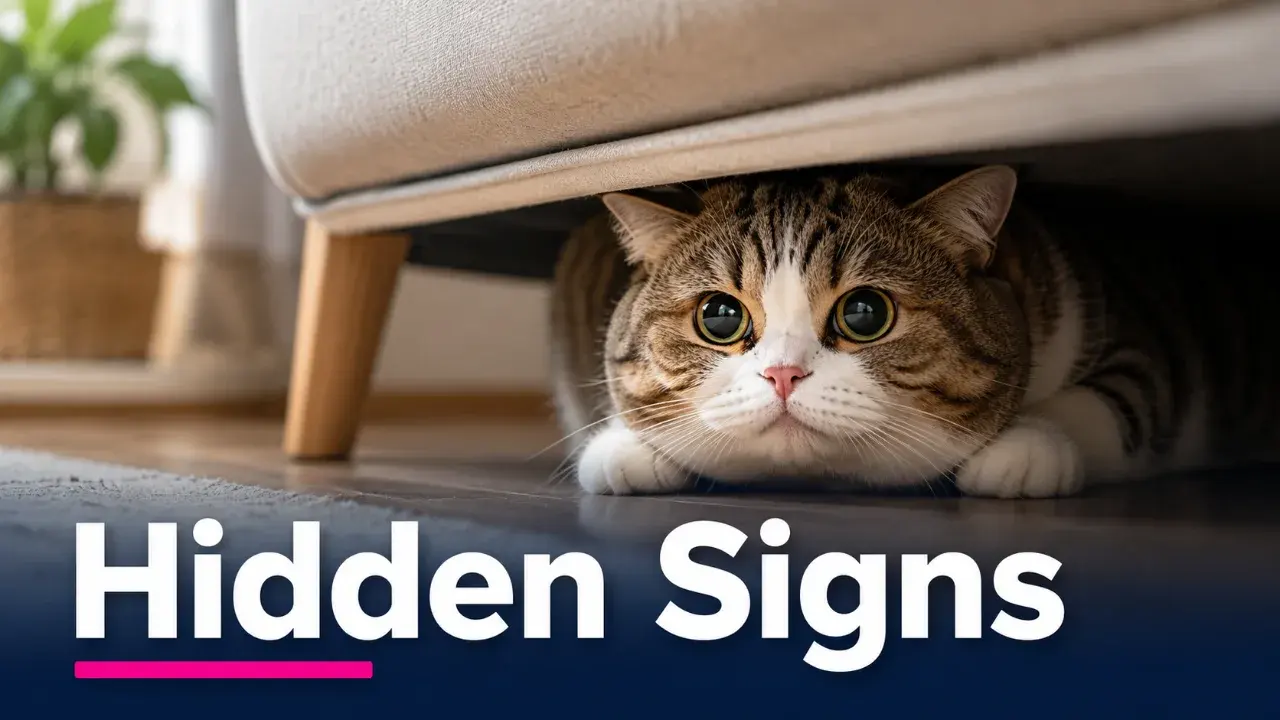
Cats often show illness through small changes long before they look visibly sick. Learning what counts as “not normal” can help owners act sooner and avoid missing important warning signs.
Cats do not always announce illness in obvious ways. A sick cat may still look calm, quiet, or simply “a little off” until the problem has already become serious.
That is one reason cat owners often feel caught by surprise. The warning signs may have been there, but they were small: a missed jump, a messier coat, a quieter routine, a different litter box pattern, or a cat that suddenly prefers the darkest corner of the room.
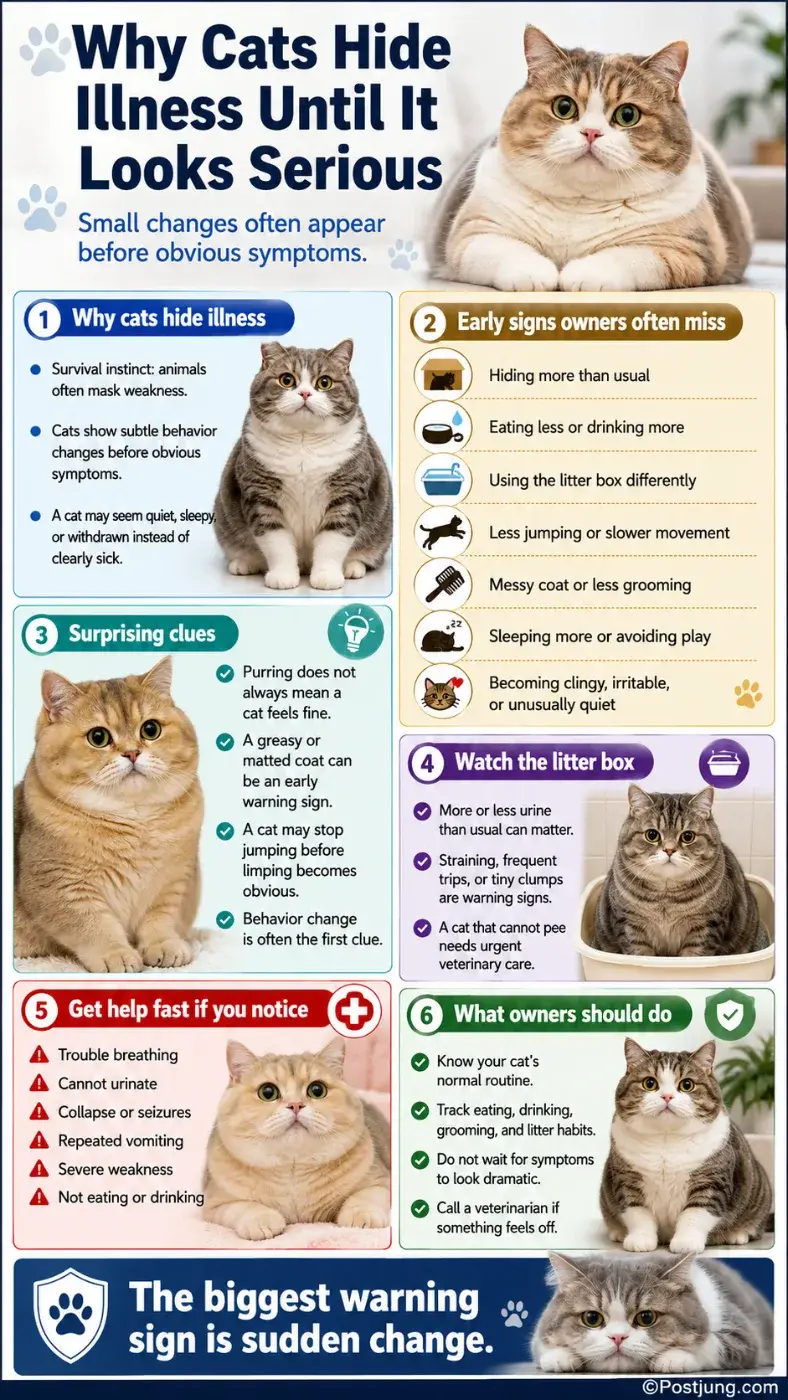
Veterinary guidance consistently points to one key idea: cats often show illness through changes in normal behavior, not dramatic symptoms. Sick cats may hide, withdraw, sleep more, stop playing, groom less, eat differently, or change how they use the litter box.
Why hiding is normal for cats
Cats are both predators and prey animals. That mixed place in the natural world helps explain why they may mask weakness. Showing pain or illness could make an animal more vulnerable, so cats evolved to stay quiet, still, and private when something feels wrong.
That does not mean every hiding cat is sick. Cats also hide when they are stressed, startled, overstimulated, or simply looking for a safe nap spot. Feline behavior guidelines describe hiding as a coping behavior cats use when they want to avoid stress, threats, or unwanted interaction.
The important question is not “Does my cat hide?” It is: Is this different from my cat’s normal pattern?
A shy cat who always sleeps under the bed may not be sending the same message as a social cat who suddenly disappears for most of the day. With cats, comparison matters. Their habits are the baseline.
The quiet clues owners often miss
One of the earliest signs may be a change in energy. A cat that no longer jumps onto a favorite chair, stops climbing, avoids play, or seems stiff may be dealing with pain, arthritis, injury, or another health issue. VCA Animal Hospitals notes that cats with arthritis or joint problems may change how they jump or stop reaching higher surfaces they once used easily.
Grooming is another clue. Cats are usually careful about their coats. When a cat stops grooming well, the fur may look greasy, matted, dull, flaky, or less tidy than usual. Too much grooming can also be a warning sign, especially if it creates bald spots or irritated skin.
Food and water changes deserve attention, too. A sick cat may eat less, eat more, drink less, or drink more. Increased thirst can be linked with conditions such as diabetes, kidney disease, or hyperthyroidism, while loss of appetite may reflect pain, nausea, dental disease, fever, or another problem.
The litter box can tell a serious story
For cat owners, the litter box is one of the most useful health monitors in the home.
More urine than usual can suggest that the body is not conserving water properly. Less urine, repeated trips to the box, straining, crying, or producing only tiny clumps can point to urinary or bladder problems. In some cases, not being able to urinate is an emergency, especially for male cats. VCA warns that lack of urination can be life-threatening and needs immediate veterinary attention.
A cat urinating outside the box is not being spiteful. It may be stressed, in pain, uncomfortable, or unable to associate the box with relief. Sudden litter box changes should be treated as information, not bad behavior.
When “just tired” is not just tired
Cats sleep a lot, so it is easy to dismiss lethargy. The difference is usually quality, not just quantity.
A healthy sleepy cat still responds to favorite sounds, meals, routines, toys, or attention in a familiar way. A sick cat may seem distant, dull, restless, unusually irritable, or unusually clingy. Some cats become quieter; others vocalize more. Some hide; others follow their owners around.
This is why the best early warning system is knowing your own cat. A small change may mean little in one cat and a lot in another.
The signs that should not wait
Some symptoms are more urgent than others. Veterinary attention should be sought quickly if a cat cannot urinate, has trouble breathing, collapses, has seizures, cannot stand, has repeated vomiting or diarrhea, refuses water, appears severely weak, has a hard or bloated abdomen, or shows signs of serious trauma. The Cat Fanciers’ Association summarizes several emergency signs that call for immediate veterinary care.
Less dramatic symptoms can still matter. If a cat is hiding more than usual, eating poorly, drinking differently, grooming abnormally, limping, avoiding jumps, changing litter box habits, or simply seeming “not right,” it is safer to contact a veterinarian than to wait until the signs become obvious.
A useful rule is this: sudden change is the warning sign.
Why early action matters
The difficult part of feline health is that cats may appear composed even when they are uncomfortable. By the time a cat looks visibly sick, the condition may already be advanced enough to limit choices or require more urgent treatment.
Early care does not always mean something severe is happening. Sometimes the cause is treatable, temporary, or related to stress. But early evaluation gives a veterinarian a better chance to find problems before they become harder to manage.
For owners, the most practical habit is simple: notice patterns. Watch how your cat eats, drinks, moves, jumps, sleeps, grooms, uses the litter box, and interacts with people. A cat’s routine is not boring background noise. It is a health record hiding in plain sight.
Cats may hide illness well, but they rarely hide every clue. The owner who knows what “normal” looks like is often the first to notice when something is quietly wrong.
This article is for general pet-health awareness only. If a cat shows sudden, severe, persistent, or unusual symptoms, owners should contact a licensed veterinarian for advice based on the cat’s age, history, and condition.
VCA Animal Hospitals, Cornell Feline Health Center, Cat Friendly Homes / AAFP-ISFM Guidelines, The Cat Fanciers’ Association
REFERENCES:
https://vcahospitals.com/know-your-pet/recognizing-signs-of-illness-in-cats
https://www.vet.cornell.edu/departments-centers-and-institutes/cornell-feline-health-center/health-information/feline-health-topics
https://catvets.com/resource/aafp-isfm-environmental-needs-guidelines/
https://cfa.org/cat-talk/is-your-cat-ill-or-in-pain/

เขียนโดย Postjung Insights
 รู้หรือไม่? เปิดรายได้พนักงานส่งพัสดุของแต่ละแอป วันหนึ่งได้เท่าไร
 อำเภอที่มีชื่ออำเภอสั้นที่สุด 3 อำเภอเท่านั้นในประเทศไทย
 รมว.วัฒนธรรมเอาจริง! จ่อส่งหนังสือทักท้วง Miss Universe Cambodia ปมใช้ภาพหญิงกำแพงเพชร หากไม่แก้ เตรียมใช้กฎหมาย
 แมคาเดเมีย (Macadamia): ราชินีแห่งถั่ว กับขุมทรัพย์โภชนาการจากออสเตรเลีย
 MRT เตาปูนกลับมาเปิดปกติแล้ว รมช.คมนาคมเผยปมไฟไหม้ พบประกายไฟจากชุดสายไฟ 750 โวลต์
 ดูหนัง–ซีรีส์ฟรีอาจไม่ฟรีอย่างที่คิด! เปิดโทษละเมิดลิขสิทธิ์ เตือนคนปล่อยคอนเทนต์เถื่อน เสี่ยงทั้งคุกทั้งปรับ
 ตาราง “เด่นเหนือเด่นใต้” งวด 1 ต.ค. 69 เปิดข้อมูลตามโพย เลขไหนอยู่ตรงไหน
 โรงเรียนที่มีนักเรียนมากที่สุดในไทย
 แมงป่อง: แมลงนักล่าสายพันธุ์โบราณของโลก ที่ยังคงอยู่มาจนถึงปัจจุบัน
 สถิติย้อนหลัง 10 ปี ออกเลขไหนบ้างมาดูกัน
 นักวิชาการ ม.อ.ไม่ปลื้ม! "ลิซ่า" ชวนดื่มหมดแก้ว ลั่น! เหยื่อเหล้าในไทยตายเยอะกว่าก่อการร้ายทั่วโลก
 5 คณะที่เรียนจบมาแล้ว มีอาชีพรองรับมากกว่าที่คิด
 English Edition