Why Pet-Proof Trash Cans Matter More Than You Think
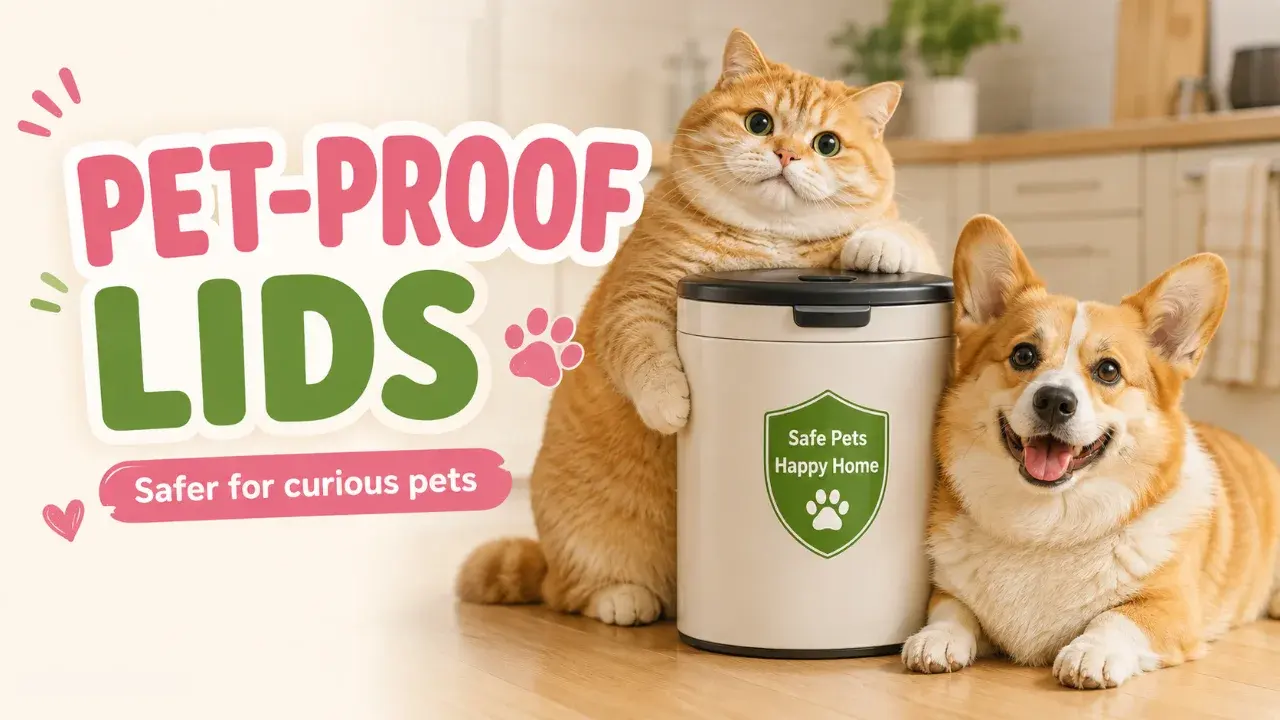
A tipped-over trash can may look like a funny pet moment, but garbage can hide food, packaging, cleaners, and sharp objects. A secure lid is one of the simplest ways to make a home safer for curious dogs and cats.
A pet getting into the trash is not just a messy inconvenience. For dogs and cats, a garbage can can be a buffet, a toy box, and a hidden hazard all at once.
That is why pet-proof trash cans deserve more attention than they usually get. A secure lid may seem like a small household detail, but it can help prevent stomach trouble, choking risks, toxic exposures, and stressful emergency vet visits.
For many pet owners, the problem starts with smell. Dogs especially experience the world through their noses, and a trash can filled with food scraps can be hard to ignore. Cats may be less obvious scavengers, but some are just as curious, especially when garbage contains fish, meat, dairy, or crinkly packaging.
The real issue is that pets do not understand what is safe to eat, chew, or lick. Trash does not sort itself by danger.
A lid helps create a barrier between curiosity and consequences.
Why garbage is so tempting to pets
Most household trash is full of mixed signals. It may contain leftover food, greasy wrappers, tissues, takeout containers, bones, coffee grounds, spoiled items, dental floss, cleaning wipes, medication packaging, or small pieces of plastic.
To a human, that is waste. To a pet, it may smell interesting.
Dogs are often drawn to garbage because food odor lingers on packaging. A wrapper that once held chicken or cheese can smell more exciting than a full bowl of kibble. Some pets will swallow packaging along with the taste they are chasing.
That is where the danger begins. Plastic wrap, foil, bags, skewers, string, and bones can cause problems if chewed or swallowed. Even when an item is not poisonous, it can still irritate the stomach or create a blockage.
Cats face different risks. They may paw through bathroom trash, chew dental floss, lick cosmetic residue, or explore containers with strong scents. Kittens and playful cats can treat the trash can as a source of movement, smell, and texture.
A pet-proof lid does not solve every household risk, but it removes an easy opportunity.
The kitchen is not the only problem
Most people think of the kitchen trash first, and for good reason. Food scraps are one of the biggest attractions.
But bathroom and bedroom trash cans can be just as important.
Bathroom bins may contain dental floss, cotton swabs, sanitary products, razors, hair ties, medication packaging, or products with lotions and fragrances. Even small items can become risky if a pet swallows them.
Home office bins can contain staples, tape, snack wrappers, batteries, or packaging from deliveries. Laundry areas may have dryer sheets or product containers. Garage trash may include chemicals, garden products, or sharp debris.
The safest approach is simple: any trash can a pet can reach should close securely.
This is especially true in homes with puppies, newly adopted pets, anxious pets, or animals that are left alone for several hours. A pet may ignore the trash for months, then suddenly discover it after one interesting smell.
Some foods are especially risky
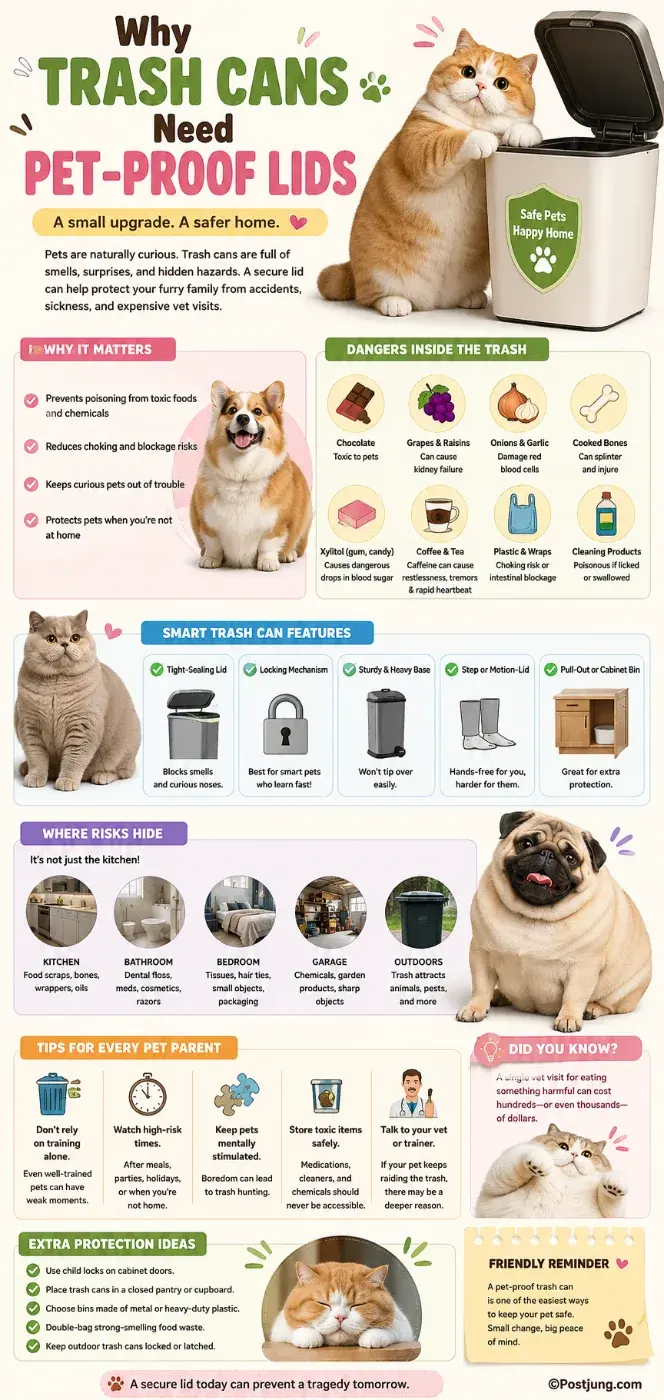
Not all food scraps carry the same level of concern. Some common human foods can be harmful to pets, including items such as chocolate, grapes, raisins, onions, garlic, and products containing xylitol, a sweetener used in some sugar-free foods and gum.
Fatty leftovers can also upset a pet’s stomach, and cooked bones may splinter or cause injury. Spoiled food adds another layer of risk because pets may eat it quickly before owners notice.
Holiday meals can be a perfect example. A trash bag after a family dinner may contain bones, foil, string, desserts, alcohol-soaked napkins, food scraps, and broken decorations. The smell is strong, the house is busy, and pets may have more chances to sneak in.
That is why animal welfare organizations often remind owners to secure garbage during holidays and gatherings. A full trash can is not harmless just because dinner is over.
What makes a trash can pet-proof?
A pet-proof trash can does not need to be complicated. The goal is to make access difficult enough that the pet gives up.
A good option usually has a tight lid, a sturdy base, and a closing mechanism that cannot be easily nosed open. Step-pedal cans can work for some homes, but smart dogs may learn how to open them. Swing-top lids are often easier for pets to push through.
For very determined pets, the best solution may be a locking lid, a pull-out cabinet bin, or a trash can kept behind a closed pantry or cabinet door.
Weight also matters. A lightweight bin may be easy to tip over, even if the lid closes. Tall, narrow bins can fall when a dog paws at them. Small bathroom bins may need lids too, or they may need to be placed inside a cabinet.
The same rule applies to outdoor garbage. If pets have access to a patio, yard, balcony, or garage, outside bins should close firmly. Outdoor trash can attract not only pets but also neighborhood animals, insects, and pests.
Training helps, but barriers still matter
Teaching a pet to “leave it” is useful, and consistent training can reduce trash raiding. But training should not be the only safety system.
Pets are not robots. They can be bored, hungry, stressed, curious, or tempted by a smell that is stronger than usual. A dog that behaves well when the owner is standing nearby may act differently when alone in the kitchen.
A secure lid works because it does not rely on perfect behavior.
It is also kinder than constant scolding. When the trash is inaccessible, the pet has fewer chances to make a bad choice, and the owner has fewer reasons to get frustrated.
For pets that repeatedly raid the trash, it may help to ask a veterinarian or qualified trainer about possible causes. Some animals are driven by boredom, anxiety, medical appetite changes, or lack of enrichment. A better trash can can prevent access, but it may not address the whole behavior.
Small habit, big peace of mind
Pet-proofing a home is often about the ordinary things: closed cabinets, safe storage, covered bins, and keeping tempting items out of reach.
Trash cans are easy to overlook because they feel like background objects. Yet they sit in the middle of daily life, collecting smells and hazards from food, cleaning, grooming, and packaging.
A pet-proof lid is not about being overly cautious. It is about recognizing how differently animals experience a home.
For a dog or cat, the trash can is not “garbage.” It is a mystery container full of smells, textures, and possible rewards. For the owner, it should be one more place where a simple barrier can prevent a very real problem.
The best trash can is the one your pet cannot open.
American Veterinary Medical Association, U.S. Food and Drug Administration, ASPCA, Humane World for Animals
REFERENCES:
https://www.avma.org/resources-tools/pet-owners/petcare/household-hazards
https://www.fda.gov/animal-veterinary/animal-health-literacy/potentially-dangerous-items-your-pet
https://www.aspca.org/pet-care/general-pet-care/holiday-safety-tips
https://www.humaneworld.org/en/resources/household-items-dangerous-pets

เขียนโดย Postjung Insights
 ถ้าฝาท่อกลมมีข้อดี แล้วทำไมเรายังเจอฝาสี่เหลี่ยมอยู่บนถนน?
 โรงเรียนที่มีนักเรียนมากที่สุดในไทย
 “วาริส” ร่ำไห้ประกาศเลิกเกมเมอร์ดัง หลังได้รับข้อมูลจากคนอื่น
 อำเภอที่มีชื่ออำเภอสั้นที่สุด 3 อำเภอเท่านั้นในประเทศไทย
 ตาราง “เด่นเหนือเด่นใต้” งวด 1 ต.ค. 69 เปิดข้อมูลตามโพย เลขไหนอยู่ตรงไหน
 5 คณะที่เรียนจบมาแล้ว มีอาชีพรองรับมากกว่าที่คิด
 5 ต้นไม้มงคลยอดฮิต เสริมโชคและแต่งบ้านได้
 สูตรคำนวณหาแนวทาง งวด 1/10/69
 Phnom Penh Post ยกประวัติศาสตร์ขอมตอบโต้ข่าวภาพหญิง ร.5 แต่ปมสำคัญยังอยู่ที่หลักฐานของภาพ
 รู้หรือไม่? เปิดรายได้พนักงานส่งพัสดุของแต่ละแอป วันหนึ่งได้เท่าไร
 แทสเมเนีย: ถอดรหัสเกาะปริศนาที่แผนที่โลกมักลืมเขียน
 มัดรวมจับเลขชน สัตว์นำโชค 1 ตุลาคม 2569
 เปิด 5 สินค้าส่งออกของลาวที่คนไทยอาจคาดไม่ถึง หนึ่งในนั้นทำเงินเกือบ 1 พันล้านดอลลาร์
 AI กำลังเปลี่ยนตลาดงาน เปิด 5 สาขามหาวิทยาลัยที่ไทยต้องการบุคลากรในอีก 5 ปี5 ต้นไม้มงคลยอดฮิต เสริมโชคและแต่งบ้านได้“วาริส” ร่ำไห้ประกาศเลิกเกมเมอร์ดัง หลังได้รับข้อมูลจากคนอื่นถ้าฝาท่อกลมมีข้อดี แล้วทำไมเรายังเจอฝาสี่เหลี่ยมอยู่บนถนน?สูตรคำนวณหาแนวทาง งวด 1/10/69
 English Edition