Why Dogs May Act Different After Boarding

A boarding stay can change a dog’s sleep, appetite, confidence, and clinginess for a short time. Most dogs settle back in, but some signs deserve closer attention.
A dog coming home from boarding may not act like the same dog right away. Some sleep more than usual. Some follow their owner from room to room. Others seem restless, extra thirsty, less hungry, or suddenly unsure of familiar routines.
That does not always mean something went wrong.
Boarding can be safe, caring, and well managed, but it still puts a dog into a very different world: new people, new dogs, new smells, different sounds, unfamiliar sleeping spaces, and a schedule that does not match home. For many dogs, the behavior change after boarding is less about “bad behavior” and more about a short adjustment period.
The important question is not whether your dog acts different for a day or two. It is whether the change is mild and improving — or whether it looks like stress, illness, injury, or fear that needs attention.
Boarding changes the whole rhythm of a dog’s day
Dogs are creatures of pattern. They learn when breakfast happens, where they sleep, which noises are normal, how their people move around the house, and what to expect before bedtime.
Boarding interrupts that pattern all at once.
Even in a good facility, a dog may sleep in a different space, eat at different times, hear barking from nearby dogs, and interact with staff instead of family. Veterinary guidance notes that some dogs unaccustomed to boarding may eat less or drink less during their stay, especially during early visits, and that short familiarization visits can help reduce anxiety over time.
That explains why a dog may come home tired, quiet, clingy, or unusually excited. The dog has not only been away from home. It has been managing a new environment.
For social dogs, boarding may feel like a busy camp. For sensitive dogs, it may feel overwhelming. For older dogs, anxious dogs, rescue dogs, or dogs that have never spent nights away from home, the transition may be harder.
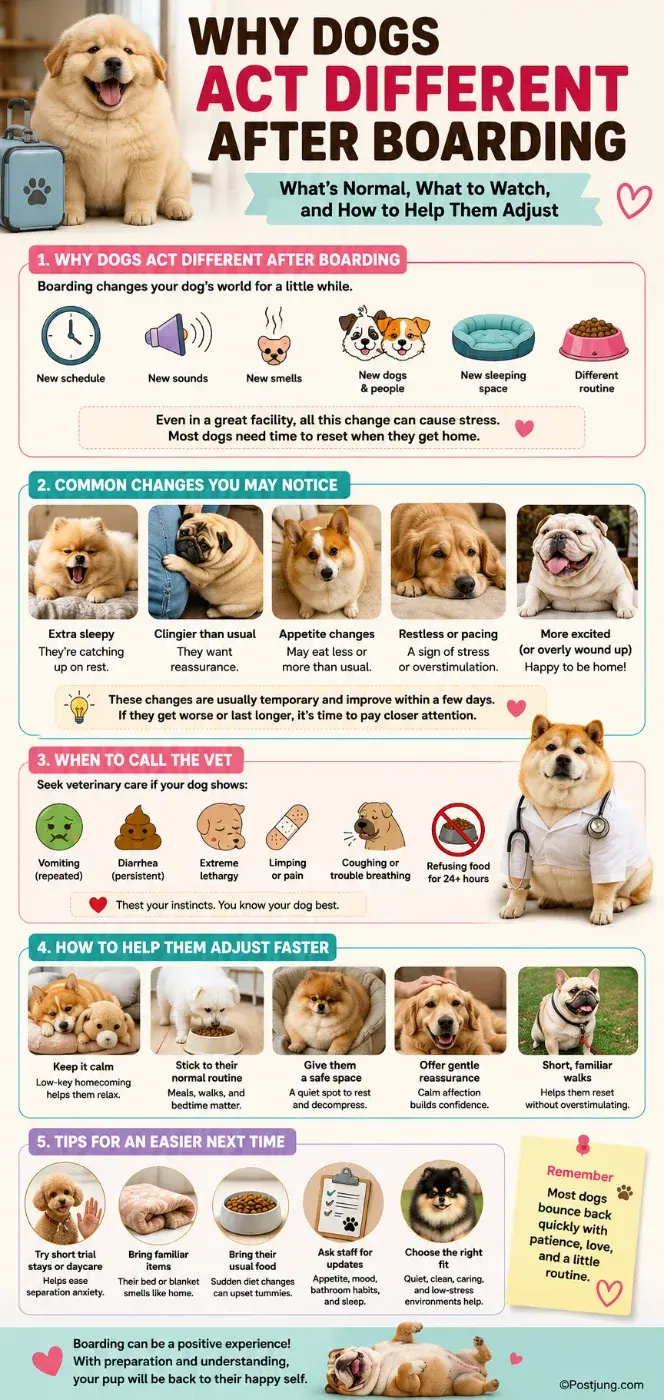
Common changes owners may notice
After boarding, many owners notice small behavior shifts that fade as the dog settles back into normal life.
A dog may sleep deeply after coming home, almost as if catching up after a busy trip. Some dogs are extra affectionate and stay close to their owner. Others seem distant for a short time, choosing a quiet corner instead of immediately returning to their normal personality.
Appetite can also change. A dog that ate less during boarding may be hungry later, while another may need time before eating normally again. Stress and environmental changes can also contribute to digestive upset in some dogs, including short-term diarrhea, though diarrhea can have many causes and should not automatically be blamed on stress alone.
Stress signs in dogs can include pacing, whining, barking, yawning, drooling, licking, and changes in body posture or behavior. These signals do not all mean panic, but they do tell owners the dog may need a calmer re-entry into home life.
The key is the trend. A dog should gradually look more like itself, not worse each day.
Why some dogs get clingy after boarding
One of the most common post-boarding changes is clinginess.
A dog may follow its owner everywhere, sit closer than usual, cry when left alone, or become more alert when someone moves toward the door. This can look dramatic, but it often reflects simple reassurance-seeking: the dog is back with its person and wants to confirm the normal bond is still there.
Dogs that already struggle with separation stress may show stronger reactions. Common separation-related signs can include pacing, panting, vocalizing, difficulty settling, hovering near doors, and house-soiling.
Owners can help by being warm but calm. A huge emotional greeting may feel natural, but some dogs recover better when the return home is peaceful: a short walk, water, normal food, a comfortable bed, and a quiet evening.
That calm routine tells the dog: home is normal again.
Tired does not always mean unhappy
A very sleepy dog after boarding can worry owners, but tiredness is often expected.
Boarding can be mentally busy. Dogs may rest less deeply when they are surrounded by unfamiliar sounds. They may spend more energy watching other dogs, responding to staff, adjusting to new smells, or joining supervised play.
For a dog that normally spends afternoons napping at home, several days in a more stimulating setting can be a lot.
That said, owners should not ignore extreme lethargy. A dog that is weak, refuses food for more than a short period, vomits repeatedly, has ongoing diarrhea, coughs, limps, seems painful, or appears unusually withdrawn should be checked by a veterinarian.
The safer approach is simple: treat mild tiredness as normal, but take illness signs seriously.
The kennel environment matters
Not all boarding experiences are the same.
A good facility is not only clean and secure. It also pays attention to stress, noise, staff training, safe handling, and how each dog is coping. The American Veterinary Medical Association’s companion animal care guidance notes that excessive noise can contribute to stress and should be minimized around animal housing.
That matters because dogs experience the world intensely through sound and smell. A kennel area that feels manageable to a human can still be loud, active, and confusing to a dog.
Before boarding, owners can ask practical questions: Did my dog eat normally? Did they sleep? Were they social or nervous? Did staff notice coughing, diarrhea, limping, or changes in mood?
Those answers can help separate normal adjustment from a possible health or care issue.
How to make the next boarding stay easier
The best time to reduce post-boarding stress is before the next stay.
For dogs new to boarding, short trial visits can help. A half day, daycare session, or one-night stay may teach the dog that being dropped off does not mean being abandoned. Familiar bedding, a blanket with home scent, usual food, and clear medication instructions can also reduce disruption.
VCA guidance recommends bringing a dog’s own bed or blanket when possible and asking staff about behavior and appetite after pickup.
Owners should also avoid changing food suddenly right before boarding. A new diet plus a new environment can make digestive problems harder to interpret.
For anxious dogs, it may help to choose a quieter facility, a veterinary boarding option, an in-home sitter, or a smaller pet-care setting. The best choice depends on the dog’s temperament, health, age, and past experiences.
When owners should call the vet
Most post-boarding changes should improve as the dog rests and returns to routine.
A veterinarian should be contacted if the dog has persistent diarrhea, repeated vomiting, coughing, breathing trouble, unusual discharge from the eyes or nose, signs of pain, a limp, wounds, refusal to eat, extreme lethargy, or behavior that seems sharply different and does not improve.
Owners should also call if the dog has a medical condition, is elderly, is very young, or came home after boarding with symptoms that appeared suddenly.
The goal is not to panic. It is to notice what is temporary and what may need care.
The best homecoming is boring in a good way
After boarding, many dogs do not need a big event. They need quiet, water, sleep, familiar smells, and a return to the schedule they understand.
A calm walk can help. So can a normal meal, a comfortable bed, and a low-key evening. Avoid packing the first day home with visitors, grooming appointments, long outings, or intense play if the dog seems tired.
The most reassuring message is consistency.
For most dogs, acting different after boarding is a short-lived response to change. With patience, routine, and careful observation, many dogs return to their usual selves quickly — and the next boarding stay can become easier than the last.
VCA Animal Hospitals, American Veterinary Medical Association
REFERENCES:
https://vcahospitals.com/know-your-pet/boarding-your-dog
https://vcahospitals.com/know-your-pet/diarrhea-in-dogs
https://vcahospitals.com/know-your-pet/signs-your-dog-is-stressed-and-how-to-relieve-it
https://www.avma.org/resources-tools/avma-policies/companion-animal-care-guidelines

เขียนโดย Postjung Insights
 รู้หรือไม่? เปิดรายได้พนักงานส่งพัสดุของแต่ละแอป วันหนึ่งได้เท่าไร
 เลขเด็ดปฏิทิน "หลวงปู่โต๊ะ" งวดวันที่ 1 ตุลาคม 69..ส่องเลย เลขไหนให้โชค!
 แปลปกสลาก งวด 1 ต.ค. 69 ส่องตัวเลขจากภาพปกสลากกินแบ่งรัฐบาล
 5 คณะที่เรียนจบมาแล้ว มีอาชีพรองรับมากกว่าที่คิด
 โรงเรียนที่มีนักเรียนมากที่สุดในไทย
 อำเภอที่มีชื่ออำเภอสั้นที่สุด 3 อำเภอเท่านั้นในประเทศไทย
 เปิดรายชื่อโรงเรียนในไทยที่ “ว่ายน้ำ” อยู่ในหลักสูตร เรียนจริงตั้งแต่อนุบาลถึงมัธยม
 ส่องเลข 3 สำนักพิมพ์ งวด 1 ต.ค. 69 ตัวไหนมีข้อมูลตรงกัน
 จุฬาฯ มหาวิทยาลัยแห่งแรกของไทย มีจุดเริ่มต้นในสมัยรัชกาลที่ 5
 ดอลลาร์จะล่มสลายจริงไหม?
 Google ยอมรับแล้ว! Gemini AI เข้าถึงระบบบริษัทจริง 3 แห่ง ระหว่างการทดสอบความปลอดภัย
 ตาราง “เด่นเหนือเด่นใต้” งวด 1 ต.ค. 69 เปิดข้อมูลตามโพย เลขไหนอยู่ตรงไหน5 คณะที่เรียนจบมาแล้ว มีอาชีพรองรับมากกว่าที่คิดเปิดรายชื่อโรงเรียนในไทยที่ “ว่ายน้ำ” อยู่ในหลักสูตร เรียนจริงตั้งแต่อนุบาลถึงมัธยมGoogle ยอมรับแล้ว! Gemini AI เข้าถึงระบบบริษัทจริง 3 แห่ง ระหว่างการทดสอบความปลอดภัยเลขเด็ดปฏิทิน "หลวงปู่โต๊ะ" งวดวันที่ 1 ตุลาคม 69..ส่องเลย เลขไหนให้โชค!
 ทำไมของพลาสติกเก่าบางชิ้นถึง “เหนียว” ขึ้นมาเอง ทั้งที่ไม่ได้เปื้อนอะไร?
 อุทยานเขาใหญ่เรียกตัว “ตีนผี” หลังขับจี้ช้างป่าพ่อลูก ลั่นระยะ 50 เมตรต้องจำให้ขึ้นใจ
 English Edition