Why Some Dogs Pull on the Leash — and What It Really Means
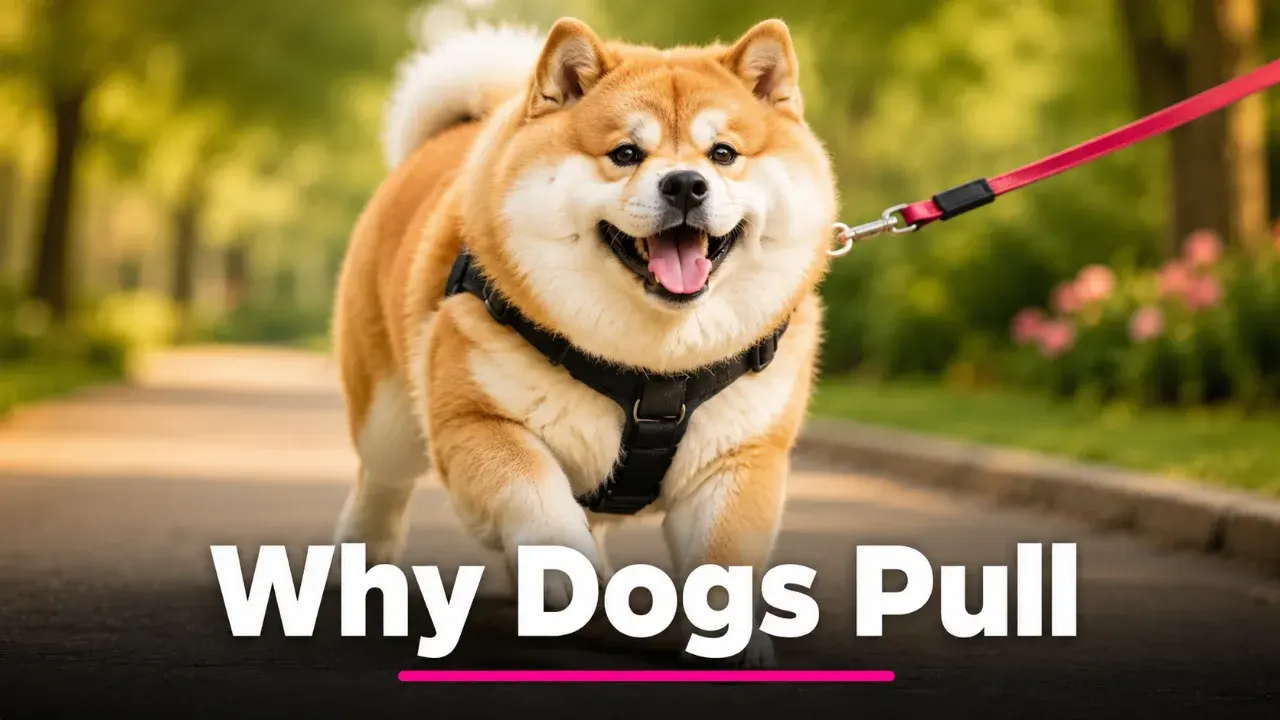
Leash pulling is not always a sign of bad behavior. For many dogs, it is a learned habit, a burst of excitement, or simply the fastest way to reach the world they want to explore.
A dog pulling on the leash can turn a simple walk into a daily arm workout. But most dogs are not trying to be difficult, dominant, or disrespectful.
They are usually doing something much simpler: moving toward what interests them.
For dogs, walks are not just exercise. They are smell tours, social updates, bathroom breaks, stress relief, and mental stimulation all packed into one outing. A leash, from a dog’s point of view, is a very human rule placed on a very dog-like activity.
That is why leash pulling is so common — and why fixing it usually starts with understanding what the dog is getting out of it.
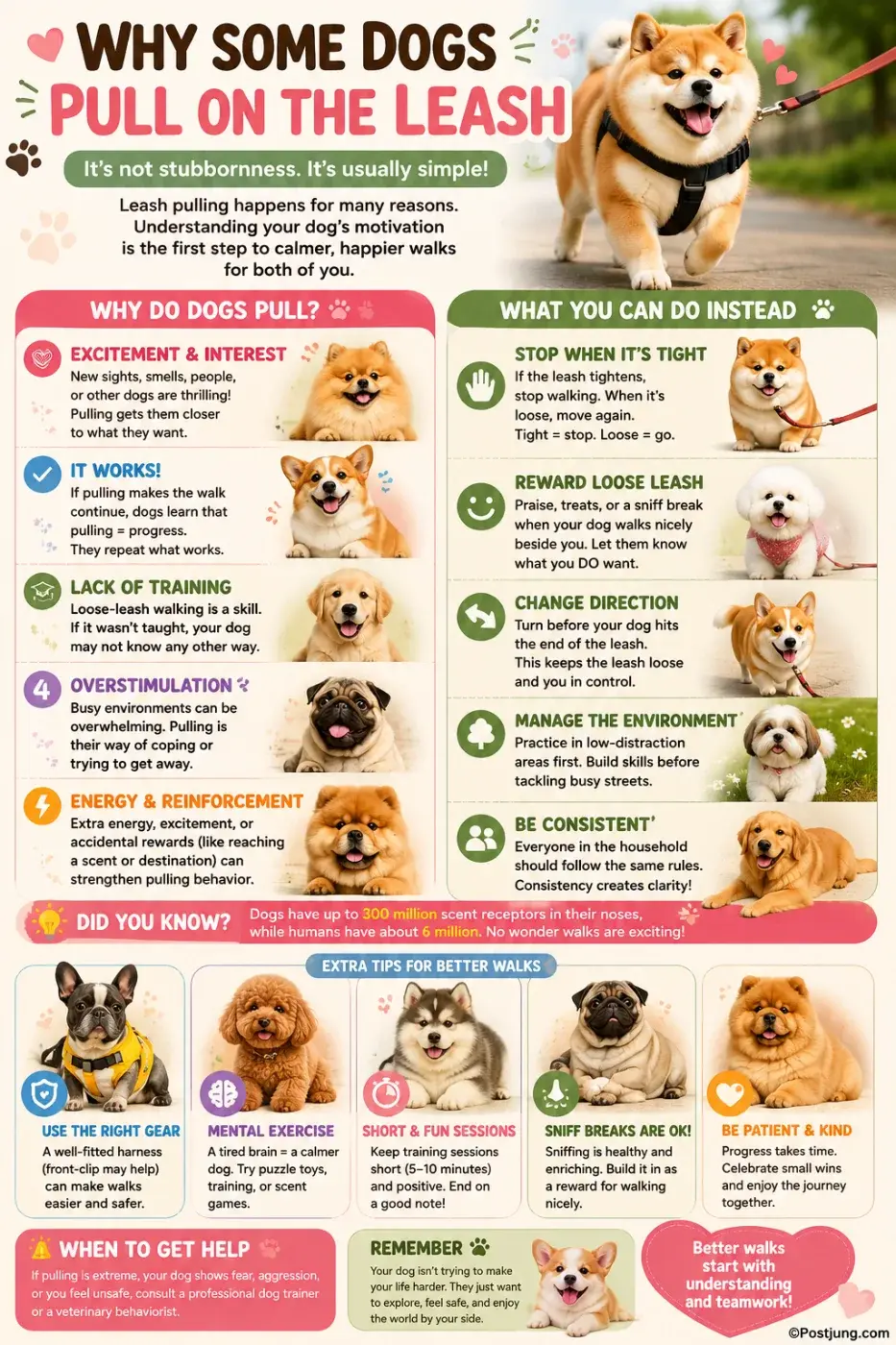
Pulling often works, so dogs repeat it
One of the biggest reasons dogs pull is also the simplest: pulling gets them where they want to go.
If a dog pulls toward a tree, another dog, a food smell, or the park gate, and the owner keeps walking forward, the dog learns that tension on the leash can be useful. It may not feel pleasant, but it produces a result.
That result matters more than the owner’s frustration.
Dogs repeat behaviors that pay off. If pulling leads to the exciting smell, the open grass, or the other side of the sidewalk, the behavior becomes stronger over time.
This is why many trainers focus less on “correcting” pulling and more on changing what the dog learns from the moment the leash tightens. If forward motion stops when the leash goes tight, and walking continues when the leash loosens, the dog begins to learn a different pattern.
Dogs experience walks faster than humans do
Humans often think of a walk as a calm line from point A to point B. Dogs experience it differently.
A sidewalk is full of information. A patch of grass may carry the scent of other dogs, wildlife, rain, food, people, and passing vehicles. For a dog, sniffing is not a delay. It is part of the walk.
That mismatch creates tension.
The owner may be thinking, “Please walk nicely.” The dog may be thinking, “That smell is urgent.”
This does not mean the dog should drag the person down the street. It does mean that the dog’s motivation is often curiosity, not defiance.
Some dogs pull because they are excited. Some pull because they have too much pent-up energy. Some pull because the environment is overwhelming. Others pull because they have never been taught what loose-leash walking actually feels like.
Loose-leash walking is not natural for every dog. It is a trained skill.
Pressure can accidentally create more pressure
Many dogs naturally lean into leash tension. When they feel pressure on a collar or harness, they may push forward instead of slowing down.
That can create a frustrating loop.
The dog pulls. The leash tightens. The owner pulls back. The dog braces and pulls harder.
This is one reason leash pulling can feel worse with strong, energetic dogs. The walk becomes a contest of pressure rather than communication.
Equipment can help, but it is not magic. A front-clip harness or well-fitted walking harness may make pulling easier to manage for some dogs, while a poor fit can cause discomfort or rubbing. A collar may be fine for some dogs, but repeated hard pulling at the neck can be concerning, especially for small dogs or dogs with breathing issues.
The best setup is usually one that keeps the dog safe while the owner teaches the walking behavior they want.
Not all pulling means the same thing
A happy dog pulling toward a familiar park is different from a frightened dog pulling away from traffic.
That distinction matters.
Some dogs pull forward because they are overexcited. Others pull sideways because they are tracking a scent. Some lunge because they want to greet another dog. Some pull backward or zigzag because they are anxious, startled, or unsure.
The body language tells the story.
A relaxed, bouncy dog with a loose mouth and wagging body may simply be excited. A stiff dog staring hard at another dog may be overstimulated or reactive. A dog with tucked posture, low body position, or frantic movement may be scared.
For owners, the goal is not just stopping the pull. It is understanding what is driving it.
A dog that pulls from fear may need distance, calm handling, and possibly professional help. A dog that pulls from excitement may need impulse-control games and reward-based walking practice. A young dog may simply need repetition in easier places before being expected to behave in busy environments.
The common mistake: waiting until the walk is chaotic
Many owners try to train leash manners only during the hardest part of the walk: outside, around smells, traffic, people, dogs, and noise.
That is like asking a child to learn math in the middle of a parade.
Leash skills are easier to teach in low-distraction places first. A hallway, yard, driveway, quiet street, or empty parking area can help the dog understand the basic rule: staying near the person makes the walk continue and good things happen.
Short sessions often work better than long battles.
Reward the dog when the leash is loose. Change direction before the dog hits the end of the leash. Stop calmly when the leash tightens. Use treats, praise, or access to sniffing as rewards.
Sniffing itself can be a powerful reward. A dog that walks politely for a few steps can be released to sniff a tree. That teaches the dog that cooperation does not mean losing access to the world.
What owners should avoid
Harsh leash jerks, shouting, or constant pulling back can make walks more stressful. They may also teach some dogs that other dogs, people, or outdoor triggers predict tension and discomfort.
That can make reactivity worse.
A better approach is usually calmer and more consistent: loose leash means go, tight leash means pause.
This sounds simple, but it requires patience. If one family member allows pulling and another tries to stop it, the dog gets mixed messages. If pulling works sometimes, many dogs will keep testing it.
Consistency matters more than force.
A better walk is a conversation
The best leash walks are not about making a dog march like a robot. They are about creating a shared rhythm.
The dog gets to sniff, move, and explore. The human gets safety, control, and a more enjoyable walk.
That balance is the heart of loose-leash walking.
A dog that pulls is not automatically spoiled or stubborn. More often, the dog has learned that pulling works, finds the outside world deeply exciting, or has not yet practiced a different way to move with a person.
Once owners see that, the walk changes.
The leash stops being a rope in a tug-of-war and becomes a quiet line of communication.
American Kennel Club, VCA Animal Hospitals, RSPCA, UC Davis School of Veterinary Medicine
REFERENCES:
https://www.akc.org/expert-advice/training/expert-tips-dog-leash-issues/
https://vcahospitals.com/know-your-pet/controlling-pulling-on-walks
https://www.rspca.org.uk/adviceandwelfare/pets/dogs/training/walknicely
https://healthtopics.vetmed.ucdavis.edu/health-topics/canine/loose-leash-walking

เขียนโดย Postjung Insights
 อินฟลูเอนเซอร์สาวผู้สร้างคอนเทนต์สำหรับผู้ใหญ่และมีรายได้ต่อปีกว่า 33 ล้านบาท ตัดสินใจเปลี่ยนอาชีพมาเป็นแพทย์แทน
 อำเภอที่มีชื่ออำเภอสั้นที่สุด 3 อำเภอเท่านั้นในประเทศไทย
 ถ้าไม่กลัวเหนื่อย 7 อาชีพที่ตลาดยังต้องการ และค่าทักษะไปถึง 800 บาท/วัน
 เปิด 5 โรงเรียนหญิงล้วนเก่าแก่ของไทย ที่มีประวัติยาวนานกว่าศตวรรษ
 รู้หรือไม่? เปิดรายได้พนักงานส่งพัสดุของแต่ละแอป วันหนึ่งได้เท่าไร
 โรงเรียนที่มีนักเรียนมากที่สุดในไทย
 หัวลูกศรหินย้อนเวลา 80,000 ปี ในเอเชียกลาง… หลักฐานใหม่ชี้ โฮโม เซเปียนส์ อาจเคยบุกยุโรปเร็วขึ้นนับหมื่นปี!
 ตึกยาวสวนกุหลาบฯ อายุเกิน 100 ปี ทำไมยังใช้เป็นห้องเรียนมาถึงวันนี้
 ส่องเลข 3 สำนักพิมพ์ งวด 1 ต.ค. 69 ตัวไหนมีข้อมูลตรงกัน
 ฝูงลิงญี่ปุ่นนับสิบรุมล้อมและโจมตีชายคนหนึ่งในคานากาวะ
 ตาราง “เด่นเหนือเด่นใต้” งวด 1 ต.ค. 69 เปิดข้อมูลตามโพย เลขไหนอยู่ตรงไหน
 ยูเครนขอจัดการประชุมสุดยอดกับญี่ปุ่นเปิด 5 โรงเรียนหญิงล้วนเก่าแก่ของไทย ที่มีประวัติยาวนานกว่าศตวรรษหัวลูกศรหินย้อนเวลา 80,000 ปี ในเอเชียกลาง… หลักฐานใหม่ชี้ โฮโม เซเปียนส์ อาจเคยบุกยุโรปเร็วขึ้นนับหมื่นปี!ถ้าไม่กลัวเหนื่อย 7 อาชีพที่ตลาดยังต้องการ และค่าทักษะไปถึง 800 บาท/วัน
 ทำไมแผนที่ส่วนใหญ่เอาทิศเหนือไว้ด้านบน ทั้งที่โลกไม่มี “ด้านบน” จริง ๆ?
 English Edition