Why Switching Pet Food Too Fast Can Upset Your Pet’s Stomach

A new food may look healthier, tastier, or better suited to your pet — but changing too quickly can trigger vomiting, diarrhea, or food refusal. The safest switch is usually a gradual one.
A new pet food can seem like a simple upgrade. Maybe it has better ingredients, a different protein, fewer fillers, or a formula made for your pet’s age.
But for dogs and cats, food is not just flavor. It is also routine, digestion, gut bacteria, texture, smell, and timing. Changing everything at once can turn a well-meant decision into a messy problem.
Veterinary nutrition guidance generally favors a gradual transition because it can reduce the risk of stomach upset, especially in pets with sensitive digestion. Purina Institute recommends transitioning cats gradually and notes that sensitive pets may benefit from a longer switch over about 10 days.
A pet’s gut likes predictability
Dogs and cats can eat the same food for months or years. During that time, their digestive system adapts to the food’s ingredients, fat level, fiber level, protein source, texture, and calorie density.
When owners suddenly replace the old food with something new, the gut has to adjust quickly. That can lead to loose stool, vomiting, gas, appetite changes, or food refusal.
This does not always mean the new food is “bad.” Sometimes the problem is the speed of the change.
A pet that does well on chicken-based kibble, for example, may still need time to adjust to a fish-based recipe, a higher-fat formula, a fresh-food diet, or a new canned food. Even a healthier food can cause trouble if the transition is abrupt.
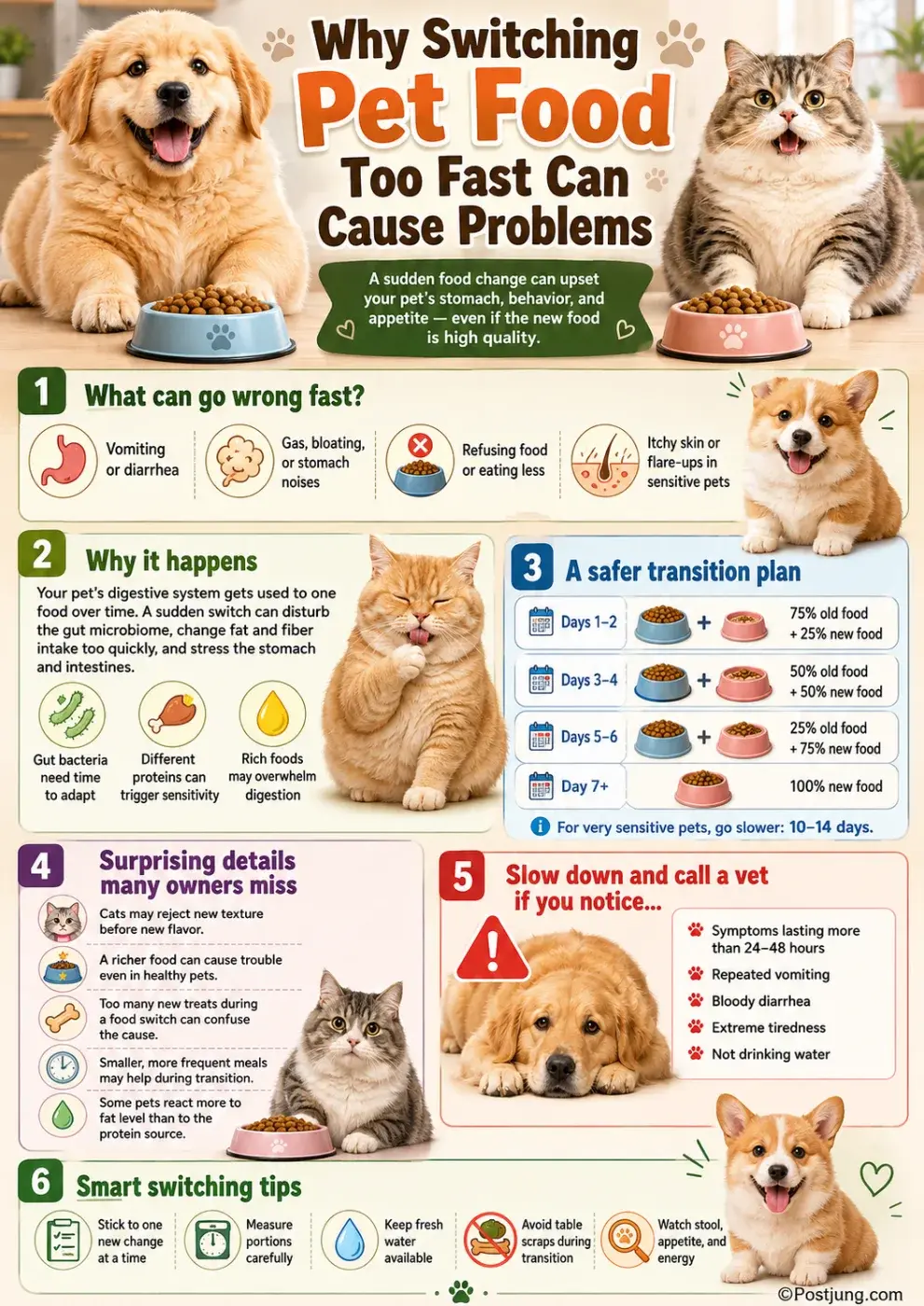
Cats can be especially sensitive to forced changes
Cats are not just picky for no reason. Many cats are cautious eaters, and sudden food changes can create stress around mealtime.
Purina Institute suggests allowing cats to transition gradually and even recommends offering old and new food in separate bowls during the switch, so the cat has some choice instead of feeling forced into the new diet. Its sample approach replaces about one-quarter of the current food every second day, completing the transition in about seven days.
That small detail matters. For cats, choice can lower mealtime stress. A cat that feels pressured may walk away from the bowl, and skipping meals can become its own health concern.
If a cat refuses the new food, the answer is not always to keep pushing. It may be better to slow down, warm the food slightly, offer it separately, or ask a veterinarian whether the formula is appropriate.
Dogs may show the problem faster
Dogs often make diet mistakes look dramatic. A sudden food change can lead to soft stool, urgent bathroom trips, vomiting, or a noisy stomach.
The Merck Veterinary Manual notes that digestive signs such as vomiting and diarrhea can come from many causes, including overeating, indigestible food, chemicals, obstruction, injury, or other diseases in the body. It also emphasizes that fluids and electrolytes may be needed when an animal is at risk of dehydration from excessive vomiting or diarrhea.
That is why owners should avoid assuming every stomach problem is “just the new food.” A diet change may be the trigger, but persistent or severe symptoms deserve medical attention.
A slower switch is usually easier
A common transition plan is simple:
Start with mostly the old food and a small amount of the new food. Over several days, gradually increase the new food while decreasing the old food.
For many pets, that may look like:
25% new food and 75% old food
50% new food and 50% old food
75% new food and 25% old food
100% new food
Some pets can complete this in about a week. Others need 10 days or longer, especially if they have a history of sensitive digestion, food allergies, pancreatitis, inflammatory bowel disease, or frequent stomach upset.
The point is not to follow a perfect chart. The point is to let the pet’s body give feedback.
If stool softens, appetite drops, or vomiting starts, slow the transition. Go back to the last ratio your pet tolerated and hold there for a few more days.
Treats can ruin the experiment
One common mistake is changing too many things at once.
An owner may switch kibble, add canned food, introduce a probiotic, try a new topper, and offer new treats in the same week. If the pet develops diarrhea, no one knows which change caused it.
During a food transition, it helps to keep the rest of the diet boring. Avoid new treats, table scraps, rich toppers, or extra snacks unless your veterinarian recommended them.
VCA Animal Hospitals advises avoiding treats and table scraps while pets recover from gastrointestinal upset because they may make symptoms worse. VCA also notes that feeding management can matter as much as the food itself, including offering smaller amounts more often when digestion is unsettled.
That is a useful reminder: a food change is not only about the bag or can. It is also about portion size, timing, hydration, and consistency.
When the new food really may not fit
Sometimes the transition is slow and careful, but the pet still reacts badly.
That can happen if the food is too rich, too high in fat, too different in fiber, poorly tolerated, or unsuitable for a pet’s medical condition. Pets with chronic digestive disease, kidney disease, food allergies, diabetes, pancreatitis, or weight concerns may need a veterinarian’s guidance before changing diets.
VCA notes that veterinary gastrointestinal diets differ in nutrient content and purpose, and that the best option depends on the suspected cause of the pet’s stomach upset. Some diets are highly digestible, some are lower in fat, some are higher in fiber, and some use hydrolyzed or novel proteins when allergies or chronic inflammation are suspected.
For everyday pet owners, the takeaway is clear: new food should match the pet, not just the marketing label.
Red flags owners should not ignore
Mild soft stool during a transition may improve when the switch is slowed. But some symptoms should not be brushed off.
Call a veterinarian if your pet has repeated vomiting, bloody diarrhea, black stool, severe lethargy, signs of dehydration, a swollen or painful belly, refusal to eat, or symptoms lasting more than a day or two.
Extra caution is needed for puppies, kittens, senior pets, very small pets, and animals with known medical conditions. They can become dehydrated or unstable faster than healthy adult pets.
If your veterinarian prescribed a new food for a medical reason, ask how quickly the switch should happen. In some cases, the medical need may change the usual transition plan.
The best food switch is boring
A successful pet food change should feel uneventful.
No dramatic appetite battle. No sudden diarrhea. No guessing game with five new products at once.
The best approach is slow, steady, and observant: keep the old food available during the early phase, increase the new food gradually, limit extra treats, watch stool and appetite, and pause if your pet struggles.
For owners, the lesson is reassuring. Switching pet food does not have to be risky. It just should not be rushed.
Purina Institute, VCA Animal Hospitals, Merck Veterinary Manual
REFERENCES:
https://www.purinainstitute.com/centresquare/understanding-pet-food/switching-pet-foods-cats
https://vcahospitals.com/know-your-pet/bland-diet-instructions-for-dogs-and-cats
https://www.merckvetmanual.com/dog-owners/digestive-disorders-of-dogs/introduction-to-digestive-disorders-of-dogs

เขียนโดย Postjung Insights
 ดูหนัง–ซีรีส์ฟรีอาจไม่ฟรีอย่างที่คิด! เปิดโทษละเมิดลิขสิทธิ์ เตือนคนปล่อยคอนเทนต์เถื่อน เสี่ยงทั้งคุกทั้งปรับ
 แมคาเดเมีย (Macadamia): ราชินีแห่งถั่ว กับขุมทรัพย์โภชนาการจากออสเตรเลีย
 อำเภอที่มีชื่ออำเภอสั้นที่สุด 3 อำเภอเท่านั้นในประเทศไทย
 รมว.วัฒนธรรมเอาจริง! จ่อส่งหนังสือทักท้วง Miss Universe Cambodia ปมใช้ภาพหญิงกำแพงเพชร หากไม่แก้ เตรียมใช้กฎหมาย
 MRT เตาปูนกลับมาเปิดปกติแล้ว รมช.คมนาคมเผยปมไฟไหม้ พบประกายไฟจากชุดสายไฟ 750 โวลต์
 งูมัลกา (Mulga Snake): นักล่าแห่งผืนดินแห้งแล้ง ของทวีปออสเตรเลีย กับฉายา King Brown กัดคนได้ถึงตาย
 รู้หรือไม่? เปิดรายได้พนักงานส่งพัสดุของแต่ละแอป วันหนึ่งได้เท่าไร
 โรงเรียนที่มีนักเรียนมากที่สุดในไทย
 5 คณะที่เรียนจบมาแล้ว มีอาชีพรองรับมากกว่าที่คิด
 แมงป่อง: แมลงนักล่าสายพันธุ์โบราณของโลก ที่ยังคงอยู่มาจนถึงปัจจุบัน
 เปิด 5 โรงเรียนหญิงล้วนเก่าแก่ของไทย ที่มีประวัติยาวนานกว่าศตวรรษ
 สถิติย้อนหลัง 10 ปี ออกเลขไหนบ้างมาดูกัน
 English Edition