How to Prepare Your Pet Before You Leave for Vacation
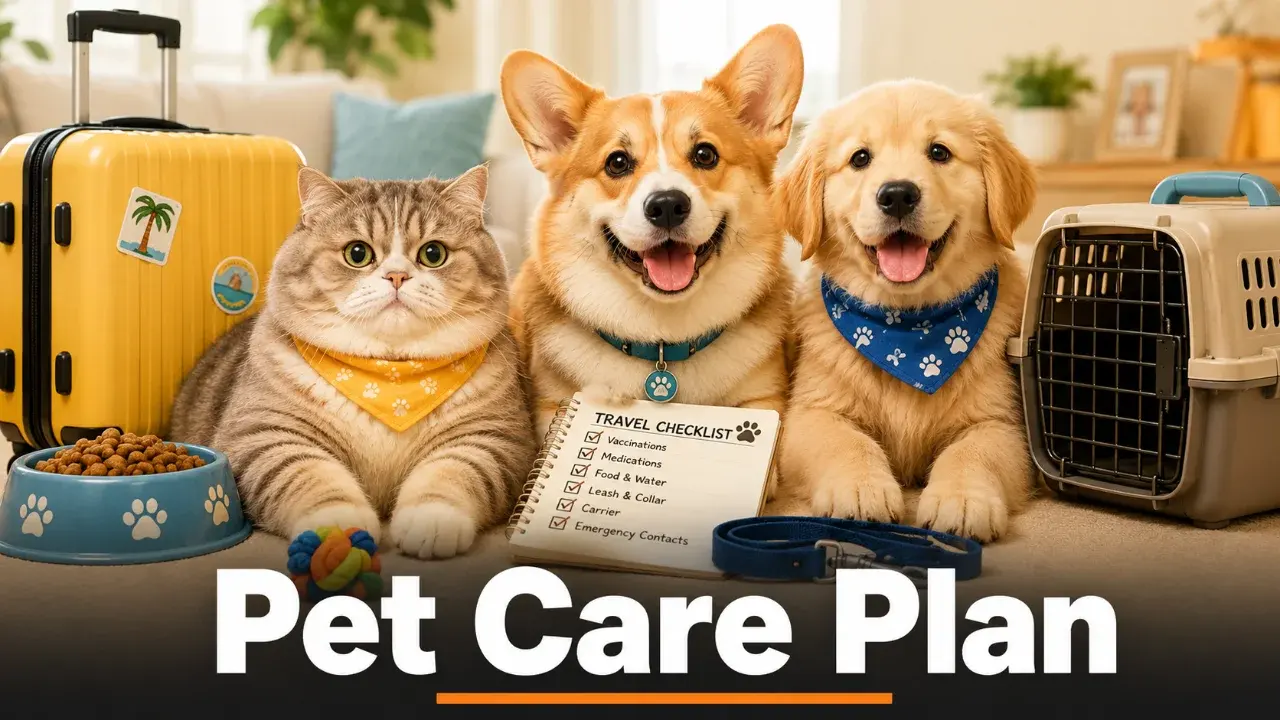
A good vacation plan should include your pet long before the suitcase comes out. From medical records to sitters, boarding, travel documents, and routines, small preparations can prevent stressful surprises.
Vacations are easier when your pet’s plan is settled before your own bag is packed. Whether your dog is coming with you, your cat is staying home, or your pet is heading to a boarding facility, preparation can make the difference between a calm trip and a preventable emergency.
For many families, the hardest part is not choosing a hotel or booking a flight. It is deciding what kind of care is safest, least stressful, and most realistic for the animal.
That decision should come first.
Start With the Big Question: Should Your Pet Travel?
Some pets handle travel well. Others are safer and happier staying in a familiar place.
A confident dog that enjoys car rides may do fine on a road trip. A senior cat with a strict medication routine may be much better at home with a reliable sitter. A pet with anxiety, motion sickness, breathing issues, or a chronic illness may need a veterinarian’s input before any major travel plan.
The American Veterinary Medical Association recommends planning ahead and talking with a veterinarian when traveling with dogs or cats, especially when health certificates, vaccines, or destination rules may be involved.
The most practical rule is simple: choose the plan that fits the pet, not the vacation fantasy.
If bringing your pet would mean long flights, unfamiliar lodging, heat, noise, or extended time alone in a hotel room, staying home may be kinder. If leaving your pet behind would mean unreliable care or missed medication, travel or professional boarding may be safer.
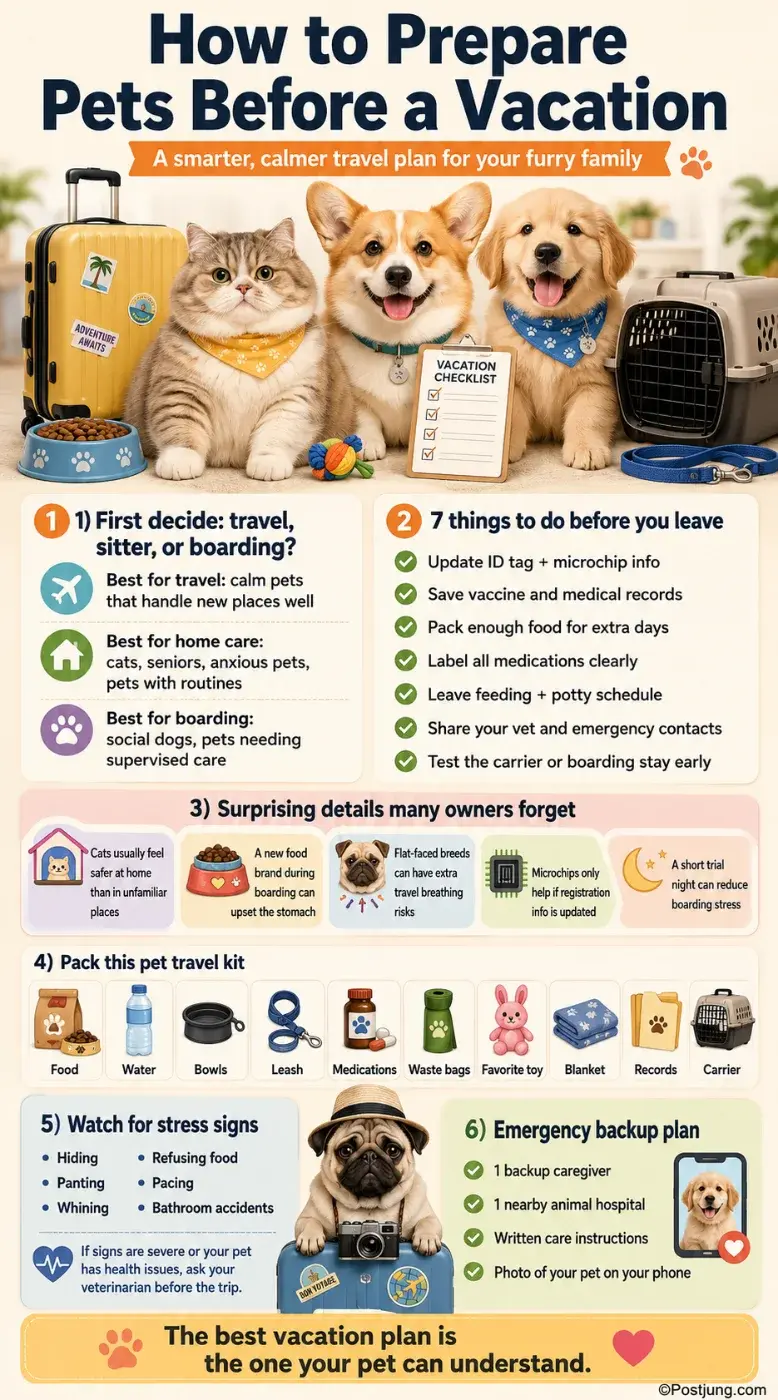
Book Care Before the Last Minute
Once you decide your pet will not travel, choose between a pet sitter, a trusted friend or relative, or a boarding facility.
A sitter may be best for cats, older pets, anxious animals, or pets that do better in their own space. Boarding may work well for social dogs, pets that need structured supervision, or owners who want staff on-site.
Either way, do not wait until the week before departure. Good sitters and reputable boarding facilities can book up during holidays and school breaks.
Before confirming care, ask practical questions:
Does the sitter know your pet’s routine?
Can they handle medication?
What happens in an emergency?
Which veterinarian will they contact?
Are they comfortable with your pet’s behavior, age, and health needs?
The ASPCA advises pet owners to leave sitters clear contact information, trip itinerary details, daily routines, and an emergency plan. That includes feeding times, walk schedules, hiding spots for cats, and what to do if something goes wrong.
A good pet-care plan is not just “someone will stop by.” It is a written routine another person can actually follow.
Update IDs, Microchips, and Medical Records
Before leaving, check your pet’s collar tag and microchip registration. The phone number should be current. If your pet is traveling with you, add temporary destination contact information when possible.
The ASPCA recommends pets travel with identification tags and, when appropriate, microchips, along with contact information that can help reunite a lost pet with its owner.
Medical records matter too. Keep digital and printed copies of vaccination records, medication instructions, allergy information, and your veterinarian’s contact details.
For boarding, ask what vaccines or health documents are required. Some facilities require proof of rabies vaccination and other disease-prevention records. Requirements vary, so the safest move is to ask early.
For international travel, the paperwork can be more complicated. USDA APHIS says pet owners traveling from the United States to another country should contact a USDA-accredited veterinarian early to determine destination requirements, which may include vaccines, tests, treatments, and endorsed health certificates.
For pets entering the United States, CDC notes that requirements can vary by animal and situation, and travelers should check importation rules before the trip.
The paperwork is not the fun part of vacation planning, but it is often the part that can delay or derail travel.
Pack for Comfort, Not Just Convenience
If your pet is traveling or boarding, pack familiar supplies.
Food should be measured and labeled. Bring more than the exact number of meals in case of delays. Pack medications in original containers when possible, along with written instructions.
Comfort items can help, but choose them carefully. A washable blanket, familiar toy, or usual bed can make a new environment feel less strange. Avoid sending fragile, valuable, or unsafe items.
For travel, the ASPCA recommends a comfortable crate with enough room for the pet to stand up and turn around, plus adequate ventilation. Pets should also travel with important records and necessary medications.
If your pet has never used a carrier or crate, do not introduce it on departure day. Let the animal explore it at home first. Add treats, bedding, and short practice sessions.
The goal is familiar smells, familiar food, and fewer surprises.
Prepare the House for a Sitter
If a sitter is coming to your home, make the job easy and safe.
Put food, medication, litter, leashes, cleaning supplies, towels, carriers, and treats in clearly marked places. Leave written instructions in one visible location, not scattered through text messages.
Remove hazards before you leave. Secure trash cans. Put away toxic foods, medications, cleaning products, cords, small objects, and anything your pet might chew or swallow. Close off rooms where the pet should not go.
Leave your veterinarian’s phone number, the nearest emergency animal hospital, your own contact information, and a backup person who can make decisions if you cannot be reached.
Also tell the sitter what is normal for your pet. A shy cat hiding under the bed may be expected. A dog refusing breakfast for one morning may be common. A pet refusing medication, vomiting, limping, or acting disoriented is different.
Good instructions help the sitter know what is normal and what is urgent.
Keep the Goodbye Calm
Pets notice stress. A frantic exit can make an anxious animal more unsettled.
Try to keep the final hours ordinary. Feed at the usual time. Walk the dog if that is part of the routine. Give cats space instead of forcing extra attention. Avoid emotional goodbyes that make the departure feel dramatic.
For pets staying home, the best goodbye may be boring. Calm routines tell the animal that nothing unusual is happening.
If your pet has a history of severe separation anxiety, destructive behavior, panic, or stress-related illness, talk with a veterinarian or qualified behavior professional before travel. Do not wait until the night before your flight.
The Best Vacation Plan Is the One Your Pet Can Understand
Preparing a pet for vacation is not about buying the most gear or creating a perfect checklist. It is about reducing uncertainty.
Pets do better when their food is familiar, their caregiver has clear instructions, their records are ready, and their emergency plan is not improvised.
For owners, that preparation brings peace of mind. For pets, it can mean a safer, calmer experience while the humans are away.
The best time to prepare is before travel feels urgent. Once the suitcase is open, the most important pet decisions should already be made.
American Veterinary Medical Association, ASPCA, USDA APHIS, Centers for Disease Control and Prevention
REFERENCES:
https://www.avma.org/resources-tools/pet-owners/petcare/animal-travel-certificates-regulations-requirements/traveling-your-dog-cat
https://www.aspca.org/news/pet-sitter-safety-what-know-you-go
https://www.aphis.usda.gov/pet-travel
https://www.cdc.gov/healthy-pets/travel/index.html

เขียนโดย Postjung Insights
 อำเภอที่มีชื่ออำเภอสั้นที่สุด 3 อำเภอเท่านั้นในประเทศไทย
 รู้หรือไม่? เปิดรายได้พนักงานส่งพัสดุของแต่ละแอป วันหนึ่งได้เท่าไร
 โรงเรียนที่มีนักเรียนมากที่สุดในไทย
 เปิดรายชื่อโรงเรียนในไทยที่ “ว่ายน้ำ” อยู่ในหลักสูตร เรียนจริงตั้งแต่อนุบาลถึงมัธยม
 Google ยอมรับแล้ว! Gemini AI เข้าถึงระบบบริษัทจริง 3 แห่ง ระหว่างการทดสอบความปลอดภัย
 เลขเด็ดปฏิทิน "หลวงปู่โต๊ะ" งวดวันที่ 1 ตุลาคม 69..ส่องเลย เลขไหนให้โชค!
 5 คณะที่เรียนจบมาแล้ว มีอาชีพรองรับมากกว่าที่คิด
 ตาราง “เด่นเหนือเด่นใต้” งวด 1 ต.ค. 69 เปิดข้อมูลตามโพย เลขไหนอยู่ตรงไหน
 สถิติย้อนหลัง 10 ปี ออกเลขไหนบ้างมาดูกัน
 ทำไมของพลาสติกเก่าบางชิ้นถึง “เหนียว” ขึ้นมาเอง ทั้งที่ไม่ได้เปื้อนอะไร?
 ดอลลาร์จะล่มสลายจริงไหม?
 เปิด 5 โรงเรียนหญิงล้วนเก่าแก่ของไทย ที่มีประวัติยาวนานกว่าศตวรรษ
 😃 ชวนเข้ามาดูกันอีกกับคนที่มีร่างกายพิเศษจนเหมือนมีกล่องสมบัติที่หายาก 😯5 คณะที่เรียนจบมาแล้ว มีอาชีพรองรับมากกว่าที่คิดเปิดรายชื่อโรงเรียนในไทยที่ “ว่ายน้ำ” อยู่ในหลักสูตร เรียนจริงตั้งแต่อนุบาลถึงมัธยมGoogle ยอมรับแล้ว! Gemini AI เข้าถึงระบบบริษัทจริง 3 แห่ง ระหว่างการทดสอบความปลอดภัยเลขเด็ดปฏิทิน "หลวงปู่โต๊ะ" งวดวันที่ 1 ตุลาคม 69..ส่องเลย เลขไหนให้โชค!ทำไมของพลาสติกเก่าบางชิ้นถึง “เหนียว” ขึ้นมาเอง ทั้งที่ไม่ได้เปื้อนอะไร?
 English Edition