Why Some Cats Refuse to Use Scented Litter
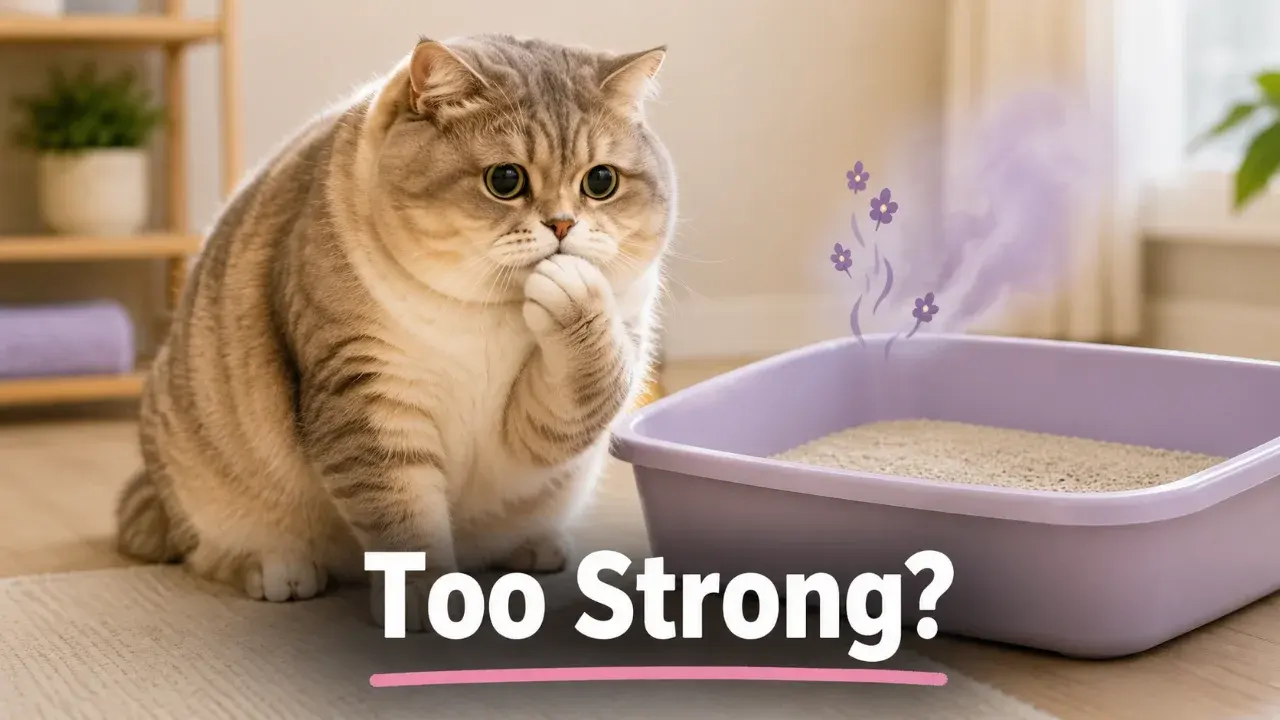
Scented litter is made for human noses, but cats experience the litter box very differently. For some cats, fragrance can turn a familiar bathroom spot into something they would rather avoid.
A fresh-smelling litter box may feel like a win for humans. For some cats, it can feel like the exact opposite.
Scented litter is designed to cover odor for people, not to match what cats naturally prefer. Cats rely heavily on smell to understand their surroundings, and the litter box is one of the most scent-sensitive places in their home. When fragrance is added, a box that once felt familiar can suddenly feel too strong, confusing, or unpleasant.
That does not mean every cat will reject scented litter. Some cats tolerate it without obvious problems. But veterinary and cat behavior guidance commonly points owners toward unscented litter when a cat starts avoiding the box, because litter type, odor, location, cleanliness, and medical issues can all affect bathroom behavior. Cornell’s Feline Health Center notes that house soiling can involve medical problems, litter box aversion, or preferences for other places or surfaces.
Why smell matters so much to cats
Cats do not treat scent as background information. Smell helps them recognize territory, other animals, food, stress signals, and familiar spaces.
That is why the litter box is not just a tray of absorbent material. To a cat, it is part of the home’s scent map.
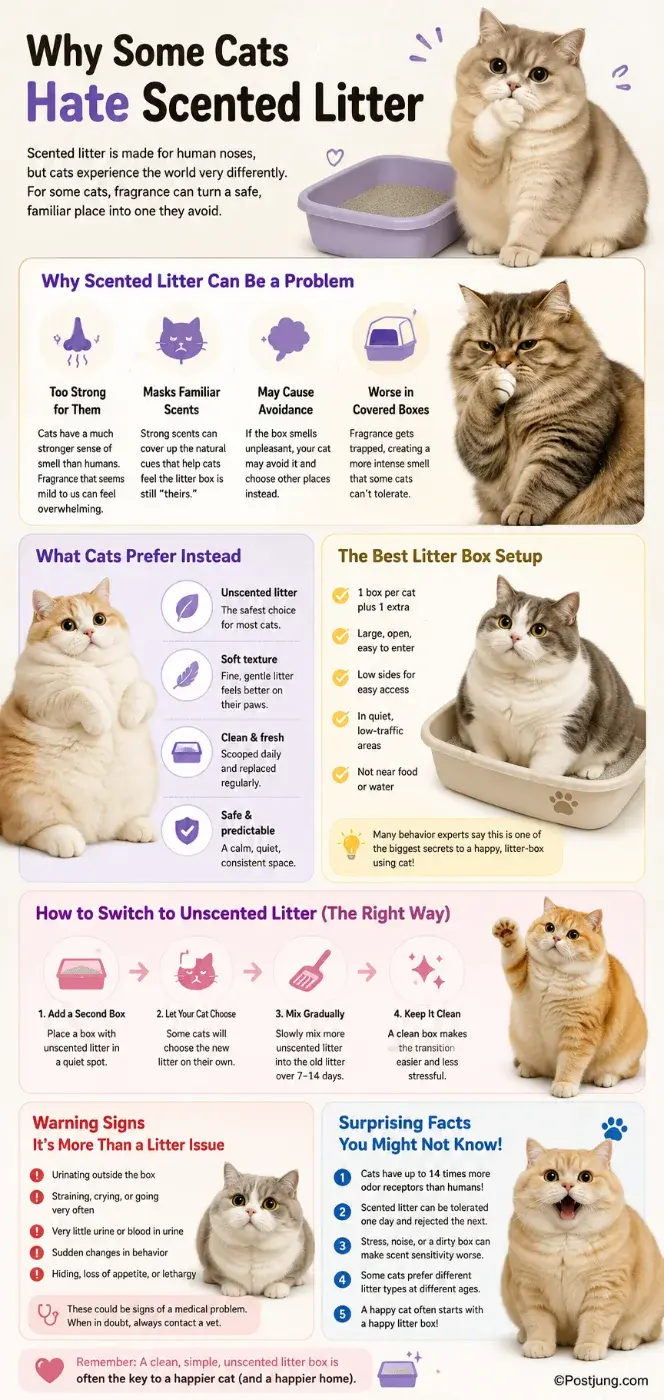
A strong floral, citrus, powder, or “fresh linen” fragrance may seem pleasant to a person standing nearby. But to a cat stepping into the box, that smell can be intense at nose level. It may also mask the familiar scent cues that help the cat feel the box is still “theirs.”
The ASPCA warns that scented cleaners can cause cats to develop an aversion to a smell, and recommends cleaning litter boxes with warm water and unscented soap, baking soda, or no soap. The same principle matters with litter: a smell added for human comfort may not be welcome to the animal actually using the box.
The problem is often not just the scent
Scented litter rarely acts alone. A cat may start avoiding the box because several small problems stack up.
The litter may smell too strong. The box may not be cleaned often enough. The tray may be too small. The location may be noisy, hard to reach, or too close to food and water. In multi-cat homes, another cat may be blocking access. A covered box can also trap odors and make the inside feel more intense.
A study on litter box preference noted that covered boxes may intensify litter fragrance, making scented litter aversive for some cats. That detail is important because many owners choose covered boxes to control smell, then add scented litter for the same reason. From the human side, it sounds logical. From the cat’s side, it may create a stronger odor chamber.
The Merck Veterinary Manual advises improving litter box access and offering cats choices to determine preferred litter and box type, including unscented options. It also notes that boxes should be hygienic and scooped at least daily.
What cats often prefer instead
For many cats, the safer default is simple: soft, clean, unscented litter in a box that is easy to enter and kept consistently clean.
International Cat Care advises that scented litter, deodorants, or strong-smelling disinfectants may put scent-sensitive cats off using the tray. Cornell experts also say most cats prefer fine-textured, unscented, clumping litter in a large box with low sides.
That does not mean every household must use the same product. Some cats prefer clay. Some accept plant-based litter. Some dislike crystals because of texture. Older cats or cats with sensitive paws may care more about softness than fragrance.
The key is to judge the litter from the cat’s point of view, not the owner’s nose.
A clean box should not need perfume
A common misunderstanding is that scented litter “solves” odor. It may make the room smell better to humans for a short time, but it does not replace cleaning.
If waste sits in the box, fragrance can mix with urine or feces odor and become even more unpleasant. Cats may notice that combination long before people do.
A better odor-control routine is usually less dramatic: scoop daily, replace litter regularly, wash the box with mild unscented cleaning methods, and make sure there are enough boxes. Many behavior specialists recommend one box per cat, plus one extra, placed in separate accessible areas rather than lined up in one crowded corner.
The goal is not to make the litter box smell like flowers. The goal is to make it clean, predictable, and easy to use.
How to switch away from scented litter
If a cat is already using scented litter without problems, there may be no urgent need to change everything overnight. But if the cat is hesitating, eliminating outside the box, scratching around without using it, or rushing out quickly, fragrance is worth reconsidering.
A sudden litter change can also upset some cats. The gentler approach is to transition gradually.
Start by placing an unscented version in a second box, ideally in a quiet and familiar area. Let the cat choose. If the cat begins using the unscented box more often, that is useful information.
Another option is to mix a small amount of unscented litter into the old litter, then slowly increase the unscented portion over several days or weeks. Keep the box extra clean during the transition so the cat does not associate the new litter with a dirty tray.
When it may be more than a litter problem
Litter box avoidance should not be blamed on scent alone, especially if the behavior appears suddenly.
A cat that urinates outside the box, strains, cries, visits the box repeatedly, produces very little urine, or has blood in the urine needs veterinary attention. Urinary issues can be painful and sometimes urgent, especially in male cats.
Cornell notes that medical problems can contribute to litter box trouble, and that a urinary disorder may cause a cat to eliminate outside the box before a location preference develops.
So the practical rule is this: change the environment, but do not ignore health signs.
The bottom line for cat owners
Scented litter is not automatically harmful, and some cats live with it just fine. But it is often a human-centered solution to a cat-centered problem.
Cats want a bathroom area that feels safe, familiar, clean, and comfortable under their paws. Strong fragrance can interfere with that, especially in covered boxes or in homes where the litter box is already less than ideal.
If a cat seems unhappy with the box, the simplest first experiment is often the most effective: offer a clean, roomy box with unscented litter and let the cat vote with its paws.
Cornell Feline Health Center, ASPCA, Merck Veterinary Manual, International Cat Care, Journal of Feline Medicine and Surgery
REFERENCES:
https://www.vet.cornell.edu/departments-centers-and-institutes/cornell-feline-health-center/health-information/feline-health-topics/feline-behavior-problems-house-soiling
https://www.aspca.org/pet-care/cat-care/common-cat-behavior-issues/litter-box-problems
https://www.merckvetmanual.com/behavior/behavior-of-cats/behavior-problems-of-cats
https://icatcare.org/articles/soiling-indoors/

เขียนโดย Postjung Insights
 รู้หรือไม่? เปิดรายได้พนักงานส่งพัสดุของแต่ละแอป วันหนึ่งได้เท่าไร
 รมว.วัฒนธรรมเอาจริง! จ่อส่งหนังสือทักท้วง Miss Universe Cambodia ปมใช้ภาพหญิงกำแพงเพชร หากไม่แก้ เตรียมใช้กฎหมาย
 อำเภอที่มีชื่ออำเภอสั้นที่สุด 3 อำเภอเท่านั้นในประเทศไทย
 MRT เตาปูนกลับมาเปิดปกติแล้ว รมช.คมนาคมเผยปมไฟไหม้ พบประกายไฟจากชุดสายไฟ 750 โวลต์
 ดูหนัง–ซีรีส์ฟรีอาจไม่ฟรีอย่างที่คิด! เปิดโทษละเมิดลิขสิทธิ์ เตือนคนปล่อยคอนเทนต์เถื่อน เสี่ยงทั้งคุกทั้งปรับ
 โรงเรียนที่มีนักเรียนมากที่สุดในไทย
 ตาราง “เด่นเหนือเด่นใต้” งวด 1 ต.ค. 69 เปิดข้อมูลตามโพย เลขไหนอยู่ตรงไหน
 แมคาเดเมีย (Macadamia): ราชินีแห่งถั่ว กับขุมทรัพย์โภชนาการจากออสเตรเลีย
 เปิด 5 โรงเรียนหญิงล้วนเก่าแก่ของไทย ที่มีประวัติยาวนานกว่าศตวรรษ
 แมงป่อง: แมลงนักล่าสายพันธุ์โบราณของโลก ที่ยังคงอยู่มาจนถึงปัจจุบัน
 งูมัลกา (Mulga Snake): นักล่าแห่งผืนดินแห้งแล้ง ของทวีปออสเตรเลีย กับฉายา King Brown กัดคนได้ถึงตาย
 สถิติย้อนหลัง 10 ปี ออกเลขไหนบ้างมาดูกัน
 English Edition