Why Pet Gates Are Useful Long After Puppyhood
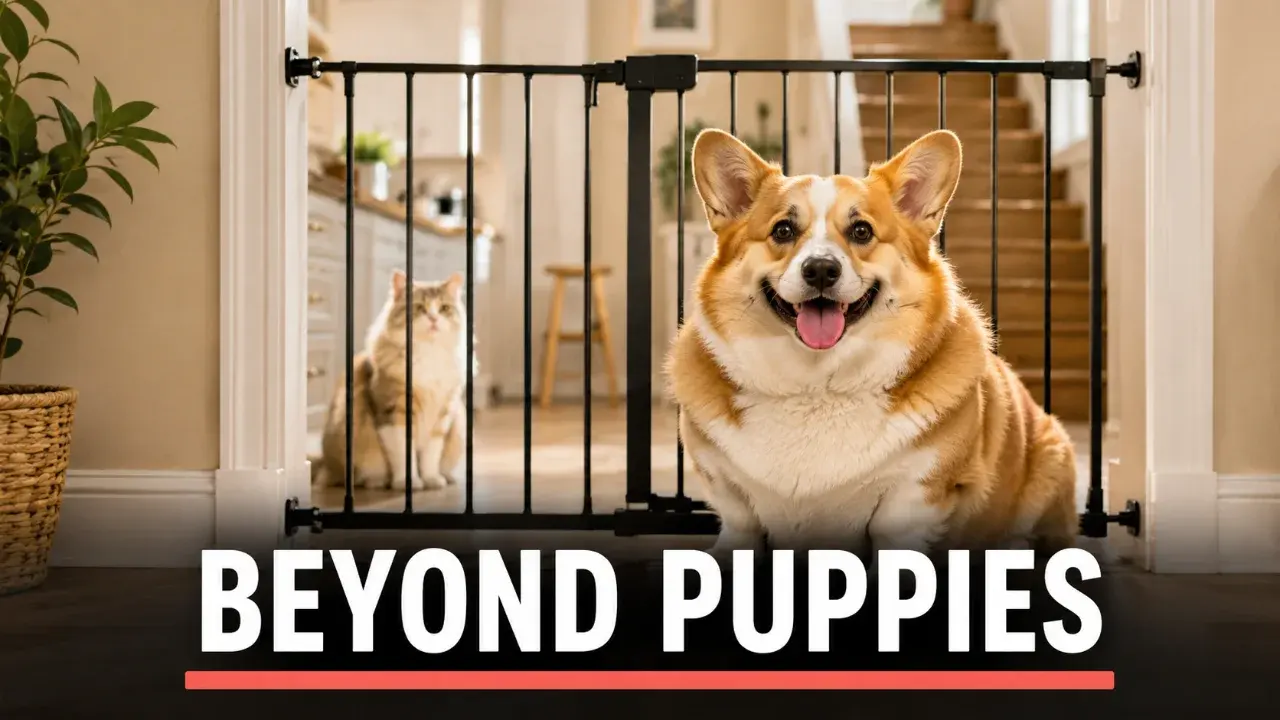
Pet gates are often treated like a puppy-stage purchase: useful for a few chaotic months, then packed away once the dog learns the rules. That misses the bigger point. A good pet gate is less about punishment and more about giving a home flexible boundaries that can change as a dog’s needs change.
For many households, the gate becomes one of the most practical tools in the house. It can protect a curious dog from a risky space, help an older pet move around more safely, reduce stress during busy moments, and give people more control without shutting a dog completely out of family life.
The most useful thing about a pet gate is that it creates a boundary without creating full isolation. A dog can still see, hear, and smell what is happening nearby. That matters because many dogs do better when they feel included, even if they need to be kept away from the kitchen, stairs, front door, or a room being cleaned.
A gate is not just a training tool. It is a way to manage real life.
Why adult dogs still need boundaries
Even a well-trained adult dog can have moments when a barrier makes sense.
Guests arrive. Groceries are carried in. A repair worker leaves a door open. Someone drops food on the kitchen floor. A child runs through the house with a snack. These are ordinary moments, but they can quickly become stressful when a dog is underfoot or tempted by something unsafe.
Pet-proofing a home means looking at the whole environment and identifying areas where animals may get into trouble, from household items to rooms that are not safe for unsupervised access.
A gate helps during those moments because it buys time. It lets the owner answer the door, clean a spill, unload the car, or manage guests without having to physically hold the dog back.
For dogs who rush the front door, a gate can also create a helpful second layer between the pet and the outside world. It does not replace training, but it can reduce the chance of a dog slipping out when someone opens the door.
The senior-dog reason people often overlook
Pet gates can become even more useful as dogs age.
Older dogs may have weaker joints, slower reflexes, reduced vision, or less confidence on stairs. Some still want to follow their people everywhere, even when a staircase, slick floor, or busy room is no longer safe for them.
Veterinary guidance for senior pets often emphasizes home adjustments that make movement safer and reduce fall risks, including changes around stairs and other difficult areas.
That is where a gate can be kind, not restrictive. It can keep a senior dog from attempting stairs when no one is nearby. It can guide them toward a safer room with a bed, water bowl, and familiar smells. It can also help separate a recovering dog from more energetic pets during healing.
For senior dogs, boundaries can be comfort. They reduce the need for constant correction and make the home easier to navigate.
Helpful for multi-pet homes
Pet gates can also make life easier when a home has more than one animal.
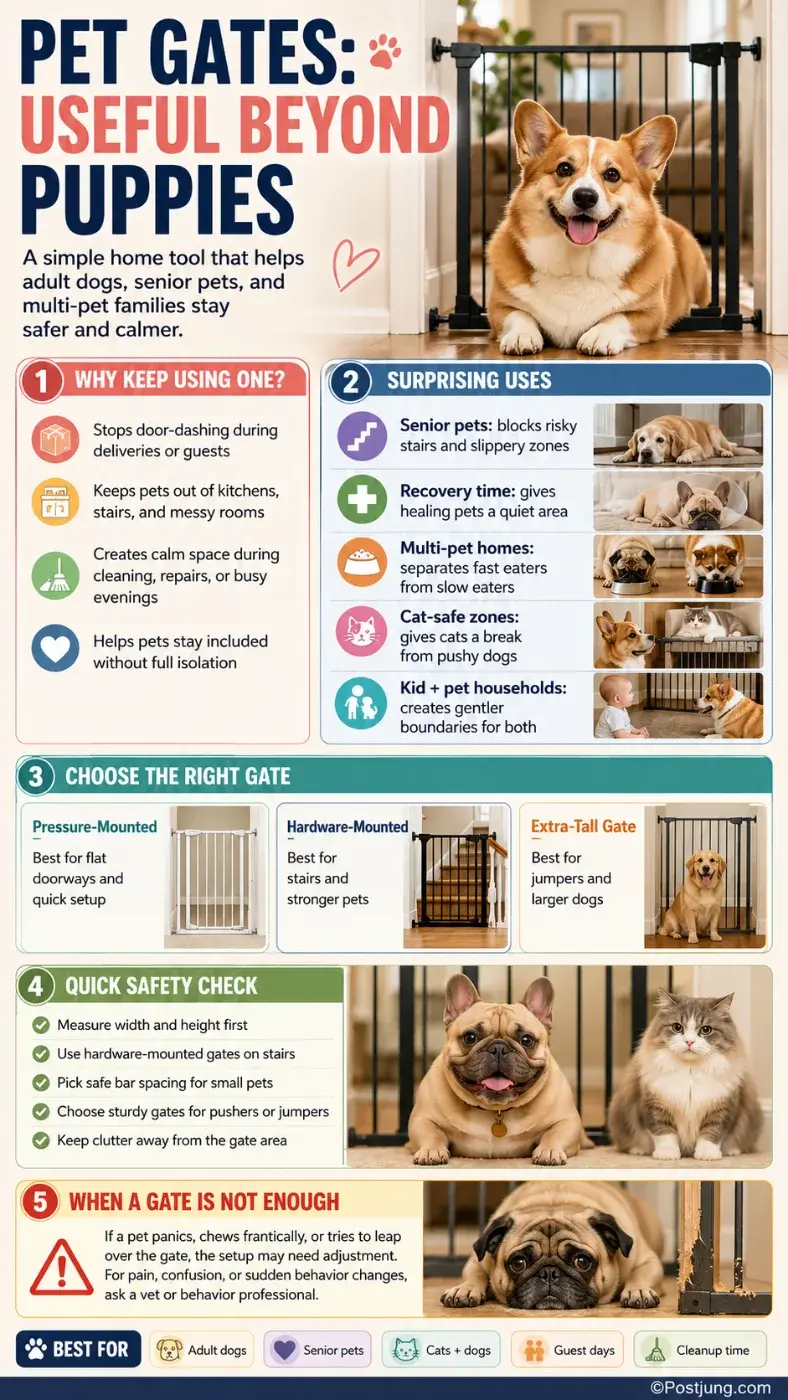
Some dogs eat faster than others. Some cats need a quiet escape route. Some pets get along most of the time but still need breaks. A gate can create zones for feeding, resting, introductions, or cooling down after play.
This is especially helpful because not every pet conflict is dramatic. Sometimes the problem is simply pressure: one pet crowding another, stealing food, blocking a doorway, or not recognizing when the other animal wants space.
A gate can make separation feel less severe than closing a door. Pets can remain aware of each other while still having a protected area.
That can be useful during introductions, after vet visits, when one pet is recovering, or when a household is adjusting to a new animal.
A safer way to handle busy household moments
Pet gates shine during the parts of the day when people are distracted.
Cooking is a classic example. Kitchens can involve hot pans, sharp tools, dropped ingredients, cleaning products, and people moving quickly. Even a polite dog can become a tripping hazard if they settle behind someone’s feet.
A gate can keep the dog nearby but outside the danger zone.
The same idea applies during cleaning, moving furniture, assembling deliveries, painting a room, or hosting children. Dogs do not always understand why a normal space has suddenly become risky. A temporary barrier makes the rule clear without repeated scolding.
The best gates prevent problems before they start. That is why they are so useful even in homes with well-behaved pets.
They can reduce stress, not increase it
Some owners worry that using a gate feels unfair once a dog is no longer a puppy. But a gate does not have to mean exclusion.
For many dogs, the difference is in how the space is set up. A gated area with a comfortable bed, water, safe chew items, and a clear view of the household can feel calm and predictable. A closed room with no visibility may feel more frustrating.
Dogs with separation-related distress may show anxiety when separated from their guardians, and serious behavior issues should be handled with care rather than punishment.
A gate will not solve separation anxiety on its own. But for everyday management, it can help create gentle distance while still allowing the dog to feel connected.
The goal is not to trap the dog. The goal is to create a safe, familiar zone that works with the dog’s temperament.
Choosing the right gate matters
Not every gate fits every dog or every home.
A small, calm dog may do well with a simple freestanding barrier. A large, strong, or athletic dog may need a sturdier gate that is mounted securely. A dog that jumps needs height. A dog that pushes needs stability. A household with stairs needs extra care because the wrong gate in the wrong place can become unsafe.
Real-world pet gate testing and buying guidance commonly emphasize size, stability, mounting type, and whether a gate is appropriate for the dog’s strength and behavior.
For stairs, many households prefer hardware-mounted gates because they are more secure than pressure-only options. For doorways between rooms, pressure-mounted gates may be convenient, but they still need to fit properly and be checked often.
Owners should also consider bar spacing, latch design, chew resistance, and whether people in the home can open and close the gate easily. A gate that is annoying to use often ends up unused.
When a gate is not the answer
A pet gate is a management tool, not a substitute for training, exercise, medical care, or behavior support.
If a dog panics behind a gate, chews aggressively at barriers, injures themselves trying to escape, or becomes more distressed when separated, the issue may need a different approach. In those cases, it is better to speak with a veterinarian or a qualified behavior professional.
The same is true if a dog suddenly needs to be gated because of pain, confusion, falling, house-soiling, or unusual behavior. Those changes can sometimes point to a health problem rather than a training problem.
A gate should make life calmer. If it makes the dog more frantic, something needs to be adjusted.
The simple tool many owners retire too early
Pet gates are easy to underestimate because they are so ordinary. They do not look like a major pet-care tool. They do not feel high-tech. They are not exciting.
But their value is in that simplicity.
They help a home adapt. Puppies grow up. Adult dogs have off days. Senior dogs need more protection. Guests visit. Floors get cleaned. Doors get opened. Life changes, and a flexible barrier can keep those changes from becoming stressful or unsafe.
A pet gate is not just for stopping a puppy from chewing shoes. Used thoughtfully, it can give dogs more safety, people more control, and the whole household a little more peace.
ASPCA, ASPCA Pet Insurance, AAHA, The Spruce Pets
REFERENCES:
https://www.aspca.org/pet-care/dog-care/common-dog-behavior-issues/separation-anxiety
https://www.aspcapetinsurance.com/resources/how-to-pet-proof-your-home/
https://www.aaha.org/resources/senior-status-understanding-your-senior-pets-life-stage/
https://www.thesprucepets.com/best-pet-gates-5190903

เขียนโดย Postjung Insights
 โรงเรียนที่มีนักเรียนมากที่สุดในไทย
 เปิดรายชื่อโรงเรียนในไทยที่ “ว่ายน้ำ” อยู่ในหลักสูตร เรียนจริงตั้งแต่อนุบาลถึงมัธยม
 รู้หรือไม่? เปิดรายได้พนักงานส่งพัสดุของแต่ละแอป วันหนึ่งได้เท่าไร
 อำเภอที่มีชื่ออำเภอสั้นที่สุด 3 อำเภอเท่านั้นในประเทศไทย
 5 คณะที่เรียนจบมาแล้ว มีอาชีพรองรับมากกว่าที่คิด
 Google ยอมรับแล้ว! Gemini AI เข้าถึงระบบบริษัทจริง 3 แห่ง ระหว่างการทดสอบความปลอดภัย
 เปิด 5 โรงเรียนหญิงล้วนเก่าแก่ของไทย ที่มีประวัติยาวนานกว่าศตวรรษ
 เลขเด็ดปฏิทิน "หลวงปู่โต๊ะ" งวดวันที่ 1 ตุลาคม 69..ส่องเลย เลขไหนให้โชค!
 แปลปกสลาก งวด 1 ต.ค. 69 ส่องตัวเลขจากภาพปกสลากกินแบ่งรัฐบาล
 อุทยานเขาใหญ่เรียกตัว “ตีนผี” หลังขับจี้ช้างป่าพ่อลูก ลั่นระยะ 50 เมตรต้องจำให้ขึ้นใจ
 สถิติย้อนหลัง 10 ปี ออกเลขไหนบ้างมาดูกัน
 ตาราง “เด่นเหนือเด่นใต้” งวด 1 ต.ค. 69 เปิดข้อมูลตามโพย เลขไหนอยู่ตรงไหน5 คณะที่เรียนจบมาแล้ว มีอาชีพรองรับมากกว่าที่คิดเปิดรายชื่อโรงเรียนในไทยที่ “ว่ายน้ำ” อยู่ในหลักสูตร เรียนจริงตั้งแต่อนุบาลถึงมัธยมGoogle ยอมรับแล้ว! Gemini AI เข้าถึงระบบบริษัทจริง 3 แห่ง ระหว่างการทดสอบความปลอดภัยเลขเด็ดปฏิทิน "หลวงปู่โต๊ะ" งวดวันที่ 1 ตุลาคม 69..ส่องเลย เลขไหนให้โชค!
 ทำไมของพลาสติกเก่าบางชิ้นถึง “เหนียว” ขึ้นมาเอง ทั้งที่ไม่ได้เปื้อนอะไร?อุทยานเขาใหญ่เรียกตัว “ตีนผี” หลังขับจี้ช้างป่าพ่อลูก ลั่นระยะ 50 เมตรต้องจำให้ขึ้นใจ
 English Edition