Why Dogs Get Ear Infections So Often
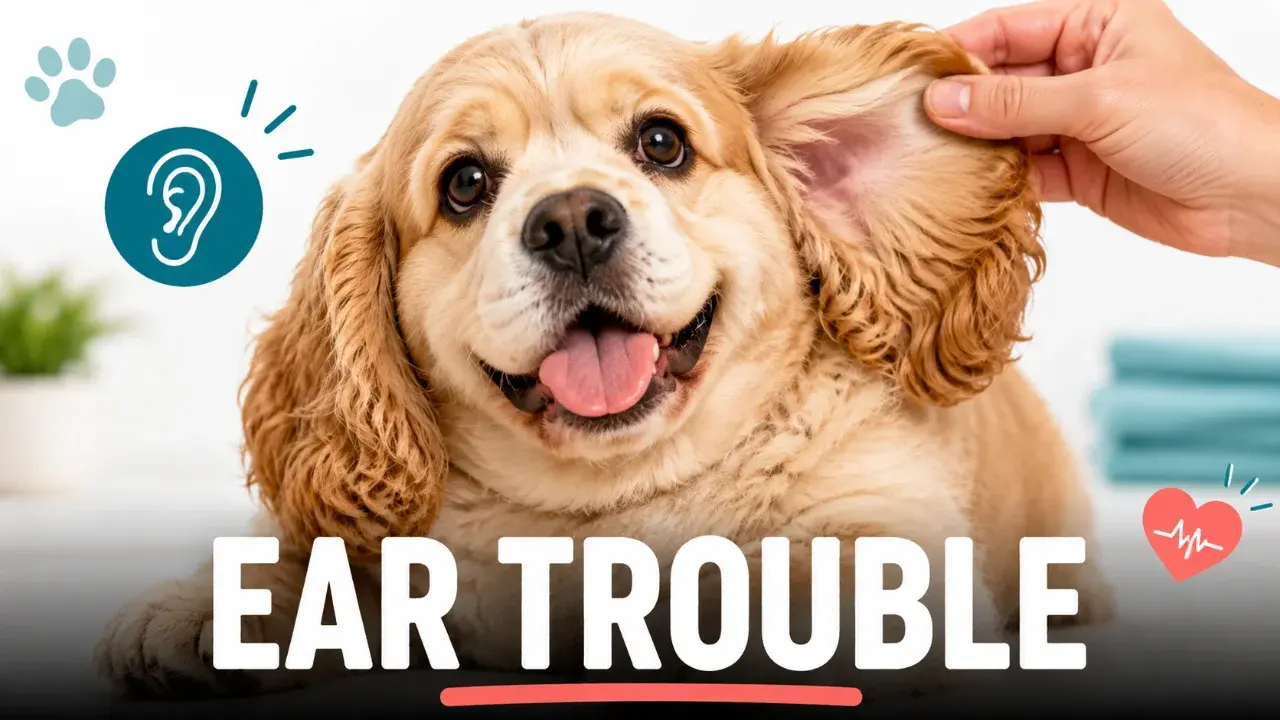
A dog’s ear canal is built differently from a human’s, and that shape can trap moisture, wax, and debris. Here’s why infections happen so often — and what owners should watch for.
Dogs do not get ear infections simply because their ears are “dirty.” In many cases, the problem starts with the shape of the ear canal, trapped moisture, allergies, or inflammation that gives yeast and bacteria a chance to grow.
That is why some dogs seem to recover, only to start shaking their head or scratching again weeks later.
For owners, ear infections can look like a small problem at first. A little smell. A little redness. A dog rubbing one side of the head against the couch. But ear infections can be painful, and recurring cases often need more than a quick cleaning at home.
A dog’s ear canal makes trouble easier to trap
One reason dogs get ear infections so often is anatomy.
Unlike the human ear canal, a dog’s ear canal has a longer, more angled shape. That structure can make it harder for moisture, wax, and debris to leave the ear naturally. When the ear stays damp or irritated, it creates a better environment for yeast and bacteria.
Veterinary sources commonly describe otitis externa — inflammation or infection of the outer ear canal — as a frequent ear problem in dogs. Signs can include head shaking, scratching, redness, swelling, odor, discharge, and pain.
The infection itself is often only part of the story. The bigger question is why the ear became inflamed enough for organisms to overgrow.
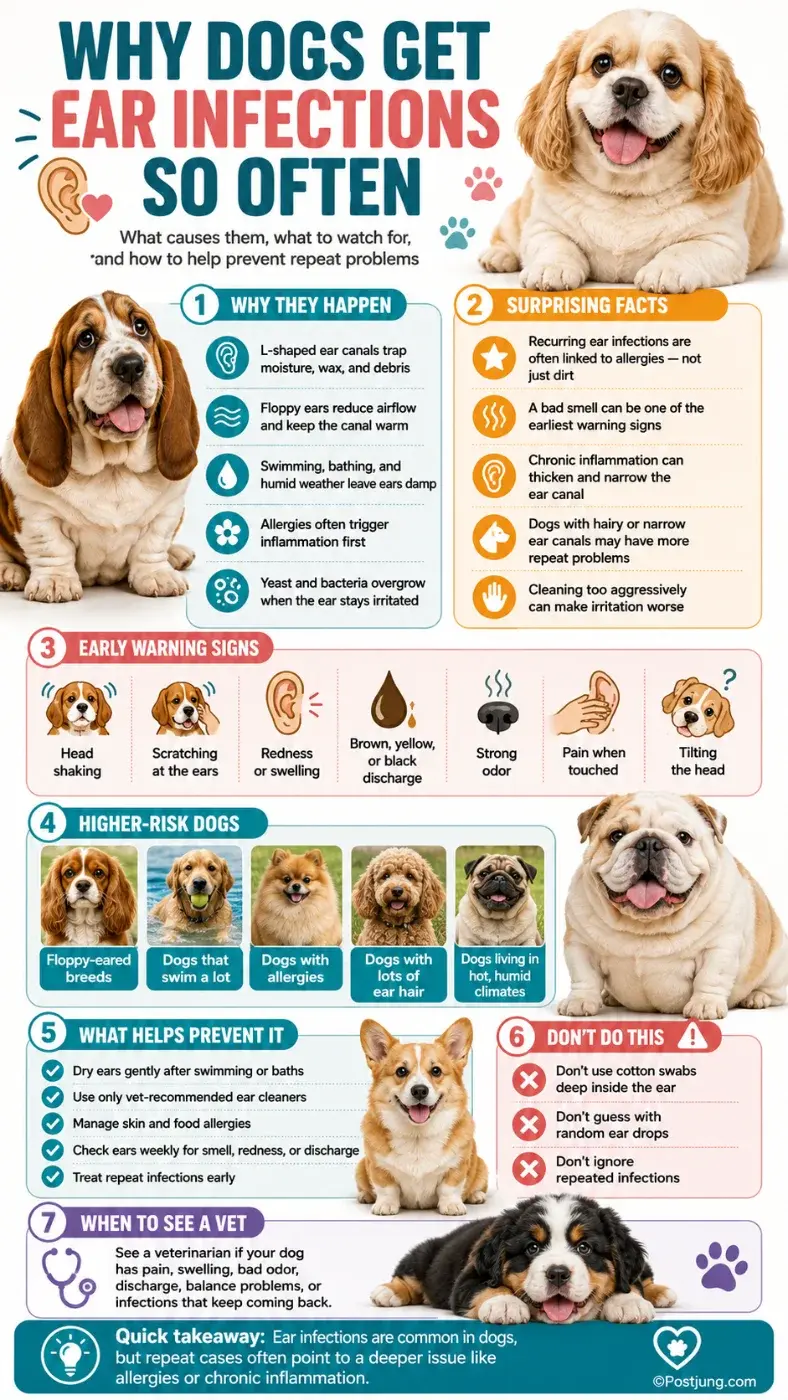
Floppy ears can make the environment warmer and damper
Some dogs are more prone to ear problems because of ear shape.
Dogs with floppy ears, heavy ear flaps, narrow ear canals, or a lot of hair around the ears may have less airflow. That does not mean every floppy-eared dog will have ear infections, but it can make the ear canal warmer and more humid.
That matters because moisture is one of the biggest helpers for yeast and bacteria.
Dogs that swim often, get bathed frequently, or live in humid climates may also be more likely to develop irritation if their ears are not dried properly. In places with tropical or rainy weather, owners may notice ear problems more often during damp seasons.
Still, ear shape and moisture are not the whole answer.
Allergies are a common hidden trigger
One of the most important things owners often miss is that recurring ear infections may be linked to allergies.
Dogs can develop allergic skin disease from environmental triggers such as pollen, dust mites, mold, or certain food ingredients. In many dogs, the ears are part of the skin problem. The ear canal becomes inflamed, itchy, and fragile, which makes infection easier to develop.
That is why a dog with repeated ear infections may need an exam for underlying causes, not just another bottle of ear drops.
Veterinary guidance often emphasizes that chronic or recurring ear infections can be harder to treat than simple, early cases, especially when the underlying cause is not managed.
The practical takeaway is simple: repeated infections are a clue, not just bad luck.
The signs are usually easy to spot
Dog ear infections often announce themselves through behavior before owners see anything inside the ear.
Common signs include:
- Head shaking
- Scratching at one or both ears
- Redness inside the ear
- Bad odor
- Brown, yellow, or black discharge
- Pain when the ear is touched
- Rubbing the head on furniture or the floor
- A tilted head or unusual balance problems in more serious cases
VCA Hospitals notes that infected ears may become red, inflamed, painful, smelly, and may produce dark or yellowish discharge. Chronic cases can cause thickening or narrowing of the ear canal.
If a dog yelps, pulls away, becomes unusually sensitive, or seems dizzy, the problem should be checked promptly.
Why home cleaning can backfire
Cleaning can help some dogs, but it is not always safe to treat an ear problem at home.
If the ear is already painful, swollen, or infected, aggressive cleaning can make inflammation worse. Cotton swabs can push debris deeper or irritate the canal. Some ear products may also be inappropriate if the eardrum is damaged, which owners usually cannot confirm without a veterinary exam.
That is why ear drops should match the diagnosis. A yeast-heavy infection, a bacterial infection, ear mites, foreign material, allergic inflammation, and a deeper middle-ear problem are not all treated the same way.
A veterinarian may examine the ear with an otoscope and may check ear debris under a microscope to identify yeast, bacteria, mites, or inflammatory cells. This helps avoid guessing.
Prevention is mostly about control, not perfection
There is no way to guarantee a dog will never get an ear infection. But owners can lower the risk.
For dogs prone to ear problems, prevention may include drying the ears after swimming or bathing, using a veterinarian-recommended cleaner, managing allergies, keeping follow-up appointments, and avoiding unnecessary digging inside the ear.
It also helps to learn what is normal for your dog. Some dogs naturally have more wax than others. Some have a mild ear smell after swimming. The red flag is a change: stronger odor, more scratching, discharge, pain, or repeated head shaking.
The goal is not to make the ear perfectly sterile. Healthy ears normally have microorganisms. The goal is to keep the ear canal balanced, dry enough, and free from ongoing inflammation.
When owners should call the vet
A mild waxy ear is different from an infected, painful ear.
Owners should contact a veterinarian if a dog has repeated head shaking, visible redness, strong odor, discharge, swelling, pain, hearing changes, balance problems, or infections that keep returning.
This is especially important because untreated or chronic ear disease can lead to more serious problems, including thickened ear canals and deeper infection. Merck Veterinary Manual lists signs such as head shaking, odor, redness, swelling, scratching, discharge, and pain in dogs with ear infections and otitis externa.
The best outcome usually comes from treating the current infection and finding the reason it happened.
A dog’s ear infection is not a sign that an owner failed. It is often a mix of anatomy, moisture, skin inflammation, allergies, and timing. But when the same problem keeps coming back, the ear is asking for a deeper look.
Merck Veterinary Manual, VCA Hospitals, American Kennel Club, Canadian Veterinary Journal
REFERENCES:
https://www.merckvetmanual.com/dog-owners/ear-disorders-of-dogs/ear-infections-and-otitis-externa-in-dogs
https://vcahospitals.com/know-your-pet/ear-infections-in-dogs-otitis-externa
https://www.akc.org/expert-advice/health/dog-ear-infections/
https://pmc.ncbi.nlm.nih.gov/articles/PMC6294027/

เขียนโดย Postjung Insights
 รู้หรือไม่? เปิดรายได้พนักงานส่งพัสดุของแต่ละแอป วันหนึ่งได้เท่าไร
 อำเภอที่มีชื่ออำเภอสั้นที่สุด 3 อำเภอเท่านั้นในประเทศไทย
 5 คณะที่เรียนจบมาแล้ว มีอาชีพรองรับมากกว่าที่คิด
 ตาราง “เด่นเหนือเด่นใต้” งวด 1 ต.ค. 69 เปิดข้อมูลตามโพย เลขไหนอยู่ตรงไหน
 เปิด 5 โรงเรียนหญิงล้วนเก่าแก่ของไทย ที่มีประวัติยาวนานกว่าศตวรรษ
 โรงเรียนที่มีนักเรียนมากที่สุดในไทย
 จุฬาฯ มหาวิทยาลัยแห่งแรกของไทย มีจุดเริ่มต้นในสมัยรัชกาลที่ 5
 เลขเด็ดปฏิทิน "หลวงปู่โต๊ะ" งวดวันที่ 1 ตุลาคม 69..ส่องเลย เลขไหนให้โชค!
 เปิดรายชื่อโรงเรียนในไทยที่ “ว่ายน้ำ” อยู่ในหลักสูตร เรียนจริงตั้งแต่อนุบาลถึงมัธยม
 Google ยอมรับแล้ว! Gemini AI เข้าถึงระบบบริษัทจริง 3 แห่ง ระหว่างการทดสอบความปลอดภัย
 ทำไมของพลาสติกเก่าบางชิ้นถึง “เหนียว” ขึ้นมาเอง ทั้งที่ไม่ได้เปื้อนอะไร?
 แปลปกสลาก งวด 1 ต.ค. 69 ส่องตัวเลขจากภาพปกสลากกินแบ่งรัฐบาล
 😃 ชวนเข้ามาดูกันอีกกับคนที่มีร่างกายพิเศษจนเหมือนมีกล่องสมบัติที่หายาก 😯5 คณะที่เรียนจบมาแล้ว มีอาชีพรองรับมากกว่าที่คิดเปิดรายชื่อโรงเรียนในไทยที่ “ว่ายน้ำ” อยู่ในหลักสูตร เรียนจริงตั้งแต่อนุบาลถึงมัธยมGoogle ยอมรับแล้ว! Gemini AI เข้าถึงระบบบริษัทจริง 3 แห่ง ระหว่างการทดสอบความปลอดภัยเลขเด็ดปฏิทิน "หลวงปู่โต๊ะ" งวดวันที่ 1 ตุลาคม 69..ส่องเลย เลขไหนให้โชค!ทำไมของพลาสติกเก่าบางชิ้นถึง “เหนียว” ขึ้นมาเอง ทั้งที่ไม่ได้เปื้อนอะไร?
 English Edition