Why Sudden Weight Gain in Pets Can Be a Clue
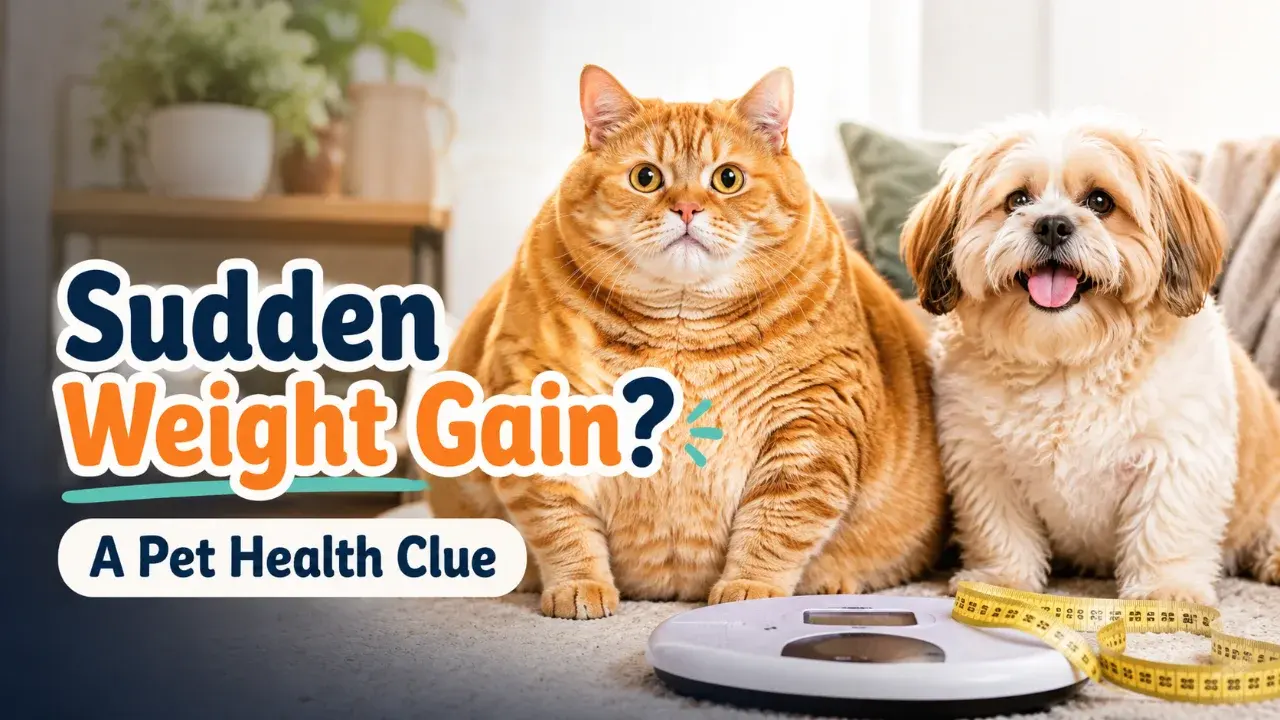
A dog or cat that gains weight quickly may simply be eating too much — but sometimes the change points to hormones, fluid retention, aging, or another health issue. Here’s what owners should notice before brushing it off.
A pet that suddenly looks heavier may not just be “getting fluffy.” Weight gain can happen for simple reasons, but a fast or unexplained change can also be an early clue that something in the body, routine, or diet has shifted.
That does not mean every extra pound is an emergency. It does mean the change is worth noticing.
For dogs and cats, body weight is one of the easiest health signals for owners to track at home. The tricky part is that many pets gain weight gradually, and owners often adjust to the new look without realizing how much has changed.
The scale is only part of the story
A number on the scale can help, but it does not tell the whole story. A small dog gaining two pounds is very different from a large dog gaining two pounds. A cat gaining one pound may seem minor to a human, but it can be a meaningful change for the cat’s body.
That is why veterinarians often use body condition scoring, a hands-on way to assess fat coverage, ribs, waist, and abdominal shape. The World Small Animal Veterinary Association describes body condition scoring as a tool used to assess fat stores in dogs and cats, and its nutrition guidelines note that many systems use a 9-point scale.
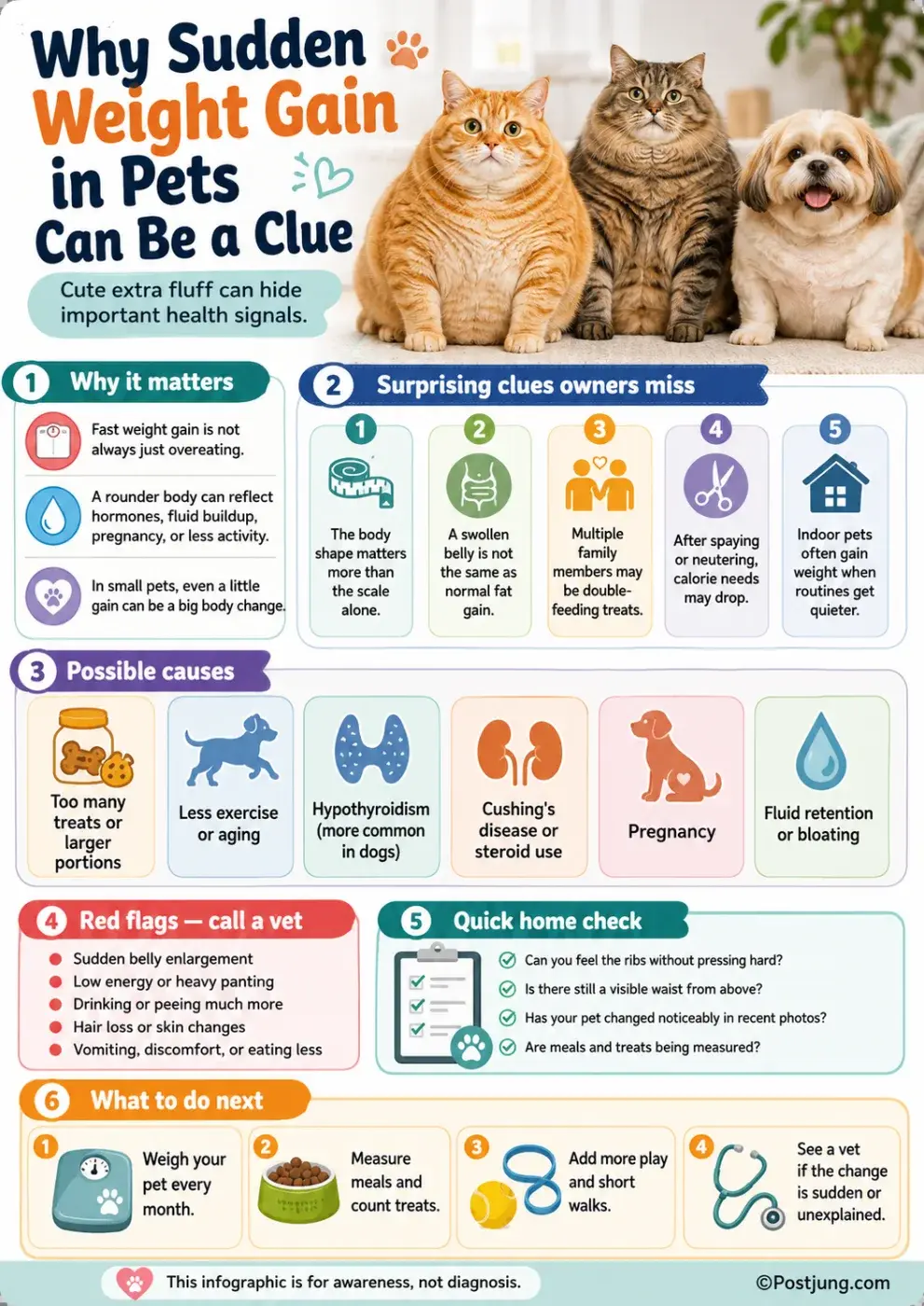
In plain terms, owners can look for three things: Can you feel the ribs without pressing hard? Is there a visible waist when viewed from above? Does the belly tuck upward when viewed from the side?
If the answer is no, the pet may be carrying more body fat than is healthy.
Food changes are the most common explanation
The most ordinary cause of weight gain is still the most common: more calories than the pet burns.
That can happen after a change in food, larger portions, extra treats, table scraps, or less exercise. It can also happen when several people in the household feed the same pet without realizing the total amount.
Neutering or spaying can also change energy needs, so a pet that eats the same amount after surgery may slowly gain weight unless portions are adjusted with veterinary guidance.
Age matters too. Older pets may move less, sleep more, and burn fewer calories. If their diet stays the same while activity drops, weight can creep upward.
When weight gain may point to health issues
Sudden or unexplained weight gain deserves more attention when it appears with other changes.
In dogs, hypothyroidism is one condition veterinarians consider. The Merck Veterinary Manual notes that hypothyroidism causes a decreased metabolic rate, with common signs including lethargy, weight gain, and coat or skin changes.
Cushing’s disease, also called hyperadrenocorticism, can also change a dog’s body shape and behavior. Merck lists signs including increased drinking and urination, hair loss, and muscle changes.
Cats have their own patterns. Cornell University’s Feline Health Center describes feline obesity as body weight 20 percent or more above normal and says it is the most frequently observed nutritional disorder among domestic cats.
Still, not every larger belly is fat. In some pets, a swollen-looking abdomen may come from fluid buildup, organ enlargement, constipation, gas, pregnancy, or other medical causes. That is one reason owners should be careful about assuming a rounder body always means overeating.
A useful rule: fast change matters more than perfect certainty. If the weight gain seems sudden, unusual, or paired with behavior changes, it is better to ask a veterinarian than to guess.
Signs owners should not ignore
Weight gain becomes more concerning when it comes with other symptoms.
Watch for low energy, heavy breathing, reduced interest in walks or play, increased thirst, increased urination, vomiting, a suddenly swollen belly, hair loss, limping, or a change in appetite.
A pet that gains weight while eating less should be checked. So should a pet that gains weight very quickly without an obvious food or activity change.
The same goes for a pet that seems uncomfortable, pants more than usual, struggles to climb stairs, or no longer wants to jump onto furniture.
These signs do not point to one single diagnosis. They simply tell owners that the weight change is not happening alone.
The emotional trap for pet owners
Many owners show love through food. A treat after work, a bite from the dinner table, a bigger scoop after a sad look — it all feels harmless.
But pets are much smaller than humans. A few extra snacks can add up quickly, especially for small dogs and indoor cats.
There is also a visual problem. When overweight pets become common, a healthy body shape can start to look “too thin” to some owners. WSAVA’s nutrition assessment guidance notes that an ideal body condition goal may appear too thin to some pet owners, which is why education matters.
That makes regular weighing useful. Photos can help too. A side photo and top-down photo taken once a month can reveal changes that daily life hides.
What to do before changing the diet
Owners should not crash-diet pets, especially cats. Rapid calorie restriction can be risky, and sudden food changes can cause digestive issues or refusal to eat.
A safer first step is to measure food accurately for a week. Write down meals, treats, snacks, chews, leftovers, and anything given by another person in the home.
Then compare that record with the feeding guide and the veterinarian’s recommendation for the pet’s ideal weight, not just current weight.
For many pets, the answer may be simple: fewer treats, measured meals, more play, shorter but more frequent walks, or a diet adjusted by a veterinarian.
For others, the weight gain may be the clue that leads to bloodwork, hormone testing, imaging, or another check.
The goal is not to panic. The goal is to notice early.
A small clue can prevent a bigger problem
A pet’s body often changes before a problem becomes obvious. Extra weight can affect joints, breathing, stamina, grooming, and long-term comfort.
That is why sudden weight gain should not be dismissed as a cosmetic issue. It may be diet. It may be age. It may be a household habit no one noticed. Or it may be the first visible sign that the pet needs medical attention.
The best response is calm and practical: weigh the pet, look at body shape, review feeding habits, and call a veterinarian if the change is fast, unexplained, or paired with other symptoms.
For owners, that small moment of attention can make a big difference.
Cornell University College of Veterinary Medicine, Merck Veterinary Manual, World Small Animal Veterinary Association
REFERENCES:
https://www.vet.cornell.edu/departments-centers-and-institutes/cornell-feline-health-center/health-information/feline-health-topics/obesity
https://www.merckvetmanual.com/endocrine-system/the-thyroid-gland/hypothyroidism-in-animals
https://www.msdvetmanual.com/endocrine-system/the-pituitary-gland/cushing-disease-pituitary-dependent-hyperadrenocorticism-in-animals
https://wsava.org/global-guidelines/global-nutrition-guidelines/

เขียนโดย Postjung Insights
 รู้หรือไม่? เปิดรายได้พนักงานส่งพัสดุของแต่ละแอป วันหนึ่งได้เท่าไร
 เปิดรายชื่อโรงเรียนในไทยที่ “ว่ายน้ำ” อยู่ในหลักสูตร เรียนจริงตั้งแต่อนุบาลถึงมัธยม
 5 คณะที่เรียนจบมาแล้ว มีอาชีพรองรับมากกว่าที่คิด
 ตาราง “เด่นเหนือเด่นใต้” งวด 1 ต.ค. 69 เปิดข้อมูลตามโพย เลขไหนอยู่ตรงไหน
 อำเภอที่มีชื่ออำเภอสั้นที่สุด 3 อำเภอเท่านั้นในประเทศไทย
 Google ยอมรับแล้ว! Gemini AI เข้าถึงระบบบริษัทจริง 3 แห่ง ระหว่างการทดสอบความปลอดภัย
 โรงเรียนที่มีนักเรียนมากที่สุดในไทย
 เลขเด็ดปฏิทิน "หลวงปู่โต๊ะ" งวดวันที่ 1 ตุลาคม 69..ส่องเลย เลขไหนให้โชค!
 โรงเรียนเพียงแห่งเดียวของประเทศไทย ที่อยู่มาตั้งแต่ยุครัชกาลที่ 4
 ดอลลาร์จะล่มสลายจริงไหม?
 จุฬาฯ มหาวิทยาลัยแห่งแรกของไทย มีจุดเริ่มต้นในสมัยรัชกาลที่ 5
 ถ้าไม่กลัวเหนื่อย 7 อาชีพที่ตลาดยังต้องการ และค่าทักษะไปถึง 800 บาท/วัน
 😃 ชวนเข้ามาดูกันอีกกับคนที่มีร่างกายพิเศษจนเหมือนมีกล่องสมบัติที่หายาก 😯5 คณะที่เรียนจบมาแล้ว มีอาชีพรองรับมากกว่าที่คิดเปิดรายชื่อโรงเรียนในไทยที่ “ว่ายน้ำ” อยู่ในหลักสูตร เรียนจริงตั้งแต่อนุบาลถึงมัธยมGoogle ยอมรับแล้ว! Gemini AI เข้าถึงระบบบริษัทจริง 3 แห่ง ระหว่างการทดสอบความปลอดภัยเลขเด็ดปฏิทิน "หลวงปู่โต๊ะ" งวดวันที่ 1 ตุลาคม 69..ส่องเลย เลขไหนให้โชค!
 ทำไมของพลาสติกเก่าบางชิ้นถึง “เหนียว” ขึ้นมาเอง ทั้งที่ไม่ได้เปื้อนอะไร?
 English Edition