Why Cats Bite During Petting — and What They’re Trying to Tell You
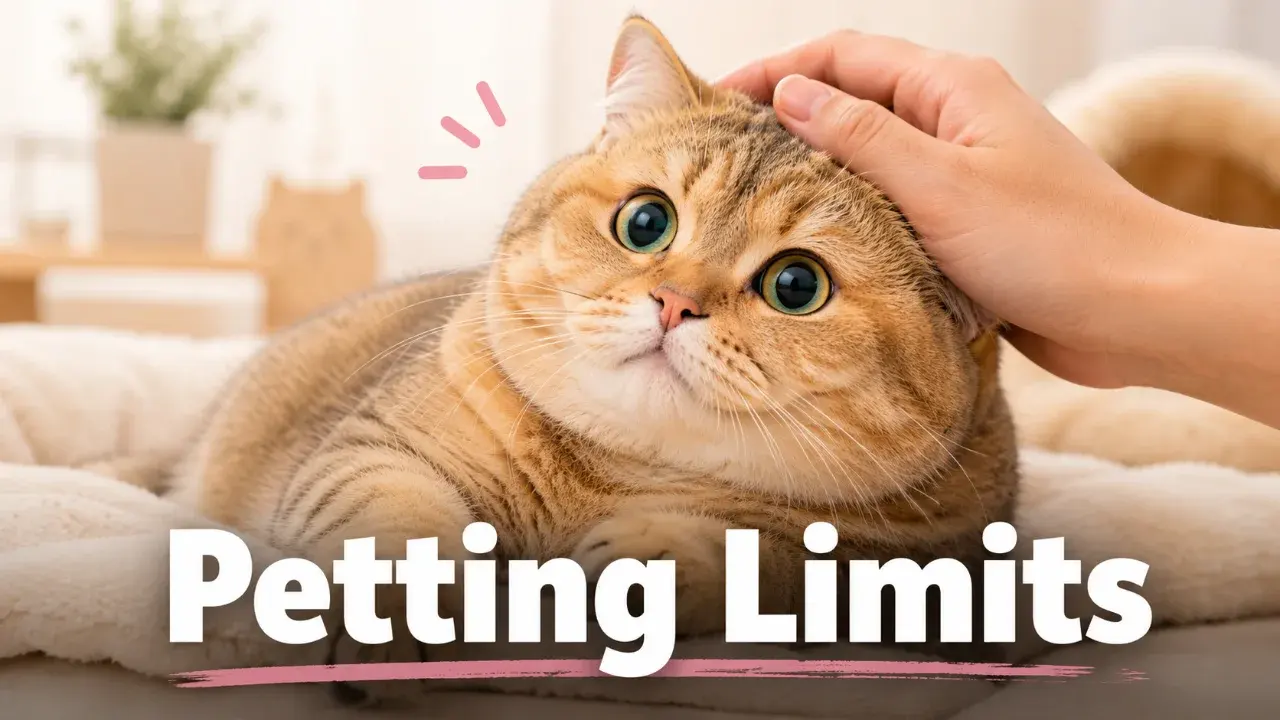
A cat that bites during petting is not always being “mean.” Often, the bite is a sign that touch has become too intense, uncomfortable, or confusing.
A cat can look perfectly relaxed one moment, then suddenly turn and bite the hand petting them. To many owners, it feels personal. To the cat, it may simply mean: “That is enough.”
This behavior is often described as petting-induced aggression or overstimulation-related biting. Veterinary and animal behavior sources note that some cats tolerate less touching than others, and a bite may happen when petting continues past the cat’s comfort limit.
The confusing part is that the cat may have seemed to enjoy the attention at first. They may have climbed into your lap, purred, leaned into your hand, or closed their eyes. Then, without much warning, they nip, swat, twist away, or leave.
But the warning signs are often there. Humans just miss them.
The bite is usually not “out of nowhere”
Cats communicate with small changes before they use bigger ones.
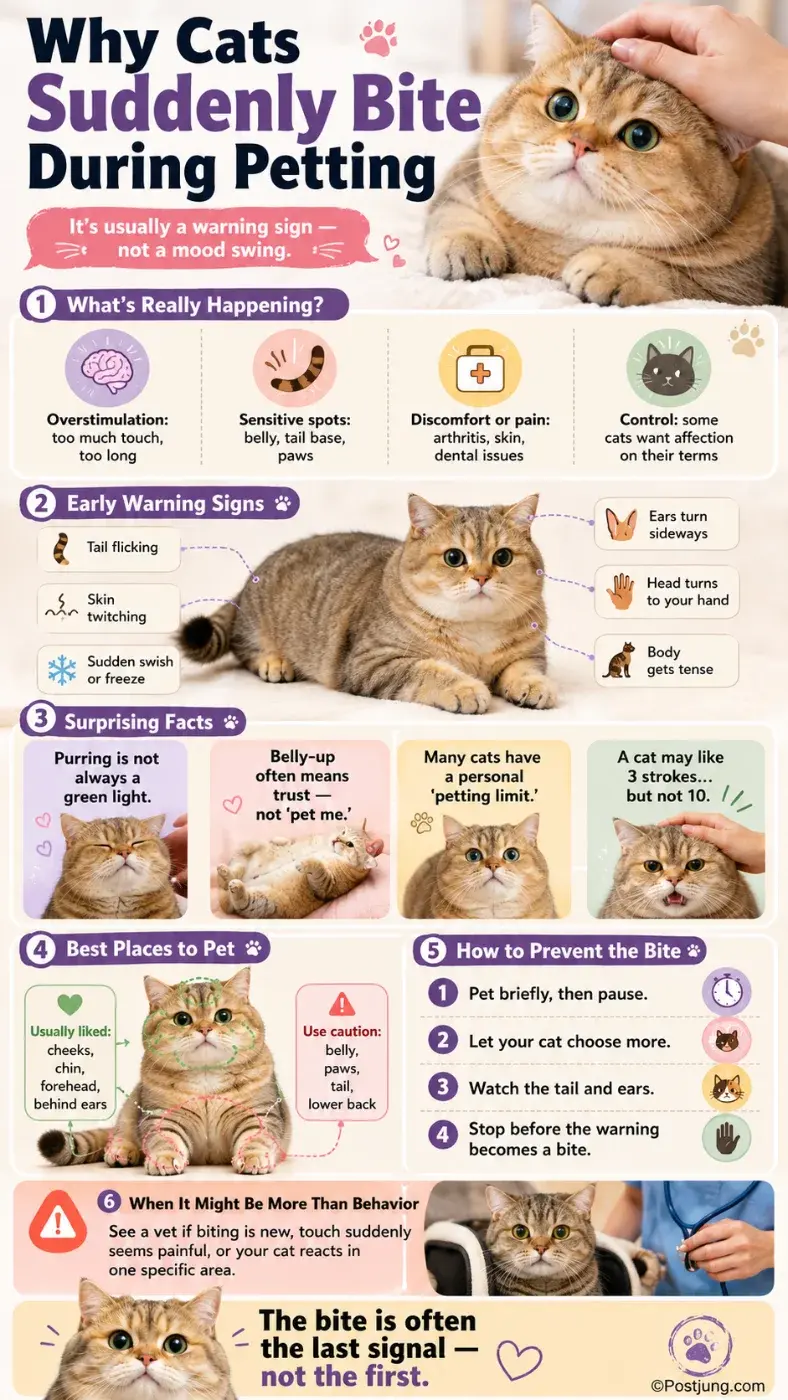
A cat that is becoming overstimulated may start flicking the tail, tensing the body, turning the head toward your hand, flattening the ears, rippling the skin along the back, or shifting from soft relaxation into alert stillness. Some cats stop purring. Others keep purring, which can make the mood harder to read.
That is why purring does not always mean keep going.
A cat may enjoy five strokes but dislike fifteen. Another may like chin scratches but hate being touched near the belly, tail base, paws, or lower back. Some cats want affection beside a person, but not on a lap. Some like short contact, then space.
The key is that petting is not one universal language. It is a negotiation.
Why petting can become too much
Petting can feel pleasant at first because touch is part of feline social behavior. Cats rub, groom, and lean against familiar animals and trusted people. But repeated stroking can also become irritating, especially if it continues in the same spot or reaches a sensitive area.
Cornell’s feline behavior guidance lists petting-induced aggression as one type of feline aggression and notes it may be related to overstimulation. ASPCA guidance similarly describes cats that suddenly become irritated during petting, nip or bite lightly, then move away.
That does not mean every bite has the same cause.
A cat might bite because touch has become too intense. They might be startled. They might be playing roughly. They might dislike being restrained. They might have learned that biting is the fastest way to end contact.
Pain can also matter. If a cat suddenly becomes more reactive to touch, especially in a specific area, it may be worth checking with a veterinarian. Dental pain, arthritis, skin problems, injury, or general illness can make handling feel unpleasant.
In other words, a sudden change deserves extra attention.
The human mistake: waiting for the bite
Many owners keep petting until the cat bites, then treat the bite as the first signal. For the cat, it may be the last signal.
A better approach is to end the interaction while the cat is still calm. Try a few gentle strokes, then pause. If the cat leans in, nudges your hand, or stays loose and relaxed, they may be inviting more. If the cat looks away, shifts position, twitches the tail, tenses, or walks off, let the moment end.
This teaches the cat that they do not need to escalate to be heard.
It also protects trust. Punishing a cat for biting can make the problem worse because the cat may become more anxious around hands. Behavior groups commonly recommend changing the handling pattern instead of forcing contact or scolding the cat.
The most useful rule is simple: stop before your cat has to say no loudly.
Where cats often prefer to be touched
Every cat is different, but many cats are more comfortable with petting around the cheeks, chin, forehead, and sides of the face. These areas are connected to scent-marking behavior, which is one reason many cats rub their faces against people or furniture.
Areas that are more likely to cause trouble include the belly, paws, tail, and sometimes the lower back. A cat exposing the belly is not always asking for a belly rub. It may simply mean the cat feels safe enough to relax.
For owners, this is one of the biggest misunderstandings: trust is not the same as permission.
A cat can trust you and still dislike a specific type of touch.
How to reduce petting bites
The safest solution is not to avoid affection. It is to make affection easier for the cat to control.
Keep petting sessions shorter. Focus on areas your cat clearly enjoys. Use a light touch. Pause often. Watch the tail, ears, skin, body tension, and head movement. Let the cat leave.
For cats with a predictable limit, count the strokes. If your cat usually bites after ten strokes, stop at five or six. Over time, calm sessions may help rebuild a better association with handling.
For playful cats, redirect energy with a toy instead of using hands as targets. Hands should feel predictable, not like prey.
If a cat bites hard, breaks skin, becomes aggressive in many situations, or suddenly reacts to touch after years of being comfortable, a veterinarian or qualified behavior professional can help rule out pain and guide a safer plan.
Cats are not trying to ruin the cuddle. They are often trying to end it in the only way that has worked before.
The more we notice the small signals, the less they need the big ones.
Cornell Feline Health Center, VCA Hospitals, ASPCA, Animal Humane Society
REFERENCES:
https://www.vet.cornell.edu/departments-centers-and-institutes/cornell-feline-health-center/health-information/feline-health-topics/feline-behavior-problems-aggression
https://vcahospitals.com/know-your-pet/cat-behavior-problems---aggression---petting-aggression
https://www.aspca.org/pet-care/cat-care/common-cat-behavior-issues/aggression-cats
https://www.animalhumanesociety.org/resource/petting-induced-and-play-aggression-cats

เขียนโดย Postjung Insights
 ดูหนัง–ซีรีส์ฟรีอาจไม่ฟรีอย่างที่คิด! เปิดโทษละเมิดลิขสิทธิ์ เตือนคนปล่อยคอนเทนต์เถื่อน เสี่ยงทั้งคุกทั้งปรับ
 แมคาเดเมีย (Macadamia): ราชินีแห่งถั่ว กับขุมทรัพย์โภชนาการจากออสเตรเลีย
 โรงเรียนที่มีนักเรียนมากที่สุดในไทย
 รู้หรือไม่? เปิดรายได้พนักงานส่งพัสดุของแต่ละแอป วันหนึ่งได้เท่าไร
 รมว.วัฒนธรรมเอาจริง! จ่อส่งหนังสือทักท้วง Miss Universe Cambodia ปมใช้ภาพหญิงกำแพงเพชร หากไม่แก้ เตรียมใช้กฎหมาย
 5 คณะที่เรียนจบมาแล้ว มีอาชีพรองรับมากกว่าที่คิด
 อำเภอที่มีชื่ออำเภอสั้นที่สุด 3 อำเภอเท่านั้นในประเทศไทย
 MRT เตาปูนกลับมาเปิดปกติแล้ว รมช.คมนาคมเผยปมไฟไหม้ พบประกายไฟจากชุดสายไฟ 750 โวลต์
 แมงป่อง: แมลงนักล่าสายพันธุ์โบราณของโลก ที่ยังคงอยู่มาจนถึงปัจจุบัน
 ตาราง “เด่นเหนือเด่นใต้” งวด 1 ต.ค. 69 เปิดข้อมูลตามโพย เลขไหนอยู่ตรงไหน
 นักวิชาการ ม.อ.ไม่ปลื้ม! "ลิซ่า" ชวนดื่มหมดแก้ว ลั่น! เหยื่อเหล้าในไทยตายเยอะกว่าก่อการร้ายทั่วโลก
 มัดรวมจับเลขชน สัตว์นำโชค 1 ตุลาคม 2569
 English Edition