Why Ear Cleaning Is Riskier Than Most People Think

Earwax helps protect the ear, but many cleaning habits push wax deeper or irritate the ear canal. Here’s what safe ear care actually means — and when symptoms need a doctor’s help.
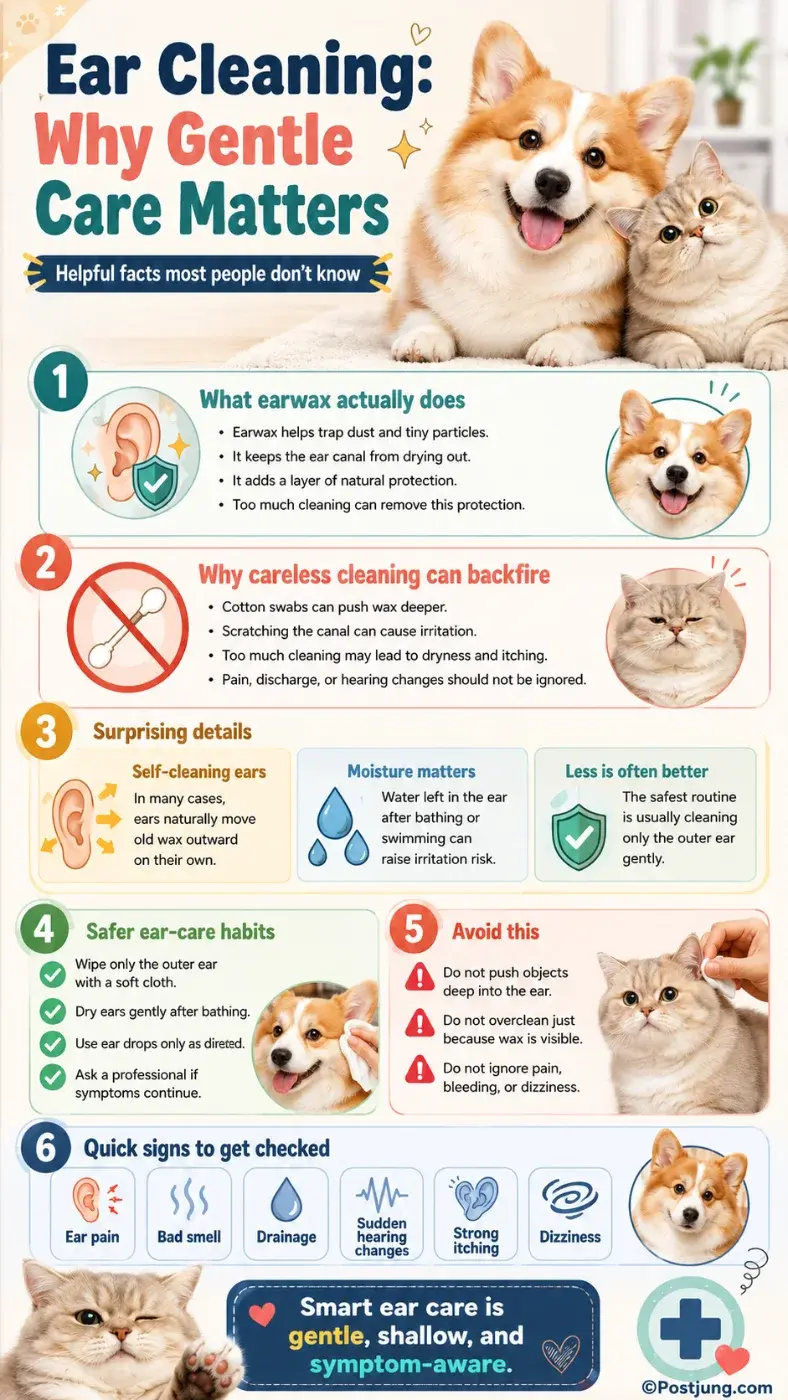
The safest ear cleaning is usually less aggressive than people think: clean the outside, not deep inside. Earwax may look unpleasant, but it is part of the ear’s natural defense system, helping protect the ear canal from dirt, dust, irritation, and bacteria.
That is why careful ear cleaning matters. The goal is not to remove every trace of wax. The goal is to avoid turning a normal protective substance into a painful blockage, scratch, infection, or injury.
Earwax is not the enemy
Earwax, also called cerumen, is produced by glands in the outer ear canal. It traps particles before they travel deeper toward the eardrum, and in most people, it slowly moves outward on its own. Chewing, jaw movement, and normal skin movement help old wax make its way toward the ear opening, where it can fall away or be washed off during bathing.
This is the part many people misunderstand: the ear is partly self-cleaning. A small amount of wax is not a sign of poor hygiene. In fact, removing too much wax can leave the ear canal dry, irritated, and more vulnerable to discomfort.
Problems begin when wax becomes too hard, too much, or trapped. A blockage can cause symptoms such as earache, fullness, ringing, itching, dizziness, hearing changes, odor, discharge, or pain. Those symptoms do not always mean wax is the cause, which is why persistent symptoms should be checked by a healthcare professional.
The cotton swab mistake
Cotton swabs are one of the most common reasons ear cleaning goes wrong. They may seem harmless, especially because they remove visible wax near the opening. But when pushed into the ear canal, they can push wax deeper instead of pulling it out. Mayo Clinic notes that earwax blockages often happen when people try to remove wax themselves with cotton swabs or other objects.
The American Academy of Otolaryngology–Head and Neck Surgery warns against putting objects such as cotton swabs, hair pins, keys, or toothpicks into the ear because they can injure the canal or eardrum.
The practical rule is simple: do not dig inside the ear canal. If a cotton swab is used at all, it should be limited to the outer ear and the visible opening, not pushed inward.
Why “too clean” can become a problem
Overcleaning can irritate the thin skin of the ear canal. That irritation can cause itching, which makes people clean more, creating a cycle of scratching, dryness, and more discomfort.
In warm and humid places, including Thailand and much of Southeast Asia, ears may feel damp after sweating, showering, or swimming. That feeling can make people want to clean more often. But moisture and irritated skin can also increase the risk of swimmer’s ear, a bacterial infection of the outer ear canal. The CDC says swimmer’s ear is often linked to water staying in the outer ear canal for a long time, creating a moist environment where bacteria can multiply.
That does not mean everyone needs special ear products after swimming. For most people, gentle drying is enough. The CDC recommends drying ears well with a towel, tilting the head to help water drain, and avoiding objects in the ear canal.
What safer ear care looks like
For everyday cleaning, the safest habit is modest: wash normally, then gently wipe the outer ear with a washcloth or towel. Cleveland Clinic advises cleaning the outside of the ear and drying the ears after bathing, while avoiding anything placed inside the ear canal.
For people who feel they have wax buildup, over-the-counter ear drops may help soften wax in some cases. Cleveland Clinic lists options such as saline, mineral oil, baby oil, glycerin, and peroxide-based drops, but these should be used according to directions and not treated as a cure-all.
Some people should be especially cautious with home methods. Anyone with ear tubes, a known eardrum perforation, ear surgery history, ear drainage, significant pain, or suspected infection should avoid experimenting and ask a healthcare professional first. Mayo Clinic specifically warns that the ear canal and eardrum are delicate and can be damaged easily.
Ear candles are another method to avoid. They are often marketed as “natural,” but the American Academy of Otolaryngology–Head and Neck Surgery says there is no evidence they remove impacted earwax and that they can seriously damage the ear canal and eardrum.
When ear cleaning should become a doctor visit
Earwax removal is not always a do-it-yourself job. A doctor, nurse, or ear specialist can look inside the ear with an otoscope and determine whether wax is actually the problem. That matters because ear pain, hearing loss, dizziness, discharge, or a blocked feeling can also point to infection, inflammation, eardrum issues, or other conditions.
Professional removal may involve safe tools, suction, or irrigation, depending on the person’s ear and medical history. People who wear hearing aids or earplugs frequently may also need more guidance, since those can contribute to wax buildup in some cases.
The most useful takeaway is not that ears should never be cleaned. It is that ear cleaning should stay gentle, shallow, and symptom-aware. The outside of the ear can be cleaned like any other skin. The deeper canal deserves more respect.
A little wax is normal. Pain, drainage, bleeding, sudden hearing change, strong dizziness, or symptoms that do not improve are not things to ignore. For those, careful ear care means letting a qualified professional take a look.
American Academy of Otolaryngology–Head and Neck Surgery, Mayo Clinic, Cleveland Clinic, Centers for Disease Control and Prevention
REFERENCES:
https://www.entnet.org/resource/aao-hnsf-updated-cpg-earwax-press-release/
https://www.mayoclinic.org/diseases-conditions/earwax-blockage/symptoms-causes/syc-20353004
https://my.clevelandclinic.org/health/diseases/14428-ear-wax-buildup--blockage
https://www.cdc.gov/healthy-swimming/prevention/preventing-swimmers-ear.html

เขียนโดย Postjung Insights
 รู้หรือไม่? เปิดรายได้พนักงานส่งพัสดุของแต่ละแอป วันหนึ่งได้เท่าไร
 อำเภอที่มีชื่ออำเภอสั้นที่สุด 3 อำเภอเท่านั้นในประเทศไทย
 เปิด 5 โรงเรียนหญิงล้วนเก่าแก่ของไทย ที่มีประวัติยาวนานกว่าศตวรรษ
 โรงเรียนที่มีนักเรียนมากที่สุดในไทย
 เปิดรายชื่อโรงเรียนในไทยที่ “ว่ายน้ำ” อยู่ในหลักสูตร เรียนจริงตั้งแต่อนุบาลถึงมัธยม
 แปลปกสลาก งวด 1 ต.ค. 69 ส่องตัวเลขจากภาพปกสลากกินแบ่งรัฐบาล
 5 คณะที่เรียนจบมาแล้ว มีอาชีพรองรับมากกว่าที่คิด
 ทำไมของพลาสติกเก่าบางชิ้นถึง “เหนียว” ขึ้นมาเอง ทั้งที่ไม่ได้เปื้อนอะไร?
 จุฬาฯ มหาวิทยาลัยแห่งแรกของไทย มีจุดเริ่มต้นในสมัยรัชกาลที่ 5
 ตาราง “เด่นเหนือเด่นใต้” งวด 1 ต.ค. 69 เปิดข้อมูลตามโพย เลขไหนอยู่ตรงไหน
 สถิติย้อนหลัง 10 ปี ออกเลขไหนบ้างมาดูกัน
 อุทยานเขาใหญ่เรียกตัว “ตีนผี” หลังขับจี้ช้างป่าพ่อลูก ลั่นระยะ 50 เมตรต้องจำให้ขึ้นใจ5 คณะที่เรียนจบมาแล้ว มีอาชีพรองรับมากกว่าที่คิดเปิดรายชื่อโรงเรียนในไทยที่ “ว่ายน้ำ” อยู่ในหลักสูตร เรียนจริงตั้งแต่อนุบาลถึงมัธยม
 Google ยอมรับแล้ว! Gemini AI เข้าถึงระบบบริษัทจริง 3 แห่ง ระหว่างการทดสอบความปลอดภัย
 เลขเด็ดปฏิทิน "หลวงปู่โต๊ะ" งวดวันที่ 1 ตุลาคม 69..ส่องเลย เลขไหนให้โชค!ทำไมของพลาสติกเก่าบางชิ้นถึง “เหนียว” ขึ้นมาเอง ทั้งที่ไม่ได้เปื้อนอะไร?อุทยานเขาใหญ่เรียกตัว “ตีนผี” หลังขับจี้ช้างป่าพ่อลูก ลั่นระยะ 50 เมตรต้องจำให้ขึ้นใจ
 English Edition