Why Pet Sitters Can Be Better Than Boarding for Some Pets

Leaving a pet behind is not just a travel detail. For some animals, the choice between boarding and a pet sitter can change how safe, calm, and cared for they feel while their owner is away.
Boarding facilities can be excellent when they are clean, well staffed, and prepared for emergencies. But for pets that are shy, older, easily stressed, or deeply attached to their daily routine, staying at home may be the kinder option.
Animal-welfare groups often point to one simple reason: familiar surroundings matter. The RSPCA says pets can become stressed when an owner is away because their normal routine changes, and that having someone care for them at home is usually best because it keeps things as familiar as possible. The group says this is especially true for cats, rabbits, and small animals that may not be used to travel or new places.
That does not mean boarding is bad. It means the best choice depends less on what is convenient for the owner and more on the animal’s personality, health, habits, and stress level.
Home can feel safer for routine-loving pets
A pet sitter allows an animal to remain in its own space. The food bowl is in the same spot. The bed smells familiar. The litter box, scratching post, toys, hiding places, and daily sounds are unchanged.
That can be especially important for cats. Many cats are territorial animals, and a sudden move to a new environment can make them hide, stop eating normally, or act differently. A quiet cat that seems “easy” at home may not feel easy at all inside a busy boarding space.
Dogs can also benefit from staying home, especially if they are nervous around unfamiliar dogs, sensitive to noise, or uncomfortable sleeping away from their people. Some dogs enjoy boarding because they like activity and social contact. Others find the same environment overwhelming.
The BC SPCA notes that a pet sitter may visit or stay in the home to feed, walk, and play with pets, allowing them to remain in a familiar environment and maintain their daily routine. It also cautions that some pets may not respond well to strangers, which is why a slow introduction before the owner leaves can help.
The key point is not that pet sitters are always better. It is that the quietest option may be the safest option for certain animals.
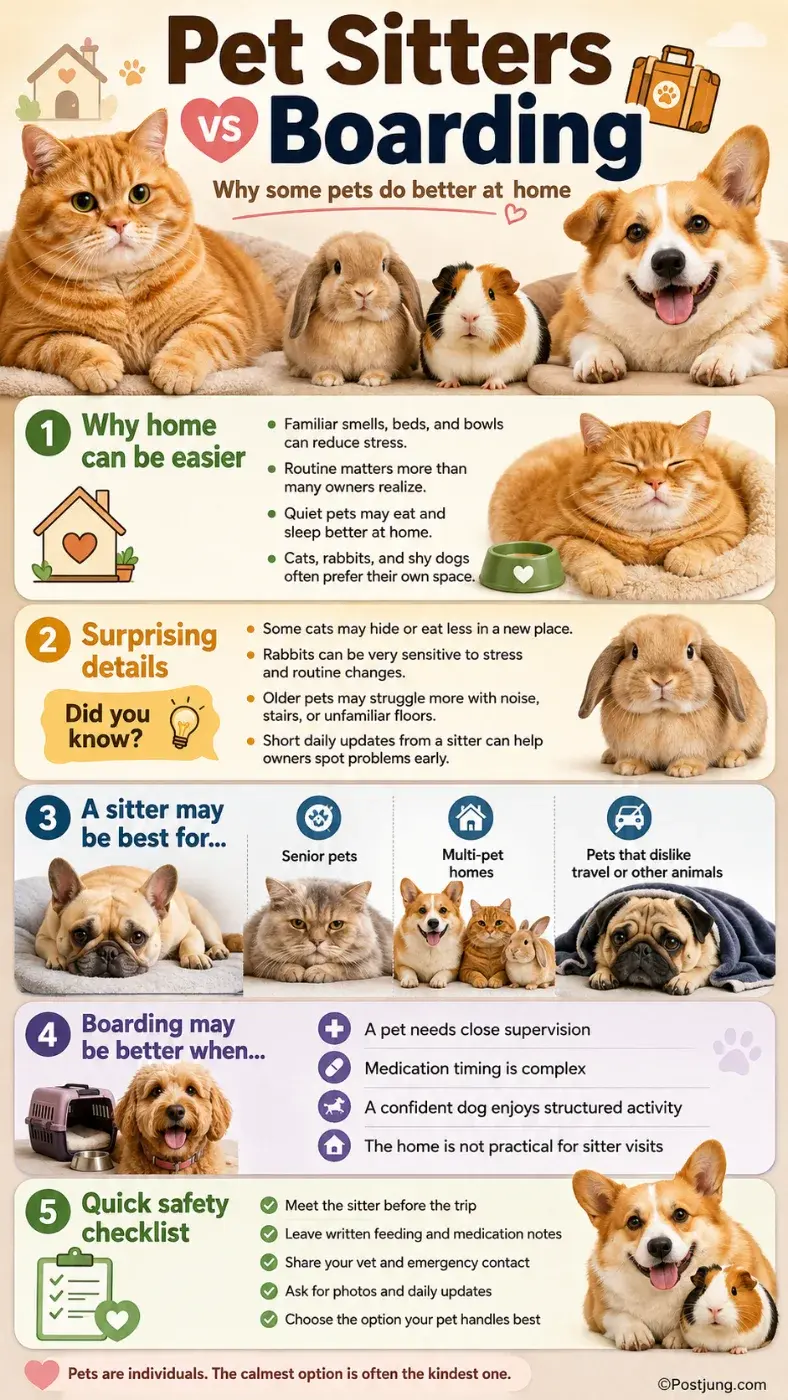
Some pets are poor candidates for busy boarding
Boarding can involve new smells, unfamiliar people, barking dogs, different feeding times, and less control over the animal’s environment. A good facility works hard to reduce those stressors. Still, some pets are more vulnerable to them.
A sitter may be a better fit for pets that are:
Older and less adaptable to change
Anxious when separated from familiar spaces
Fearful of other animals
Sensitive to noise
Recovering from a minor illness or procedure, with veterinary approval
Used to a strict feeding, medication, or bathroom routine
Part of a multi-pet household that feels calmer when kept together
Small animals may also do better at home. Rabbits, guinea pigs, birds, reptiles, and fish often have specific housing, temperature, diet, and handling needs. Moving them can create risk if the caregiver is not familiar with that species.
For global readers, this matters because pet-care options vary widely by country. In the United States, the United Kingdom, Thailand, and many other places, owners may choose between professional sitters, friends or relatives, veterinary boarding, pet hotels, catteries, and home-based boarding. The name of the service matters less than the quality of care.
Boarding still has real advantages
There are situations where boarding may be the smarter choice.
A well-run boarding facility may offer staff on site, secure enclosures, structured feeding, cleaning routines, and experience handling many animals. Veterinary boarding can be especially useful for pets that need medical monitoring, injections, frequent medication, or observation by trained staff.
Boarding can also be a better match for confident, social dogs that enjoy people, play sessions, and structured activity. Some dogs become lonely with only short sitter visits. For them, a reputable facility with careful supervision may provide more stimulation than staying home alone most of the day.
The American Animal Hospital Association advises owners to evaluate boarding options carefully, discuss a pet’s routine and special needs, pack familiar food and comfort items, provide medications with clear instructions, update identification, and check with a veterinarian before a boarding stay.
That same logic applies to sitters. A person entering the home should not be chosen casually just because they are available. Trust is part of the safety plan.
The sitter matters more than the label
A good pet sitter is not just someone who likes animals. The sitter needs to understand the pet’s routine, body language, feeding needs, medication schedule, emergency contacts, and house rules.
The RSPCA recommends meeting a pet sitter before hiring them, checking references, confirming insurance for emergencies, and arranging introductory sessions so the pet can settle with the new caregiver before the owner leaves.
Owners should leave written instructions that are boringly specific: feeding amounts, medication times, walking routes, hiding places, litter habits, favorite toys, forbidden foods, escape risks, and what behavior would be unusual.
A sitter should also know when to call the veterinarian. A cat that has not eaten, a dog with repeated vomiting, a rabbit that stops passing stool, or a bird that suddenly becomes quiet can require urgent attention. The AVMA advises pet owners to provide up-to-date medical information, vaccination history, and relevant care instructions when someone else is responsible for an animal’s care.
For longer trips, daily updates can give owners peace of mind. Photos, short notes, feeding confirmations, and medication check-ins are not just emotional comfort. They create a record that the pet is being seen, handled, and monitored.
What to ask before choosing
The best decision starts with honest questions.
Does the pet relax around strangers, or hide from them?
Does the pet need medication at exact times?
Would barking, other animals, or a new room cause stress?
Is the home safe for sitter visits, including locks, keys, alarms, and emergency access?
Is the boarding facility clean, calm, and willing to answer detailed questions?
Does either option have a backup plan if the sitter gets sick or the facility has an emergency?
The BC SPCA recommends asking boarding services about emergency plans, sanitation, temperature, noise levels, welfare checks, daily care schedules, overnight monitoring, and how staff recognize signs of stress.
For pet sitters, owners should ask about experience, references, insurance, emergency procedures, comfort with the species, and whether the sitter uses humane, reward-based handling. A sitter who is confident with dogs may not be qualified for rabbits. A cat lover may not know how to manage a diabetic pet. A friendly neighbor may be perfect for feeding fish but not for giving medication to an anxious dog.
The best choice is the one your pet can handle
Pet care while traveling is often discussed as a convenience issue. Really, it is a welfare issue.
Some pets need the structure of a reputable boarding facility. Some need the calm of their own home. Some do best with a trusted friend or family member who already knows them. Others need a professional sitter who can follow detailed instructions and provide steady check-ins.
Owners should also be realistic. A sitter is not always available. Boarding may be necessary. A home may not be safe for drop-in visits. A pet with medical needs may require veterinary support. The right answer can change as the animal ages.
Before making a final choice, pet owners should speak with their veterinarian if their animal has anxiety, illness, medication needs, mobility problems, or a history of stress when routines change.
The most caring option is not the one that sounds most luxurious. It is the one that keeps the pet secure, understood, and as close as possible to normal until their person comes home.
American Veterinary Medical Association, RSPCA, American Animal Hospital Association, BC SPCA
REFERENCES:
https://www.avma.org/resources-tools/pet-owners/emergencycare/whos-charge-your-animals-care-while-youre-away
https://www.rspca.org.uk/adviceandwelfare/pets/general/holiday/leavingyourpet
https://www.aaha.org/resources/6-tips-to-prepare-your-pet-for-summertime-boarding/
https://spca.bc.ca/news/pet-care-travel/

เขียนโดย Postjung Insights
 ดูหนัง–ซีรีส์ฟรีอาจไม่ฟรีอย่างที่คิด! เปิดโทษละเมิดลิขสิทธิ์ เตือนคนปล่อยคอนเทนต์เถื่อน เสี่ยงทั้งคุกทั้งปรับ
 โรงเรียนที่มีนักเรียนมากที่สุดในไทย
 รมว.วัฒนธรรมเอาจริง! จ่อส่งหนังสือทักท้วง Miss Universe Cambodia ปมใช้ภาพหญิงกำแพงเพชร หากไม่แก้ เตรียมใช้กฎหมาย
 รู้หรือไม่? เปิดรายได้พนักงานส่งพัสดุของแต่ละแอป วันหนึ่งได้เท่าไร
 อำเภอที่มีชื่ออำเภอสั้นที่สุด 3 อำเภอเท่านั้นในประเทศไทย
 แมคาเดเมีย (Macadamia): ราชินีแห่งถั่ว กับขุมทรัพย์โภชนาการจากออสเตรเลีย
 5 คณะที่เรียนจบมาแล้ว มีอาชีพรองรับมากกว่าที่คิด
 งูมัลกา (Mulga Snake): นักล่าแห่งผืนดินแห้งแล้ง ของทวีปออสเตรเลีย กับฉายา King Brown กัดคนได้ถึงตาย
 MRT เตาปูนกลับมาเปิดปกติแล้ว รมช.คมนาคมเผยปมไฟไหม้ พบประกายไฟจากชุดสายไฟ 750 โวลต์
 ตาราง “เด่นเหนือเด่นใต้” งวด 1 ต.ค. 69 เปิดข้อมูลตามโพย เลขไหนอยู่ตรงไหน
 เปิด 5 โรงเรียนหญิงล้วนเก่าแก่ของไทย ที่มีประวัติยาวนานกว่าศตวรรษ
 แมงป่อง: แมลงนักล่าสายพันธุ์โบราณของโลก ที่ยังคงอยู่มาจนถึงปัจจุบัน
 English Edition