Why Tug Games Do Not Automatically Make Dogs Aggressive
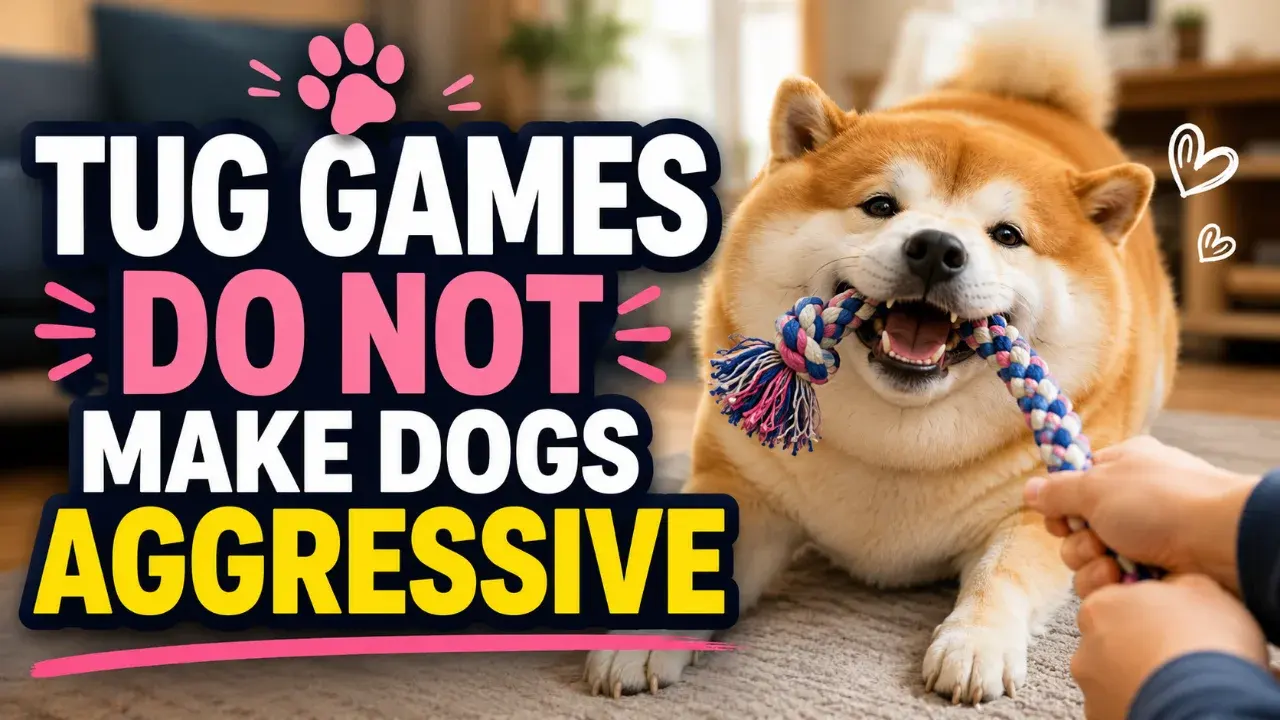
Tug-of-war can look intense, especially when a dog growls or pulls hard. But the real issue is not the game itself — it is how the game is managed, how the dog feels, and whether the owner knows when to pause.
Tug-of-war can look rough, but rough-looking play is not the same as aggression. For many dogs, tug is a normal, exciting game that can build focus, confidence, and connection with their owner when it is played with clear rules.
The idea that tug games “make dogs aggressive” has been repeated for years, often tied to older beliefs about dominance. Modern dog behavior guidance is more careful: tug is not automatically dangerous, and letting a dog win a tug toy does not mean the dog now thinks it controls the household.
A better question is not “Is tug bad?” It is: What is this dog learning during the game?
Tug is play, not a power struggle
Dogs use their mouths, bodies, and voices when they play. That can make normal play look dramatic to humans, especially for people who are new to dogs or who have only seen calm, quiet pet behavior indoors.
The American Kennel Club notes that well-managed tug games can have benefits and cites scientific research finding that tug does not promote aggressive or dominant behavior by itself. A study indexed by PubMed also found that dogs playing tug-of-war and fetch scored high in “confident interactivity,” while winning or losing games did not have a consistent effect on relationship test scores.
That matters because the old advice often focused on who “wins.” Owners were sometimes told never to let a dog take the toy at the end of a game. But for many dogs, winning the toy is simply part of the fun. The dog may run in a happy circle, bring it back, and ask to play again.
That is not a takeover. It is a game loop.
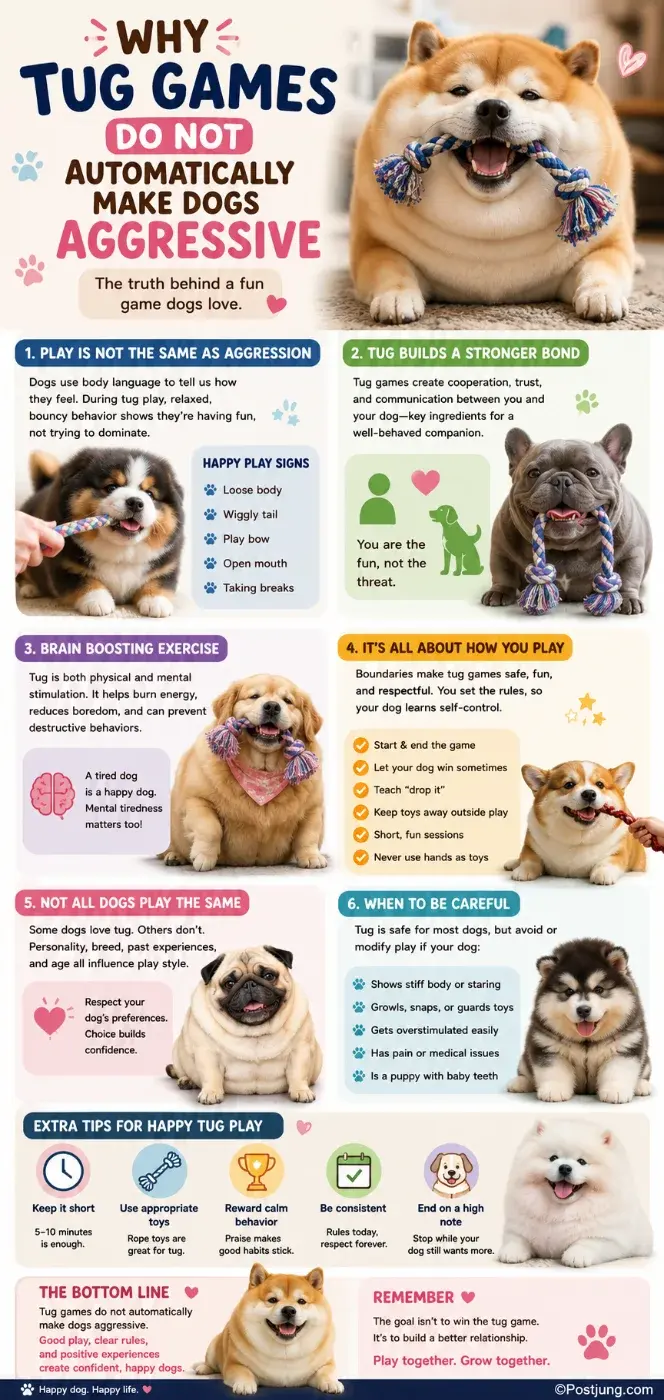
Growling during tug is not always a warning
One reason tug worries people is the sound. Some dogs growl loudly while pulling, shaking, or bouncing around with a toy. That can feel alarming, especially if the dog is large.
But growling has different meanings. The AKC explains that growling can be part of play and does not automatically mean a dog is aggressive. The context matters: loose body movement, play bows, bouncy behavior, and a relaxed return to the game are very different from a stiff body, hard staring, freezing, or guarding the toy from people.
This is where owners need to read the whole dog, not just one sound.
A playful tug growl usually comes with movement and engagement. A stress growl often comes with tension. If a dog becomes still, stiff, avoids contact, shows teeth in a tense way, snaps, guards the toy, or seems unable to calm down, the game should stop.
The safest rule is simple: play should stay loose and cooperative.
The real risk is poor control, not tug itself
Tug can become a problem when the dog has no boundaries during play. If the dog grabs hands, refuses to release, becomes frantic, guards toys, or keeps escalating after the owner pauses, the issue is not that tug magically created aggression. The issue is that the dog needs better structure, lower excitement, or professional help if guarding or biting is already present.
A useful tug game includes a start and a stop. The dog learns when the game begins, when it pauses, and how to release the toy. Teaching “drop it” is especially helpful because it turns releasing the toy into part of the game rather than a fight over possession. AKC training guidance describes “drop it” as an important cue that helps owners safely get objects away from dogs without chasing, grabbing, or prying open the dog’s mouth.
That point is bigger than tug. Dogs often pick up things they should not have: shoes, food scraps, children’s toys, or unsafe household objects. A dog that happily trades or releases on cue is safer than a dog that learns humans only take things away.
In good tug play, the toy becomes a shared object, not a prize humans must wrestle back.
How to play tug in a healthier way
The game works best when it is short, clear, and predictable.
Use a tug toy long enough to keep teeth away from hands. Invite the dog to play rather than letting the dog jump and grab whenever it wants. Tug side to side gently instead of yanking upward or whipping the dog’s neck. Take breaks before the dog becomes too excited.
Most importantly, build in a release cue. Pause, go still, ask for “drop it,” and reward the release by restarting the game. For many dogs, getting the game back is more exciting than a treat.
This teaches a powerful lesson: self-control makes the fun continue.
Puppies, senior dogs, small dogs, and dogs with dental, neck, back, or joint issues need gentler play. The AKC also cautions against playing too rough or too long and recommends moderating pressure based on the individual dog’s age and physical condition.
Dogs are individuals. The RSPCA also emphasizes that dogs vary in their health, age, athleticism, and activity needs. A game that suits a young, energetic terrier may not suit an older dog with sore joints.
When tug is not the right game
Tug may not be the best choice for every dog in every situation.
If a dog already shows resource guarding, snaps when people approach toys, bites hands during play, or struggles to calm down, owners should avoid turning tug into a high-arousal contest. In those cases, a qualified force-free trainer, veterinary behaviorist, or veterinarian can help identify whether the behavior is fear, pain, guarding, overexcitement, or poor impulse control.
Children also need special caution. Even a friendly dog can accidentally hurt a child during an intense game. Adults should supervise closely, choose safer games when needed, and teach children not to pull toys from a dog’s mouth.
The goal is not to ban tug. The goal is to match the game to the dog in front of you.
The better way to think about tug
Tug is one of those dog behaviors that can look worse than it is. A dog may growl, pull, shake the toy, and seem wildly excited — then instantly relax when the game ends. For many dogs, that is normal play.
The myth says tug creates aggression. The more useful view is that tug reveals and trains behavior. It can reveal whether a dog understands boundaries. It can reveal whether the owner recognizes stress signals. And with patient handling, it can teach release, focus, and cooperation.
A good tug game does not ask the dog to be emotionless. It teaches the dog how to be excited and still listen.
That is the real value: not less joy, but better communication.
American Kennel Club, PubMed, RSPCA
REFERENCES:
https://www.akc.org/expert-advice/advice/is-tug-of-war-bad-for-dogs/
https://pubmed.ncbi.nlm.nih.gov/12909524/
https://www.akc.org/expert-advice/training/why-dogs-growl-and-how-to-handle-it/
https://www.akc.org/expert-advice/training/teaching-your-dog-to-drop-it/

เขียนโดย Postjung Insights
 รู้หรือไม่? เปิดรายได้พนักงานส่งพัสดุของแต่ละแอป วันหนึ่งได้เท่าไร
 Google ยอมรับแล้ว! Gemini AI เข้าถึงระบบบริษัทจริง 3 แห่ง ระหว่างการทดสอบความปลอดภัย
 โรงเรียนที่มีนักเรียนมากที่สุดในไทย
 ตาราง “เด่นเหนือเด่นใต้” งวด 1 ต.ค. 69 เปิดข้อมูลตามโพย เลขไหนอยู่ตรงไหน
 เลขเด็ดปฏิทิน "หลวงปู่โต๊ะ" งวดวันที่ 1 ตุลาคม 69..ส่องเลย เลขไหนให้โชค!
 เปิด 5 โรงเรียนหญิงล้วนเก่าแก่ของไทย ที่มีประวัติยาวนานกว่าศตวรรษ
 จุฬาฯ มหาวิทยาลัยแห่งแรกของไทย มีจุดเริ่มต้นในสมัยรัชกาลที่ 5
 5 คณะที่เรียนจบมาแล้ว มีอาชีพรองรับมากกว่าที่คิด
 อำเภอที่มีชื่ออำเภอสั้นที่สุด 3 อำเภอเท่านั้นในประเทศไทย
 เปิดรายชื่อโรงเรียนในไทยที่ “ว่ายน้ำ” อยู่ในหลักสูตร เรียนจริงตั้งแต่อนุบาลถึงมัธยม
 อุทยานเขาใหญ่เรียกตัว “ตีนผี” หลังขับจี้ช้างป่าพ่อลูก ลั่นระยะ 50 เมตรต้องจำให้ขึ้นใจ
 ถ้าไม่กลัวเหนื่อย 7 อาชีพที่ตลาดยังต้องการ และค่าทักษะไปถึง 800 บาท/วัน
 😃 ชวนเข้ามาดูกันอีกกับคนที่มีร่างกายพิเศษจนเหมือนมีกล่องสมบัติที่หายาก 😯5 คณะที่เรียนจบมาแล้ว มีอาชีพรองรับมากกว่าที่คิดเปิดรายชื่อโรงเรียนในไทยที่ “ว่ายน้ำ” อยู่ในหลักสูตร เรียนจริงตั้งแต่อนุบาลถึงมัธยมGoogle ยอมรับแล้ว! Gemini AI เข้าถึงระบบบริษัทจริง 3 แห่ง ระหว่างการทดสอบความปลอดภัยเลขเด็ดปฏิทิน "หลวงปู่โต๊ะ" งวดวันที่ 1 ตุลาคม 69..ส่องเลย เลขไหนให้โชค!
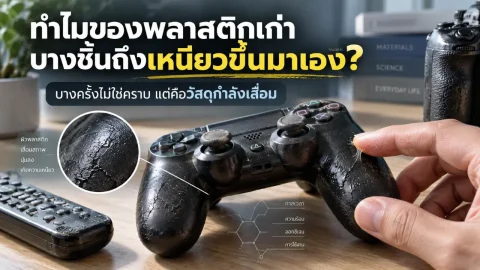 ทำไมของพลาสติกเก่าบางชิ้นถึง “เหนียว” ขึ้นมาเอง ทั้งที่ไม่ได้เปื้อนอะไร?
 English Edition