Why Sudden Weight Loss in Pets Should Never Be Ignored
A slimmer pet is not always a healthier pet. Unexplained weight loss can point to pain, stress, digestive trouble, or illness that needs veterinary attention.
A pet that suddenly looks thinner may not simply be “getting in shape.” In dogs and cats, unexplained weight loss can be one of the earliest visible signs that something inside the body is changing.
That does not mean every slimmer pet is seriously ill. A change in food, stress, activity, weather, dental pain, parasites, or aging can all affect weight. But when the loss is noticeable, fast, or unexplained, it deserves attention because pets often hide discomfort better than people do.
Veterinary guidance treats sudden weight gain or loss as a reason to contact a veterinarian promptly, especially when it appears with other symptoms such as lethargy, vomiting, diarrhea, abnormal drinking, or appetite changes. The Merck Veterinary Manual lists sudden weight gain or loss among signs that should be evaluated within 24 hours.
A smaller body can hide a bigger problem
Weight loss happens when a pet uses more energy than it takes in, cannot absorb nutrients properly, loses nutrients through vomiting or diarrhea, or stops eating enough. VCA Animal Hospitals notes that unintentional weight loss in dogs can be linked to normal or abnormal causes, but faster weight loss is generally more concerning.
That is why the pattern matters.
A dog that gradually loses a small amount of weight after a veterinarian-approved diet plan is different from a dog that loses weight while eating normally. A cat that is intentionally losing weight under veterinary supervision is different from a cat that suddenly looks bony along the spine.
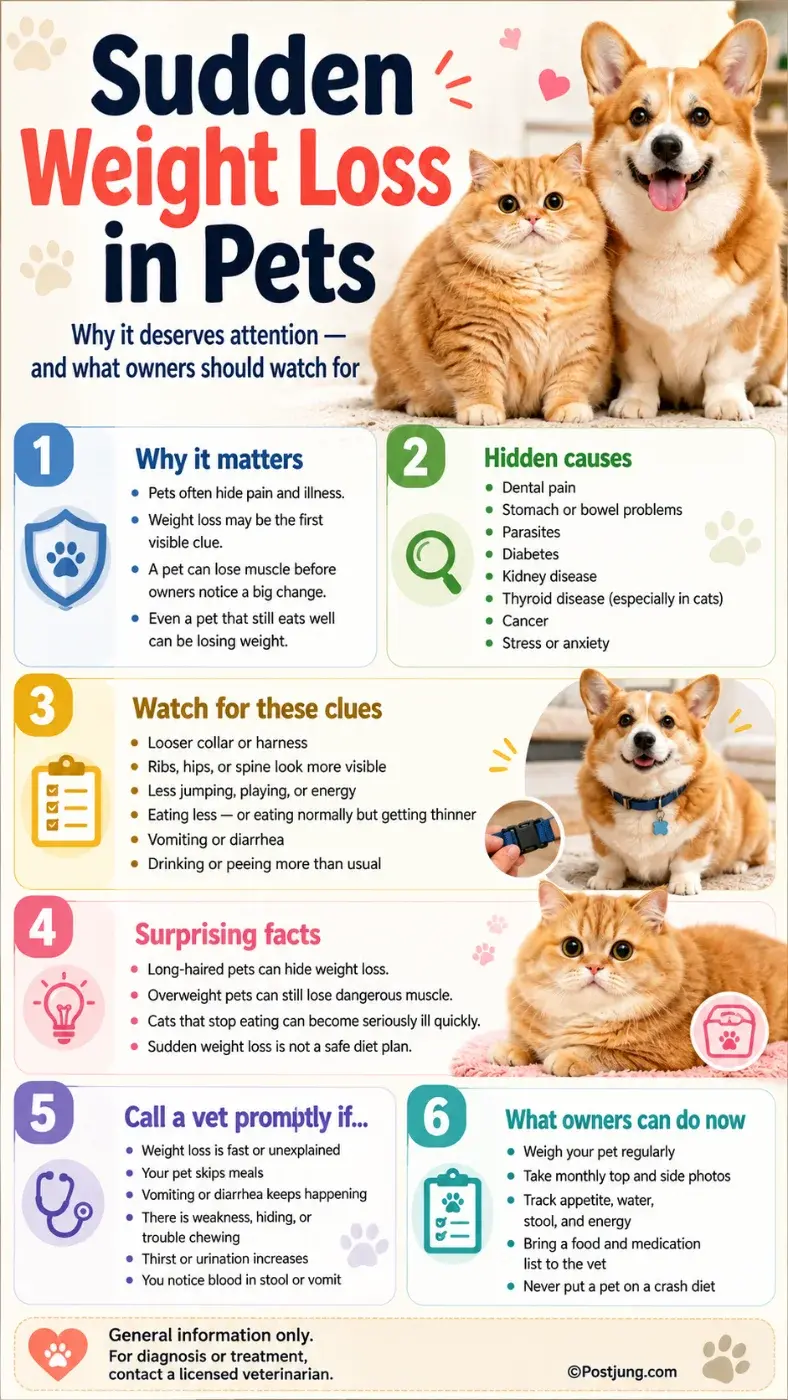
Owners often notice the change in small ways: a collar feels loose, the ribs are easier to feel, the hips look sharper, the pet seems weaker when jumping, or a once-round face looks narrower.
Those visual clues are easy to miss in fluffy breeds or long-haired cats. They are also easy to explain away in older pets. But age alone is not a diagnosis. Senior dogs and cats may lose muscle as they age, but unexplained weight loss can also reflect pain, metabolic disease, dental trouble, kidney disease, diabetes, digestive disorders, cancer, parasites, or other conditions that need a proper exam.
Appetite can be misleading
One of the most confusing signs is weight loss with a normal or even increased appetite. Many owners assume that if a pet is still eating, the situation cannot be serious.
That is not always true.
Some conditions can make a pet lose weight even while eating. Others make eating painful or inefficient. Dental disease, swallowing problems, vomiting, diarrhea, increased urination, poor digestion, and nutrient loss can all change the balance between food intake and body weight. VCA’s clinical guidance on abnormal weight loss points owners toward questions veterinarians commonly ask, including appetite, food type, activity level, stool changes, vomiting, drinking, urination, parasite prevention, and medication use.
Cats require extra caution. Cornell University’s Feline Health Center notes that sustained appetite loss in cats can be a sign of many health problems, including diabetes, kidney disease, hepatic lipidosis, hyperthyroidism, pancreatitis, fever, respiratory disease, dental issues, and stress. It also warns that food avoidance can become serious quickly, especially in kittens.
For cat owners, the key point is simple: not eating is never just stubbornness if it continues or comes with other signs of illness.
What owners can check at home
A home check cannot replace a veterinary exam, but it can help owners describe the problem clearly.
Start with the body. Can you feel the ribs more easily than before? Are the hip bones or spine more prominent? Does the waist look sharply tucked? Is muscle disappearing from the shoulders or back legs?
The World Small Animal Veterinary Association’s body condition charts for dogs and cats use visible shape, rib feel, waist, abdominal tuck, and fat coverage to help assess whether a pet is under ideal, ideal, or over ideal. These tools are useful because weight alone does not tell the whole story. A 10-pound cat and a 50-pound dog can both be healthy or unhealthy depending on body frame, muscle, and body condition.
Then look at behavior. Is the pet still playful? Sleeping more? Hiding? Struggling to jump? Drinking more water? Urinating more often? Dropping food while chewing? Vomiting hairballs more often than usual? Having loose stool?
Those details matter because weight loss is rarely the only clue. The pattern around the weight loss often helps the veterinarian decide what to test first.
A simple weight log can also help. Small pets can lose a meaningful percentage of body weight before the change looks dramatic. Weighing a cat or small dog regularly, using the same scale when possible, can make subtle changes easier to catch.
Do not crash-diet an overweight pet
There is another important side to this topic: intentional weight loss should also be careful.
Many pets are overweight, and weight management can improve comfort and mobility when done properly. But cutting food sharply without guidance can create problems. Cornell’s canine weight-loss guidance says veterinarians can help determine a dog’s ideal body weight and calculate daily calorie needs; it also warns that simply restricting a maintenance diet may create nutritional deficiencies.
Cats need particular care. Cornell’s feline obesity guidance advises that feline weight-reduction programs should be done under veterinary direction and warns that sudden starvation diets can put cats at risk of hepatic lipidosis, a serious liver condition.
In other words, a planned diet is not just “less food.” It is a health plan.
When to call the vet sooner
Call a veterinarian promptly if weight loss is sudden, continues for more than a short period, or appears with other warning signs: refusing food, vomiting, diarrhea, weakness, hiding, breathing changes, increased thirst, increased urination, trouble chewing, bloody stool, black stool, pain, collapse, or major behavior change.
For urgent symptoms such as difficulty breathing, severe lethargy, inability to urinate, seizures, severe pain, or refusal to eat or drink, owners should seek emergency veterinary care rather than waiting. Merck’s pet-owner guidance lists several of these signs among reasons to see a veterinarian immediately.
The safest mindset is not panic. It is observation plus action.
A pet’s body often tells a quiet story before a crisis appears. Sudden weight loss is one of those signals. Catching it early can make the difference between a simple adjustment, an early diagnosis, and a problem that becomes harder to treat.
This article is general pet health information, not a diagnosis. Owners should contact a licensed veterinarian for advice about a specific dog, cat, or other companion animal, especially when weight loss is sudden or unexplained.
Merck Veterinary Manual, Cornell University College of Veterinary Medicine, VCA Animal Hospitals, World Small Animal Veterinary Association, American Veterinary Medical Association
REFERENCES:
https://www.merckvetmanual.com/multimedia/table/when-to-see-a-veterinarian
https://vcahospitals.com/know-your-pet/weight-loss-abnormal-in-dogs
https://www.vet.cornell.edu/departments-centers-and-institutes/cornell-feline-health-center/health-information/feline-health-topics/anorexia
https://www.vet.cornell.edu/departments-centers-and-institutes/riney-canine-health-center/canine-health-topics/obesity-and-weight-loss-dogs

เขียนโดย Postjung Insights
 อำเภอที่มีชื่ออำเภอสั้นที่สุด 3 อำเภอเท่านั้นในประเทศไทย
 รู้หรือไม่? เปิดรายได้พนักงานส่งพัสดุของแต่ละแอป วันหนึ่งได้เท่าไร
 Google ยอมรับแล้ว! Gemini AI เข้าถึงระบบบริษัทจริง 3 แห่ง ระหว่างการทดสอบความปลอดภัย
 5 คณะที่เรียนจบมาแล้ว มีอาชีพรองรับมากกว่าที่คิด
 โรงเรียนที่มีนักเรียนมากที่สุดในไทย
 เปิดรายชื่อโรงเรียนในไทยที่ “ว่ายน้ำ” อยู่ในหลักสูตร เรียนจริงตั้งแต่อนุบาลถึงมัธยม
 แปลปกสลาก งวด 1 ต.ค. 69 ส่องตัวเลขจากภาพปกสลากกินแบ่งรัฐบาล
 ตาราง “เด่นเหนือเด่นใต้” งวด 1 ต.ค. 69 เปิดข้อมูลตามโพย เลขไหนอยู่ตรงไหน
 เลขเด็ดปฏิทิน "หลวงปู่โต๊ะ" งวดวันที่ 1 ตุลาคม 69..ส่องเลย เลขไหนให้โชค!
 เปิด 5 โรงเรียนหญิงล้วนเก่าแก่ของไทย ที่มีประวัติยาวนานกว่าศตวรรษ
 สถิติย้อนหลัง 10 ปี ออกเลขไหนบ้างมาดูกัน
 ดอลลาร์จะล่มสลายจริงไหม?5 คณะที่เรียนจบมาแล้ว มีอาชีพรองรับมากกว่าที่คิดเปิดรายชื่อโรงเรียนในไทยที่ “ว่ายน้ำ” อยู่ในหลักสูตร เรียนจริงตั้งแต่อนุบาลถึงมัธยมGoogle ยอมรับแล้ว! Gemini AI เข้าถึงระบบบริษัทจริง 3 แห่ง ระหว่างการทดสอบความปลอดภัยเลขเด็ดปฏิทิน "หลวงปู่โต๊ะ" งวดวันที่ 1 ตุลาคม 69..ส่องเลย เลขไหนให้โชค!
 ทำไมของพลาสติกเก่าบางชิ้นถึง “เหนียว” ขึ้นมาเอง ทั้งที่ไม่ได้เปื้อนอะไร?
 อุทยานเขาใหญ่เรียกตัว “ตีนผี” หลังขับจี้ช้างป่าพ่อลูก ลั่นระยะ 50 เมตรต้องจำให้ขึ้นใจ
 English Edition