Why Some Cats Hate Nail Clippers — and What Helps
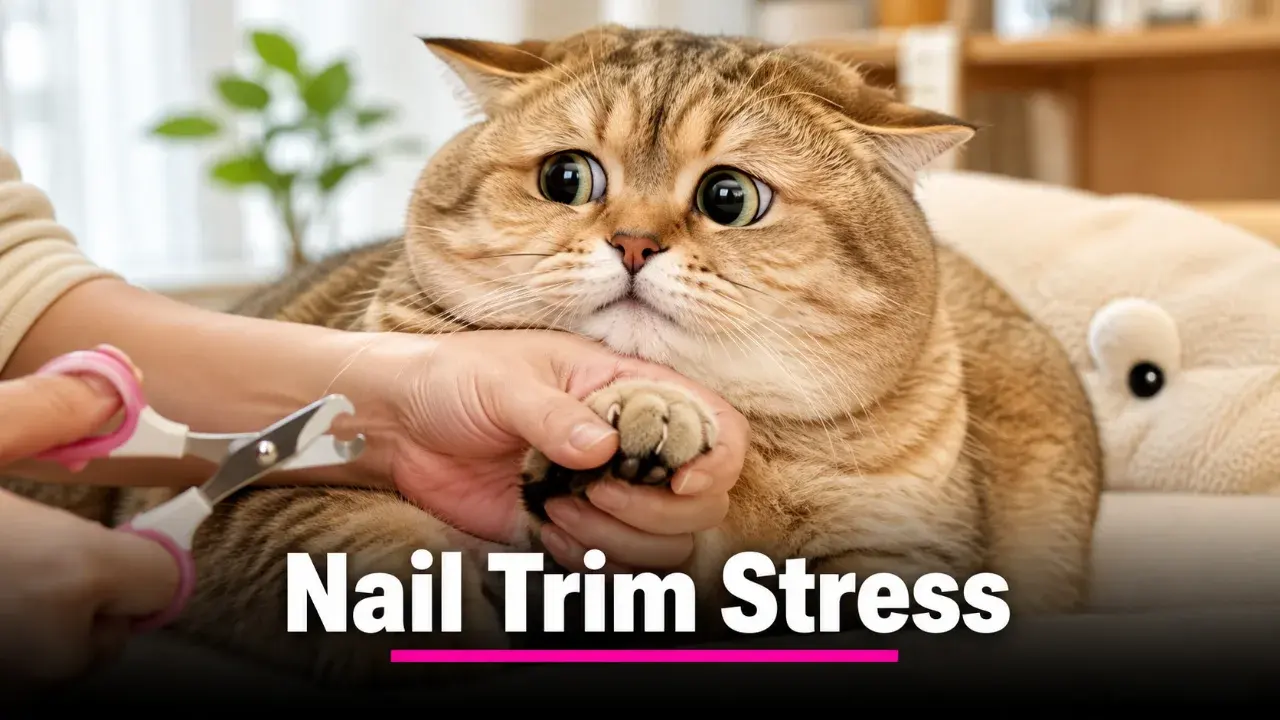
A cat’s fear of nail clippers usually has less to do with the clipper itself and more to do with paws, pressure, sound, restraint, and memory. The good news: slower handling and smaller steps can make a real difference.
Some cats see nail clippers and vanish. Others freeze, pull their paws away, or turn a simple grooming task into a full household negotiation.
The reaction can look stubborn, but it usually makes sense. For many cats, nail clipping combines several things they dislike at once: having their paws held, hearing a sharp clipping sound, feeling pressure on the toe, and losing control of the situation.
That does not mean nail trims are always bad. For many indoor cats, older cats, or cats with mobility issues, trimming claws can help prevent overgrowth, snagging, and painful problems. VCA Animal Hospitals notes that indoor cats may need regular trims, and older cats can be more prone to overgrown nails because they may scratch less as they age.
The challenge is helping the cat feel safe enough to cooperate.
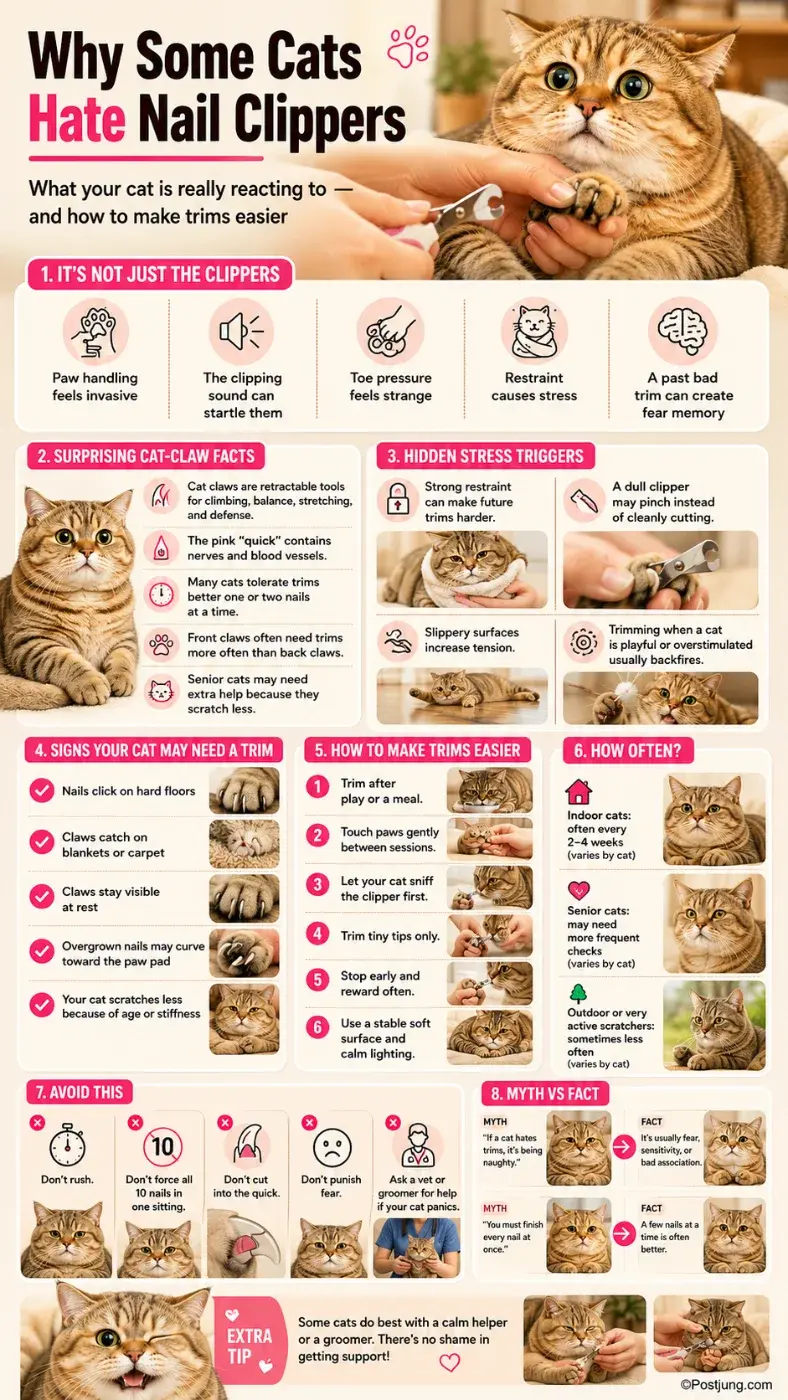
Why paws are such a big deal
A cat’s paws are not just cute. They are tools for balance, climbing, scratching, landing, grooming, and defense. ASPCA notes that healthy feet help cats scratch, climb, and make those acrobatic landings people love to watch.
So when a person grabs a paw, presses a toe, and brings in a metal tool, the cat may read the moment as a loss of control. Even a gentle hold can feel intense if the cat has not learned that paw handling is safe.
This is why some cats tolerate petting but hate nail trims. Petting usually lets the cat move away. Nail clipping often involves restraint, focus, and a tool near a sensitive body part.
The sound can be part of the fear
The clip itself can startle a cat. The small snap of the blades may not bother a person, but to a cat already watching the tool closely, it can feel sudden.
That is why the ASPCA recommends getting a cat comfortable with the sound before attempting a real trim, even suggesting practice with uncooked spaghetti in the clippers while rewarding the cat.
That little detail matters. A cat may not hate the nail trim in theory. It may hate the surprise.
The quick is the part you really need to avoid
Inside a cat’s claw is the quick, the sensitive pink area that contains nerves and blood vessels. Cornell Feline Health Center explains that cutting into the quick can cause bleeding and pain, while VCA advises trimming gradually rather than taking off too much at once.
For cats with light-colored claws, the quick is usually easier to see. With dark claws, it can be harder, which is why careful, tiny cuts are safer.
A cat that has had the quick cut before may remember the experience. The next time the clippers appear, the cat may react before anything has happened. In that case, the problem is not attitude. It is memory.
Restraint can make things worse
A common mistake is trying to “just get it over with.” That can work once, but it often teaches the cat that nail trims mean being trapped.
VCA’s guidance is especially useful here: when restraining cats, less is more, and if a cat resists restraint, it is better to stop and contact a veterinarian for help or an in-person demonstration.
This is one reason towel wraps are not a magic fix. Some cats feel safer with gentle wrapping. Others panic because they feel trapped. The right method depends on the individual cat.
A calmer trim often starts days before the clippers
The best nail trim may begin with no trimming at all.
Start by touching the paw briefly when the cat is relaxed. Let go before the cat gets irritated. Offer a treat. Later, gently press one toe so the claw extends, then release. Reward again.
The goal is to teach the cat that paw handling predicts something good, not a struggle.
Once the cat accepts that, introduce the clipper nearby. Let the cat sniff it. Reward calm behavior. Then practice the sound away from the claw. Only after that should you try trimming one tiny tip.
For nervous cats, one nail is still progress. Cats Protection recommends stopping after one paw if needed and spacing claw clipping over several days so the cat does not become too distressed.
What not to do
Do not yell. Do not punish. Do not chase the cat with the clippers. Do not keep going when the cat is agitated.
ASPCA specifically advises against raising your voice, punishing the cat, rushing, or trying to trim when the cat is upset. It also recommends asking a vet or groomer for help if the cat refuses to allow clipping.
It is also worth checking whether the tool is part of the problem. Dull clippers can crush or split the nail. A clipper that is too large may feel awkward and make the person less precise. Some people prefer small scissors-style cat clippers; others use a different style. The safest tool is the one that allows a clean, controlled trim.
When nail trims matter most
Not every young, active cat needs frequent trimming. Cats Protection notes that many cats keep their claws in good condition by scratching, especially when they have appropriate surfaces available. Older cats or cats with arthritis or mobility problems may need more help.
Signs that claws may be too long include catching on blankets or carpets, visible claws while resting, difficulty retracting claws, tapping sounds on hard floors, or concern that claws may be growing toward the paw pads. Cats Protection advises contacting a vet if the claws change or appear to be growing into the pads.
That is the balance: nail trims should protect the cat, not frighten the cat.
A better way to think about it
A cat that hates nail clippers is not trying to be difficult. It may be protecting its paws, reacting to an old mistake, resisting restraint, or simply saying the process is too much, too fast.
The kindest approach is also usually the most effective one: slow down, use rewards, trim less, stop earlier, and build trust between sessions.
For some cats, the win is not trimming all claws in one sitting. The win is a cat that sees the clippers and does not run.
ASPCA, Cornell Feline Health Center, VCA Animal Hospitals, Cats Protection
REFERENCES:
https://www.aspca.org/pet-care/cat-care/cat-grooming-tips
https://www.vet.cornell.edu/departments-centers-and-institutes/cornell-feline-health-center/health-information/feline-health-topics/feline-behavior-problems-destructive-behavior
https://vcahospitals.com/know-your-pet/how-to-trim-a-cats-nails
https://www.cats.org.uk/help-and-advice/health/how-to-trim-cat-claws

เขียนโดย Postjung Insights
 รู้หรือไม่? เปิดรายได้พนักงานส่งพัสดุของแต่ละแอป วันหนึ่งได้เท่าไร
 ดูหนัง–ซีรีส์ฟรีอาจไม่ฟรีอย่างที่คิด! เปิดโทษละเมิดลิขสิทธิ์ เตือนคนปล่อยคอนเทนต์เถื่อน เสี่ยงทั้งคุกทั้งปรับ
 รมว.วัฒนธรรมเอาจริง! จ่อส่งหนังสือทักท้วง Miss Universe Cambodia ปมใช้ภาพหญิงกำแพงเพชร หากไม่แก้ เตรียมใช้กฎหมาย
 แมคาเดเมีย (Macadamia): ราชินีแห่งถั่ว กับขุมทรัพย์โภชนาการจากออสเตรเลีย
 MRT เตาปูนกลับมาเปิดปกติแล้ว รมช.คมนาคมเผยปมไฟไหม้ พบประกายไฟจากชุดสายไฟ 750 โวลต์
 ตาราง “เด่นเหนือเด่นใต้” งวด 1 ต.ค. 69 เปิดข้อมูลตามโพย เลขไหนอยู่ตรงไหน
 อำเภอที่มีชื่ออำเภอสั้นที่สุด 3 อำเภอเท่านั้นในประเทศไทย
 โรงเรียนที่มีนักเรียนมากที่สุดในไทย
 งูมัลกา (Mulga Snake): นักล่าแห่งผืนดินแห้งแล้ง ของทวีปออสเตรเลีย กับฉายา King Brown กัดคนได้ถึงตาย
 5 คณะที่เรียนจบมาแล้ว มีอาชีพรองรับมากกว่าที่คิด
 แมงป่อง: แมลงนักล่าสายพันธุ์โบราณของโลก ที่ยังคงอยู่มาจนถึงปัจจุบัน
 เปิด 5 โรงเรียนหญิงล้วนเก่าแก่ของไทย ที่มีประวัติยาวนานกว่าศตวรรษ
 English Edition