Why Cheap Pet Food Can Cost More Than It Seems
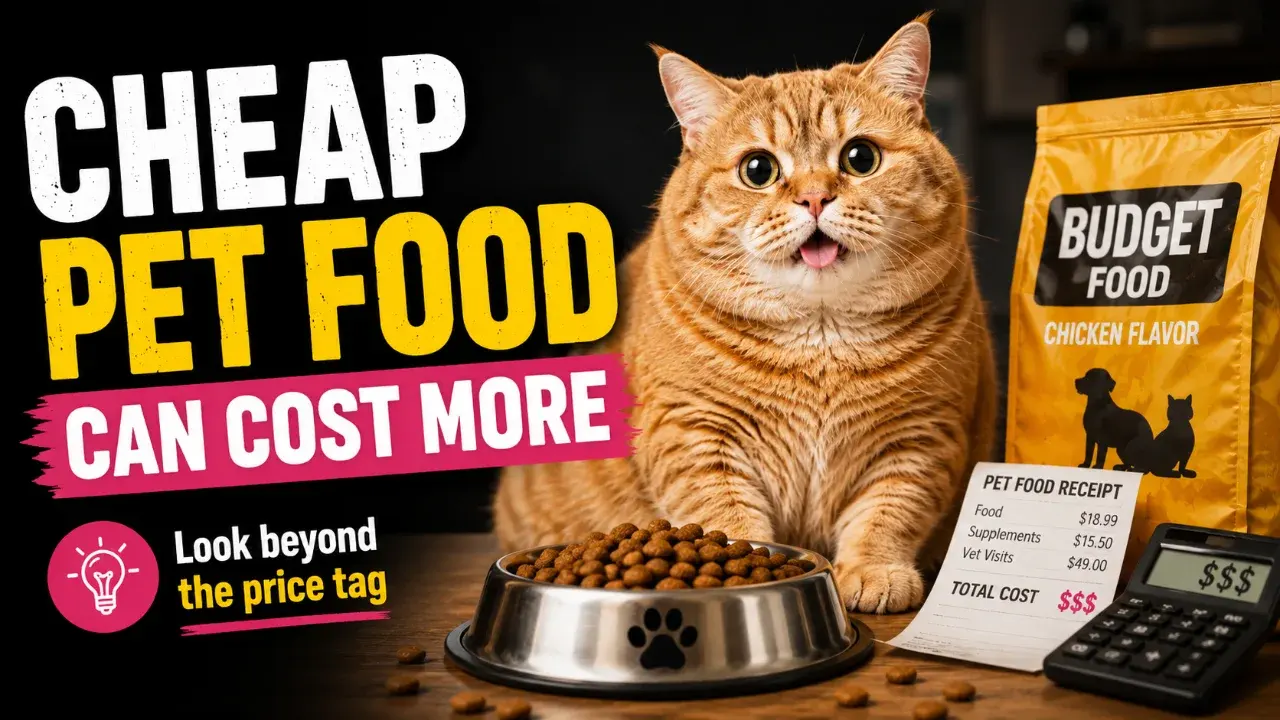
The cheapest bag on the shelf may not be the cheapest food to feed. Calories, nutrition, life stage, and how well a pet does on the diet can all change the real cost.
Cheap pet food can look like the obvious money-saving choice, especially when household budgets are tight. But the lowest price on the shelf does not always mean the lowest cost over time.
That does not mean every budget pet food is bad. It also does not mean expensive food is automatically better. The smarter question is different: What does this food actually cost to feed well?
The shelf price is only the beginning
Pet owners often compare food by the price of the bag, can, or pouch. That is understandable, but it can be misleading.
A smaller, cheaper bag may cost less at checkout while costing more per meal. A food with fewer calories per cup may require larger servings. A food that does not fit a pet’s age, size, or health needs may lead owners to add toppers, supplements, or extra treats to compensate.
The result is a familiar budget trap: the product feels cheaper, but the routine around it becomes more expensive.
A better comparison is the cost per day of feeding, not just the price per package. Tufts University’s veterinary nutrition team has shown that pet food costs can vary widely depending on food type, with dry food generally costing less than wet, fresh, or raw options in their comparison of foods for an average 55-pound dog.
“Complete and balanced” matters more than fancy words
One of the most useful lines on a pet food label is usually not the biggest text on the front. It is the nutritional adequacy statement.
In the U.S., the FDA explains that a pet food labeled “complete and balanced” is intended to be fed as a pet’s sole diet and must either meet AAFCO nutrient profiles or pass feeding trials using AAFCO procedures.
AAFCO also says “complete” means the product contains all required nutrients, while “balanced” means those nutrients are present in the correct ratios. The label should also identify the species and life stage the food is meant for, such as growth, adult maintenance, or all life stages.
That matters because a puppy, kitten, pregnant animal, adult dog, senior cat, and pet with a medical condition may not need the same food.
A cheap food that is complete and balanced for the right life stage may be a reasonable choice for many healthy pets. A cheap food that is not complete, is only for supplemental feeding, or does not match the pet’s life stage can become a poor bargain.
Marketing can distract from the real questions
Pet food packaging is designed to attract humans. Words such as “premium,” “holistic,” “natural-inspired,” or “gourmet” can sound reassuring, but they do not always tell owners much about nutritional quality.
The World Small Animal Veterinary Association notes that pet food labels can include marketing images and phrases that promote sales rather than relay nutritional information. Its guidance encourages owners and veterinary teams to look at deeper questions, such as whether the company employs qualified nutrition experts, who formulates the diet, what quality control is used, and whether the food matches the pet’s needs.
That advice cuts both ways. A cheap food is not automatically low quality. A costly food is not automatically superior.
The real issue is whether the food is nutritionally appropriate, safely made, clearly labeled, and working well for the individual pet.
Ingredient lists can fool careful shoppers
Many owners try to judge pet food by the first few ingredients. That can help in some situations, especially for pets with known allergies, but it is not a complete measure of quality.
Tufts’ veterinary nutrition team warns that ingredient lists can be difficult to interpret because ingredients are listed by weight, including water content. Fresh meats and vegetables can appear higher on the list because they contain moisture, while nutritionally dense dry ingredients may appear lower.
This is one reason pets need nutrients, not pretty ingredient lists.
Some ingredients that sound appealing to humans may be present in tiny amounts or added mainly for marketing. At the same time, ingredients that sound less attractive may provide useful nutrients when they come from a manufacturer with strong quality control.
The cheapest food may create extra costs
A pet food may stop being a bargain if it leads to practical problems.
If the food is less calorie-dense, owners may feed more of it. If a pet does not tolerate it well, there may be more wasted food, more stool cleanup, or more trial-and-error switching. If the food does not satisfy the pet, owners may spend extra on treats or toppers.
For pets with allergies, obesity, kidney disease, urinary issues, diabetes, digestive problems, or other medical concerns, the cheapest food may not be appropriate at all. In those cases, choosing food without veterinary guidance can create avoidable stress and cost.
That does not mean owners should jump to the most expensive option. It means the best value is the food that meets the pet’s needs, fits the household budget, and keeps the pet doing well.
A simple way to shop smarter
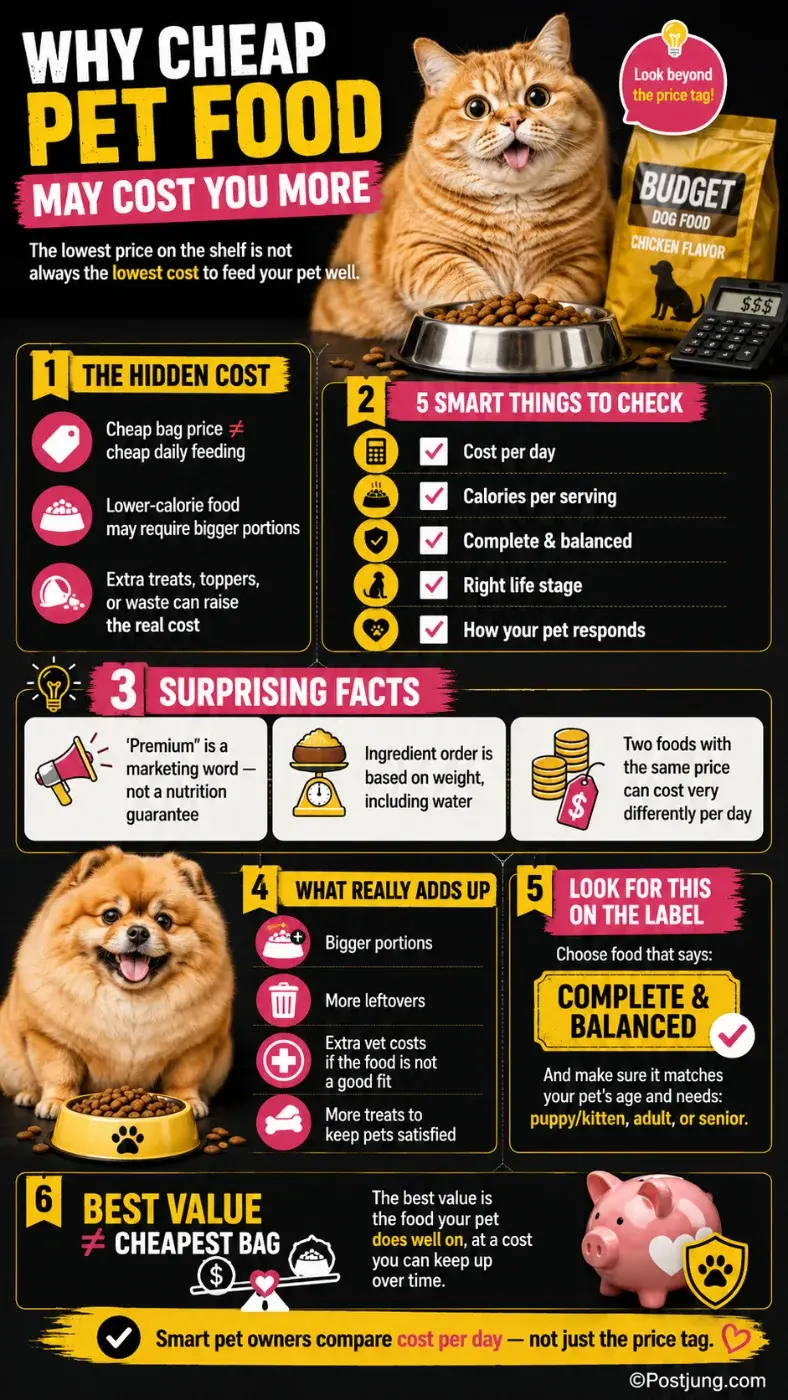
A practical pet food check starts with five questions.
Is the food complete and balanced for the pet’s species and life stage? How many calories are in each cup, can, or serving? How much will the pet actually need per day? Does the company provide clear contact information and feeding guidance? Most importantly, does the pet maintain a healthy weight, normal digestion, good energy, and a coat and skin condition that seem normal for them?
The answer will not be the same for every dog or cat.
A healthy adult indoor cat may do well on a different formula than an active large-breed puppy. A small dog may make a higher-priced food more affordable because daily portions are small. A large dog may make cost per calorie a much bigger issue.
The best value is rarely the cheapest label or the fanciest package. It is the food that gives the pet appropriate nutrition at a cost the owner can maintain.
Cheap pet food may save money. It may also quietly cost more than expected. The difference is not the brand image. It is the math, the label, and how the pet actually responds.
For pets with health problems, major weight changes, vomiting, diarrhea, chronic itching, urinary symptoms, or special dietary needs, owners should ask a veterinarian before changing diets. Food is an everyday decision, but for many pets, it is also part of long-term health care.
U.S. Food and Drug Administration, AAFCO, World Small Animal Veterinary Association, Tufts Cummings School of Veterinary Medicine
REFERENCES:
https://www.fda.gov/animal-veterinary/animal-health-literacy/complete-and-balanced-pet-food
https://www.aafco.org/consumers/understanding-pet-food/reading-labels/
https://wsava.org/wp-content/uploads/2021/04/Selecting-a-pet-food-for-your-pet-updated-2021_WSAVA-Global-Nutrition-Toolkit.pdf
https://sites.tufts.edu/petfoodology/2022/03/21/pet-food-costs-by-type/

เขียนโดย Postjung Insights
 รู้หรือไม่? เปิดรายได้พนักงานส่งพัสดุของแต่ละแอป วันหนึ่งได้เท่าไร
 อำเภอที่มีชื่ออำเภอสั้นที่สุด 3 อำเภอเท่านั้นในประเทศไทย
 ถ้าไม่กลัวเหนื่อย 7 อาชีพที่ตลาดยังต้องการ และค่าทักษะไปถึง 800 บาท/วัน
 หัวลูกศรหินย้อนเวลา 80,000 ปี ในเอเชียกลาง… หลักฐานใหม่ชี้ โฮโม เซเปียนส์ อาจเคยบุกยุโรปเร็วขึ้นนับหมื่นปี!
 โรงเรียนที่มีนักเรียนมากที่สุดในไทย
 อินฟลูเอนเซอร์สาวผู้สร้างคอนเทนต์สำหรับผู้ใหญ่และมีรายได้ต่อปีกว่า 33 ล้านบาท ตัดสินใจเปลี่ยนอาชีพมาเป็นแพทย์แทน
 ยูเครนขอจัดการประชุมสุดยอดกับญี่ปุ่น
 ส่องเลข 3 สำนักพิมพ์ งวด 1 ต.ค. 69 ตัวไหนมีข้อมูลตรงกัน
 เปิด 5 โรงเรียนหญิงล้วนเก่าแก่ของไทย ที่มีประวัติยาวนานกว่าศตวรรษ
 ฝูงลิงญี่ปุ่นนับสิบรุมล้อมและโจมตีชายคนหนึ่งในคานากาวะ
 ตาราง “เด่นเหนือเด่นใต้” งวด 1 ต.ค. 69 เปิดข้อมูลตามโพย เลขไหนอยู่ตรงไหน
 6 จุดหมายดังติดโผ นักท่องเที่ยวเจอ ไม่เป็นมิตร เมืองในฝันก็ไม่รอด เหตุผลคืออะไรเปิด 5 โรงเรียนหญิงล้วนเก่าแก่ของไทย ที่มีประวัติยาวนานกว่าศตวรรษหัวลูกศรหินย้อนเวลา 80,000 ปี ในเอเชียกลาง… หลักฐานใหม่ชี้ โฮโม เซเปียนส์ อาจเคยบุกยุโรปเร็วขึ้นนับหมื่นปี!ถ้าไม่กลัวเหนื่อย 7 อาชีพที่ตลาดยังต้องการ และค่าทักษะไปถึง 800 บาท/วัน
 ทำไมแผนที่ส่วนใหญ่เอาทิศเหนือไว้ด้านบน ทั้งที่โลกไม่มี “ด้านบน” จริง ๆ?
 English Edition