Why Older Pets Should See the Vet More Often

Senior dogs and cats often hide pain, illness, and behavior changes until problems are harder to treat. More frequent checkups can help owners catch subtle signs earlier and keep aging pets more comfortable.
Older pets do not always look sick when something is changing. A dog may still wag its tail. A cat may still jump onto the couch, just a little less often. That is why senior pets often need more frequent veterinary visits than younger animals.
The point is not to treat aging like a disease. It is to recognize that old age is not a diagnosis — and that many age-related problems are easier to manage when they are noticed early. The American Animal Hospital Association says veterinary teams are taught that old age itself is not a disease, while senior care should include medical support, behavior management, awareness of multiple conditions, and changes to the pet’s environment.
A year is a long time for an aging pet
For many healthy adult pets, an annual wellness visit may feel routine. For a senior pet, a full year can be a long gap.
AAHA advises that senior dogs should have a physical exam at least twice a year, with routine bloodwork and additional screening tests when needed. During those visits, veterinarians may check the mouth, heart, lungs, joints, skin, eyes, ears, nervous system, weight, body condition, and mobility.
That six-month rhythm matters because aging pets can change quietly. Weight loss, stiffness, increased thirst, changes in appetite, bad breath, accidents in the house, confusion at night, or less interest in play may look like “just getting old.” In reality, those signs can point to pain, dental disease, kidney changes, thyroid problems, arthritis, diabetes, or cognitive decline.
A vet visit gives owners a chance to compare today’s pet with the pet they saw six months ago — not just the pet they remember from years ago.
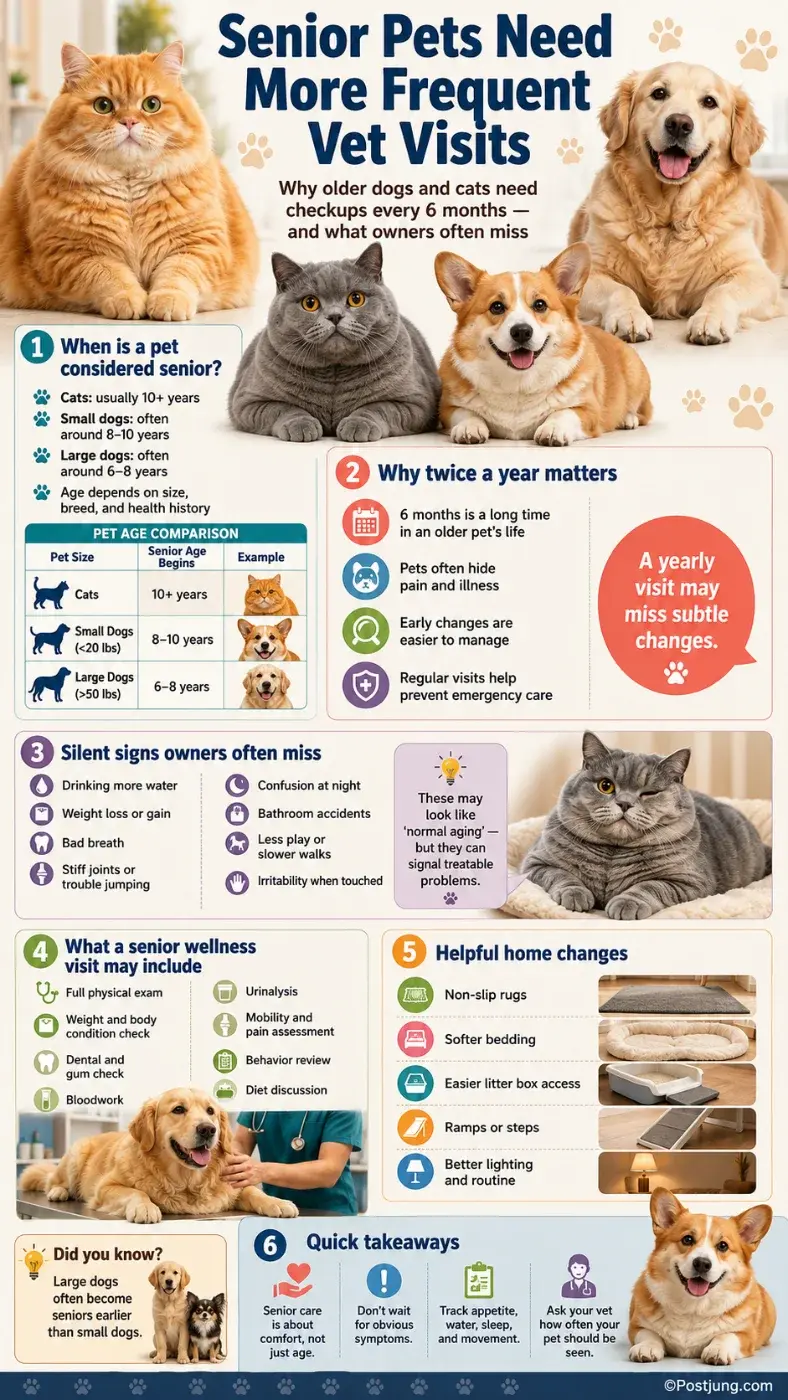
Senior does not mean the same age for every pet
There is no single birthday when every dog or cat becomes senior.
AAHA notes that senior status is generally linked to the last 25% of a pet’s estimated life span. For cats, senior status is described as older than 10 years. For dogs, size matters: smaller dogs often live longer, while large dogs may reach senior status as early as 7 to 8 years old. Health history can also make a pet age earlier than expected.
That is why a 7-year-old large dog may need a different care plan from a 7-year-old small dog. It is also why owners should ask their veterinarian when their own pet should start senior screening, rather than relying only on a generic age chart.
What happens during a senior pet checkup
A senior wellness visit is usually more detailed than a quick vaccine appointment.
For cats, Cornell’s Feline Health Center says a veterinarian may take a full medical and behavioral history, perform a thorough physical exam, evaluate every organ system, check weight and body condition, and compare the findings with previous visits. Blood tests, fecal exams, and urinalysis may be suggested at least once a year to help find disorders early and monitor ongoing conditions.
AAHA’s senior care guidance also lists several diagnostic tests that may be recommended for older dogs and cats, including parasite testing, complete blood count, blood chemistry, urinalysis, thyroid testing, and other screening depending on species, health, and clinical need. Some tests may be recommended every 6 to 12 months.
This does not mean every senior pet needs every test at every visit. It means the visit becomes more individualized. The veterinarian is not only asking, “Is this pet sick today?” They are also asking, “What has changed since last time?”
The subtle signs owners often miss
Senior pets can be remarkably good at hiding discomfort.
A cat that stops jumping to a high shelf may not be lazy. A dog that hesitates before climbing stairs may not be stubborn. A pet that becomes irritable when touched may be protecting a painful joint or tooth.
AAHA highlights disease detection, pain recognition, diet and exercise adjustments, home accessibility, and sensory decline as important parts of senior pet care. Simple changes such as ramps, non-slip rugs, orthopedic bedding, better lighting, and safer walking routines can help older pets move with more confidence.
This is where frequent visits become practical. A veterinarian can help separate normal aging from treatable discomfort. That can lead to pain control, dental care, nutrition changes, mobility support, or home adjustments that make daily life easier.
More visits can mean less crisis care
Many pet owners worry that more checkups simply mean more cost. That concern is real, especially when veterinary care is expensive.
But senior visits are not only about adding tests. They are about building a clearer picture of the pet’s baseline. When a veterinarian knows what is normal for a pet’s weight, kidney values, appetite, behavior, gait, and heart sounds, it becomes easier to spot a meaningful change.
For American readers used to annual physicals, the idea is similar: a checkup is not valuable only when something dramatic is found. Sometimes the value is knowing what looks stable — and catching the small shift before it becomes an emergency.
The best schedule depends on the animal. A healthy senior pet may do well with twice-yearly exams. A pet with kidney disease, diabetes, arthritis, heart disease, cancer, or significant weight loss may need more frequent follow-up. Owners should use veterinary advice rather than online checklists to decide what is appropriate for their own pet.
Aging well is still possible
A senior pet may sleep more, move more slowly, or need a softer routine. That does not mean their best days are automatically behind them.
Good senior care is really about attention. Notice the smaller changes. Keep a record of appetite, weight, thirst, litter box habits, bathroom accidents, sleep, play, and mobility. Bring those details to the vet instead of waiting for a crisis.
The most loving question is not “Is my pet old?” It is “How can we keep this pet comfortable?”
For many older dogs and cats, the answer begins with seeing the veterinarian before a problem becomes obvious.
American Veterinary Medical Association, American Animal Hospital Association, Cornell University College of Veterinary Medicine
REFERENCES:
https://www.avma.org/resources-tools/pet-owners/petcare/senior-pets
https://www.aaha.org/resources/2023-aaha-senior-care-guidelines-for-dogs-and-cats/
https://www.aaha.org/resources/senior-status-understanding-your-senior-pets-life-stage/
https://www.vet.cornell.edu/departments-centers-and-institutes/cornell-feline-health-center/health-information/feline-health-topics/special-needs-senior-cat

เขียนโดย Postjung Insights
 เปิดรายชื่อโรงเรียนในไทยที่ “ว่ายน้ำ” อยู่ในหลักสูตร เรียนจริงตั้งแต่อนุบาลถึงมัธยม
 รู้หรือไม่? เปิดรายได้พนักงานส่งพัสดุของแต่ละแอป วันหนึ่งได้เท่าไร
 Google ยอมรับแล้ว! Gemini AI เข้าถึงระบบบริษัทจริง 3 แห่ง ระหว่างการทดสอบความปลอดภัย
 ตาราง “เด่นเหนือเด่นใต้” งวด 1 ต.ค. 69 เปิดข้อมูลตามโพย เลขไหนอยู่ตรงไหน
 โรงเรียนที่มีนักเรียนมากที่สุดในไทย
 5 คณะที่เรียนจบมาแล้ว มีอาชีพรองรับมากกว่าที่คิด
 อำเภอที่มีชื่ออำเภอสั้นที่สุด 3 อำเภอเท่านั้นในประเทศไทย
 เลขเด็ดปฏิทิน "หลวงปู่โต๊ะ" งวดวันที่ 1 ตุลาคม 69..ส่องเลย เลขไหนให้โชค!
 ทำไมของพลาสติกเก่าบางชิ้นถึง “เหนียว” ขึ้นมาเอง ทั้งที่ไม่ได้เปื้อนอะไร?
 สถิติย้อนหลัง 10 ปี ออกเลขไหนบ้างมาดูกัน
 จุฬาฯ มหาวิทยาลัยแห่งแรกของไทย มีจุดเริ่มต้นในสมัยรัชกาลที่ 5
 เปิด 5 โรงเรียนหญิงล้วนเก่าแก่ของไทย ที่มีประวัติยาวนานกว่าศตวรรษ5 คณะที่เรียนจบมาแล้ว มีอาชีพรองรับมากกว่าที่คิดเปิดรายชื่อโรงเรียนในไทยที่ “ว่ายน้ำ” อยู่ในหลักสูตร เรียนจริงตั้งแต่อนุบาลถึงมัธยมGoogle ยอมรับแล้ว! Gemini AI เข้าถึงระบบบริษัทจริง 3 แห่ง ระหว่างการทดสอบความปลอดภัยเลขเด็ดปฏิทิน "หลวงปู่โต๊ะ" งวดวันที่ 1 ตุลาคม 69..ส่องเลย เลขไหนให้โชค!ทำไมของพลาสติกเก่าบางชิ้นถึง “เหนียว” ขึ้นมาเอง ทั้งที่ไม่ได้เปื้อนอะไร?
 อุทยานเขาใหญ่เรียกตัว “ตีนผี” หลังขับจี้ช้างป่าพ่อลูก ลั่นระยะ 50 เมตรต้องจำให้ขึ้นใจ
 English Edition