Why Litter Box Size Matters More Than Style
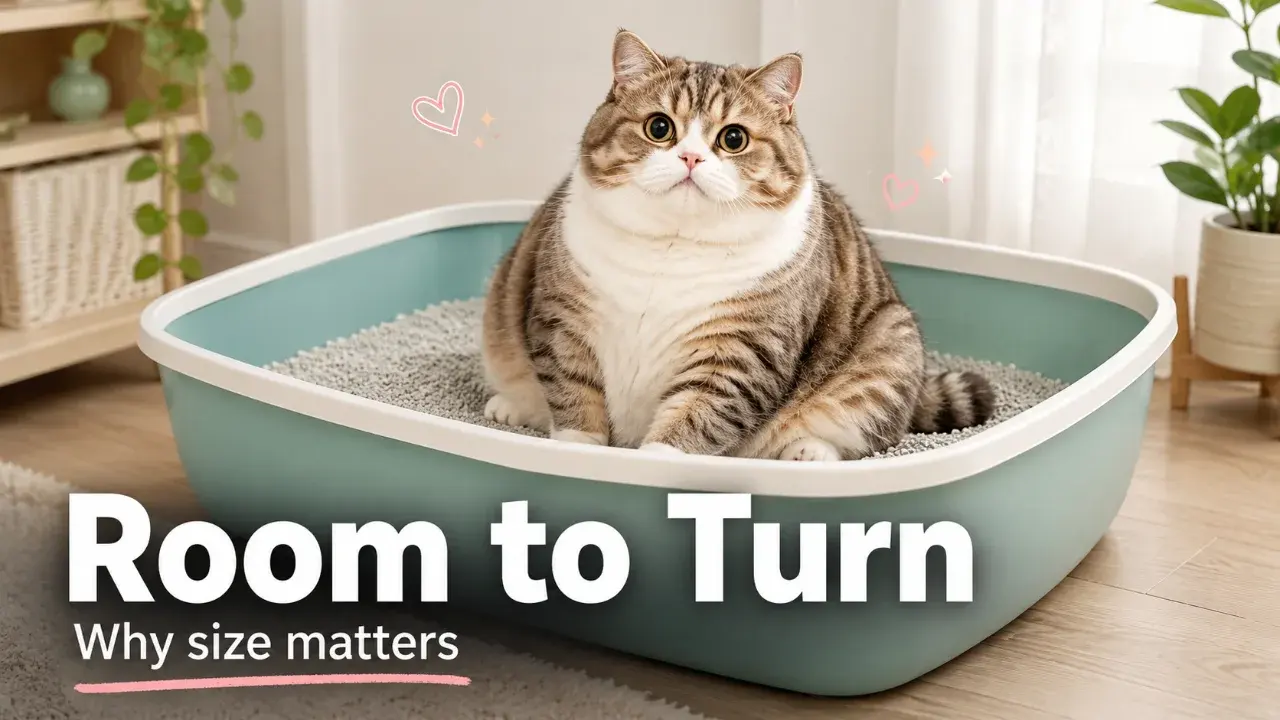
A good litter box is not just the one that looks best in your home. For cats, space, access, cleanliness, and escape routes often matter far more than a sleek design.
A litter box can look perfect in a living room and still feel wrong to the cat using it. For many cats, the problem is not the color, shape, or modern design. It is whether the box gives them enough room to move, turn, dig, and leave without feeling trapped.
That is why size often matters more than style.
A litter box is not just a bathroom fixture. For a cat, it is a private, scent-heavy, vulnerable space. If the box is cramped, hard to enter, too enclosed, or placed in a stressful spot, a cat may start avoiding it — and the owner may blame the litter, the attitude, or the cat’s “bad behavior” before noticing the box itself.
A bigger box gives a cat room to act like a cat
Cats do not simply step into a box, urinate, and leave. Many need to circle, sniff, scratch, squat, cover, and turn around. That takes more space than many standard litter boxes provide.
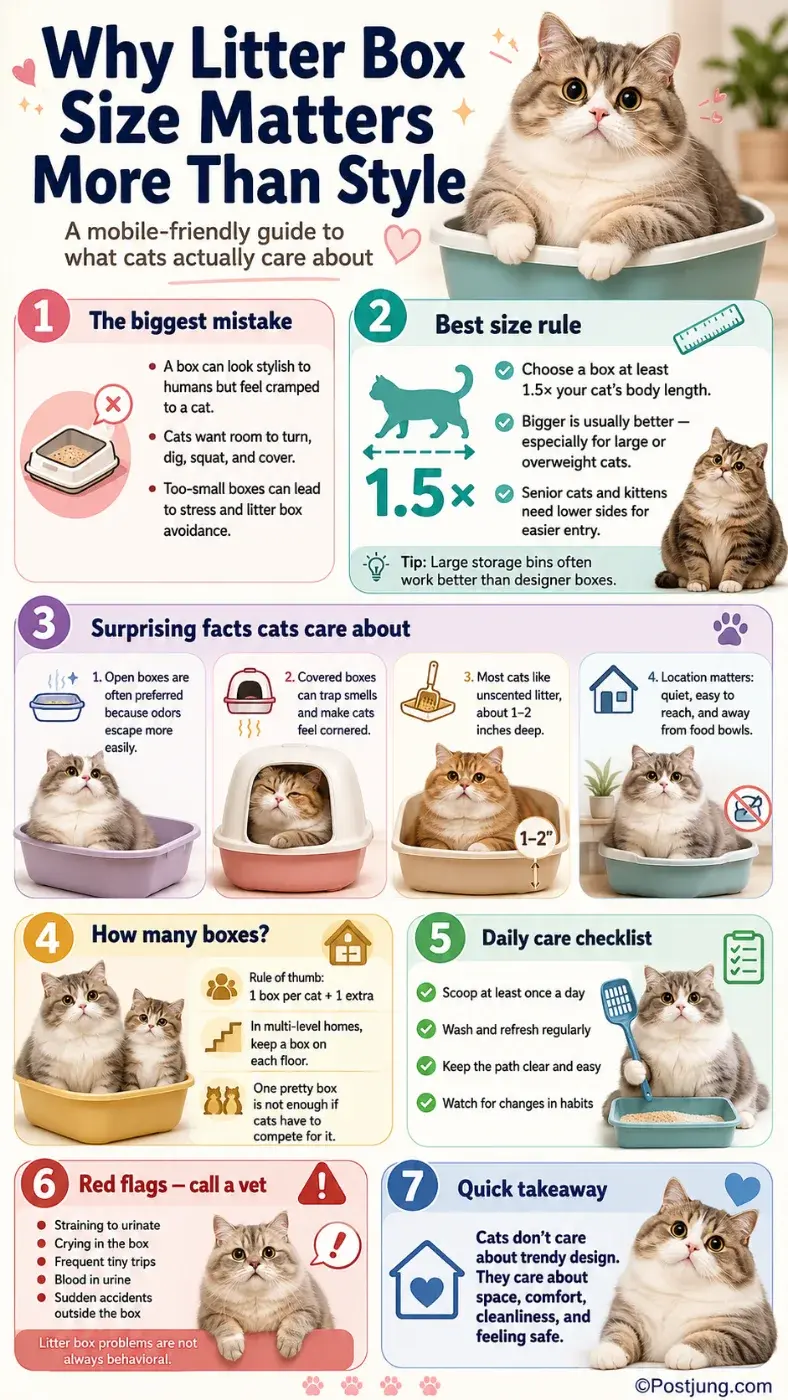
The 2021 AAHA/AAFP feline life stage guidance recommends a litter box at least one and a half times the length of the cat, measured from nose to the tip of the tail, and notes that many manufactured boxes are not large enough for that standard. Larger storage containers can sometimes work better because they give cats more usable space.
That point matters for average cats, but it matters even more for large cats, overweight cats, senior cats, and cats with joint pain. Cornell Feline Health Center notes that overweight and large cats need bigger boxes, while young kittens, elderly cats, and cats with mobility problems need boxes with low sides.
A stylish covered box may look tidy to people, but a cat may experience it as a tight room with one exit. A box that is too small can force the cat to step in waste, hang part of the body over the edge, or skip normal digging and covering behavior.
Style can solve a human problem while creating a cat problem
Many modern litter boxes are designed around human preferences: odor control, hidden placement, compact size, furniture-like covers, or top-entry shapes that keep litter off the floor.
Those features can be useful. The trouble starts when the design makes the box less comfortable for the cat.
Cornell says most cats prefer an uncovered box that lets odors escape and gives them a 360-degree view of their surroundings. The ASPCA also notes that most cats do not like liners or lids and that cats prefer boxes in quiet locations where they do not feel cornered.
That does not mean every covered box is wrong. Some cats use them without complaint. But if a cat starts avoiding the box, the lid, entry height, interior space, and location should all be questioned before assuming the cat is being difficult.
A beautiful litter box is only successful if the cat uses it comfortably.
Cleanliness still matters — but size changes the experience
Even a large box can become unappealing if it is dirty. Cats have a strong sense of smell, and a small, enclosed box can trap odor quickly.
The ASPCA recommends scooping at least once a day and says most cats prefer a shallow bed of litter, around one to two inches, rather than a deeper layer. Cornell gives similar guidance, noting that most cats prefer unscented, finer-textured litter about one to two inches deep.
A larger box gives the cat more clean surface area between scoopings. It also gives the cat more room to avoid stepping directly on waste. That can be especially important in homes where people work long hours or where several cats share space.
Still, a big box is not a substitute for cleaning. A roomy box still has to be clean.
Multi-cat homes need more than one good box
In a home with more than one cat, the size of a single box is not the whole answer. Cats may share people, sofas, and sunny windows, but they do not always want to share a bathroom.
The Ohio State University’s Indoor Pet Initiative describes the “golden rule” as one litter box per cat, plus one more. It also recommends boxes on each level of a multi-story home so cats do not have to travel far.
This is not just about convenience. A cat may block another cat’s path, guard a hallway, or make one location feel unsafe. The owner may never see the conflict happen. The only sign may be one cat suddenly choosing a rug, laundry pile, bathtub, or corner.
In that situation, buying a more expensive box may not fix the issue. Adding another accessible box in a different location often makes more sense.
The best box is easy to enter, easy to leave, and easy to clean
A good litter box does not have to be fancy. It needs to work from the cat’s point of view.
For many cats, that means:
- Large enough to turn around comfortably
- Low enough to enter without strain
- Open enough to avoid trapped odors
- Placed in a quiet but not cornered area
- Far from food and water bowls
- Scooped daily
- Available in enough numbers for the household
The Ohio State guidance emphasizes that cats need to stand and move comfortably in the box, and that the path to the box should not require climbing over furniture or passing another animal.
That detail is easy to overlook. Humans often think of the box itself. Cats also care about the route to reach it.
When litter box avoidance may be a health warning
Not every litter box problem is behavioral. A cat that suddenly urinates outside the box, strains, cries while urinating, makes frequent trips, or has blood in the urine may need veterinary care.
Cornell Feline Health Center lists difficult or painful urination, increased frequency, crying while urinating, blood in the urine, and urinating outside the box among signs of feline lower urinary tract disease. It also warns that a urethral obstruction, where a cat passes little or no urine and becomes distressed, is an emergency requiring immediate veterinary treatment.
That is why owners should be careful about assuming a cat is “protesting” or “acting out.” Sometimes the litter box setup is wrong. Sometimes the cat is stressed. Sometimes the cat is sick.
The safest approach is to improve the environment while watching for medical red flags.
The simple rule: choose comfort first
The best litter box is not the one that disappears into the décor. It is the one your cat can use naturally, repeatedly, and without stress.
A sleek box may make a home look cleaner. But a larger, simpler, easier-to-access box may make the cat feel safer. In the long run, that is the choice most owners actually want: fewer accidents, less frustration, and a cat that feels comfortable doing something it needs to do every day.
AAHA/AAFP Feline Life Stage Guidelines, Cornell Feline Health Center, The Ohio State University Indoor Pet Initiative, ASPCA
REFERENCES:
https://www.aaha.org/resources/2021-aaha-aafp-feline-life-stage-guidelines/general-litter-box-considerations/
https://www.vet.cornell.edu/departments-centers-and-institutes/cornell-feline-health-center/health-information/feline-health-topics/feline-behavior-problems-house-soiling
https://indoorpet.osu.edu/cats/basic-indoor-cat-needs/litter-boxes
https://www.aspca.org/pet-care/cat-care/common-cat-behavior-issues/litter-box-problems

เขียนโดย Postjung Insights
 ดูหนัง–ซีรีส์ฟรีอาจไม่ฟรีอย่างที่คิด! เปิดโทษละเมิดลิขสิทธิ์ เตือนคนปล่อยคอนเทนต์เถื่อน เสี่ยงทั้งคุกทั้งปรับ
 อำเภอที่มีชื่ออำเภอสั้นที่สุด 3 อำเภอเท่านั้นในประเทศไทย
 แมคาเดเมีย (Macadamia): ราชินีแห่งถั่ว กับขุมทรัพย์โภชนาการจากออสเตรเลีย
 รู้หรือไม่? เปิดรายได้พนักงานส่งพัสดุของแต่ละแอป วันหนึ่งได้เท่าไร
 ตาราง “เด่นเหนือเด่นใต้” งวด 1 ต.ค. 69 เปิดข้อมูลตามโพย เลขไหนอยู่ตรงไหน
 รมว.วัฒนธรรมเอาจริง! จ่อส่งหนังสือทักท้วง Miss Universe Cambodia ปมใช้ภาพหญิงกำแพงเพชร หากไม่แก้ เตรียมใช้กฎหมาย
 5 คณะที่เรียนจบมาแล้ว มีอาชีพรองรับมากกว่าที่คิด
 MRT เตาปูนกลับมาเปิดปกติแล้ว รมช.คมนาคมเผยปมไฟไหม้ พบประกายไฟจากชุดสายไฟ 750 โวลต์
 โรงเรียนที่มีนักเรียนมากที่สุดในไทย
 เปิด 5 โรงเรียนหญิงล้วนเก่าแก่ของไทย ที่มีประวัติยาวนานกว่าศตวรรษ
 งูมัลกา (Mulga Snake): นักล่าแห่งผืนดินแห้งแล้ง ของทวีปออสเตรเลีย กับฉายา King Brown กัดคนได้ถึงตาย
 สถิติย้อนหลัง 10 ปี ออกเลขไหนบ้างมาดูกัน
 English Edition