Why Routine Blood Tests Can Help Senior Pets Stay Healthier Longer
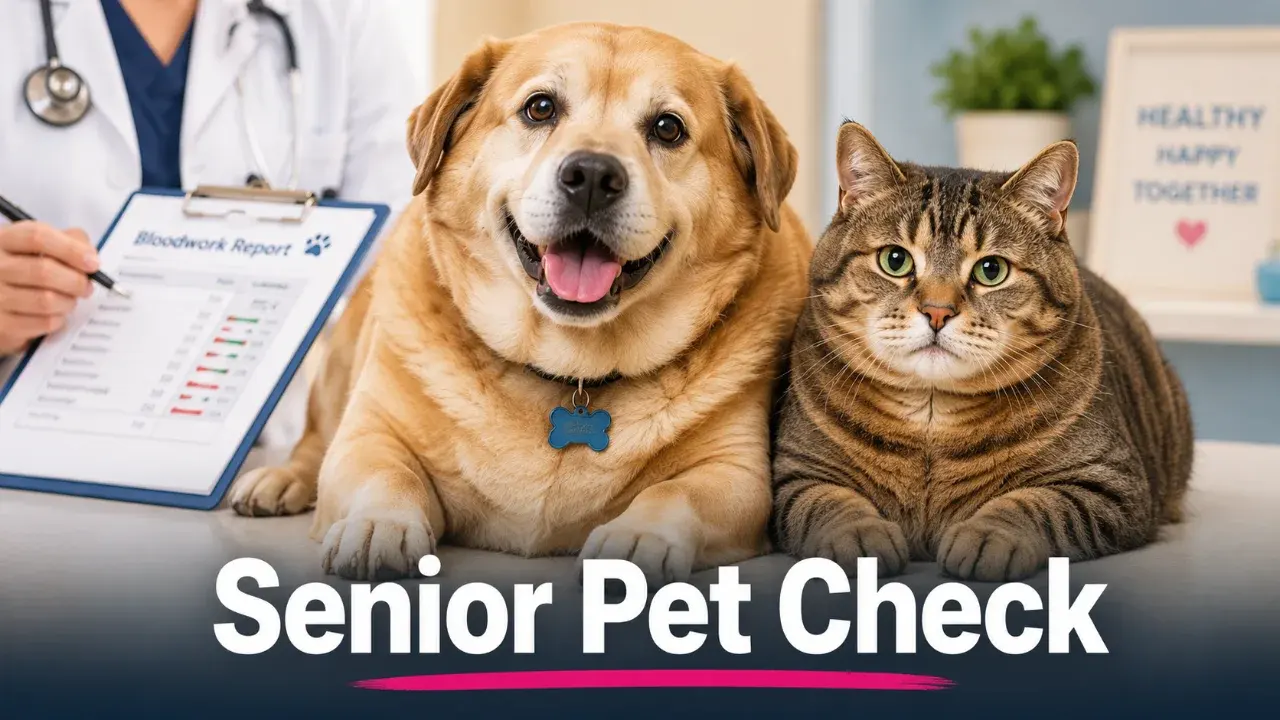
Older dogs and cats often hide illness until problems are advanced. Routine blood tests give veterinarians a clearer baseline and can help catch changes in organs, blood sugar, thyroid function, and inflammation earlier.
Senior pets can look perfectly normal while their bodies are already changing. That is why routine blood tests matter: they can give veterinarians a view of health that a quick glance, a wagging tail, or a normal appetite may not reveal.
For older dogs and cats, bloodwork is not just a box to check. It helps create a medical baseline, shows whether organs are under stress, and gives pet owners a better chance to respond before a small problem becomes a crisis.
The American Animal Hospital Association’s senior care guidelines describe senior pet care as a more systematic approach that includes screening, diagnostic testing, and quality-of-life assessment for aging dogs and cats. The American Veterinary Medical Association also notes that senior pet exams are typically more in-depth than exams for younger animals and may include bloodwork and checks for age-related conditions.
What blood tests can reveal
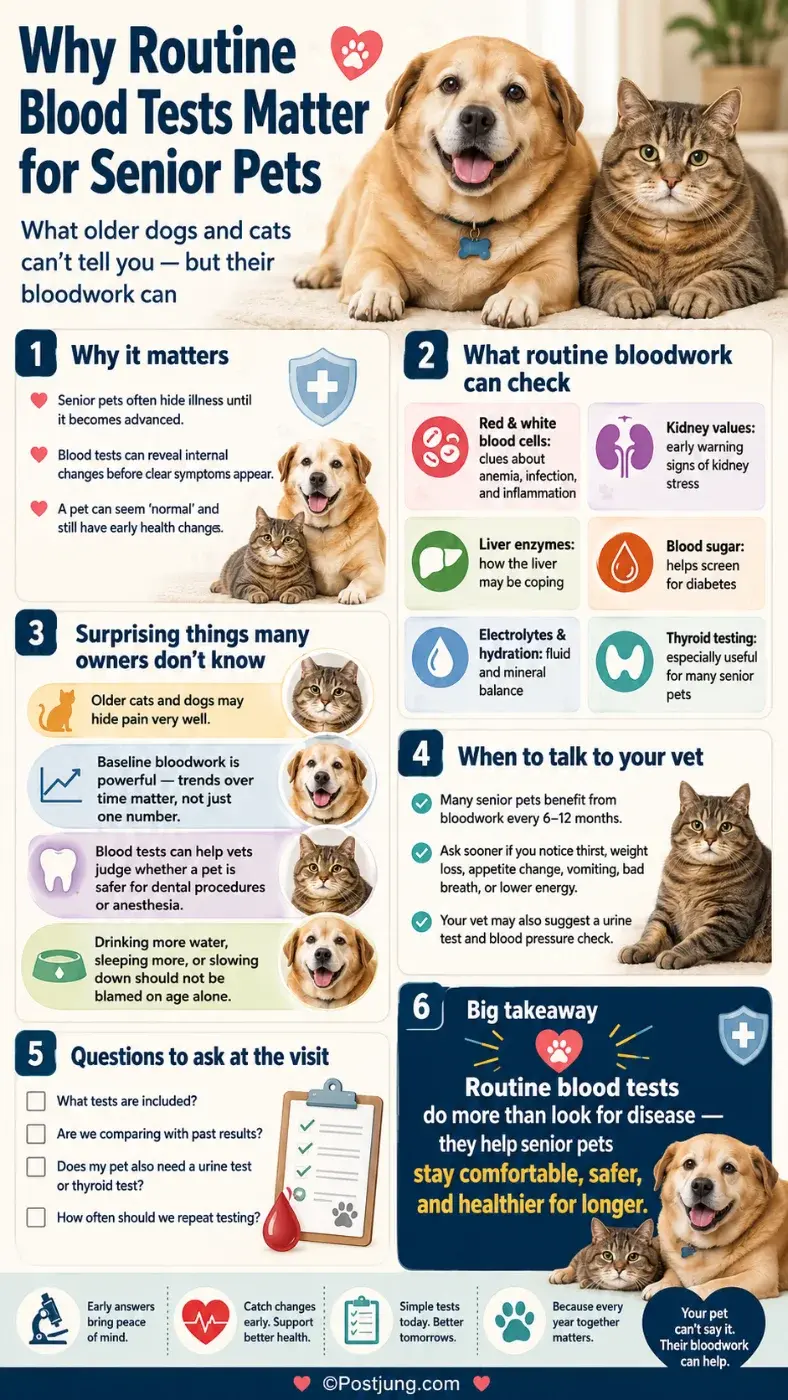
Routine bloodwork usually includes a complete blood count and a blood chemistry panel. Depending on the pet, the veterinarian may also recommend thyroid testing, urinalysis, blood pressure monitoring, or other screening.
A complete blood count can give clues about red blood cells, white blood cells, and platelets. That can help veterinarians look for patterns linked to anemia, infection, inflammation, clotting problems, or other concerns.
A blood chemistry panel gives broader information about internal health. The Merck Veterinary Manual explains that chemistry panels can provide clues about hydration, inflammation, kidney and liver function, and blood sugar control.
That does not mean one abnormal number automatically equals a diagnosis. Lab results need to be interpreted with the pet’s age, breed, symptoms, medications, exam findings, and medical history. But the value is clear: bloodwork can make invisible changes visible.
Why senior pets are different
A young adult pet may go through a year with few major health changes. Senior pets can change faster.
Cats are especially skilled at hiding illness. A senior cat may continue eating, grooming, and moving around the home while kidney disease, thyroid disease, diabetes, dental pain, or other problems are developing quietly.
Cornell Feline Health Center says that for senior cats, veterinarians may suggest blood tests, fecal exams, and urinalysis at least once a year so disorders can be found and treated early, and ongoing medical conditions can be evaluated.
Dogs can hide problems too, especially when changes happen gradually. A dog that sleeps more, slows down on walks, drinks more water, loses muscle, gains weight, or seems “just old” may actually have an issue that deserves attention.
That is one of the biggest misunderstandings in senior pet care: aging is not a diagnosis. Slowing down may be normal in some ways, but it can also be a clue.
The baseline matters more than many owners realize
One of the most useful parts of routine testing is not just finding disease. It is building a baseline.
If a healthy 9-year-old dog has normal bloodwork today, those results become a comparison point next year. If kidney values, liver enzymes, thyroid levels, blood sugar, or blood cell counts begin shifting later, the veterinarian can see the change in context.
A value may still fall inside a laboratory reference range but look unusual for that individual pet. That trend can be more meaningful than a single result.
For pet owners, this is often where routine bloodwork becomes practical. It helps answer questions like:
Is my pet safe for anesthesia before dental care?
Could weight loss be linked to thyroid disease, diabetes, kidney disease, or another problem?
Are long-term medications affecting the liver or kidneys?
Is increased thirst just a habit, or should we investigate further?
Is my pet’s tiredness age-related, painful, metabolic, or something else?
The answer is not always dramatic. Sometimes bloodwork simply confirms that a senior pet is doing well. That peace of mind has value too.
Blood tests are only one part of the picture
A normal blood test does not guarantee that a pet has no health problem. Some conditions require imaging, urine testing, blood pressure checks, dental X-rays, eye exams, orthopedic exams, or more specific diagnostics.
That is why many veterinarians pair bloodwork with a physical exam and urinalysis. The AAHA senior care resources note that a minimum database for senior pets may include a detailed blood profile and urinalysis, with additional tests depending on the patient.
Urine testing matters because it can help complete the picture, especially for kidney, urinary tract, hydration, and metabolic concerns. Some early changes may show up more clearly when blood and urine results are reviewed together.
The best question is not “Does my pet need every test?” It is “Which tests make sense for my pet?”
What pet owners should ask the vet
Before agreeing to senior bloodwork, owners can ask a few simple questions:
What tests are included?
What are we screening for?
Are we comparing these results with past results?
Would you recommend a urinalysis or thyroid test too?
How soon should we repeat testing if everything is normal?
What changes at home should I watch for?
After results come back, ask the veterinarian to explain the findings in plain language. It is reasonable to ask which values are normal, which are borderline, and which ones need action or monitoring.
Pet owners should not change medications, supplements, food, or treatment plans based on lab numbers alone. A veterinarian who knows the pet’s full history is the right person to interpret what the results mean.
A quieter kind of care
Routine blood tests may not feel urgent when a senior pet seems happy. But that is exactly when they can be most useful.
They help catch quiet changes. They help avoid guessing. They help veterinarians track trends instead of reacting only when symptoms become obvious.
Most of all, they support a gentler goal: helping older pets stay comfortable, stable, and well cared for through the years when small health details matter more than ever.
For many families, senior pet bloodwork is not about expecting bad news. It is about giving a beloved dog or cat the best chance to age with comfort, dignity, and time.
American Animal Hospital Association, American Veterinary Medical Association, Cornell Feline Health Center, Merck Veterinary Manual
REFERENCES:
https://www.aaha.org/resources/2023-aaha-senior-care-guidelines-for-dogs-and-cats/
https://www.avma.org/resources-tools/pet-owners/petcare/senior-pets
https://www.vet.cornell.edu/departments-centers-and-institutes/cornell-feline-health-center/health-information/feline-health-topics/special-needs-senior-cat
https://www.merckvetmanual.com/special-pet-topics/diagnostic-tests-and-imaging/common-laboratory-tests-in-veterinary-medicine

เขียนโดย Postjung Insights
 รมว.วัฒนธรรมเอาจริง! จ่อส่งหนังสือทักท้วง Miss Universe Cambodia ปมใช้ภาพหญิงกำแพงเพชร หากไม่แก้ เตรียมใช้กฎหมาย
 อำเภอที่มีชื่ออำเภอสั้นที่สุด 3 อำเภอเท่านั้นในประเทศไทย
 รู้หรือไม่? เปิดรายได้พนักงานส่งพัสดุของแต่ละแอป วันหนึ่งได้เท่าไร
 MRT เตาปูนกลับมาเปิดปกติแล้ว รมช.คมนาคมเผยปมไฟไหม้ พบประกายไฟจากชุดสายไฟ 750 โวลต์
 งูมัลกา (Mulga Snake): นักล่าแห่งผืนดินแห้งแล้ง ของทวีปออสเตรเลีย กับฉายา King Brown กัดคนได้ถึงตาย
 ดูหนัง–ซีรีส์ฟรีอาจไม่ฟรีอย่างที่คิด! เปิดโทษละเมิดลิขสิทธิ์ เตือนคนปล่อยคอนเทนต์เถื่อน เสี่ยงทั้งคุกทั้งปรับ
 แมคาเดเมีย (Macadamia): ราชินีแห่งถั่ว กับขุมทรัพย์โภชนาการจากออสเตรเลีย
 5 คณะที่เรียนจบมาแล้ว มีอาชีพรองรับมากกว่าที่คิด
 สถิติย้อนหลัง 10 ปี ออกเลขไหนบ้างมาดูกัน
 มัดรวมจับเลขชน สัตว์นำโชค 1 ตุลาคม 2569
 โรงเรียนที่มีนักเรียนมากที่สุดในไทย
 ตาราง “เด่นเหนือเด่นใต้” งวด 1 ต.ค. 69 เปิดข้อมูลตามโพย เลขไหนอยู่ตรงไหน
 English Edition