Why Charging Cables Are a Real Hazard for Pets

A phone charger may look harmless on the floor, but chewing one can expose pets to burns, shock, choking hazards, or swallowed plastic and wire. The safest fix is simple: make cables boring, covered, and out of reach.
A charging cable on the floor can look like a toy to a curious pet. To a puppy, kitten, rabbit, or bored adult dog, it may feel like something to tug, bite, or explore with the mouth. The danger is that a cable is not just clutter — it can become a source of burns, electric shock, or swallowed material.
Veterinary safety guidance treats plugged-in electrical cords as a household hazard because pets that chew them can suffer burns or electrocution. The American Veterinary Medical Association advises pet owners to block access to cords and use cord covers, especially in areas where animals spend time unsupervised.
A Small Bite Can Turn Serious
The most obvious danger is electricity. When a pet bites through a live cord, the current may pass through the mouth and surrounding tissue. The result can be painful burns, injury inside the mouth, and in serious cases, disruption to breathing or heart rhythm.
The Merck Veterinary Manual notes that in small animals, chewing electrical cords is the most common cause of electrical injury, with young pets especially at risk because they are more likely to chew. MSPCA-Angell explains that when an animal bites an electrical cord, electrical energy can turn into heat at the contact point, causing a thermal burn; the current may also interfere with normal body functions such as breathing and heart rhythm.
That is why a quick nibble is not always minor. A pet may look startled and run away, but damage inside the mouth can become clearer later. Burns may not be obvious at first, especially if they are on the tongue, gums, lips, or roof of the mouth.
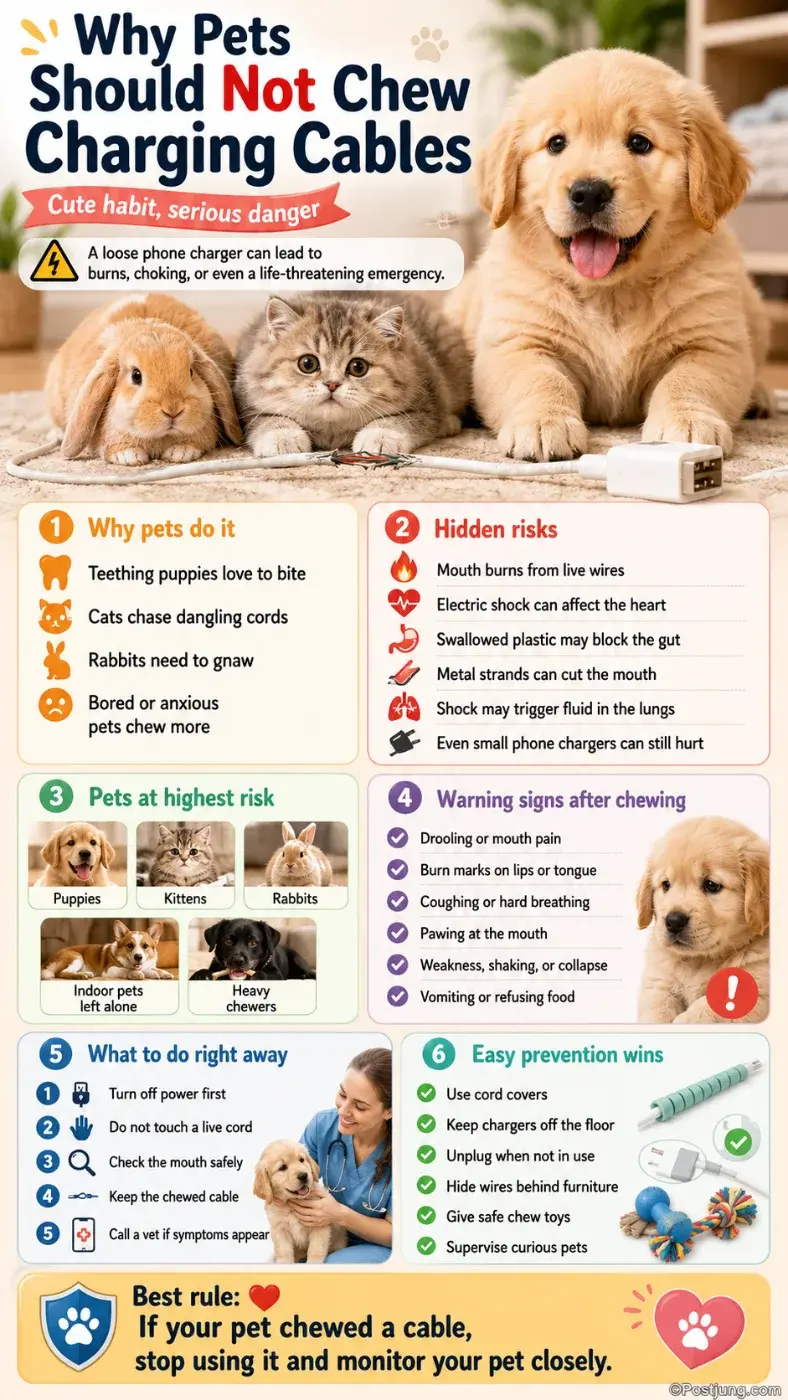
Charging Cables Feel Like Toys
Many pets do not chew cables because they are “bad.” They chew because the object fits their instincts.
Puppies explore with their mouths. Kittens chase dangling lines. Rabbits and some small pets have a strong need to gnaw. Adult dogs may chew when they are anxious, bored, teething, under-exercised, or seeking attention. A cable hanging from a desk can move like string. A phone charger on a bedside table can smell like the owner’s hands. A warm adapter may even attract a curious animal.
This is why scolding alone rarely solves the problem. The better approach is to change the environment so the cable is no longer available, interesting, or easy to bite.
ASPCA guidance for kittens recommends hiding cords behind furniture, redirecting the kitten to something appropriate, and using pet-safe deterrent sprays when needed. For dogs, ASPCA behavior guidance also emphasizes supervision, removing inappropriate items, and replacing them with acceptable chew objects.
The Risk Is Not Only Electricity
A cable does not have to be actively shocking a pet to be dangerous. Chewed plastic, rubber, and wire pieces can become choking hazards or swallowed foreign objects. A damaged cable can also expose wires, making the next contact more dangerous for both pets and people.
Pet owners sometimes assume phone charging cords are safer than larger appliance cords because they are small. That can be a risky assumption. The danger depends on the device, adapter, wall outlet, cable damage, exposure time, and whether the pet reaches a live electrical source. A frayed cable should never be left in use.
The safest rule is simple: if a pet has chewed a cable, stop using it. Unplug it if it is safe to do so, replace it, and check the area for missing pieces.
Make Cables Hard to Reach
The best prevention is physical separation. Cord management may not feel exciting, but it is one of the easiest ways to reduce risk in a pet-friendly home.
Start with the places where pets are most often alone: bedrooms, home offices, living rooms, kitchens, and charging stations. Move chargers off the floor. Keep cords behind furniture when possible. Use cable boxes, cord sleeves, wall clips, or protective covers. The American Animal Hospital Association recommends keeping electrical cords organized and hidden in commercial cord protectors or behind furniture when possible.
For pets that chew repeatedly, do not rely on one solution. Combine several small changes:
Keep chargers unplugged when not in use. Route cords along walls instead of across floors. Put power strips inside covered cable boxes. Offer safe chew toys nearby. Use baby gates, crates, playpens, or closed doors when supervision is not possible.
The goal is not a perfect home. The goal is fewer tempting cables in bite range.
Watch for Warning Signs
If a pet has chewed a plugged-in cable, contact a veterinarian or emergency clinic for advice, especially if the animal cried out, collapsed, coughed, drooled, pawed at the mouth, had trouble breathing, seemed weak, or developed swelling around the lips or tongue.
Other warning signs include burns in or around the mouth, refusal to eat, vomiting, lethargy, tremors, or abnormal behavior. If pieces of cable may have been swallowed, a veterinarian may need to assess whether there is a risk of choking, stomach irritation, or intestinal blockage.
Do not put your hand near a pet that may still be in contact with electricity. If the cord is plugged in and the situation looks unsafe, disconnect power at the source before touching the animal or the cable.
A Safer Home Starts With One Habit
The easiest safety habit is to look at your home from your pet’s eye level. What hangs? What dangles? What moves when touched? What sits near a favorite sleeping spot?
A cable that feels invisible to a person may be the most interesting object in the room to an animal.
For pet owners, the takeaway is not fear. It is prevention. Charging cables are part of daily life, but they should not be part of a pet’s play space. Cover them, lift them, unplug them, and replace damaged ones quickly.
A few minutes of cable management can prevent a frightening emergency later.
KEY TAKEAWAYS:
- Plugged-in charging cables can cause electrical burns or shock if pets chew through them.
- Young pets are at higher risk because they explore with their mouths.
- Damaged or frayed cables should be removed and replaced, not reused.
- Cable covers, cord boxes, furniture placement, and supervision reduce risk.
- Call a veterinarian if a pet chews a live cable or may have swallowed pieces.
American Veterinary Medical Association, Merck Veterinary Manual, MSPCA-Angell, ASPCA, American Animal Hospital Association
REFERENCES:
https://www.avma.org/resources-tools/pet-owners/petcare/household-hazards
https://www.merckvetmanual.com/generalized-conditions/lightning-strike-and-electrical-injury/lightning-strike-and-electrical-injury-in-animals
https://www.mspca.org/clinical/electrical-cord-injury/
https://www.aaha.org/resources/essential-tips-for-pet-proofing-your-home/

เขียนโดย Postjung Insights
 รู้หรือไม่? เปิดรายได้พนักงานส่งพัสดุของแต่ละแอป วันหนึ่งได้เท่าไร
 5 คณะที่เรียนจบมาแล้ว มีอาชีพรองรับมากกว่าที่คิด
 แทสเมเนีย: ถอดรหัสเกาะปริศนาที่แผนที่โลกมักลืมเขียน
 อำเภอที่มีชื่ออำเภอสั้นที่สุด 3 อำเภอเท่านั้นในประเทศไทย
 คุณนุชออกโรงชี้แจง ปมมีภาพถ่ายร่วมสัมภาษณ์ “หนุ่ม กรรชัย” ยอมรับผิด พร้อมขอโทษทุกฝ่าย
 โรงเรียนที่มีนักเรียนมากที่สุดในไทย
 เลขขายดีงวดนี้ 1 ตุลาคม 2569 สำรวจกระแสเลขเด่นก่อนหวยออก พร้อมวิธีอ่านข้อมูลอย่างมีสติ
 “หลุมยักษ์แห่งไซบีเรีย” หน้าต่างสู่น้ำแข็งอายุ 650,000 ปี ที่กำลังเปิดประวัติศาสตร์โลกออกมาทีละชั้น
 แปลปกสลาก งวด 1 ต.ค. 69 ส่องตัวเลขจากภาพปกสลากกินแบ่งรัฐบาล
 Phnom Penh Post ยกประวัติศาสตร์ขอมตอบโต้ข่าวภาพหญิง ร.5 แต่ปมสำคัญยังอยู่ที่หลักฐานของภาพ
 โรงเรียนเพียงแห่งเดียวของประเทศไทย ที่อยู่มาตั้งแต่ยุครัชกาลที่ 4
 เปิด 5 โรงเรียนหญิงล้วนเก่าแก่ของไทย ที่มีประวัติยาวนานกว่าศตวรรษ
 AI กำลังเปลี่ยนตลาดงาน เปิด 5 สาขามหาวิทยาลัยที่ไทยต้องการบุคลากรในอีก 5 ปีPhnom Penh Post ยกประวัติศาสตร์ขอมตอบโต้ข่าวภาพหญิง ร.5 แต่ปมสำคัญยังอยู่ที่หลักฐานของภาพแทสเมเนีย: ถอดรหัสเกาะปริศนาที่แผนที่โลกมักลืมเขียนเลขขายดีงวดนี้ 1 ตุลาคม 2569 สำรวจกระแสเลขเด่นก่อนหวยออก พร้อมวิธีอ่านข้อมูลอย่างมีสติ
 ทำไมคนไทยยังแห่ซื้อ"iPhone 18" ทั้งที่ราคาสูง แต่ค่าครองชีพสวนทางกับรายได้?
 จากยาพิษโบราณสู่อาณาจักรหมื่นล้าน: มหากาพย์ “อัลมอนด์” พืชเศรษฐกิจที่สร้างแคลิฟอร์เนีย
 English Edition