What Pet Owners Often Forget Before an Emergency Vet Visit

A sudden pet emergency can make even experienced owners panic. The details you bring — from medication names to symptom timelines — can help the veterinary team act faster and with fewer guesses.
A pet emergency rarely arrives with warning. One moment your dog is coughing strangely, your cat is hiding under the bed, or your pet has swallowed something they should not have touched. The rush to get help is natural — but the small details owners forget can make the first minutes at the emergency vet harder than they need to be.
Emergency veterinarians do not expect pet owners to arrive calm, polished, or perfectly organized. They do need useful information quickly. In many cases, the best thing an owner can bring is not a fancy first-aid kit. It is a clear picture of what happened, when it started, and what the pet may have been exposed to.
The first thing owners miss: timing
When a pet suddenly looks unwell, time can blur. Owners may remember that vomiting started “a little while ago” or that breathing looked strange “after dinner,” but those details can be too vague when a veterinary team is trying to assess risk.
A simple timeline can help. When did the symptoms begin? Did they come on suddenly or build slowly? How many times did the pet vomit? When was the last normal meal, walk, litter box visit, or dose of medication?
This matters because some emergencies change quickly. The American Veterinary Medical Association lists signs such as difficulty breathing, severe bleeding, choking, suspected poisoning, seizures, collapse, and major trauma as situations that may require immediate veterinary consultation or care.
For owners, the takeaway is simple: write down the time before you leave. Even a note on your phone can be helpful.
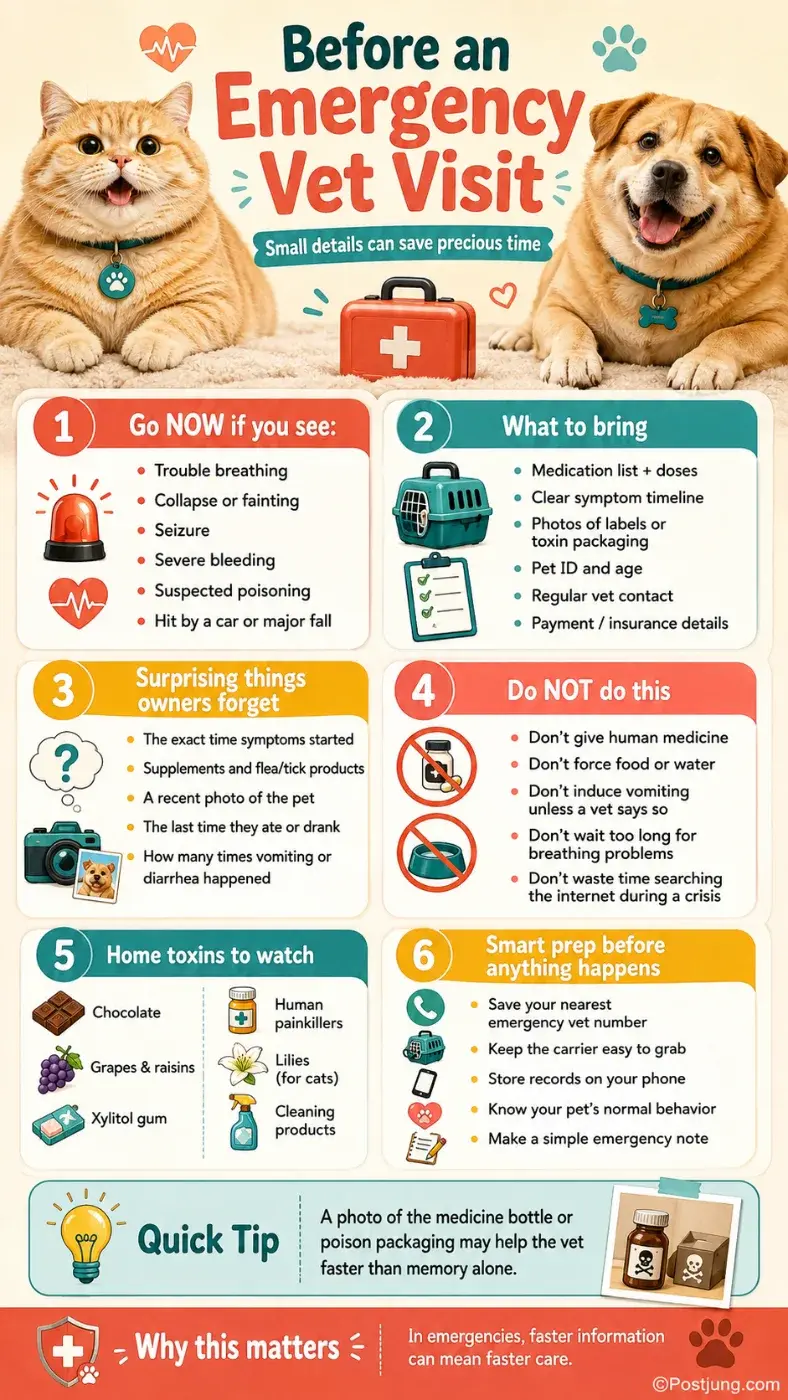
Medication names matter more than many people think
One of the most common gaps before an emergency visit is incomplete medication information. Owners may know their pet takes “a heart pill,” “a pain medicine,” or “something for allergies,” but not the exact drug, dose, or schedule.
That can slow decision-making. Some medications interact with others. Some affect anesthesia, blood pressure, hydration, bleeding risk, or diagnostic choices. Supplements matter too, especially if the pet takes products for joints, anxiety, skin, digestion, or flea and tick prevention.
The safest habit is to keep an updated phone note with:
Pet’s name and age
Current medications and supplements
Dose and timing
Known allergies or past reactions
Major medical conditions
Regular veterinarian’s contact information
If you can, bring the bottles or take clear photos of the labels. In an emergency, a label photo may be more useful than memory.
Owners often forget the “evidence”
If a pet may have eaten something toxic, the packaging can be extremely useful. That includes chocolate wrappers, medication bottles, plant pieces, cleaning-product labels, bait boxes, supplement containers, or food packaging.
The ASPCA Animal Poison Control Center advises pet owners to call if they think a pet has ingested a potentially poisonous substance, and its hotline operates around the clock. A consultation fee may apply.
For emergency teams, the exact product can matter. “Chocolate” is not specific enough if the amount, type, and timing are unknown. “A plant” may not help if the species is unclear. “A pill” may be very different depending on whether it was an over-the-counter pain reliever, a prescription medication, or a supplement.
Before leaving, if it is safe to do so, take the package with you or photograph it clearly. Do not spend valuable time searching the house if your pet is struggling to breathe, collapsing, seizing, or bleeding heavily. In those cases, getting to veterinary care is the priority.
Breathing problems are not a wait-and-see situation
Some pet symptoms can be monitored briefly while calling a veterinarian. Breathing trouble is different.
Open-mouth breathing in a cat, blue or pale gums, choking, nonstop coughing and gagging, collapse, or a pet that seems unable to get comfortable can signal a serious emergency. VCA Animal Hospitals notes that emergency clinics often triage pets based on severity, with breathing problems, major trauma, severe bleeding, seizures, and collapse treated as urgent concerns.
This is where owners sometimes lose time by trying home remedies first. A pet who cannot breathe normally does not need a long observation period. They need immediate professional guidance.
A useful rule: when breathing looks wrong, call now. Tell the clinic you are coming, describe what you see, and follow their instructions for safe transport.
Your regular vet records can save time
Emergency clinics often see pets with no prior history. That means the team may not know about kidney disease, heart conditions, diabetes, seizures, allergies, prior surgeries, vaccine history, or past test results.
If your pet has a chronic condition, ask your regular veterinarian how to access records after hours. Some clinics have online portals. Others can email records to emergency hospitals. At minimum, keep recent lab results, diagnosis names, and medication lists saved on your phone.
This is especially helpful for pets with complicated histories. A senior dog with heart disease, a diabetic cat, or a pet with previous seizures may need a different approach than a healthy young animal with the same surface symptom.
Payment and decision-making are part of preparation
Emergency care can move quickly. Owners may be asked to approve exams, stabilization, bloodwork, X-rays, medication, hospitalization, or transfer to a specialty hospital.
This can feel overwhelming. It is even harder when payment options, insurance details, or family decision-makers are unclear.
Before an emergency happens, pet owners should know where the nearest 24-hour emergency clinic is, how far away it is, whether their pet insurance requires claim documents, and who can make decisions if the main owner is unavailable.
This is not about expecting the worst. It is about removing friction during a stressful moment.
What not to do before the emergency vet
A few well-meant actions can make things worse.
Do not give human medication unless a veterinarian specifically instructs you to do so. Many common human drugs can be dangerous for pets, and doses are not interchangeable.
Do not induce vomiting unless a veterinarian or poison-control professional tells you to. Vomiting can be dangerous with certain substances, sharp objects, breathing problems, seizures, or unconsciousness.
Do not feed a sick pet “to see if they improve” before the visit. Food can complicate sedation, anesthesia, or vomiting risk.
Do not delay care to search online for a perfect answer. Online information can help owners recognize risk, but an emergency needs real-time veterinary guidance.
A simple emergency note can help more than a big kit
Pet owners do not need to live in fear. Most emergencies are handled better with a few boring preparations done in advance.
Save the nearest emergency vet’s phone number. Keep a medication list. Photograph important labels. Know your pet’s normal behavior well enough to recognize when something is truly off. Keep carriers accessible, not buried in a closet. For cats, that detail alone can save precious time.
A pet emergency will still be stressful. But being prepared changes the first few minutes from confusion into action.
The best emergency plan is not dramatic. It is practical, updated, and easy to find when your hands are shaking.
KEY TAKEAWAYS:
- Know the nearest emergency vet before something happens.
- Bring or photograph medication labels, supplement labels, and possible toxin packaging.
- Write down when symptoms started and how they changed.
- Breathing trouble, collapse, seizures, severe bleeding, major trauma, and suspected poisoning should be treated urgently.
- Do not give human medication or induce vomiting unless a veterinary professional tells you to.
American Veterinary Medical Association, American Animal Hospital Association, ASPCA Animal Poison Control, VCA Animal Hospitals
REFERENCES:
https://www.avma.org/resources/pet-owners/emergencycare/13-animal-emergencies-require-immediate-veterinary-consultation-andor-care
https://www.aaha.org/resources/preparing-for-the-unexpected-essential-pet-sitter-instructions/
https://www.aspca.org/pet-care/aspca-poison-control
https://vcahospitals.com/know-your-pet/how-do-emergency-clinics-work

เขียนโดย Postjung Insights
 รู้หรือไม่? เปิดรายได้พนักงานส่งพัสดุของแต่ละแอป วันหนึ่งได้เท่าไร
 5 คณะที่เรียนจบมาแล้ว มีอาชีพรองรับมากกว่าที่คิด
 จุฬาฯ มหาวิทยาลัยแห่งแรกของไทย มีจุดเริ่มต้นในสมัยรัชกาลที่ 5
 อำเภอที่มีชื่ออำเภอสั้นที่สุด 3 อำเภอเท่านั้นในประเทศไทย
 เปิดรายชื่อโรงเรียนในไทยที่ “ว่ายน้ำ” อยู่ในหลักสูตร เรียนจริงตั้งแต่อนุบาลถึงมัธยม
 โรงเรียนที่มีนักเรียนมากที่สุดในไทย
 สถิติย้อนหลัง 10 ปี ออกเลขไหนบ้างมาดูกัน
 เปิด 5 โรงเรียนหญิงล้วนเก่าแก่ของไทย ที่มีประวัติยาวนานกว่าศตวรรษ
 อุทยานเขาใหญ่เรียกตัว “ตีนผี” หลังขับจี้ช้างป่าพ่อลูก ลั่นระยะ 50 เมตรต้องจำให้ขึ้นใจ
 Google ยอมรับแล้ว! Gemini AI เข้าถึงระบบบริษัทจริง 3 แห่ง ระหว่างการทดสอบความปลอดภัย
 ตาราง “เด่นเหนือเด่นใต้” งวด 1 ต.ค. 69 เปิดข้อมูลตามโพย เลขไหนอยู่ตรงไหน
 เลขเด็ดปฏิทิน "หลวงปู่โต๊ะ" งวดวันที่ 1 ตุลาคม 69..ส่องเลย เลขไหนให้โชค!
 😃 ชวนเข้ามาดูกันอีกกับคนที่มีร่างกายพิเศษจนเหมือนมีกล่องสมบัติที่หายาก 😯5 คณะที่เรียนจบมาแล้ว มีอาชีพรองรับมากกว่าที่คิดเปิดรายชื่อโรงเรียนในไทยที่ “ว่ายน้ำ” อยู่ในหลักสูตร เรียนจริงตั้งแต่อนุบาลถึงมัธยมGoogle ยอมรับแล้ว! Gemini AI เข้าถึงระบบบริษัทจริง 3 แห่ง ระหว่างการทดสอบความปลอดภัยเลขเด็ดปฏิทิน "หลวงปู่โต๊ะ" งวดวันที่ 1 ตุลาคม 69..ส่องเลย เลขไหนให้โชค!
 ทำไมของพลาสติกเก่าบางชิ้นถึง “เหนียว” ขึ้นมาเอง ทั้งที่ไม่ได้เปื้อนอะไร?
 English Edition