Why Pet Carriers Work Better When Training Starts Early
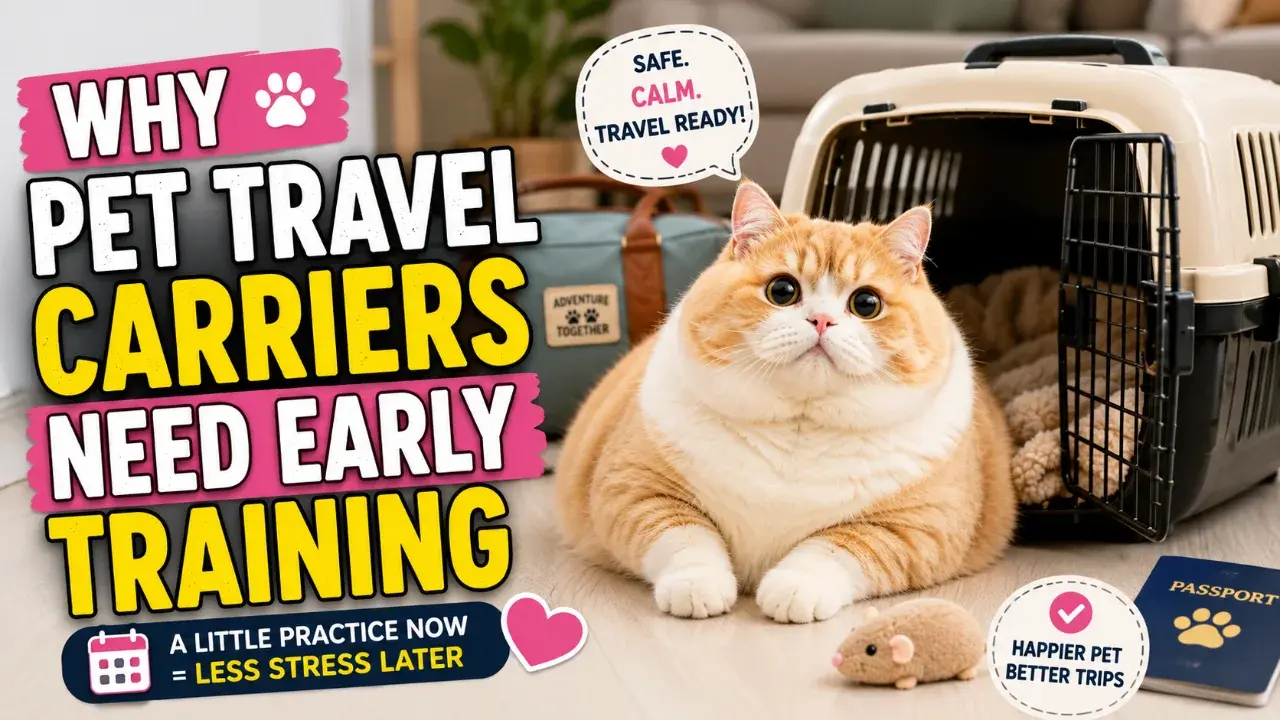
A carrier is not just travel gear. For dogs and cats, it can feel like safety — or a trap — depending on how early owners introduce it.
A pet carrier should not make its first real appearance on travel day. By then, the car is packed, the airport is busy, the vet appointment is close, and the animal has very little time to understand what is happening.
That is why early carrier training matters. For dogs and cats, the carrier is not just a box with a handle. It is the small space they may rely on during car rides, flights, hotel stays, vet visits, evacuations, and unexpected emergencies.
The difference often comes down to one simple question: did the pet meet the carrier as a safe place, or only as a warning sign?
A carrier should feel familiar before it matters
Many pets learn fast. If the carrier only appears before a stressful vet visit, a loud car ride, or a long trip, the animal may begin to associate it with fear.
That reaction is not stubbornness. It is pattern recognition.
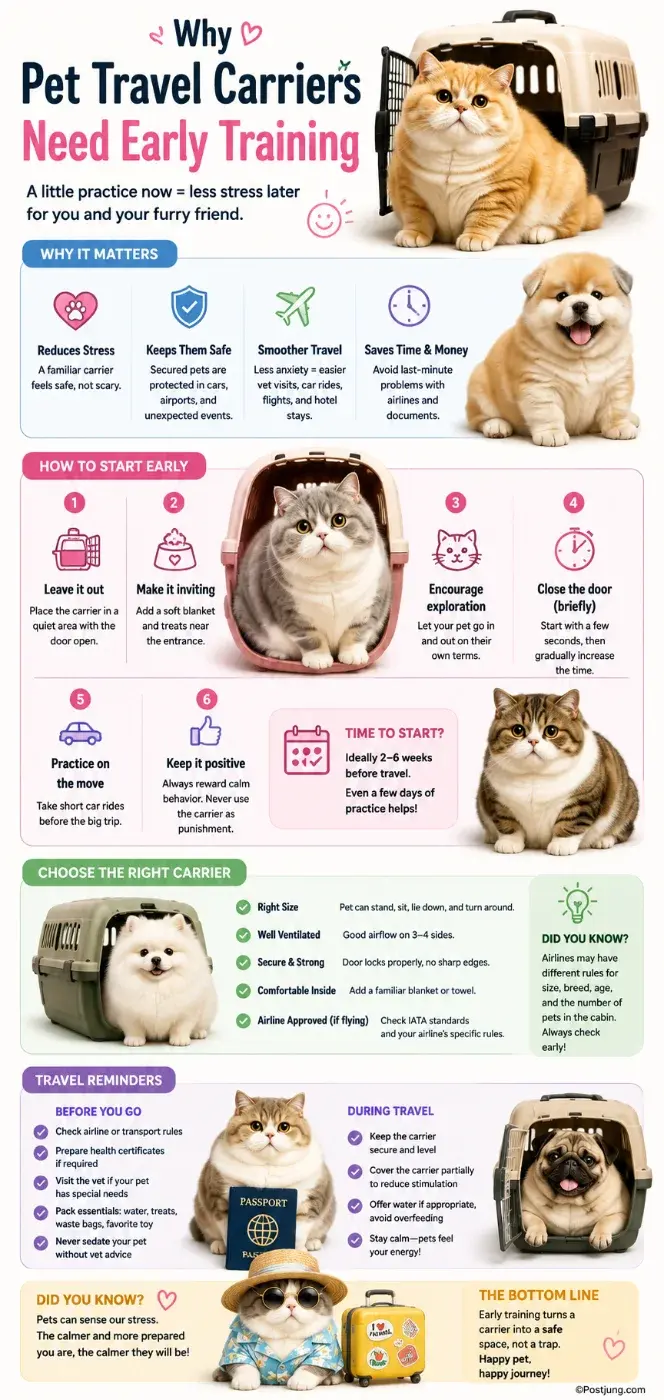
Early training changes that pattern. Instead of dragging the carrier out only when something stressful is about to happen, owners can make it part of normal life. Leave it open in a quiet room. Add a familiar blanket. Place treats near the entrance. Let the pet investigate without pressure.
Over time, the carrier becomes less like a trap and more like furniture with a purpose.
That matters because real travel already brings enough stress. IATA guidance for dogs and cats traveling in aircraft cabins notes that travel can be unsettling for animals and says they should be disturbed as little as possible. It also advises passengers to check airline rules because individual carriers may have additional or stricter policies.
In other words, the travel system is built around rules, containers, timing, and control. The pet’s comfort depends heavily on what happens before that system begins.
Training is not only about flights
Carrier training is often discussed before air travel, but it is just as useful for ordinary car rides.
The ASPCA recommends keeping pets safe and secure in a well-ventilated crate or carrier during travel. It also says the crate should be large enough for the pet to stand, sit, lie down, and turn around, and that it should be secured so it does not slide or shift during an abrupt stop.
That is a safety point, not just a comfort point.
A loose pet in a car can be injured, distract the driver, or bolt when a door opens. A pet that has never practiced being in a carrier may panic, scratch, vocalize, or refuse to enter just when the owner needs calm cooperation.
Early training gives the owner options.
A dog that can settle in a crate may travel more safely in the back of a vehicle. A cat that accepts a carrier may be easier to move during a storm, building repair, or sudden trip to an emergency clinic. A small pet that already understands the carrier may be less overwhelmed by the noises and smells of a new place.
The size and design still matter
Training cannot fix the wrong carrier.
For air travel, IATA’s container requirements say each animal must have enough space to stand, sit erect, lie in a natural position, and turn around normally while standing. The same document also includes construction and ventilation requirements, including smooth interiors and openings designed to avoid injury to animals and handlers.
For owners, the practical lesson is clear: do not choose a carrier only because it looks cute, folds flat, or fits under a seat in theory.
The pet has to fit in it. The door has to close securely. Ventilation has to be adequate. The animal should not be crammed into a space so tight that it cannot move naturally.
This is especially important for air travel, where airlines may have their own rules about size, breed restrictions, cabin limits, age requirements, documentation, and whether a pet can travel in the cabin at all. USDA APHIS advises pet owners that travel paperwork and requirements can take time and should not be left until the last minute.
For international trips from the United States, USDA APHIS also tells owners to contact a USDA-accredited veterinarian as soon as they decide to travel, because destination countries set pet entry requirements and those rules can change.
That means early preparation is doing two jobs at once: training the animal and preventing paperwork surprises.
What early carrier training can look like
The best carrier training is usually quiet and boring.
Start with the door open. Let the pet sniff it. Put a treat just inside, then farther back. Feed a small snack near it. Add a towel or blanket that already smells like home.
Do not shut the door immediately. The first goal is not confinement. The first goal is curiosity without fear.
Once the pet enters comfortably, close the door for a few seconds, then open it again. Later, build up to a minute, then a few minutes. Carry the empty carrier around before carrying the pet in it. Practice short car sessions before a long drive.
For cats especially, this can make a big difference. Many cats only see the carrier before vet visits, which can make the carrier itself feel like the first step of a bad experience.
Dogs may have a different challenge. Some enter willingly at home but become restless once the car starts moving. Short practice rides can help separate the carrier from one big stressful event.
The goal is not to erase all stress
Even a well-trained pet may still feel nervous during travel. Airports are loud. Cars vibrate. New places smell unfamiliar. Some animals are naturally more anxious than others.
Early training does not promise a perfectly calm trip. What it does is reduce the number of surprises.
A familiar carrier gives the pet one thing it already understands. It gives the owner a safer way to move the animal. It also gives veterinarians, airline staff, hotel workers, or emergency responders a more manageable situation when timing matters.
For pets, trust is built before the stressful moment begins.
That may be the real reason carrier training works: it turns travel gear into a known place. And when the world suddenly starts moving, a known place can feel like a small but important piece of home.
KEY TAKEAWAYS:
- Introduce the carrier weeks before travel, not on the day of the trip.
- A carrier should be large enough for the pet to stand, sit, lie down, and turn around.
- Short, positive practice sessions are better than forcing the pet inside.
- Carriers help with ordinary car rides, flights, vet visits, and emergencies.
- For air or international travel, always check airline and official entry rules early.

เขียนโดย Postjung Insights
 รู้หรือไม่? เปิดรายได้พนักงานส่งพัสดุของแต่ละแอป วันหนึ่งได้เท่าไร
 ดูหนัง–ซีรีส์ฟรีอาจไม่ฟรีอย่างที่คิด! เปิดโทษละเมิดลิขสิทธิ์ เตือนคนปล่อยคอนเทนต์เถื่อน เสี่ยงทั้งคุกทั้งปรับ
 รมว.วัฒนธรรมเอาจริง! จ่อส่งหนังสือทักท้วง Miss Universe Cambodia ปมใช้ภาพหญิงกำแพงเพชร หากไม่แก้ เตรียมใช้กฎหมาย
 โรงเรียนที่มีนักเรียนมากที่สุดในไทย
 5 คณะที่เรียนจบมาแล้ว มีอาชีพรองรับมากกว่าที่คิด
 ตาราง “เด่นเหนือเด่นใต้” งวด 1 ต.ค. 69 เปิดข้อมูลตามโพย เลขไหนอยู่ตรงไหน
 อำเภอที่มีชื่ออำเภอสั้นที่สุด 3 อำเภอเท่านั้นในประเทศไทย
 MRT เตาปูนกลับมาเปิดปกติแล้ว รมช.คมนาคมเผยปมไฟไหม้ พบประกายไฟจากชุดสายไฟ 750 โวลต์
 แมคาเดเมีย (Macadamia): ราชินีแห่งถั่ว กับขุมทรัพย์โภชนาการจากออสเตรเลีย
 สถิติย้อนหลัง 10 ปี ออกเลขไหนบ้างมาดูกัน
 งูมัลกา (Mulga Snake): นักล่าแห่งผืนดินแห้งแล้ง ของทวีปออสเตรเลีย กับฉายา King Brown กัดคนได้ถึงตาย
 มัดรวมจับเลขชน สัตว์นำโชค 1 ตุลาคม 2569
 English Edition