Why Cats Hide When Guests Come Over — and What It Really Means
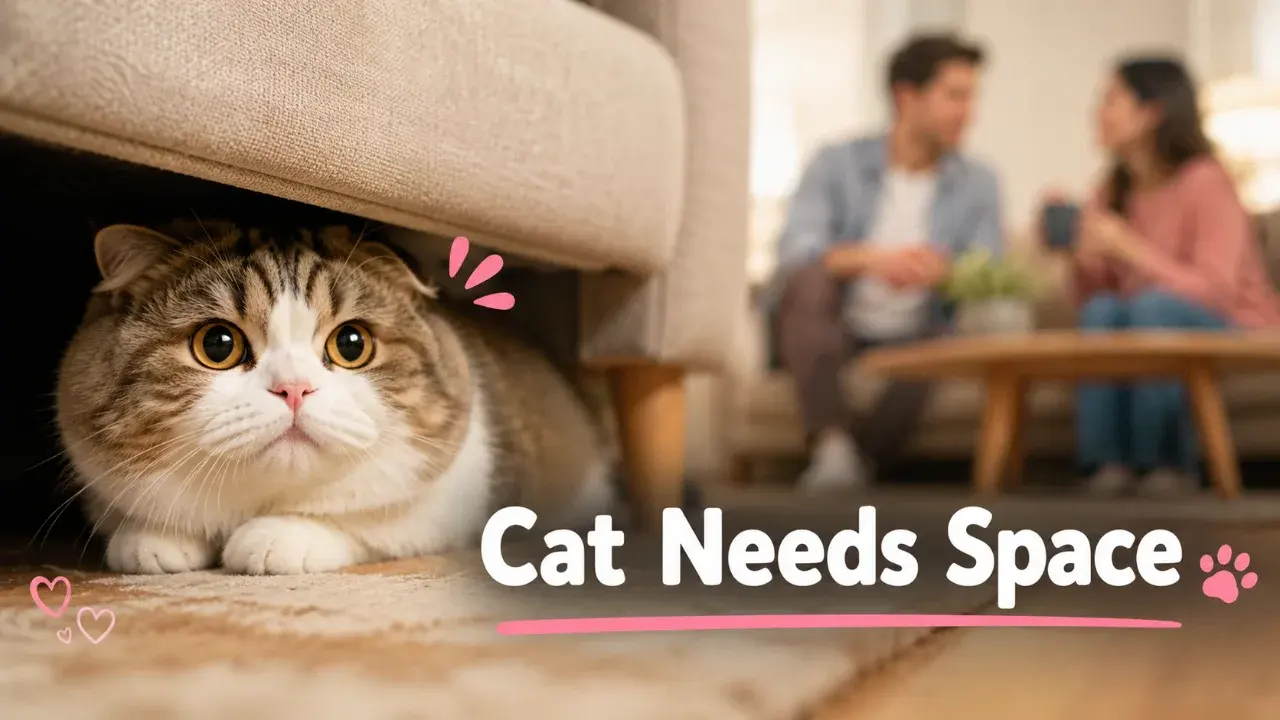
A cat that vanishes when guests walk through the door is not being dramatic. In most cases, it is doing something deeply cat-like: choosing safety before socializing.
For humans, visitors may mean conversation, food, laughter, and a good evening. For a cat, the same moment can bring sudden noise, unfamiliar voices, new smells, moving feet, doorbells, bags, children, perfume, and a changed household routine. That is a lot for an animal that often feels most secure when life is predictable.
The important thing to know is this: hiding is not automatically a problem. For many cats, it is a normal way to manage stress. The question is not simply “Why is my cat hiding?” but “Is my cat using a safe retreat, or is this a sign that something else is wrong?”
Hiding Is a Safety Strategy, Not an Insult
Cats are often described as independent, but that does not mean they are fearless. In natural behavior terms, cats are both hunters and animals that can be vulnerable to larger threats. That helps explain why many cats prefer to observe from a protected spot before deciding whether a situation is safe.
Veterinary behavior guidance emphasizes that cats need private, secure places where they can retreat, often with some height or enclosure. These spaces help them feel protected and in control of their surroundings.
That is why a cat may run under the bed, climb to the top of a wardrobe, slip behind a couch, or disappear into a quiet closet when people arrive. The hiding place gives the cat distance, cover, and time.
To a guest, it may look like rejection. To the cat, it may feel like smart risk management.
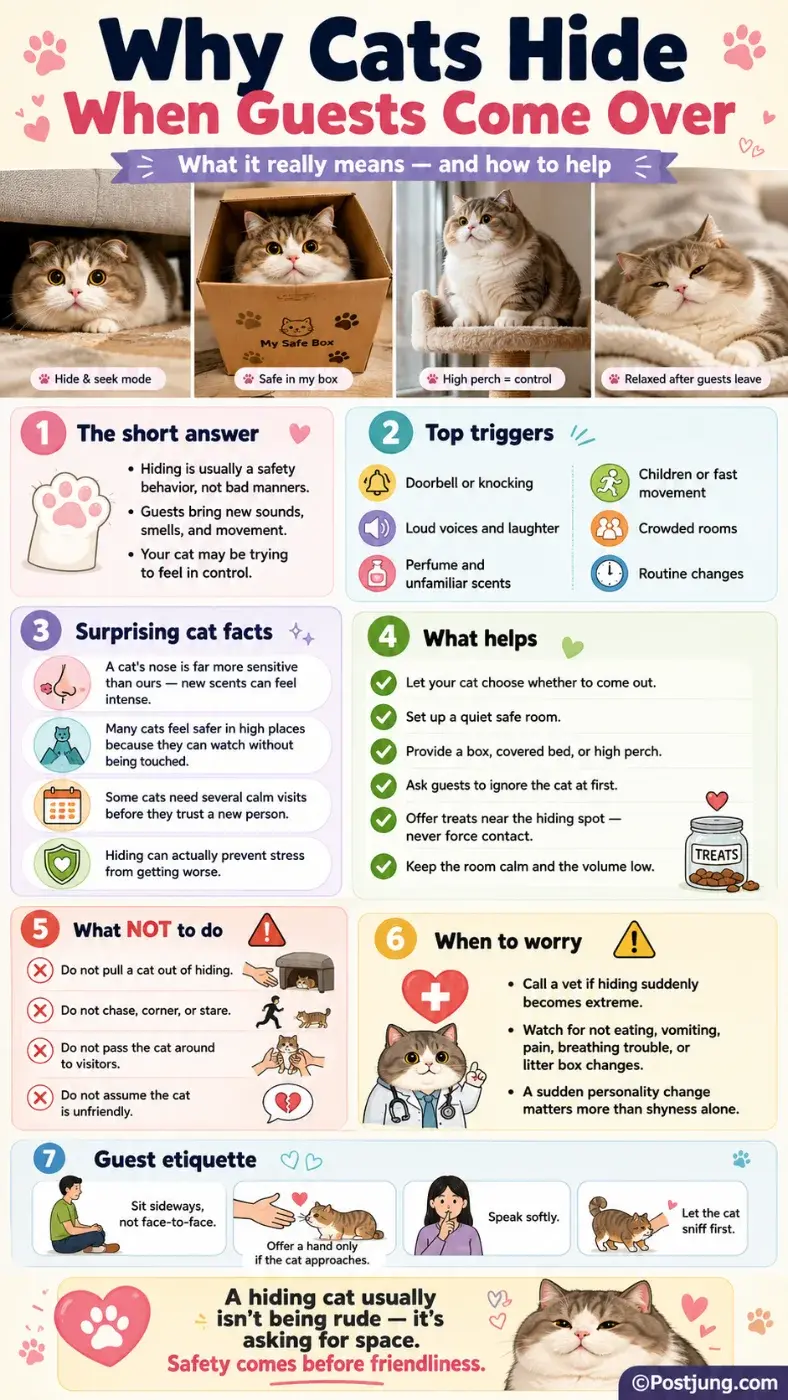
Guests Bring More Than Just People
A visitor changes the whole sensory map of a home.
Cats rely heavily on smell, sound, routine, and territory. When guests enter, they bring unfamiliar scents from outside, other homes, other pets, cars, workplaces, restaurants, or public spaces. They may speak loudly, move quickly, laugh, open doors, drop bags, or lean down to say hello.
Even friendly guests can accidentally feel overwhelming.
Best Friends Animal Society notes that cats may be shy around strangers for several reasons, including limited early experience with different people. The arrival of visitors can also come with other stressful cues, such as knocking, packages, or loud sounds.
For some cats, the scary part is not the person. It is the entire event.
A quiet cat may tolerate one calm adult but panic when five people arrive at once. A confident cat may be fine with familiar friends but vanish when a toddler runs through the room. A rescue cat may need months before it decides that guests are predictable enough to ignore.
The Best Response Is Usually to Let the Cat Choose
The most helpful thing owners and guests can do is surprisingly simple: do not force the interaction.
Pulling a cat out from under furniture, blocking its escape route, or passing it around to visitors can teach the cat that guests are even more stressful than it thought. A better approach is to let the cat keep its hiding spot and decide whether to come out.
A good guest rule is: ignore the cat until the cat asks otherwise.
That does not mean being cold. It means avoiding direct staring, chasing, loud calling, grabbing, or reaching into a hiding place. If the cat comes out, guests can sit calmly, keep their hands low, and let the cat sniff first. Some cats may accept a treat tossed nearby. Others may simply observe from across the room.
That still counts as progress.
A “Safe Room” Can Make Visitors Easier
For cats that hide every time guests arrive, a planned refuge can help. This can be a bedroom, office, laundry room, or quiet corner where the cat already feels comfortable.
The space should have the basics: water, a litter box nearby or accessible, a soft resting spot, familiar bedding, a scratching surface, and at least one hiding place. A cardboard box, covered cat bed, open carrier with a blanket, or cat tree can work well.
The Ohio State University Indoor Pet Initiative recommends giving cats access to refuge areas during stressful household events and making sure they have places to escape noise.
This matters because a cat that has a predictable escape route may feel less trapped. Over time, that can make guests feel less threatening.
The goal is not to make every cat become a party cat. The goal is to give the cat enough control that the home still feels safe.
Elevated Spaces Can Help Cats Feel in Control
Some cats do not want to hide under things. They want to hide above them.
Cat trees, shelves, window perches, and tall furniture can give cats a safer way to watch the room without being in the middle of it. Feline environmental guidelines describe safe places as often private, secure, and sometimes raised, giving cats a sense of seclusion and protection.
This is one reason a cat may sit on top of a refrigerator or bookshelf when guests arrive. It is not random. Height gives the cat a better view and more distance from hands, feet, dogs, or children.
A strong setup might include both: a low enclosed hiding spot and a high observation perch. Different cats prefer different safety strategies.
When Hiding May Be a Warning Sign
Most guest-related hiding is normal. But a change in hiding behavior deserves attention.
If a cat that normally greets people suddenly hides all day, refuses food, stops using the litter box normally, becomes unusually aggressive, sleeps much more, or seems painful, that is different from ordinary shyness.
VCA Hospitals notes that sick cats may become withdrawn and hide, although changes can vary by personality. Lower energy, less play, restlessness, or changes in appetite can also be signs that something is off.
A helpful rule is to compare the cat with its own normal pattern. A lifelong shy cat hiding during a dinner party may be fine. A social cat suddenly disappearing for long periods may need a closer look.
Sudden behavior change matters more than the hiding itself.
If hiding comes with not eating, vomiting, trouble breathing, obvious pain, weakness, repeated litter box changes, or a dramatic personality shift, a veterinarian should be contacted.
The Biggest Misunderstanding: “My Cat Hates People”
Many shy cats do not hate people. They are cautious about unfamiliar people.
That distinction matters. A cautious cat may still bond deeply with its owner, enjoy affection, play, and relax at home. It may simply need more time and control around outsiders.
Some cats also warm up slowly. They may spend the first few visits hidden, then eventually sit in the hallway, then watch from a chair, then approach one trusted guest. That gradual process can be easy to miss if people expect instant friendliness.
A cat’s confidence is built through repeated safe experiences. If every guest ignores the cat respectfully, leaves the hiding place alone, and allows the cat to approach on its own schedule, the cat may learn that visitors are not a threat.
Small Changes Can Make a Big Difference
Owners can prepare before guests arrive by setting up the safe room, feeding the cat earlier, keeping music or TV at a gentle volume, and warning visitors not to chase or pick up the cat.
Treats can help, but they should not be used to lure a frightened cat into a situation it does not want. A better method is to reward brave behavior from a distance: looking into the room, walking past a guest, or accepting food near the doorway.
For very nervous cats, short visits are easier than long noisy gatherings. One calm guest is easier than a crowded party. Adults sitting quietly are easier than people standing over the cat.
The key is to lower the intensity.
A cat does not need to become social in one evening. Feeling safe comes before being friendly.
Let the Hidden Cat Be a Cat
A hiding cat is often telling the truth in the clearest way it can: “I need space.”
That message should be respected, not taken personally. The cat may come out later. It may not. Either outcome can be normal.
The best homes for cats are not the ones where cats are forced to perform friendliness for guests. They are the ones where cats have choices: a way to hide, a way to watch, a way to retreat, and a way to approach when they are ready.
When guests come over, your cat may not be antisocial. It may simply be careful.
And in cat language, careful can be healthy.
AAFP/ISFM Feline Environmental Needs Guidelines, Ohio State University Indoor Pet Initiative, Best Friends Animal Society, VCA Hospitals
REFERENCES:
https://journals.sagepub.com/doi/pdf/10.1177/1098612x13477537
https://indoorpet.osu.edu/cats/feline-life-stressors/events-and-around-house
https://bestfriends.org/pet-care-resources/why-my-cat-shy-around-strangers-tips-anxious-cats
https://vcahospitals.com/know-your-pet/recognizing-signs-of-illness-in-cats

เขียนโดย Postjung Insights
 5 คณะที่เรียนจบมาแล้ว มีอาชีพรองรับมากกว่าที่คิด
 อำเภอที่มีชื่ออำเภอสั้นที่สุด 3 อำเภอเท่านั้นในประเทศไทย
 เปิดรายชื่อโรงเรียนในไทยที่ “ว่ายน้ำ” อยู่ในหลักสูตร เรียนจริงตั้งแต่อนุบาลถึงมัธยม
 โรงเรียนที่มีนักเรียนมากที่สุดในไทย
 Google ยอมรับแล้ว! Gemini AI เข้าถึงระบบบริษัทจริง 3 แห่ง ระหว่างการทดสอบความปลอดภัย
 รู้หรือไม่? เปิดรายได้พนักงานส่งพัสดุของแต่ละแอป วันหนึ่งได้เท่าไร
 ตาราง “เด่นเหนือเด่นใต้” งวด 1 ต.ค. 69 เปิดข้อมูลตามโพย เลขไหนอยู่ตรงไหน
 อุทยานเขาใหญ่เรียกตัว “ตีนผี” หลังขับจี้ช้างป่าพ่อลูก ลั่นระยะ 50 เมตรต้องจำให้ขึ้นใจ
 ทำไมของพลาสติกเก่าบางชิ้นถึง “เหนียว” ขึ้นมาเอง ทั้งที่ไม่ได้เปื้อนอะไร?
 เลขเด็ดปฏิทิน "หลวงปู่โต๊ะ" งวดวันที่ 1 ตุลาคม 69..ส่องเลย เลขไหนให้โชค!
 จุฬาฯ มหาวิทยาลัยแห่งแรกของไทย มีจุดเริ่มต้นในสมัยรัชกาลที่ 5
 โรงเรียนเพียงแห่งเดียวของประเทศไทย ที่อยู่มาตั้งแต่ยุครัชกาลที่ 45 คณะที่เรียนจบมาแล้ว มีอาชีพรองรับมากกว่าที่คิดเปิดรายชื่อโรงเรียนในไทยที่ “ว่ายน้ำ” อยู่ในหลักสูตร เรียนจริงตั้งแต่อนุบาลถึงมัธยมGoogle ยอมรับแล้ว! Gemini AI เข้าถึงระบบบริษัทจริง 3 แห่ง ระหว่างการทดสอบความปลอดภัยเลขเด็ดปฏิทิน "หลวงปู่โต๊ะ" งวดวันที่ 1 ตุลาคม 69..ส่องเลย เลขไหนให้โชค!ทำไมของพลาสติกเก่าบางชิ้นถึง “เหนียว” ขึ้นมาเอง ทั้งที่ไม่ได้เปื้อนอะไร?อุทยานเขาใหญ่เรียกตัว “ตีนผี” หลังขับจี้ช้างป่าพ่อลูก ลั่นระยะ 50 เมตรต้องจำให้ขึ้นใจ
 English Edition