Why Stairs Get Harder for Aging Pets — and What Owners Should Watch
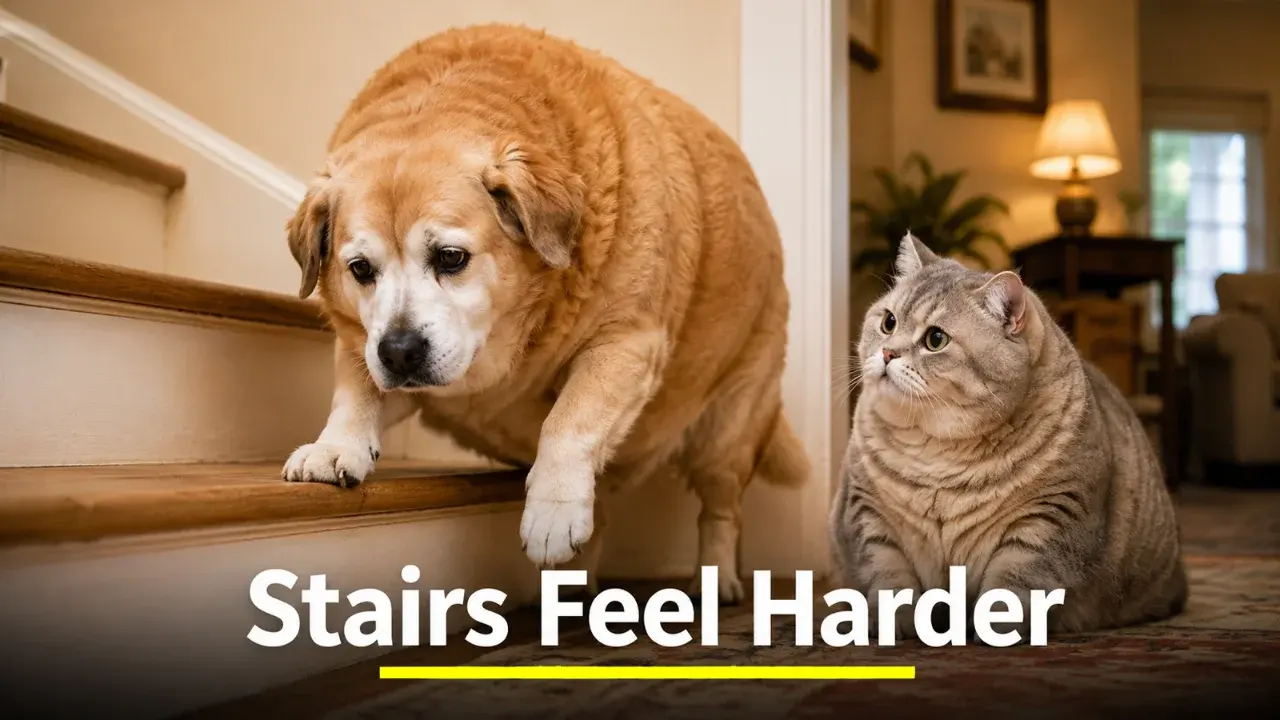
A senior dog or cat avoiding stairs is not always “just getting old.” It can be an early sign of pain, joint disease, muscle loss, poor vision, or a home setup that no longer feels safe.
Aging pets often show discomfort in small ways first. One of the clearest signs can be a staircase that suddenly looks too steep, too slippery, or too painful to climb.
For many owners, the change feels subtle: a dog pauses at the bottom step, a cat stops going upstairs at night, or a once-confident pet starts waiting to be carried. It can be easy to dismiss this as normal aging, but stair trouble can also point to pain, joint stiffness, weakness, or changes in balance and vision.
Veterinary sources describe osteoarthritis as a chronic, progressive joint disease that can cause pain, inflammation, stiffness, changes in gait, and difficulty using affected limbs. Cornell University College of Veterinary Medicine lists difficulty navigating stairs or jumping on furniture among the clinical signs of osteoarthritis in dogs.
Stairs Ask More From the Body Than Walking
Walking across a room is mostly forward motion. Stairs are different.
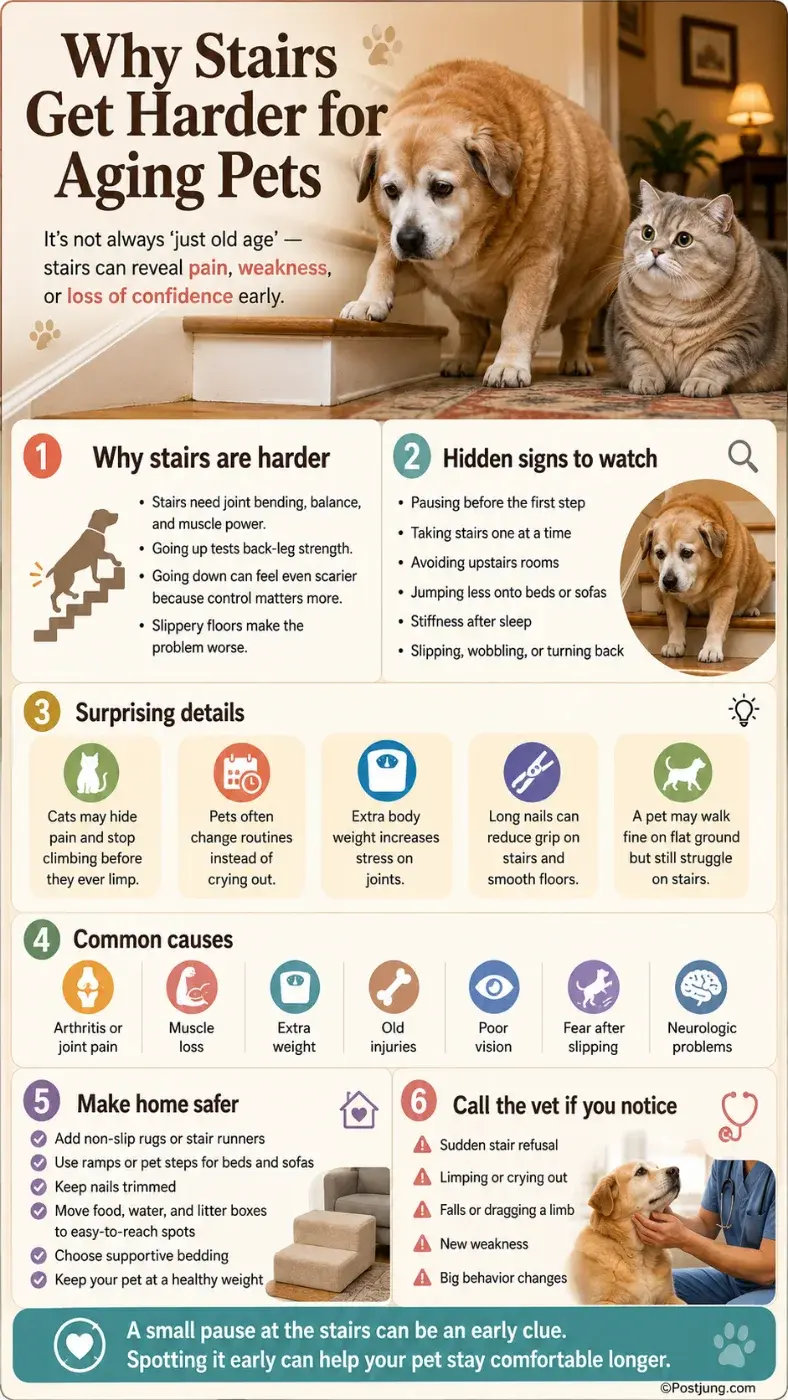
A pet has to shift weight, bend the hips, knees, elbows, shoulders, and spine, push upward with the back legs, control the landing with the front legs, and keep balance on a narrow surface. That makes stairs a kind of daily mobility test.
For older dogs, the back legs often reveal the problem first. A dog may still walk normally on flat ground but struggle to push up the steps. Going down can be even more frightening because it requires control, balance, and confidence.
For cats, the signs may be quieter. A cat that no longer jumps as high, avoids favorite elevated spots, or chooses the downstairs couch instead of the upstairs bedroom may be adapting to pain without making much noise about it. AAHA’s mobility guidance notes that cats with osteoarthritis may rarely limp; instead, they may appear stiff, move less fluidly, become less active, jump less, or avoid being handled.
That is why a stair habit can become a health clue.
Pain Is Not the Only Reason
Joint disease is a common explanation, but it is not the only one.
Older pets may also struggle with stairs because of muscle loss, excess weight, neurologic problems, old injuries, poor nail traction, reduced vision, or fear after a slip. The American Veterinary Medical Association says behavior changes in senior pets can be early signs of aging and may be linked to pain, arthritis, worsening sight or hearing, medical conditions, or the normal aging process.
Weight matters too. Extra pounds increase the force on joints, and Cornell notes that obesity contributes significantly to osteoarthritis because of added joint load and inflammatory effects from fat cells.
This does not mean every slow climb is an emergency. But “just old age” can hide treatable discomfort. A pet who avoids stairs may be making a practical choice: the movement hurts, the landing feels unsafe, or the body no longer responds as smoothly as before.
What Owners Often Notice First
The early signs can be easy to miss because many pets adapt around pain.
A dog may stand at the staircase and look back at the owner. A cat may stop sleeping in a favorite upstairs room. A pet may climb halfway, pause, turn around, or take the steps one at a time instead of moving smoothly.
Other clues may show up around the home:
- hesitating before jumping onto furniture
- slipping on tile or wood floors
- stiffness after sleep
- slower walks
- difficulty rising from lying down
- irritability when touched
- less interest in play
- changes in posture or gait
Cornell lists stiffness, lameness or gait changes, reduced activity, difficulty getting up, muscle wasting, and behavior changes among possible signs of osteoarthritis.
One important point: pets do not need to cry or whimper to be in pain. Many animals are quiet about discomfort. They show it through changed routines.
Small Home Changes Can Make a Big Difference
A safer home setup can reduce strain while an owner arranges veterinary advice.
Non-slip rugs or runners can help pets who slide on smooth floors near stairs. Ramps or shallow pet steps may reduce jumping onto beds, couches, or into cars. Supportive bedding can make it easier for an older pet to rest and rise. Keeping nails trimmed may also improve traction.
Cornell includes weight control, low-impact activity, non-slip rugs, and ramps among lifestyle changes that may help dogs with osteoarthritis management.
For cats, the best help is often quiet and practical: lower resting spots, easier access to litter boxes, food, and water, and a way to reach favorite areas without a big jump. A cat that cannot comfortably climb into a high-sided litter box may start having accidents that look behavioral but are really mobility-related.
The goal is not to force an aging pet to “exercise through it.” It is to reduce unnecessary strain while protecting movement, comfort, and confidence.
When a Vet Visit Matters
A veterinarian should evaluate a pet who suddenly refuses stairs, limps, falls, cries out, drags a limb, becomes unusually weak, or shows sudden behavior changes. A slower, gradual decline is also worth discussing, especially if it affects normal routines.
Veterinarians may watch how the pet walks, check joint range of motion, look for pain or muscle loss, and recommend imaging or other tests when needed. Cornell notes that osteoarthritis diagnosis can involve a physical exam, gait and posture assessment, joint palpation, and sometimes X-rays or advanced imaging.
Treatment depends on the cause. It may include weight management, controlled exercise, physical rehabilitation, pain management, joint support, environmental changes, or other options guided by the pet’s health status. Owners should not give human pain medication to dogs or cats unless a veterinarian specifically prescribes it; many human medications can be dangerous for pets.
The encouraging part is that stair trouble is not automatically the end of independence. With the right care plan, many senior pets can stay mobile and comfortable for longer.
The staircase may simply be the first place where aging becomes visible. Paying attention to that pause at the bottom step can help owners respond sooner, more gently, and with better information.
KEY TAKEAWAYS:
- Difficulty with stairs can be an early sign of pain, stiffness, weakness, or reduced confidence in older pets.
- Dogs may show stair problems before they seem limited on flat ground.
- Cats often hide pain and may show changes by jumping less or avoiding favorite elevated places.
- Non-slip surfaces, ramps, weight control, and easier access to daily essentials can help.
- Sudden stair refusal, limping, falling, weakness, or major behavior changes should be checked by a veterinarian.
Cornell University College of Veterinary Medicine, American Veterinary Medical Association, American Animal Hospital Association
REFERENCES:
https://www.vet.cornell.edu/departments-centers-and-institutes/riney-canine-health-center/canine-health-topics/osteoarthritis
https://www.avma.org/resources-tools/pet-owners/petcare/senior-pets
https://www.aaha.org/wp-content/uploads/globalassets/05-pet-health-resources/mobilitymatters.pdf

เขียนโดย Postjung Insights
 5 คณะที่เรียนจบมาแล้ว มีอาชีพรองรับมากกว่าที่คิด
 Google ยอมรับแล้ว! Gemini AI เข้าถึงระบบบริษัทจริง 3 แห่ง ระหว่างการทดสอบความปลอดภัย
 เลขเด็ดปฏิทิน "หลวงปู่โต๊ะ" งวดวันที่ 1 ตุลาคม 69..ส่องเลย เลขไหนให้โชค!
 โรงเรียนที่มีนักเรียนมากที่สุดในไทย
 รู้หรือไม่? เปิดรายได้พนักงานส่งพัสดุของแต่ละแอป วันหนึ่งได้เท่าไร
 ตาราง “เด่นเหนือเด่นใต้” งวด 1 ต.ค. 69 เปิดข้อมูลตามโพย เลขไหนอยู่ตรงไหน
 เปิด 5 โรงเรียนหญิงล้วนเก่าแก่ของไทย ที่มีประวัติยาวนานกว่าศตวรรษ
 อำเภอที่มีชื่ออำเภอสั้นที่สุด 3 อำเภอเท่านั้นในประเทศไทย
 สถิติย้อนหลัง 10 ปี ออกเลขไหนบ้างมาดูกัน
 เปิดรายชื่อโรงเรียนในไทยที่ “ว่ายน้ำ” อยู่ในหลักสูตร เรียนจริงตั้งแต่อนุบาลถึงมัธยม
 ดอลลาร์จะล่มสลายจริงไหม?
 จุฬาฯ มหาวิทยาลัยแห่งแรกของไทย มีจุดเริ่มต้นในสมัยรัชกาลที่ 55 คณะที่เรียนจบมาแล้ว มีอาชีพรองรับมากกว่าที่คิดเปิดรายชื่อโรงเรียนในไทยที่ “ว่ายน้ำ” อยู่ในหลักสูตร เรียนจริงตั้งแต่อนุบาลถึงมัธยมGoogle ยอมรับแล้ว! Gemini AI เข้าถึงระบบบริษัทจริง 3 แห่ง ระหว่างการทดสอบความปลอดภัยเลขเด็ดปฏิทิน "หลวงปู่โต๊ะ" งวดวันที่ 1 ตุลาคม 69..ส่องเลย เลขไหนให้โชค!
 ทำไมของพลาสติกเก่าบางชิ้นถึง “เหนียว” ขึ้นมาเอง ทั้งที่ไม่ได้เปื้อนอะไร?
 อุทยานเขาใหญ่เรียกตัว “ตีนผี” หลังขับจี้ช้างป่าพ่อลูก ลั่นระยะ 50 เมตรต้องจำให้ขึ้นใจ
 English Edition