Why Puzzle Feeders Help Dogs Think While They Eat
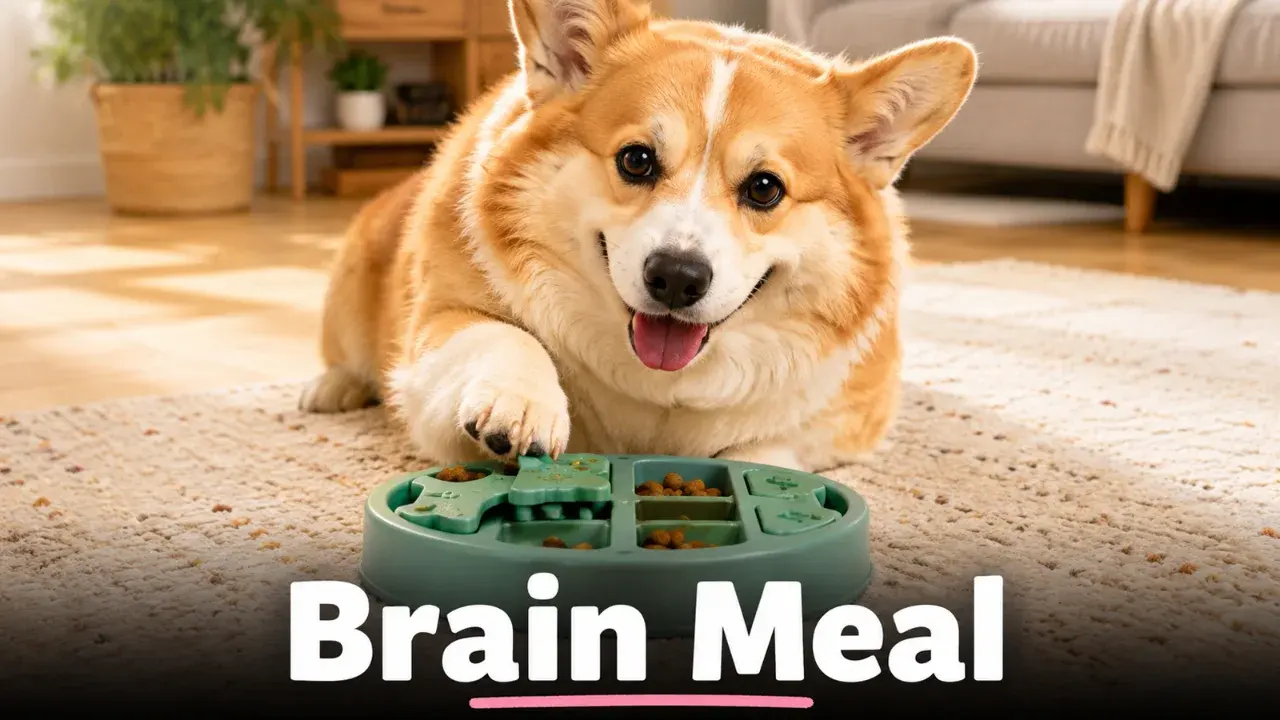
Puzzle feeders make dogs slow down, sniff, search, and solve small problems before getting their food. Used well, they can add mental stimulation to ordinary mealtimes without turning dinner into frustration.
A puzzle feeder can make an ordinary bowl of kibble feel like a small problem worth solving. For dogs, that matters because eating is not only about calories — it is also a chance to sniff, search, paw, lick, nudge, and figure things out.
That is why many trainers, shelters, and veterinary behavior resources treat food puzzles as a form of enrichment. They give dogs a job that feels natural: work a little, use the nose, make a choice, and earn the reward. VCA Animal Hospitals describes foraging toys as tools that simulate hunting and seeking food, while the ASPCA says food puzzles can slow eating and provide mental stimulation.
Dogs were not built to eat in ten seconds
Most pet dogs are served food in a bowl, in the same spot, at roughly the same time every day. That is convenient for people, but it can be surprisingly dull for a species that likes to investigate the world through smell and movement.
A puzzle feeder changes the rhythm. Instead of gulping food from an open bowl, a dog may need to roll a toy, nose through a snuffle mat, open a compartment, lick from a textured surface, or move around the room to find pieces of kibble.
That small delay is the point. The food becomes a task, not just a delivery system.
The American Kennel Club describes puzzle toys as devices that hold food or treats and require physical and mental effort before the dog gets the reward. That effort is what makes the meal more engaging.
Puzzle feeders tap into natural behavior
Dogs are scavengers and problem-solvers by nature. Even a pampered couch dog still has instincts tied to sniffing, chewing, searching, licking, and manipulating objects.
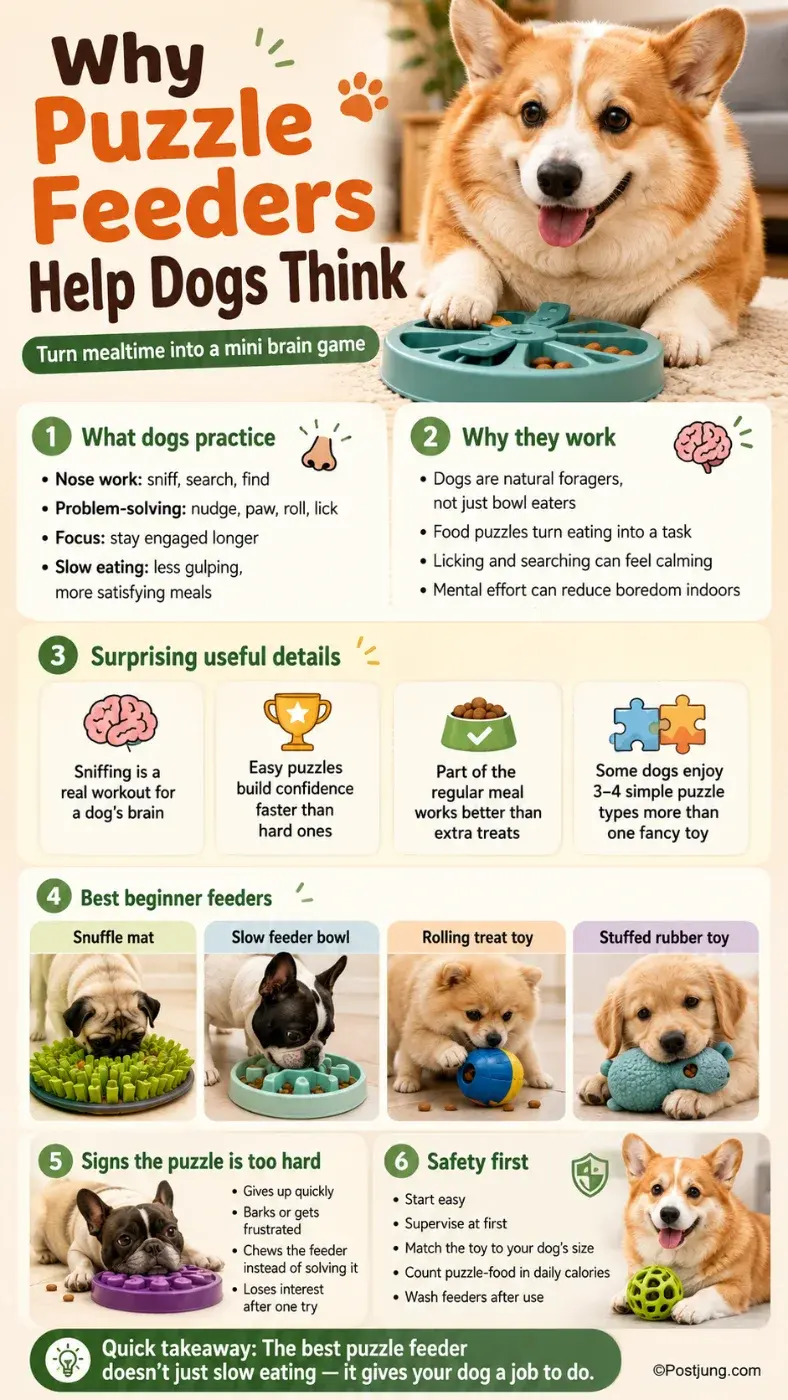
A good puzzle feeder gives those instincts a safe outlet. A snuffle mat lets a dog use its nose. A slow feeder makes the tongue and mouth work more carefully. A rolling treat dispenser encourages movement and persistence. A stuffed rubber toy can turn licking and chewing into a calming activity.
The RSPCA notes that enrichment for dogs can include cognitive tasks, feeding activities, scent work, environmental variety, and social interaction. It also warns that enrichment should be thoughtful, because poorly chosen toys can create frustration, boredom, overeating, or safety risks.
That balance is important. A puzzle feeder should feel like a satisfying challenge, not an impossible exam.
Thinking does not mean “making dogs smarter”
It is tempting to say puzzle feeders make dogs smarter. A better way to put it is this: they give dogs chances to practice attention, persistence, scent use, body control, and simple problem-solving.
That is still valuable.
For a young dog, puzzle feeding can help build patience and curiosity. For a high-energy dog, it can turn part of that energy into focused activity. For a senior dog, gentle enrichment may help keep daily life more interesting.
Research on older dogs suggests cognitive and physical enrichment can affect behavior, engagement, novelty-seeking, and some aspects of problem-solving, though the science is more careful than the marketing. A 2024 study in GeroScience found that cognitive and physical intervention therapies could influence behavior in older healthy pet dogs, but also noted limits and the need for longer or earlier interventions.
So puzzle feeders are not magic. They will not transform every dog into a canine genius. But they can make daily life richer, especially when they are matched to the dog’s age, health, food motivation, and personality.
The best puzzle is easy at first
The most common mistake is starting too hard.
If a dog has always eaten from a bowl, a complicated sliding-panel puzzle may be confusing. The dog may bark, chew the toy, walk away, or become frustrated. That does not mean the dog is “bad at puzzles.” It usually means the setup skipped a few steps.
Start with something simple:
A beginner snuffle mat.
Kibble scattered in a towel.
A slow-feeder bowl.
A toy that releases food easily.
A muffin tin with kibble placed under a few tennis balls.
The ASPCA includes simple DIY ideas such as muffin tin puzzles, box puzzles, paper roll puzzles, and snuffle mats, while also emphasizing active supervision when homemade items are accessible.
For the first few tries, make the puzzle almost too easy. Let the dog win quickly. Once the dog understands the idea, gradually increase the challenge.
Confidence comes before difficulty.
Puzzle feeding can also slow fast eaters
Some dogs inhale food so quickly that mealtime is over before the owner has put the scoop away. A puzzle feeder can slow that down by spreading the food out or making the dog work for each piece.
This can be helpful for owners who want meals to feel less rushed, but it should not be used as a substitute for veterinary care. Dogs that gulp food, vomit after eating, guard food, lose weight, gain weight, or show sudden changes in appetite should be evaluated by a veterinarian.
Puzzle feeders can support a healthier routine, but they do not diagnose or fix medical problems.
Safety matters more than clever design
A puzzle feeder should match the dog in front of you.
A powerful chewer may destroy a soft or thin plastic feeder. A tiny dog may struggle with a toy made for larger breeds. A senior dog with dental pain may dislike hard materials. A dog that guards food may need space from other pets while using a feeder.
VCA advises choosing size-appropriate, durable toys, supervising pets at first, selecting the right difficulty level, and using caution in multi-pet homes where food guarding may occur.
A safe puzzle feeder should be:
Durable enough for the dog’s mouth.
Large enough not to be swallowed.
Easy enough to prevent frustration.
Cleanable after use.
Appropriate for the dog’s diet.
Used with food that counts toward the dog’s daily calories.
That last point is easy to miss. Puzzle feeders often use treats, peanut butter, soft food, or extra kibble. Those calories add up. For dogs with weight concerns, puzzle feeders are best filled with part of the regular meal, not endless bonus snacks.
A small habit with a big emotional effect
One reason puzzle feeders are so useful is that they do not require a major lifestyle change. Owners do not need a big backyard, expensive equipment, or hours of free time. A five-minute feeding puzzle can make breakfast more interesting.
For dogs living in apartments, recovering from limited activity, dealing with rainy days, or spending time alone while owners work, that matters.
It also changes the way people see feeding. Instead of treating meals as a chore, owners can turn them into a daily enrichment moment.
The best result is not a dog that solves the hardest puzzle. It is a dog that finishes the activity calmer, more satisfied, and more engaged with the world.
A puzzle feeder works because it respects something simple about dogs: their brains need something to do. Dinner can be one of the easiest places to start.
KEY TAKEAWAYS:
- Puzzle feeders turn ordinary meals into sniffing, searching, licking, and problem-solving activities.
- They can provide mental stimulation, slow fast eating, and reduce boredom when used properly.
- The best puzzle feeder starts easy and becomes more challenging only after the dog understands it.
- Owners should supervise at first and choose safe, size-appropriate, durable feeders.
- Puzzle feeders are enrichment tools, not medical treatment or a guaranteed way to make dogs smarter.
VCA Animal Hospitals, ASPCA, RSPCA Knowledgebase, American Kennel Club, GeroScience
REFERENCES:
https://vcahospitals.com/know-your-pet/behavior-management---enrichment-and-activity-toys
https://www.aspca.org/pet-care/dog-care/canine-diy-enrichment
https://kb.rspca.org.au/categories/companion-animals/dogs/caring-for-my-dog/why-is-enrichment-important-for-dogs
https://link.springer.com/article/10.1007/s11357-024-01122-2

เขียนโดย Postjung Insights
 ดูหนัง–ซีรีส์ฟรีอาจไม่ฟรีอย่างที่คิด! เปิดโทษละเมิดลิขสิทธิ์ เตือนคนปล่อยคอนเทนต์เถื่อน เสี่ยงทั้งคุกทั้งปรับ
 โรงเรียนที่มีนักเรียนมากที่สุดในไทย
 5 คณะที่เรียนจบมาแล้ว มีอาชีพรองรับมากกว่าที่คิด
 MRT เตาปูนกลับมาเปิดปกติแล้ว รมช.คมนาคมเผยปมไฟไหม้ พบประกายไฟจากชุดสายไฟ 750 โวลต์
 ตาราง “เด่นเหนือเด่นใต้” งวด 1 ต.ค. 69 เปิดข้อมูลตามโพย เลขไหนอยู่ตรงไหน
 รู้หรือไม่? เปิดรายได้พนักงานส่งพัสดุของแต่ละแอป วันหนึ่งได้เท่าไร
 รมว.วัฒนธรรมเอาจริง! จ่อส่งหนังสือทักท้วง Miss Universe Cambodia ปมใช้ภาพหญิงกำแพงเพชร หากไม่แก้ เตรียมใช้กฎหมาย
 เปิด 5 โรงเรียนหญิงล้วนเก่าแก่ของไทย ที่มีประวัติยาวนานกว่าศตวรรษ
 อำเภอที่มีชื่ออำเภอสั้นที่สุด 3 อำเภอเท่านั้นในประเทศไทย
 แมคาเดเมีย (Macadamia): ราชินีแห่งถั่ว กับขุมทรัพย์โภชนาการจากออสเตรเลีย
 นักวิชาการ ม.อ.ไม่ปลื้ม! "ลิซ่า" ชวนดื่มหมดแก้ว ลั่น! เหยื่อเหล้าในไทยตายเยอะกว่าก่อการร้ายทั่วโลก
 มัดรวมจับเลขชน สัตว์นำโชค 1 ตุลาคม 2569
 English Edition