Wet vs. Dry Pet Food: Why They Affect Dogs and Cats Differently

Wet and dry pet foods can both be healthy, but they do not work the same way in a pet’s body or in a household routine. The biggest differences come down to water, calories, storage, chewing, and the individual needs of each dog or cat.
A bowl of wet food and a scoop of dry kibble may promise the same thing — a complete meal for a dog or cat — but they affect pets in noticeably different ways. The difference is not just texture. It is moisture, calorie density, smell, chewing, storage, and how easily an owner can control portions.
That is why the better question is rarely “wet or dry?” The more useful question is what your pet needs from the food.
Both formats can be appropriate when they are labeled complete and balanced for the pet’s life stage. In the U.S., the FDA explains that a pet food carrying a valid “complete and balanced” statement should either meet AAFCO nutrient profiles or pass feeding trials using AAFCO procedures. Those life-stage claims matter because puppies, kittens, adult pets, pregnant animals, and senior pets do not all have the same nutritional needs.
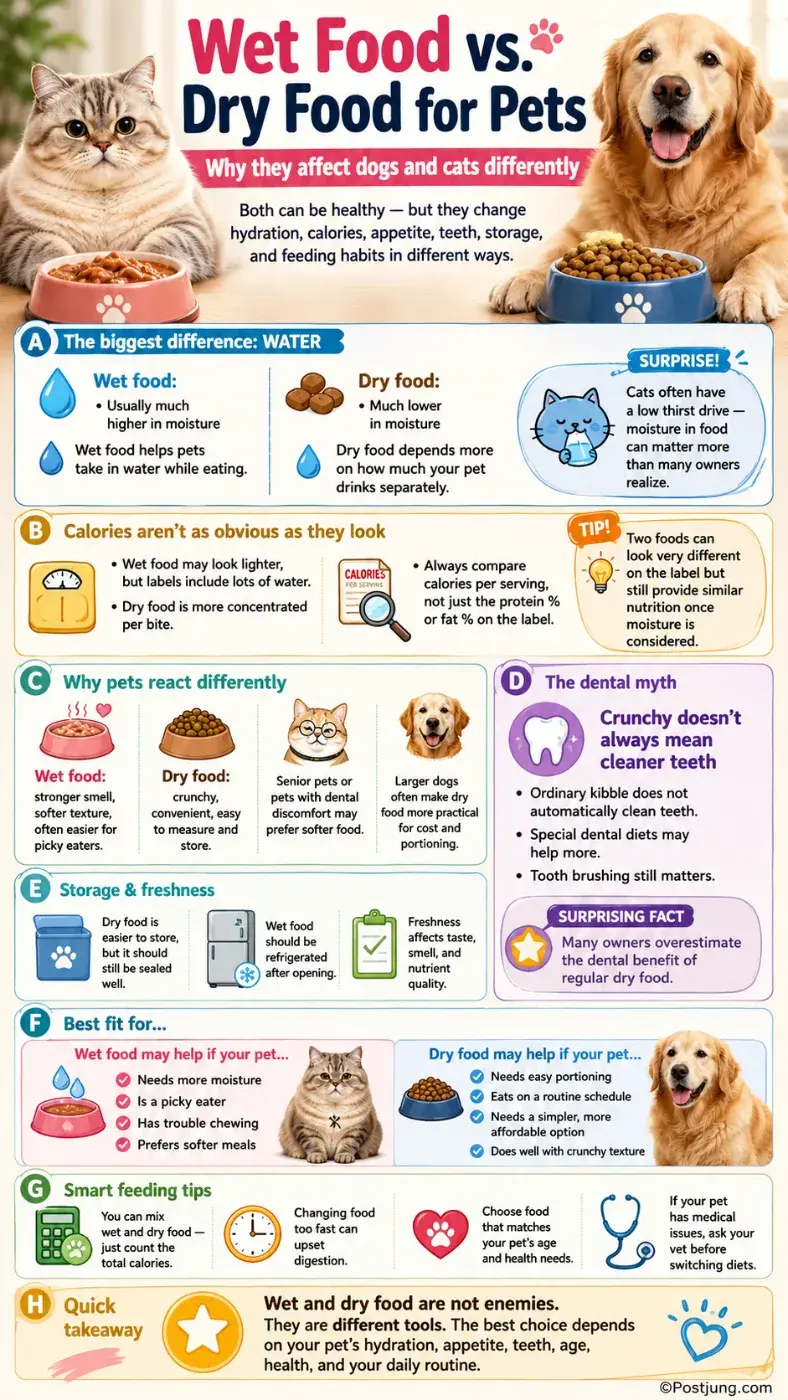
The biggest difference is water
Wet food contains far more water than dry food. The FDA notes that canned pet food is typically about 75% to 78% moisture, while dry pet food is typically about 10% to 12% moisture. That single difference changes how the food looks on the label, how filling it feels, and how much water a pet gets from meals.
For cats, this can be especially relevant. Cornell’s Feline Health Center says canned cat food has at least 75% moisture, making it a meaningful dietary source of water. Cornell also notes that wet food can contain up to 80% water, while cats eating dry food usually make up more of their daily water needs by drinking.
That does not mean dry food causes dehydration by itself. A healthy pet with good access to clean water may do perfectly well on dry food. But for some pets, especially cats that naturally drink less or animals with certain veterinary conditions, a moisture-rich diet may be useful under veterinary guidance.
The key takeaway is simple: wet food adds water at mealtime, while dry food relies more on drinking behavior.
Labels can be misleading if you compare them too quickly
A common mistake is looking at the protein or fat number on a wet food label and comparing it directly with a dry food label.
That can lead owners in the wrong direction because wet food contains so much water. The FDA says guaranteed analysis on pet food labels is listed on an “as-fed” basis, meaning moisture is included. To compare foods with very different water levels, the nutrient amounts need to be converted to a dry-matter basis.
Tufts’ Petfoodology team makes the same point with a practical example: canned food percentages may look lower simply because the label includes water. Once water and calories are accounted for, a canned food may be richer in a nutrient than it first appears.
This is one reason a food can look “lighter” on the label but still be calorie-dense per bite of dry matter. For pets that need weight control, kidney support, urinary care, or a low-fat plan, guessing from the front of the package is not enough. Owners should look for calories, feeding directions, life-stage claims, and veterinary advice when a pet has a medical issue.
Wet food often wins on smell and softness
Wet food is usually more aromatic and softer than dry kibble. That can make it attractive for picky pets, older animals, or pets with missing teeth or chewing discomfort.
Tufts notes that canned foods may be useful for picky dogs, smaller dogs, dogs with tooth problems, and dogs with some urinary tract issues where increased water intake is beneficial. The same source also cautions that canned foods can be higher in protein and fat than many dry foods, which may not suit every dog.
For cats, Cornell says canned food is highly palatable for many cats and can be useful when a cat is finicky. But Cornell also warns that some specialty canned foods may be nutritionally incomplete, so owners still need to read the label and look for a nutritional guarantee.
In other words, wet food may help a pet eat, but palatable does not automatically mean complete.
Dry food often wins on convenience
Dry food is popular for practical reasons. It is easier to store, easier to measure, less messy, and often less expensive per meal. Tufts notes that dry diets are usually less expensive and more convenient to store and feed, especially for larger dogs.
That convenience matters in real homes. A large dog may need many calories a day, and feeding only wet food can become costly and bulky. Dry food also works better for some feeders, training rewards, and households that need simpler portioning.
But dry food is not maintenance-free. Cornell advises storing dry cat food carefully, checking expiration dates, and keeping it in an airtight container because long storage can reduce vitamin potency and increase the risk of fats becoming rancid.
So while dry food feels easier, it still needs proper storage and portion control.
The dental question is more complicated than many owners think
Many people believe dry food automatically cleans teeth. The reality is more limited.
Tufts says some dry diets have compounds on the outside of the kibble that may help reduce tartar buildup, but unless the dry food is specifically made for dental health, the benefit may be subtle. Tufts also says dogs still need regular tooth brushing regardless of diet.
The Veterinary Oral Health Council maintains lists of accepted products that have earned its Seal of Acceptance, including dental diets and other oral-care products for dogs and cats. That is a more useful signal than assuming any crunchy kibble will protect teeth.
Dry food can be part of a dental routine, but it should not replace real dental care.
Mixing wet and dry can be a practical middle ground
For many pets, the answer is not one or the other. Mixing wet and dry food can add moisture and aroma while keeping some of the convenience and cost control of kibble.
The important part is calories. Adding wet food on top of the same amount of kibble can quietly increase daily intake and lead to weight gain. A safer approach is to treat the whole bowl as one meal plan, not as kibble plus “extras.”
Owners should also handle wet food carefully. Opened canned food should be refrigerated to maintain quality and prevent spoilage, Cornell notes.
The best choice depends on the pet’s age, health, appetite, dental comfort, weight goals, and the owner’s routine. A healthy adult dog may do well on dry food. A cat that rarely drinks may benefit from wet food. A senior pet with chewing trouble may need softer meals. A pet on a medical diet should follow the veterinarian’s plan.
The most honest answer is this: wet and dry foods are tools, not teams. The right one is the one that fits the animal in front of you.
KEY TAKEAWAYS:
- Wet food contains much more moisture than dry food, which can support hydration at mealtime.
- Dry food is usually more convenient, easier to store, and often less expensive to feed.
- Pet food labels can be misleading unless wet and dry foods are compared on a dry-matter or calorie basis.
- Dry kibble does not automatically clean teeth; dental diets and brushing matter more.
- Both wet and dry food can be healthy if they are complete, balanced, and appropriate for the pet’s life stage.
FDA, Cornell Feline Health Center, Tufts Petfoodology / Cummings School of Veterinary Medicine, Veterinary Oral Health Council
REFERENCES:
https://www.fda.gov/animal-veterinary/animal-health-literacy/complete-and-balanced-pet-food
https://www.vet.cornell.edu/departments-centers-and-institutes/cornell-feline-health-center/health-information/feline-health-topics/feeding-your-cat
https://www.vet.cornell.edu/departments-centers-and-institutes/cornell-feline-health-center/health-information/feline-health-topics/hydration
https://sites.tufts.edu/petfoodology/2016/03/22/should-i-feed-canned-or-dry-food/

เขียนโดย Postjung Insights
 รู้หรือไม่? เปิดรายได้พนักงานส่งพัสดุของแต่ละแอป วันหนึ่งได้เท่าไร
 อำเภอที่มีชื่ออำเภอสั้นที่สุด 3 อำเภอเท่านั้นในประเทศไทย
 5 คณะที่เรียนจบมาแล้ว มีอาชีพรองรับมากกว่าที่คิด
 ตาราง “เด่นเหนือเด่นใต้” งวด 1 ต.ค. 69 เปิดข้อมูลตามโพย เลขไหนอยู่ตรงไหน
 เลขเด็ดปฏิทิน "หลวงปู่โต๊ะ" งวดวันที่ 1 ตุลาคม 69..ส่องเลย เลขไหนให้โชค!
 ทำไมของพลาสติกเก่าบางชิ้นถึง “เหนียว” ขึ้นมาเอง ทั้งที่ไม่ได้เปื้อนอะไร?
 เปิดรายชื่อโรงเรียนในไทยที่ “ว่ายน้ำ” อยู่ในหลักสูตร เรียนจริงตั้งแต่อนุบาลถึงมัธยม
 โรงเรียนที่มีนักเรียนมากที่สุดในไทย
 Google ยอมรับแล้ว! Gemini AI เข้าถึงระบบบริษัทจริง 3 แห่ง ระหว่างการทดสอบความปลอดภัย
 เปิด 5 โรงเรียนหญิงล้วนเก่าแก่ของไทย ที่มีประวัติยาวนานกว่าศตวรรษ
 อุทยานเขาใหญ่เรียกตัว “ตีนผี” หลังขับจี้ช้างป่าพ่อลูก ลั่นระยะ 50 เมตรต้องจำให้ขึ้นใจ
 จุฬาฯ มหาวิทยาลัยแห่งแรกของไทย มีจุดเริ่มต้นในสมัยรัชกาลที่ 55 คณะที่เรียนจบมาแล้ว มีอาชีพรองรับมากกว่าที่คิดเปิดรายชื่อโรงเรียนในไทยที่ “ว่ายน้ำ” อยู่ในหลักสูตร เรียนจริงตั้งแต่อนุบาลถึงมัธยมGoogle ยอมรับแล้ว! Gemini AI เข้าถึงระบบบริษัทจริง 3 แห่ง ระหว่างการทดสอบความปลอดภัยเลขเด็ดปฏิทิน "หลวงปู่โต๊ะ" งวดวันที่ 1 ตุลาคม 69..ส่องเลย เลขไหนให้โชค!ทำไมของพลาสติกเก่าบางชิ้นถึง “เหนียว” ขึ้นมาเอง ทั้งที่ไม่ได้เปื้อนอะไร?อุทยานเขาใหญ่เรียกตัว “ตีนผี” หลังขับจี้ช้างป่าพ่อลูก ลั่นระยะ 50 เมตรต้องจำให้ขึ้นใจ
 English Edition