Why Bad Breath in Pets Can Be a Sign of Something Serious
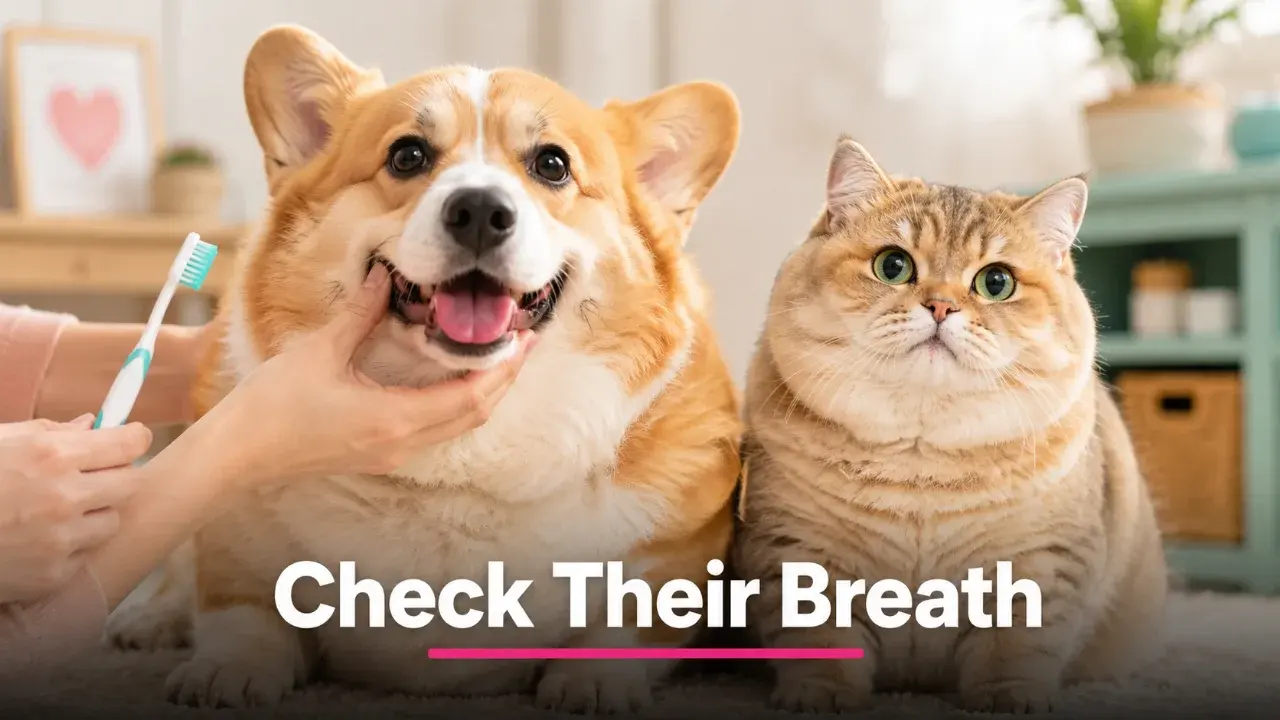
A little odor after dinner is usually no emergency. But persistent bad breath in dogs and cats can point to dental disease, pain, infection, or health problems owners may not see right away.
A pet’s bad breath is easy to laugh off. Many owners call it “doggy breath” or assume cats simply have strong-smelling mouths.
But persistent bad breath is not something to ignore. In dogs and cats, it can be one of the earliest signs that bacteria, plaque, gum inflammation, or another health problem is developing below the surface.
Bad breath often starts where owners cannot see
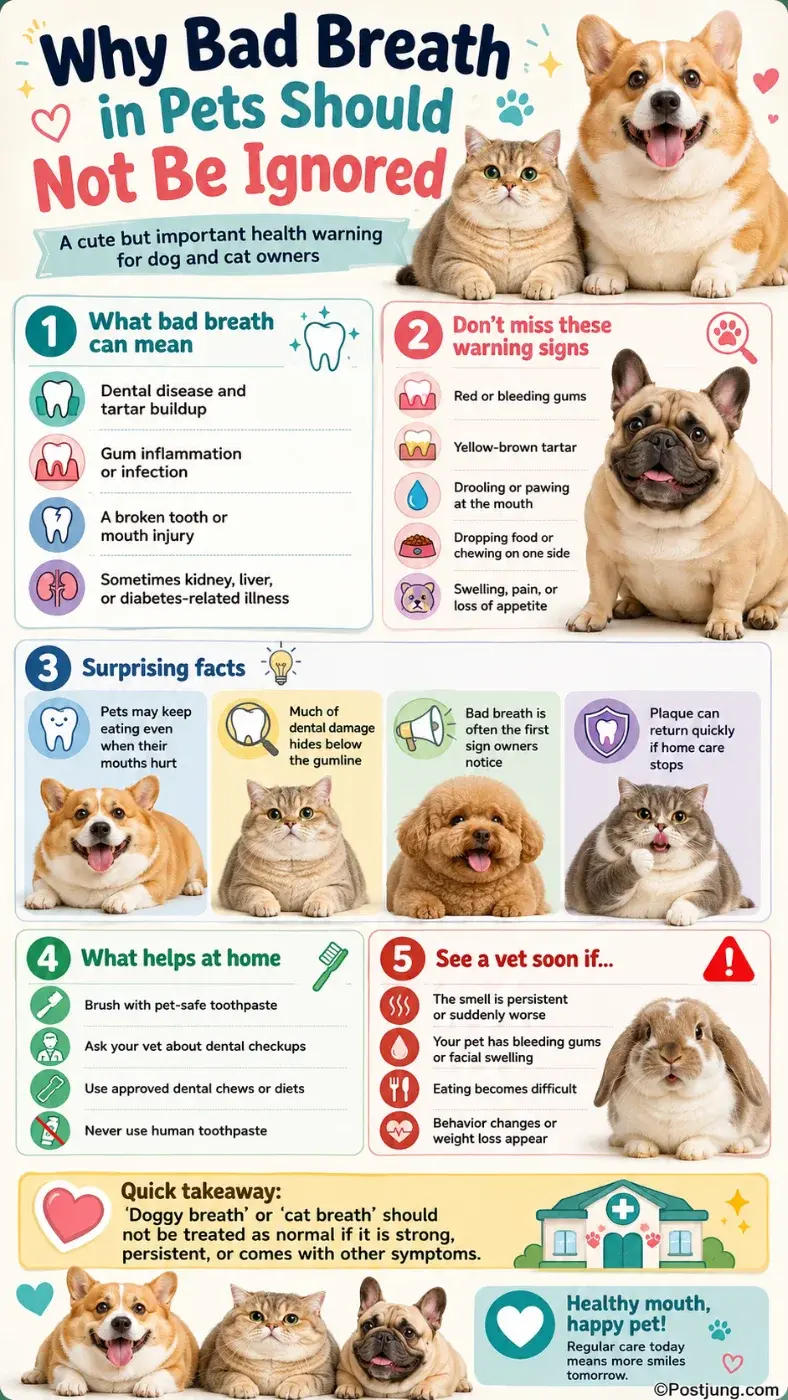
The most common reason pets develop ongoing bad breath is dental disease. Plaque builds up on the teeth, hardens into tartar, and can lead to inflamed gums and periodontal disease. That process may happen quietly before a dog or cat shows obvious pain.
AAHA notes that many pets show no signs in the early stages of dental disease, and bad breath may be the only clue. As dental disease progresses, owners may notice drooling, red or swollen gums, discolored teeth, dropped food, or chewing on only one side of the mouth.
That is why breath matters. It is not just about whether a pet smells pleasant when it climbs onto the couch. It can be a small warning sign from a part of the body that animals are very good at hiding.
Pets can be in pain and still act normal
Dogs and cats often continue eating even when their mouths hurt. Some simply chew differently, avoid hard food, drop kibble, or become less playful. Cats may turn their heads while chewing, drool, or become reluctant to eat.
Cornell’s Feline Health Center describes periodontitis in cats as a condition that can weaken the tissues that attach the tooth to the gums and bone, potentially leading to loose teeth and tooth loss. Cats with periodontitis may show red, swollen, or bleeding gums, drooling, halitosis, and difficulty chewing.
For owners, the important point is simple: a pet does not have to stop eating to be uncomfortable. A dog finishing dinner or a cat asking for treats does not prove the mouth is healthy.
It is not always “just teeth”
Dental disease is common, but it is not the only possible reason for bad breath. Cornell notes that bad breath in cats may be linked to periodontal disease, but it can also be associated with kidney disease, respiratory disease, liver disease, diabetes, skin disease around the lips, oral trauma, mouth sores, or even cancer.
That does not mean every case of bad breath is dangerous. Food smells can be temporary, especially after strong-smelling meals or treats. The concern is breath that is consistent, unusually foul, suddenly different, or paired with other changes.
A sweet smell, urine-like odor, bleeding, swelling, loss of appetite, facial swelling, pawing at the mouth, or sudden behavior change should be taken more seriously.
The hidden problem below the gumline
One reason pet dental disease is easy to miss is that much of the damage can happen below the gumline. Owners may see a little tartar and assume the issue is cosmetic, while bacteria and inflammation are affecting the tissues that hold the teeth in place.
AAHA explains that veterinarians may use dental X-rays because a significant portion of each tooth is below the gumline and not visible during a basic look inside the mouth. Treatment can range from scaling and polishing to extractions in advanced disease.
This is also why cosmetic cleaning alone is not the same as a full veterinary dental evaluation. A clean-looking tooth surface does not always reveal what is happening around the roots.
What owners can do at home
The best prevention usually starts with routine mouth care. Brushing a pet’s teeth may sound unrealistic at first, but many animals can learn to accept it gradually when owners start slowly and use pet-safe products.
Cornell recommends regular tooth brushing for cats and emphasizes that plaque can build up again within days after professional cleaning if home care does not continue.
For dogs and cats that resist brushing, dental diets, chews, wipes, gels, or water additives may help as part of a broader routine. The Veterinary Oral Health Council lists products that have earned its Seal of Acceptance, meaning they met preset criteria for helping control plaque or calculus in dogs and cats.
The key is not to treat these products as magic breath fresheners. Fresh breath is not the main goal. A healthier mouth, less inflammation, and earlier detection of problems matter more.
When to call a veterinarian
A veterinary exam is a good idea when bad breath is persistent, worsening, or paired with visible mouth changes. Warning signs include red or bleeding gums, yellow-brown tartar, loose teeth, swelling, drooling, difficulty eating, dropped food, weight loss, or sudden reluctance to chew.
Owners should also be careful with home remedies. Human toothpaste should not be used for pets, and breath sprays or treats should not replace an exam when a medical issue may be present.
For pets with chronic disease, older pets, small-breed dogs, or cats with known dental problems, regular dental checks may be especially important. A veterinarian can decide whether cleaning, X-rays, medication, extraction, or further testing is needed.
Bad breath may seem like a small thing. Sometimes it is. But when it does not go away, it can be one of the few early clues a pet gives before pain becomes obvious.
The safest habit is to notice it, not panic over it. A smelly mouth deserves attention, especially when the animal cannot explain what hurts.
KEY TAKEAWAYS:
- Persistent bad breath in pets is not something owners should automatically dismiss.
- Dental disease is a common cause, but other health issues can also affect breath.
- Pets may keep eating even when their mouths are painful.
- Veterinary dental exams can reveal problems hidden below the gumline.
- Brushing and VOHC-accepted dental products can support prevention, but they do not replace veterinary care.
American Veterinary Medical Association, AAHA, Cornell University College of Veterinary Medicine, American Veterinary Dental College, Veterinary Oral Health Council
REFERENCES:
https://www.avma.org/resources-tools/pet-owners/petcare/pet-dental-care
https://www.aaha.org/resources/healthy-mouth-healthy-pet-why-dental-care-matters/
https://www.vet.cornell.edu/departments-centers-and-institutes/cornell-feline-health-center/health-information/feline-health-topics/bad-breath-sign-illness
https://vohc.org/accepted-products/

เขียนโดย Postjung Insights
 รู้หรือไม่? เปิดรายได้พนักงานส่งพัสดุของแต่ละแอป วันหนึ่งได้เท่าไร
 5 คณะที่เรียนจบมาแล้ว มีอาชีพรองรับมากกว่าที่คิด
 เปิดรายชื่อโรงเรียนในไทยที่ “ว่ายน้ำ” อยู่ในหลักสูตร เรียนจริงตั้งแต่อนุบาลถึงมัธยม
 อำเภอที่มีชื่ออำเภอสั้นที่สุด 3 อำเภอเท่านั้นในประเทศไทย
 โรงเรียนที่มีนักเรียนมากที่สุดในไทย
 ตาราง “เด่นเหนือเด่นใต้” งวด 1 ต.ค. 69 เปิดข้อมูลตามโพย เลขไหนอยู่ตรงไหน
 เลขเด็ดปฏิทิน "หลวงปู่โต๊ะ" งวดวันที่ 1 ตุลาคม 69..ส่องเลย เลขไหนให้โชค!
 สถิติย้อนหลัง 10 ปี ออกเลขไหนบ้างมาดูกัน
 ส่องเลข 3 สำนักพิมพ์ งวด 1 ต.ค. 69 ตัวไหนมีข้อมูลตรงกัน
 เปิด 5 โรงเรียนหญิงล้วนเก่าแก่ของไทย ที่มีประวัติยาวนานกว่าศตวรรษ
 Google ยอมรับแล้ว! Gemini AI เข้าถึงระบบบริษัทจริง 3 แห่ง ระหว่างการทดสอบความปลอดภัย
 แปลปกสลาก งวด 1 ต.ค. 69 ส่องตัวเลขจากภาพปกสลากกินแบ่งรัฐบาล5 คณะที่เรียนจบมาแล้ว มีอาชีพรองรับมากกว่าที่คิดเปิดรายชื่อโรงเรียนในไทยที่ “ว่ายน้ำ” อยู่ในหลักสูตร เรียนจริงตั้งแต่อนุบาลถึงมัธยมGoogle ยอมรับแล้ว! Gemini AI เข้าถึงระบบบริษัทจริง 3 แห่ง ระหว่างการทดสอบความปลอดภัยเลขเด็ดปฏิทิน "หลวงปู่โต๊ะ" งวดวันที่ 1 ตุลาคม 69..ส่องเลย เลขไหนให้โชค!
 ทำไมของพลาสติกเก่าบางชิ้นถึง “เหนียว” ขึ้นมาเอง ทั้งที่ไม่ได้เปื้อนอะไร?
 อุทยานเขาใหญ่เรียกตัว “ตีนผี” หลังขับจี้ช้างป่าพ่อลูก ลั่นระยะ 50 เมตรต้องจำให้ขึ้นใจ
 English Edition