Why Your Cat May Need More Water Than You Think
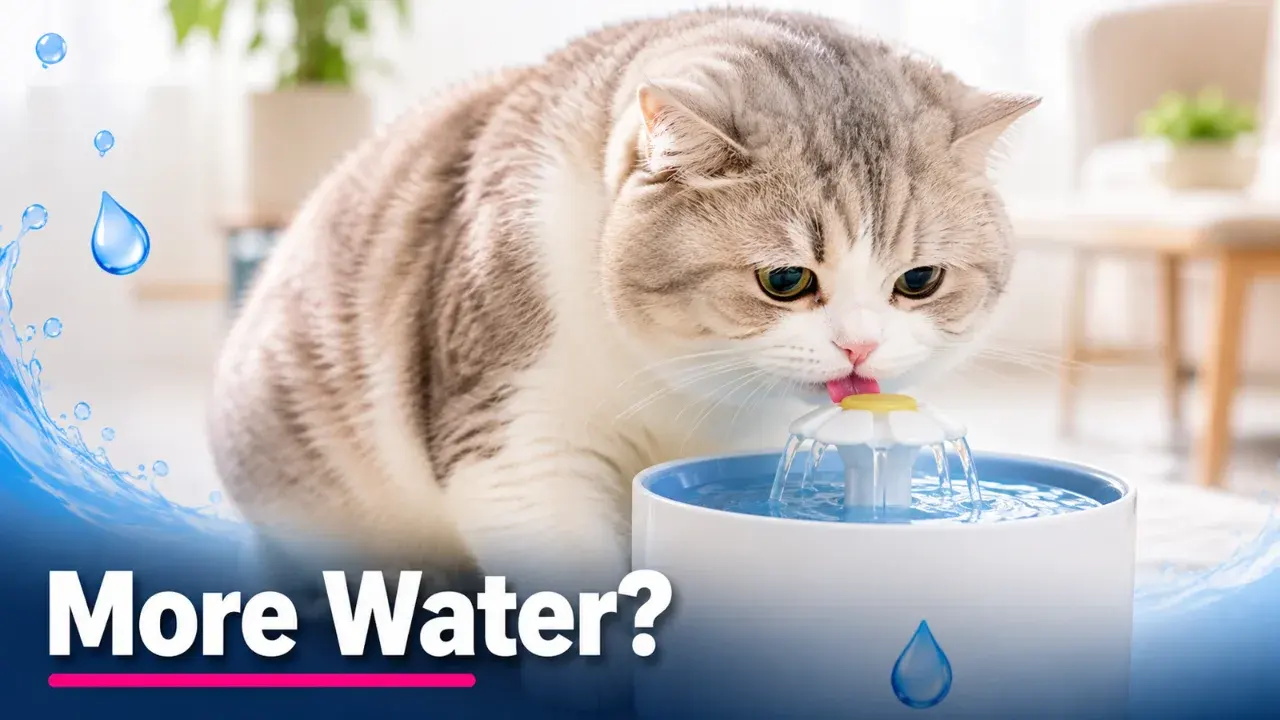
Cats often get water from food as well as the bowl, which can make their hydration harder to judge. Here’s why moisture matters, what signs to watch for, and how to make water more appealing.
A cat can look perfectly fine and still be taking in less water than its body needs. That is what makes feline hydration easy to overlook: cats are quiet about discomfort, and many do not make a show of drinking.
For owners, the question is not simply whether there is a water bowl on the floor. It is whether the cat is actually getting enough fluid through both drinking and food.
That difference matters because water supports circulation, body temperature control, digestion, and normal urinary function. Veterinary references describe water as an essential nutrient for small animals, and cats are often singled out because they may not drink large amounts on their own.
Cats were not built around the modern kibble bowl
One reason cats can seem casual about drinking is their ancestry. Domestic cats descended from desert-adapted wild cats that got much of their fluid from prey. In a modern home, that natural pattern can clash with a diet built mostly around dry kibble.
That does not mean dry food is “bad.” It does mean owners should understand what changes when a cat’s meals are dry.
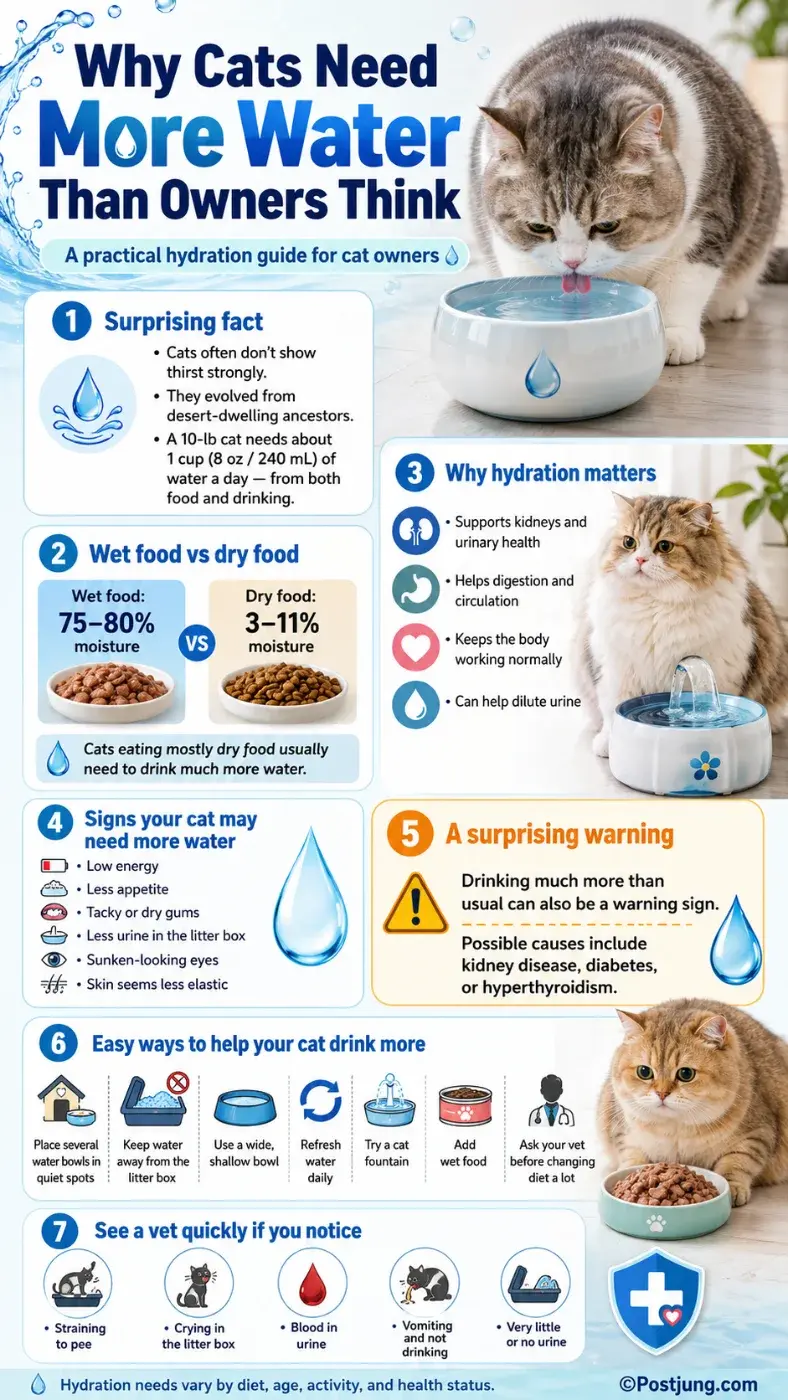
Canned cat food is naturally high in moisture. Cornell Feline Health Center says canned cat food has at least 75 percent moisture, while its hydration guidance notes that wet food can contain up to 80 percent water. Dry food, by contrast, contains far less moisture; MSD Veterinary Manual lists dry pet foods at about 3 to 11 percent water.
That is why a cat eating wet food may visit the water bowl less often and still be taking in fluid. A cat eating mostly dry food usually has to make up much more of its water needs by drinking.
The number is a guide, not a perfect rule
A commonly used baseline is about four ounces of water per five pounds of lean body weight each day. By that estimate, a healthy 10-pound cat would need about eight ounces, or roughly one cup, of water daily. Cornell and VCA both present this as a general starting point, while noting that real needs vary.
That variation is important. A cat’s water needs can shift with diet, body size, activity level, room temperature, health status, and age. A cat in a warm home, a playful young cat, a senior cat, or a cat with a medical condition may not fit neatly into a simple chart.
The most useful mindset is this: watch the pattern, not just the bowl. A sudden increase or decrease in drinking can matter more than one quiet day.
Why hydration matters for the urinary tract
Cats are often associated with urinary problems, and hydration is one of the everyday factors owners can actually influence. More fluid intake can help dilute urine, which may support urinary comfort and reduce concentration in the bladder. It is not a cure-all, and it does not replace veterinary care, but it is one practical part of good cat care.
Poor water intake can become especially concerning if a cat also has signs such as frequent trips to the litter box, straining, crying while urinating, blood in the urine, urinating outside the box, or producing little to no urine. A cat that cannot urinate normally needs urgent veterinary attention.
Hydration is also closely watched in cats with conditions such as kidney disease, diabetes, vomiting, diarrhea, or hyperthyroidism, because these problems can change fluid balance or increase water loss. Cornell lists several of these as common reasons cats may become dehydrated.
The signs owners should not ignore
Dehydration is not always obvious at first. Possible signs include low energy, weakness, reduced appetite, dry or tacky gums, and sunken-looking eyes in more serious cases. Cornell also describes reduced skin elasticity as a possible physical sign, though it cautions that older cats may have looser skin even when they are not dehydrated.
A practical warning: do not rely on one home test alone. Skin tenting, gum feel, and behavior can all be misleading without the full picture.
The opposite change matters too. A cat that suddenly drinks far more than usual may not simply be “healthier.” Increased thirst can be linked with medical problems, so a major change in drinking habits deserves a vet visit.
How to make water easier to choose
Helping a cat drink more is often about making water feel safe, fresh, and convenient.
Start with more than one water station. Some cats avoid a bowl because of household traffic, another pet, or an uncomfortable location. Cats Protection recommends placing water in several locations and keeping it away from both the food bowl and litter tray.
Keep bowls clean and water fresh. VCA notes that cats can be sensitive to smell and taste, so daily washing and frequent water changes may help. Some cats prefer cool water; others prefer room temperature. Some like fountains or dripping water, while others prefer a still, wide bowl.
The bowl shape can matter. A shallow, wide bowl may be more comfortable for cats that dislike their whiskers touching the sides.
Food can help too. Wet food is one of the simplest ways to increase moisture intake. Owners who feed dry food can also ask their veterinarian whether adding a small amount of water to kibble is appropriate. VCA recommends introducing moistened kibble gradually and warns that if a cat refuses it, owners should provide regular food rather than letting the cat go without eating.
That last point is crucial. Cats should not be forced into sudden food changes, especially if they stop eating.
The real goal is a hydrated routine
Good hydration is not about chasing a perfect number every day. It is about building a routine where fresh water is easy to reach, food moisture is considered, and changes in behavior are noticed early.
For many cats, that may mean a mix of wet food, clean bowls, quiet water stations, and a fountain. For others, it may simply mean moving the bowl away from the litter box or refreshing it more often.
The best approach is calm and observant: know what is normal for your cat, make water easy to choose, and call a veterinarian if drinking, eating, urination, or energy changes suddenly.
A quiet cat will not always tell you when something is wrong. Hydration is one of the small daily details that can help owners listen sooner.
KEY TAKEAWAYS:
- Cats get water from both drinking and food, so bowl-watching alone can be misleading.
- Wet food can significantly increase moisture intake compared with dry kibble.
- A healthy 10-pound cat may need about one cup of water daily, but needs vary.
- Sudden changes in thirst, urination, appetite, or energy should be discussed with a veterinarian.
- Multiple clean water stations, wet food, and cat-friendly bowls can help improve hydration.
Cornell Feline Health Center, MSD Veterinary Manual, VCA Animal Hospitals, Cats Protection
REFERENCES:
https://www.vet.cornell.edu/departments-centers-and-institutes/cornell-feline-health-center/health-information/feline-health-topics/hydration
https://www.vet.cornell.edu/departments-centers-and-institutes/cornell-feline-health-center/health-information/feline-health-topics/feeding-your-cat
https://www.msdvetmanual.com/management-and-nutrition/nutrition-small-animals/nutritional-requirements-of-small-animals
https://vcahospitals.com/resources/preventive-cat/nutrition/tips-to-encourage-cats-to-drink-more-water

เขียนโดย Postjung Insights
 รู้หรือไม่? เปิดรายได้พนักงานส่งพัสดุของแต่ละแอป วันหนึ่งได้เท่าไร
 ถ้าไม่กลัวเหนื่อย 7 อาชีพที่ตลาดยังต้องการ และค่าทักษะไปถึง 800 บาท/วัน
 อินฟลูเอนเซอร์สาวผู้สร้างคอนเทนต์สำหรับผู้ใหญ่และมีรายได้ต่อปีกว่า 33 ล้านบาท ตัดสินใจเปลี่ยนอาชีพมาเป็นแพทย์แทน
 ตึกยาวสวนกุหลาบฯ อายุเกิน 100 ปี ทำไมยังใช้เป็นห้องเรียนมาถึงวันนี้
 หัวลูกศรหินย้อนเวลา 80,000 ปี ในเอเชียกลาง… หลักฐานใหม่ชี้ โฮโม เซเปียนส์ อาจเคยบุกยุโรปเร็วขึ้นนับหมื่นปี!
 อำเภอที่มีชื่ออำเภอสั้นที่สุด 3 อำเภอเท่านั้นในประเทศไทย
 ส่องเลข 3 สำนักพิมพ์ งวด 1 ต.ค. 69 ตัวไหนมีข้อมูลตรงกัน
 ฝูงลิงญี่ปุ่นนับสิบรุมล้อมและโจมตีชายคนหนึ่งในคานากาวะ
 เปิด 5 โรงเรียนหญิงล้วนเก่าแก่ของไทย ที่มีประวัติยาวนานกว่าศตวรรษ
 ตาราง “เด่นเหนือเด่นใต้” งวด 1 ต.ค. 69 เปิดข้อมูลตามโพย เลขไหนอยู่ตรงไหน
 6 จุดหมายดังติดโผ นักท่องเที่ยวเจอ ไม่เป็นมิตร เมืองในฝันก็ไม่รอด เหตุผลคืออะไร
 โรงเรียนที่มีนักเรียนมากที่สุดในไทยเปิด 5 โรงเรียนหญิงล้วนเก่าแก่ของไทย ที่มีประวัติยาวนานกว่าศตวรรษหัวลูกศรหินย้อนเวลา 80,000 ปี ในเอเชียกลาง… หลักฐานใหม่ชี้ โฮโม เซเปียนส์ อาจเคยบุกยุโรปเร็วขึ้นนับหมื่นปี!ถ้าไม่กลัวเหนื่อย 7 อาชีพที่ตลาดยังต้องการ และค่าทักษะไปถึง 800 บาท/วัน
 ทำไมแผนที่ส่วนใหญ่เอาทิศเหนือไว้ด้านบน ทั้งที่โลกไม่มี “ด้านบน” จริง ๆ?
 English Edition