The Common Flower Cat Owners Should Keep Out of the House
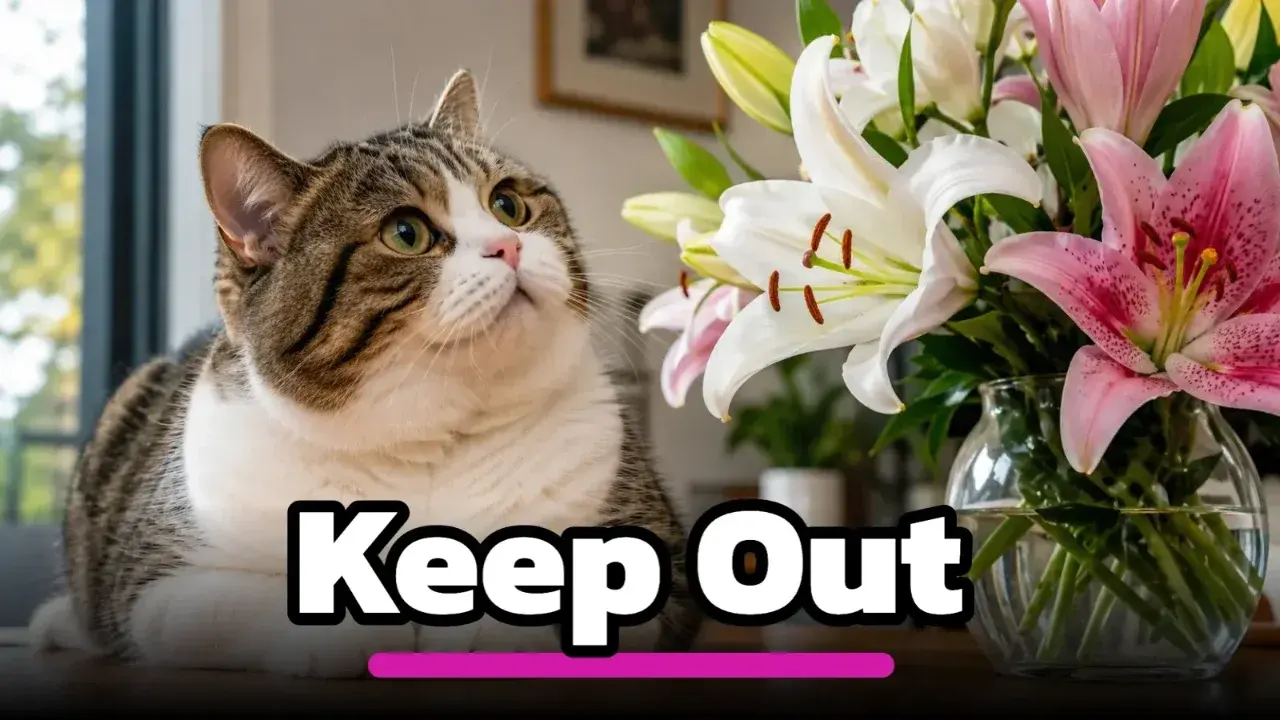
Lilies can look harmless in a vase, but for cats, even small exposure may lead to a veterinary emergency. The safest approach is simple: do not bring true lilies or daylilies into a home with cats.
A lily bouquet can look like an ordinary gift. For a cat, it can become a medical emergency.
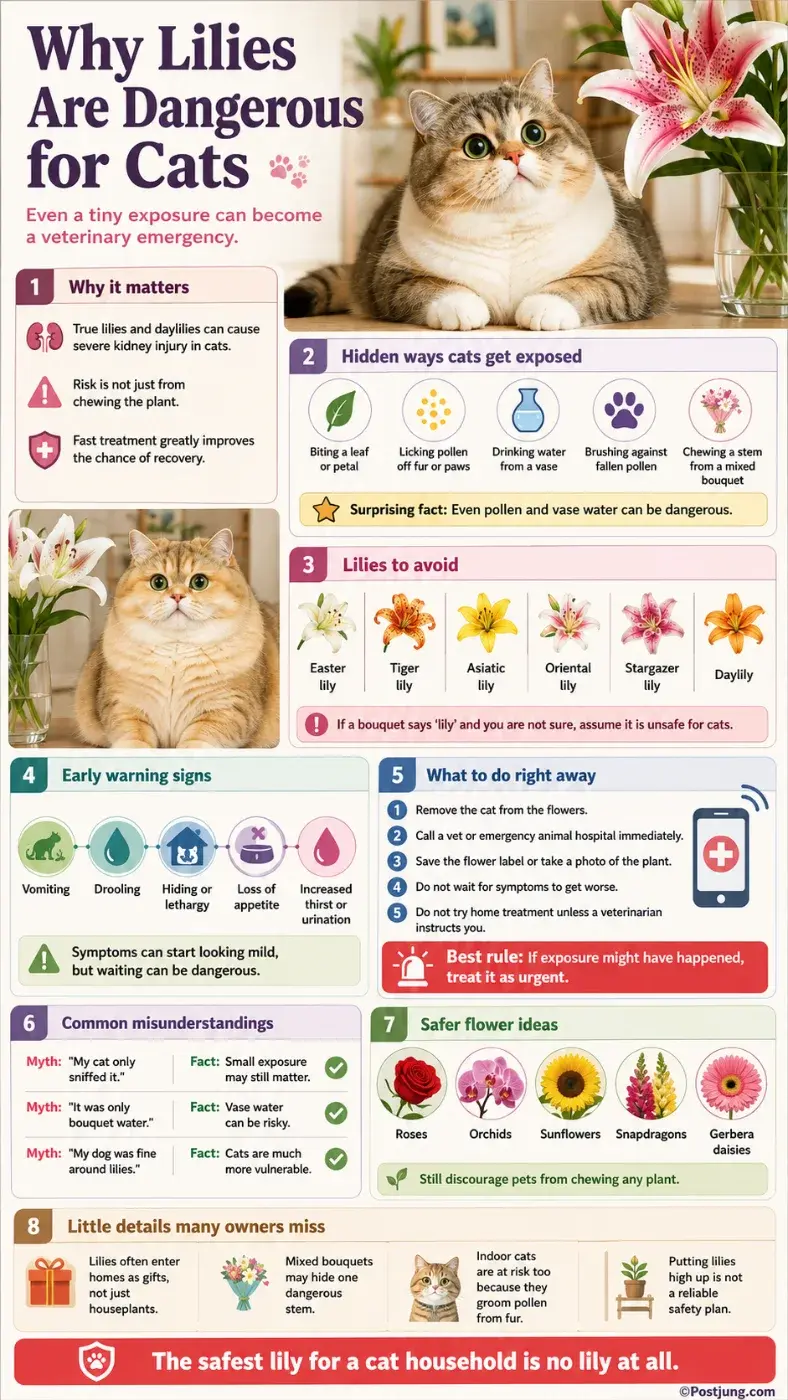
That is the part many pet owners miss. The danger is not limited to a cat eating an entire flower. Veterinary and animal-safety sources warn that cats may be harmed by chewing a leaf or petal, licking pollen from their fur, or drinking water from a vase that held lilies. The U.S. Food and Drug Administration says certain lilies can cause severe kidney damage in cats, and delayed treatment can lead to irreversible kidney failure.
For households with cats, lilies are not just another plant to place on a high shelf. They are flowers many veterinarians and pet-safety groups urge owners to avoid bringing indoors at all.
Why lilies are different from ordinary houseplants
Cats investigate the world in small, quiet ways. They sniff, brush against objects, nibble leaves, drink from odd places, and groom anything that gets on their fur.
With lilies, those normal behaviors are exactly what can make exposure dangerous.
A cat does not need to knock over a vase or chew a full stem for owners to worry. A few grains of pollen on a paw can be licked off during grooming. A fallen petal can be mouthed. Vase water can look like a strange but tempting drink.
Cornell Feline Health Center lists lilies among common cat hazards and says they are especially toxic to cats, with even tiny amounts capable of causing life-threatening kidney failure.
That is why the safest advice sounds unusually strict: if a home has cats, skip the lilies completely.
The word “lily” can be confusing
One reason this risk gets overlooked is that “lily” is used loosely in plant names.
The biggest concern for cats is generally true lilies and daylilies, including plants in the Lilium and Hemerocallis groups. ASPCA Pro says both can produce severe toxicosis and acute kidney injury in cats, and that all parts of the plant are toxic, with cases documented from pollen exposure alone.
Common flowers cat owners should be especially cautious about include Easter lilies, tiger lilies, Asiatic lilies, Oriental lilies, Stargazer lilies, and daylilies.
Some other plants with “lily” in the name, such as peace lilies or calla lilies, may cause irritation or stomach upset rather than the same kidney-failure risk associated with true lilies and daylilies. But common names are not always clear on bouquet tags, and many shoppers are not plant experts.
That uncertainty matters. If a flower arrangement includes something labeled “lily,” and a cat lives in the home, the safest move is to keep it away from the cat and confirm the plant before treating it as safe.
Early signs may look too ordinary
One of the most difficult parts of lily exposure is that the first signs may not look dramatic.
UC Davis Veterinary Medicine lists initial signs of lily poisoning in cats as vomiting, lethargy, drooling, and loss of appetite. It also notes that increased urination and dehydration may appear 12 to 24 hours after ingestion as signs of kidney damage, with kidney failure possible later in the disease process.
To a busy owner, those early symptoms could look like a mild stomach problem. A cat may hide, refuse food, or seem unusually tired. Those signs are easy to underestimate, especially if no one actually saw the cat eat the plant.
But with lilies, waiting can be risky. The FDA warns that treatment delayed by 18 hours or more after ingestion generally leaves the cat with irreversible kidney failure.
That does not mean every exposure will end the same way. It means timing matters, and quick veterinary help gives the cat the best chance.
Dogs are not a useful comparison
Another misunderstanding comes from comparing cats with dogs.
A dog may chew a plant and develop stomach upset. A cat can face a much more serious kidney risk from a smaller exposure. UC Davis notes that dogs do not develop the same kidney failure from lilies, though they may have gastrointestinal upset after eating them.
That difference can make lilies feel less dangerous than they are. A household may have had flowers around pets before without a problem. A dog may have ignored them. A previous cat may never touched plants.
None of that makes lilies safe for the next cat.
Cats are climbers, jumpers, and quiet investigators. A bouquet placed “out of reach” may not stay out of reach. A door may be left open. A stem may fall. Pollen may drop onto a table or floor.
For cat owners, the practical rule is simple: do not rely on distance, height, or luck.
What owners should do if exposure is possible
If a cat may have chewed, licked, brushed against, or drunk from lilies, owners should treat it as urgent and contact a veterinarian, emergency animal hospital, or animal poison-control service immediately.
Do not wait for obvious symptoms. Do not try to handle it at home. Do not assume the amount was too small.
If possible, take a photo of the plant or bring part of it in a sealed bag, kept away from the cat. Identification can help the veterinary team understand the risk more quickly.
Veterinary care may involve steps such as decontamination, monitoring kidney values, and supportive treatment, depending on the cat, the type of exposure, and how much time has passed. The exact approach should come from a qualified veterinary professional.
The gift bouquet problem
Lilies often enter homes as gifts.
They appear in birthday arrangements, sympathy flowers, Easter displays, Mother’s Day bouquets, Valentine’s Day arrangements, grocery-store bundles, and mixed floral decorations. The person sending the flowers may have no idea a cat lives there. The recipient may not recognize every flower in the arrangement.
For American readers, the Easter lily is a particularly familiar example. But the risk is not limited to spring. Stargazer lilies and Oriental lilies are common in bouquets throughout the year, and mixed arrangements may include lilies even when they are not the main feature.
That makes a simple note useful: “No lilies, cats in the home.”
It may feel oddly specific, but it can prevent a dangerous mistake.
Safer flowers are the better choice
Avoiding lilies does not mean avoiding flowers altogether.
Pet owners can ask florists for cat-safer arrangements and check plant names before bringing flowers indoors. ASPCA advises avoiding Lilium, Hemerocallis, and Convallaria plants in homes with cats because of toxicity concerns.
Even flowers generally considered safer should not be treated as cat snacks. Any plant material may cause mild stomach upset if a pet eats enough of it. The goal is not to create a chewable garden for cats. It is to avoid flowers known for a much more serious risk.
The bigger lesson is awareness. Many people already know that chocolate can be dangerous for dogs or that some household cleaners should be locked away from pets. Lilies deserve a similar level of caution in cat homes.
A beautiful bouquet should not become an emergency. Before bringing flowers into a home with cats, check the plant names, remove risky stems, and choose something else when there is any doubt.
For cat owners, this is one of the clearest household safety rules: the safest lily is no lily at all.
KEY TAKEAWAYS:
- True lilies and daylilies can cause serious kidney injury in cats.
- Cats may be exposed by chewing leaves or petals, licking pollen, or drinking vase water.
- Early signs can look mild, including vomiting, tiredness, drooling, or loss of appetite.
- If exposure is possible, owners should contact a veterinarian or animal poison-control service immediately.
- The safest choice for cat homes is to avoid bringing lilies indoors.
U.S. Food and Drug Administration, Cornell Feline Health Center, ASPCA, ASPCA Pro, UC Davis Veterinary Medicine
References:
https://www.fda.gov/animal-veterinary/animal-health-literacy/lovely-lilies-and-curious-cats-dangerous-combination
https://www.vet.cornell.edu/departments-centers-and-institutes/cornell-feline-health-center/health-information/feline-health-topics/common-cat-hazards-0
https://www.aspcapro.org/resource/how-spot-which-lilies-are-dangerous-cats-plan-treatment

เขียนโดย Postjung Insights
 5 คณะที่เรียนจบมาแล้ว มีอาชีพรองรับมากกว่าที่คิด
 รู้หรือไม่? เปิดรายได้พนักงานส่งพัสดุของแต่ละแอป วันหนึ่งได้เท่าไร
 โรงเรียนที่มีนักเรียนมากที่สุดในไทย
 อำเภอที่มีชื่ออำเภอสั้นที่สุด 3 อำเภอเท่านั้นในประเทศไทย
 เปิดรายชื่อโรงเรียนในไทยที่ “ว่ายน้ำ” อยู่ในหลักสูตร เรียนจริงตั้งแต่อนุบาลถึงมัธยม
 Google ยอมรับแล้ว! Gemini AI เข้าถึงระบบบริษัทจริง 3 แห่ง ระหว่างการทดสอบความปลอดภัย
 ทำไมของพลาสติกเก่าบางชิ้นถึง “เหนียว” ขึ้นมาเอง ทั้งที่ไม่ได้เปื้อนอะไร?
 เลขเด็ดปฏิทิน "หลวงปู่โต๊ะ" งวดวันที่ 1 ตุลาคม 69..ส่องเลย เลขไหนให้โชค!
 สถิติย้อนหลัง 10 ปี ออกเลขไหนบ้างมาดูกัน
 ส่องเลข 3 สำนักพิมพ์ งวด 1 ต.ค. 69 ตัวไหนมีข้อมูลตรงกัน
 ตาราง “เด่นเหนือเด่นใต้” งวด 1 ต.ค. 69 เปิดข้อมูลตามโพย เลขไหนอยู่ตรงไหน
 จุฬาฯ มหาวิทยาลัยแห่งแรกของไทย มีจุดเริ่มต้นในสมัยรัชกาลที่ 5
 😃 ชวนเข้ามาดูกันอีกกับคนที่มีร่างกายพิเศษจนเหมือนมีกล่องสมบัติที่หายาก 😯5 คณะที่เรียนจบมาแล้ว มีอาชีพรองรับมากกว่าที่คิดเปิดรายชื่อโรงเรียนในไทยที่ “ว่ายน้ำ” อยู่ในหลักสูตร เรียนจริงตั้งแต่อนุบาลถึงมัธยมGoogle ยอมรับแล้ว! Gemini AI เข้าถึงระบบบริษัทจริง 3 แห่ง ระหว่างการทดสอบความปลอดภัยเลขเด็ดปฏิทิน "หลวงปู่โต๊ะ" งวดวันที่ 1 ตุลาคม 69..ส่องเลย เลขไหนให้โชค!ทำไมของพลาสติกเก่าบางชิ้นถึง “เหนียว” ขึ้นมาเอง ทั้งที่ไม่ได้เปื้อนอะไร?
 English Edition