Subtle Signs Your Cat May Need a Vet Visit Soon
Cats often hide pain or illness, so the first warning signs may look ordinary: a changed appetite, a strange litter box pattern, less grooming, or a quieter mood.
A cat may not look sick when something is wrong. Sometimes the first clue is a half-finished bowl of food, a messier coat, or a litter box routine that suddenly changes.
That is what makes cat health easy to miss.
Cats are known for masking discomfort. A dog in pain may whine, limp, or follow its owner around. A cat may simply hide under the bed, sleep more than usual, or stop jumping onto a favorite chair.
For owners, the goal is not to panic over every small change. It is to notice when a pattern feels different enough to call a veterinarian.
The litter box is often the first warning
A cat’s litter box can reveal more than many owners realize.
Straining, repeated trips with little urine, crying while trying to go, or urinating outside the box can all be signs that something is wrong. VCA Animal Hospitals says changes in litter box use, including decreased urine, straining, or small urine clumps, can point to kidney or bladder problems, and lack of urination is a life-threatening emergency.
This is especially important because some owners mistake litter box problems for “bad behavior.” In many cases, the cat may be dealing with pain, stress, urinary discomfort, arthritis, or another health issue.
A sudden litter box change should be treated as information, not attitude.
Appetite changes deserve attention
Cats can be picky, but a clear change in eating or drinking should not be ignored.
A cat that eats less, refuses favorite food, seems nauseated around meals, drinks far more than usual, or produces larger urine clumps may need a veterinary check. VCA notes that changes in appetite or thirst can be a concern, and cats that have not eaten properly for 24 hours should receive immediate veterinary attention.
The same applies to weight. A fluffy cat can lose weight slowly without looking dramatically different. Running your hands gently along the ribs and spine during normal petting can help you notice changes earlier.
Owners do not need to diagnose the cause. They just need to recognize that “not eating like usual” can mean more than moodiness.
Vomiting is common, but frequent vomiting is different
Many cat owners are used to occasional vomiting, especially when hairballs are involved. But vomiting should not become background noise.
Cornell Feline Health Center says cats that vomit more often than once a week, or vomit along with weakness, lethargy, decreased appetite, blood, increased thirst, urination changes, or diarrhea, should be evaluated promptly by a veterinarian.
That distinction matters. One isolated episode may not be urgent. Repeated vomiting, vomiting with diarrhea, vomiting with appetite loss, or vomiting that leaves a cat weak is a different situation.
Digestive problems can look temporary, but when they continue, they may point to pain, infection, parasites, diet issues, dehydration, or other medical concerns.
Breathing problems are not “wait and see” signs
Some symptoms should move an owner from “book an appointment soon” to “contact a vet now.”
Breathing trouble is one of them.
VCA lists shallow breathing, mouth breathing, panting, repeated coughing, or unusual breathing posture as signs of possible airway or lung problems. The same guidance says breathing problems, straining in the litter box, or eye abnormalities should prompt immediate veterinary attention.
Cats are not like dogs in this way. A cat panting at rest is not usually something to brush off as normal tiredness.
If a cat is struggling to breathe, sitting with its neck stretched out, breathing with an open mouth, or unable to rest normally, owners should seek urgent veterinary advice.
Grooming and mood changes can reveal pain
Cats are usually careful groomers. When a cat stops grooming, the coat may become greasy, dull, matted, or full of loose hair.
Overgrooming can also be a clue. A cat licking one area repeatedly may be reacting to itchiness, skin irritation, fleas, stress, or pain.
Behavior changes matter too. A cat that suddenly hides more, avoids touch, growls when picked up, stops playing, or no longer jumps onto familiar furniture may be showing discomfort. VCA notes that sick cats may become withdrawn, lower in energy, restless, cranky, or less able to jump if joint problems are involved.
This is where owners have a real advantage. No one knows a cat’s everyday routine better than the person who lives with it.
What many owners misunderstand
A quiet cat is not always a calm cat.
That is the misunderstanding. Because cats are independent, people may assume a hidden or sleepy cat is simply being “cat-like.” Sometimes that is true. But a sudden change in sociability, appetite, grooming, litter box use, or movement can also be an early sign of illness.
The best clue is often contrast. A cat that has always been shy may hide often. But a social cat that suddenly disappears for most of the day is telling you something has changed.
When to call the vet
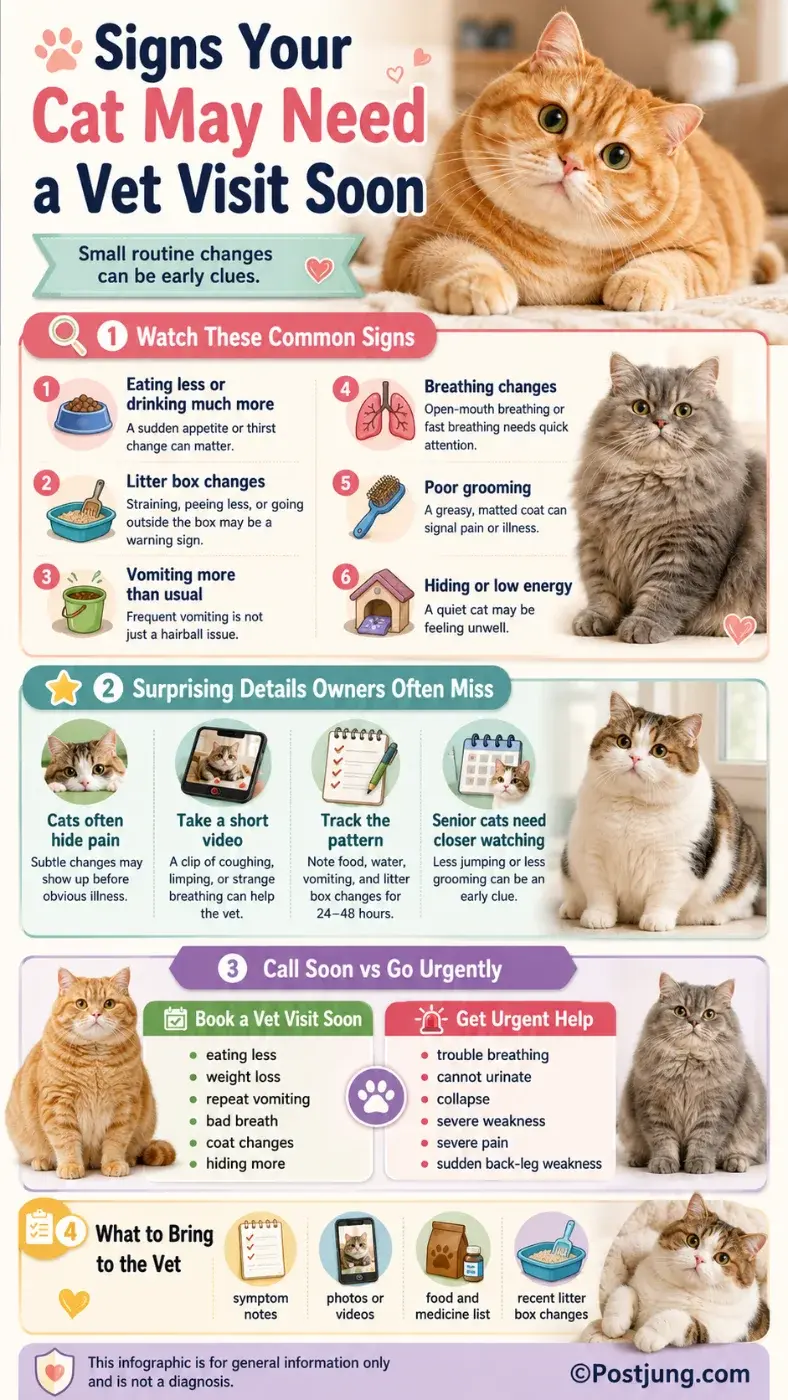
A vet visit may be needed soon if your cat has reduced appetite, repeated vomiting, weight loss, grooming changes, unusual hiding, bad breath, eye discharge, increased thirst, diarrhea, constipation, or a new litter box problem.
Urgent veterinary advice is more appropriate if your cat cannot urinate, has trouble breathing, collapses, seems extremely weak, has severe pain, cannot use the back legs, or has not eaten properly for 24 hours.
This article is general information, not a diagnosis. If a symptom is new, worsening, severe, or simply feels wrong for your cat, calling a licensed veterinarian is safer than guessing.
The best cat owners are not the ones who worry about everything. They are the ones who notice when something small no longer feels normal.
KEY TAKEAWAYS:
- Cats often hide illness, so early warning signs may be subtle.
- Litter box changes, appetite shifts, vomiting, grooming changes, and hiding can all matter.
- Breathing problems, inability to urinate, severe weakness, or not eating for 24 hours may need urgent care.
- Owners should watch patterns, not isolated moments.
- A veterinarian is the safest source when symptoms are new, worsening, or unclear.
Cornell Feline Health Center, VCA Animal Hospitals
References:
https://www.vet.cornell.edu/departments-centers-and-institutes/cornell-feline-health-center/health-information/feline-health-topics/vomiting
https://vcahospitals.com/know-your-pet/recognizing-signs-of-illness-in-cats

เขียนโดย Postjung Insights
 ดูหนัง–ซีรีส์ฟรีอาจไม่ฟรีอย่างที่คิด! เปิดโทษละเมิดลิขสิทธิ์ เตือนคนปล่อยคอนเทนต์เถื่อน เสี่ยงทั้งคุกทั้งปรับ
 รู้หรือไม่? เปิดรายได้พนักงานส่งพัสดุของแต่ละแอป วันหนึ่งได้เท่าไร
 อำเภอที่มีชื่ออำเภอสั้นที่สุด 3 อำเภอเท่านั้นในประเทศไทย
 งูมัลกา (Mulga Snake): นักล่าแห่งผืนดินแห้งแล้ง ของทวีปออสเตรเลีย กับฉายา King Brown กัดคนได้ถึงตาย
 รมว.วัฒนธรรมเอาจริง! จ่อส่งหนังสือทักท้วง Miss Universe Cambodia ปมใช้ภาพหญิงกำแพงเพชร หากไม่แก้ เตรียมใช้กฎหมาย
 ตาราง “เด่นเหนือเด่นใต้” งวด 1 ต.ค. 69 เปิดข้อมูลตามโพย เลขไหนอยู่ตรงไหน
 เปิด 5 โรงเรียนหญิงล้วนเก่าแก่ของไทย ที่มีประวัติยาวนานกว่าศตวรรษ
 5 คณะที่เรียนจบมาแล้ว มีอาชีพรองรับมากกว่าที่คิด
 นักวิชาการ ม.อ.ไม่ปลื้ม! "ลิซ่า" ชวนดื่มหมดแก้ว ลั่น! เหยื่อเหล้าในไทยตายเยอะกว่าก่อการร้ายทั่วโลก
 โรงเรียนที่มีนักเรียนมากที่สุดในไทย
 MRT เตาปูนกลับมาเปิดปกติแล้ว รมช.คมนาคมเผยปมไฟไหม้ พบประกายไฟจากชุดสายไฟ 750 โวลต์
 สถิติย้อนหลัง 10 ปี ออกเลขไหนบ้างมาดูกัน
 English Edition