Why Pets Eat Too Fast—and When It’s a Warning Sign
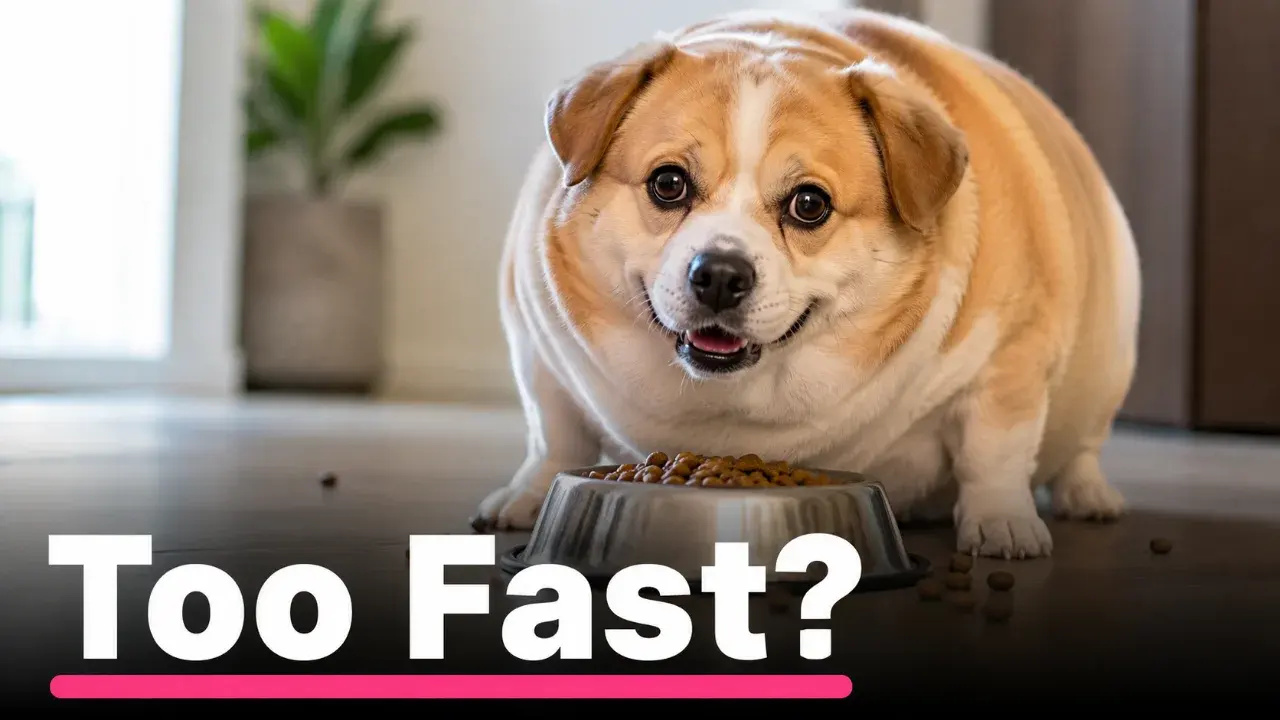
Fast eating is not always simple hunger. For dogs and cats, a rushed meal can point to excitement, competition, anxiety, routine—or a health issue worth checking.
A pet that inhales dinner may look funny at first. But a rushed meal can reveal more than a big appetite.
Some dogs finish kibble in seconds. Some cats gulp down food and bring it back up soon after. In many homes, owners describe the behavior as greed, drama, or excitement. But fast eating is often less about “bad manners” and more about instinct, habit, stress, or the way mealtime is set up.
The useful question is not, “Why is my pet so greedy?” It is: why does this meal feel like a race?
For many pets, the answer is harmless and manageable. For others, especially when the behavior appears suddenly or comes with vomiting, weight loss, bloating, or major appetite changes, it can be a sign that something else is going on.
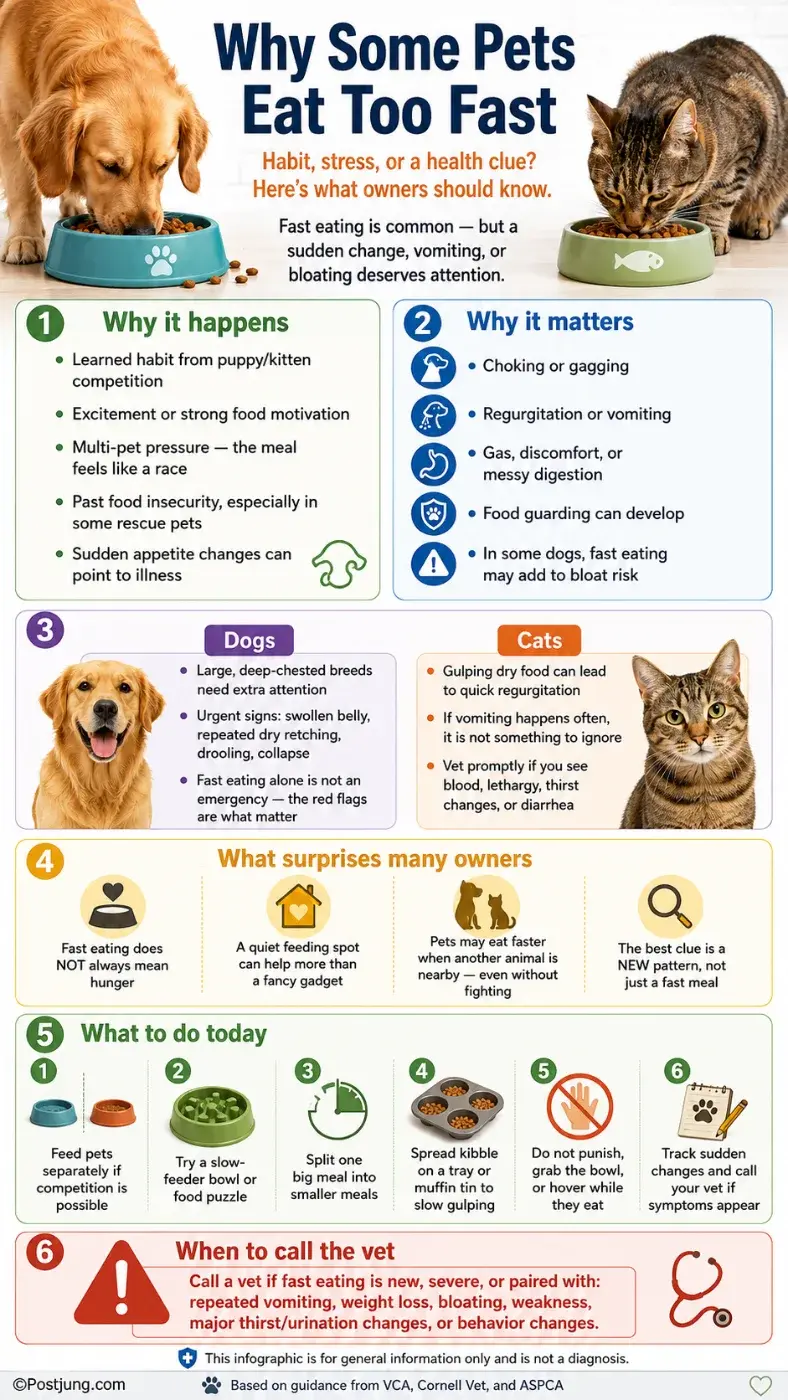
Fast eating is often learned
Animals can learn to rush meals early in life. Puppies or kittens that competed with littermates may carry that behavior into adulthood. Rescue animals may have old food insecurity, even after they are safe and well fed. Pets in multi-animal homes may also eat faster because another dog or cat is nearby.
That pressure can be subtle. A dog does not have to growl to feel protective around food. A cat does not have to fight to feel rushed. Even a quiet bowl placed too close to another pet can make mealtime feel competitive.
This is one reason separating pets during meals can help. A different room, a baby gate, a crate, or a quiet corner can reduce pressure without turning feeding into a stressful event.
In compact homes, apartments, and busy family spaces, this detail is easy to miss. People may place bowls close together because it is convenient. Pets may experience the same setup very differently.
It can also be excitement, routine, or boredom
Not every fast eater is anxious. Some pets simply love food. Others have learned that dinner arrives at a predictable time and become highly aroused before the bowl is placed down.
Dogs, especially, may gulp when meals are too exciting or too easy to swallow. Cats may rush when they are fed a portion they strongly prefer, or when they have learned that begging brings more food.
The bowl itself can also make speed eating easier. A smooth, open dish allows pets to take large mouthfuls quickly. Dry food can disappear especially fast when an animal barely pauses to chew.
That does not mean owners should punish the behavior. Taking food away, scolding, or hovering over the bowl can make a worried pet feel even more pressure. A better strategy is to slow the meal without making the pet feel threatened.
When fast eating can become risky
Fast eating can lead to gagging, choking, regurgitation, vomiting, gas, or digestive discomfort. For cats, speed eating may lead to regurgitation, especially when food is swallowed quickly and comes back up soon after.
Occasional vomiting can happen, but frequent vomiting should not be treated as normal. If a cat vomits often or shows signs such as weakness, blood in vomit, diarrhea, appetite changes, or changes in thirst or urination, a veterinarian should evaluate the cat.
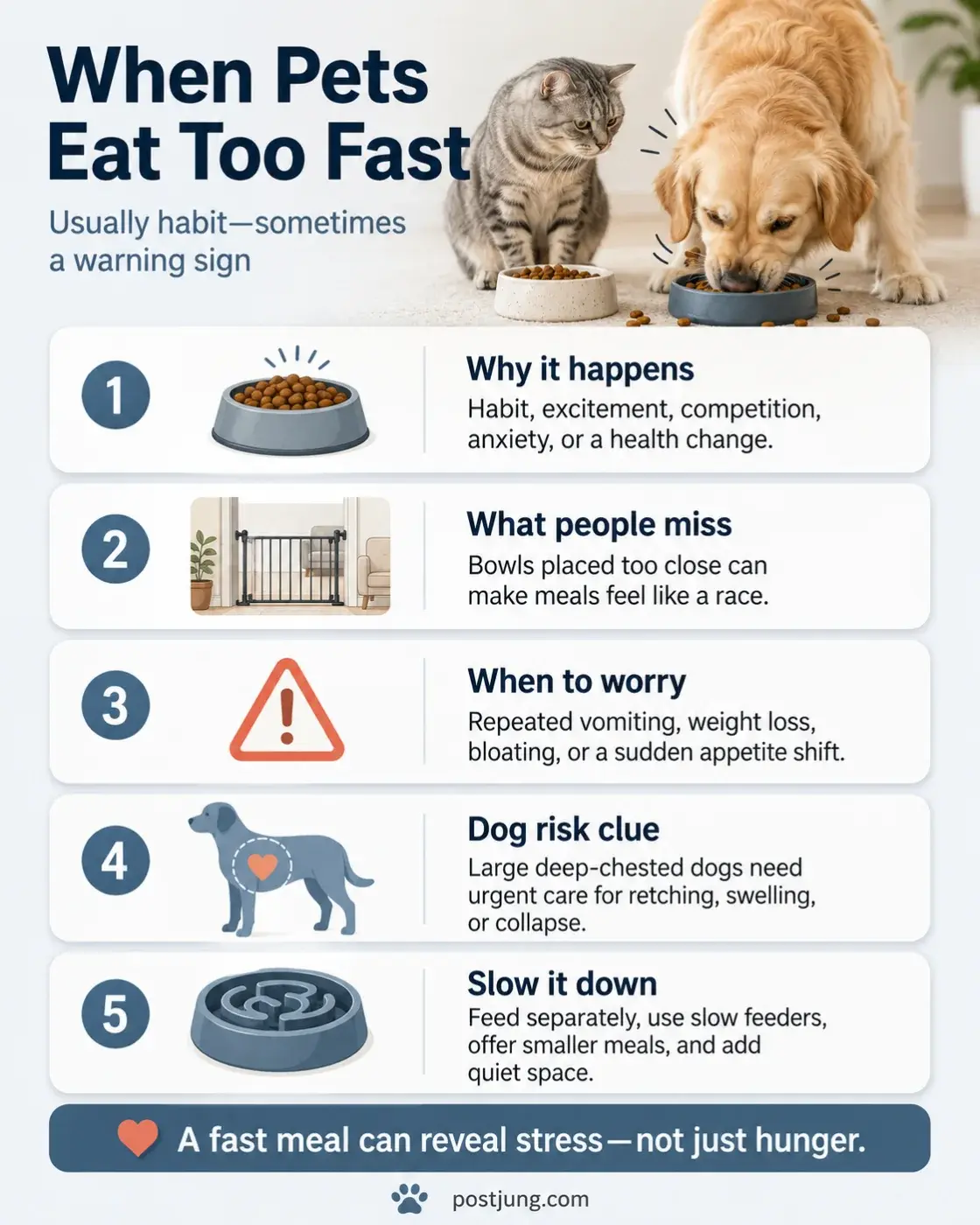
For dogs, one concern is gastric dilatation-volvulus, often called GDV or bloat. This is a serious emergency in which the stomach can fill with air, fluid, or food and may twist. Large, deep-chested dogs are at higher risk.
Fast eating is commonly discussed as one possible risk factor, but the evidence is not perfectly settled. That nuance matters. Owners should not panic just because a dog eats quickly, but they should pay attention, especially if the dog is large, deep-chested, older, anxious, fed one large meal a day, or tends to exercise soon after eating.
Warning signs that need urgent veterinary attention can include a swollen abdomen, repeated unproductive retching, restlessness, drooling, weakness, collapse, or obvious pain.
A sudden appetite change deserves attention
A pet that has always eaten quickly is different from a pet whose appetite suddenly changes.
If a dog or cat suddenly eats faster, begs constantly, steals food, loses weight despite eating well, drinks more water, urinates more, vomits, has diarrhea, or seems unusually restless, the issue may not be behavioral.
Increased appetite can sometimes be linked with medical conditions such as diabetes, intestinal parasites, digestive problems, or thyroid disease in older cats. Some medications can also affect appetite.
Owners do not need to diagnose the cause at home. The practical step is to notice the pattern and call a veterinarian if the change is new, intense, or paired with other symptoms.
A fast meal is often just a habit. A fast meal plus weight loss or illness signs is a different story.
Simple ways to slow the bowl down
The best fixes are usually simple.
A slow-feeder bowl can make it harder for a dog or cat to gulp large mouthfuls. Food puzzles can stretch mealtime while giving the animal mental stimulation. A muffin tin, a wide tray, or small portions placed in different spots can also slow dry food without requiring an expensive product.
For cats, hiding small portions around the home can mimic foraging and make meals last longer. For dogs, feeding smaller meals, using part of the meal during training, or spreading kibble across a tray can help reduce gulping.
The goal is not to frustrate the animal. If a feeder makes a pet anxious, start with an easier version. The right tool should make eating slower, not scarier.
Owners can also try changing the environment before buying anything. Feed pets separately. Move the bowl away from foot traffic. Avoid crowding the pet while it eats. Keep children and other animals away from a pet that guards food.
Sometimes the most effective change is not the bowl. It is privacy.
What owners should remember
Fast eating does not automatically mean a pet is sick, spoiled, or starving. It can come from excitement, learned competition, food insecurity, boredom, or the design of the feeding routine.
But it is worth taking seriously when it causes choking, repeated vomiting, regurgitation, bloating, weight loss, sudden appetite changes, or unusual behavior.
A food bowl may seem like a small part of the day. For a pet, it can reveal how safe, rushed, excited, or uncomfortable mealtime feels.
Slow the meal down. Reduce pressure around the bowl. Watch what changes. If the pattern is sudden or paired with other symptoms, the safest next step is a veterinary check—not a guess.
KEY TAKEAWAYS:
- Fast eating can come from habit, excitement, competition, anxiety, or a health change.
- Separate feeding spaces can help pets that feel pressure around food.
- Slow-feeder bowls, food puzzles, trays, and smaller meals can reduce gulping.
- Dogs at risk for bloat and cats with frequent vomiting need closer attention.
- Sudden appetite changes, weight loss, bloating, or repeated vomiting should be checked by a veterinarian.
VCA Animal Hospitals, Cornell University College of Veterinary Medicine, ASPCA, Veterinary Evidence
References:
https://vcahospitals.com/resources/preventive-dog/nutrition/how-to-slow-down-your-chowhound
https://www.vet.cornell.edu/departments-centers-and-institutes/riney-canine-health-center/canine-health-topics/gastric-dilatation-volvulus-gdv-or-bloat
https://www.vet.cornell.edu/departments-centers-and-institutes/cornell-feline-health-center/health-information/feline-health-topics/vomiting

เขียนโดย Postjung Insights
 รู้หรือไม่? เปิดรายได้พนักงานส่งพัสดุของแต่ละแอป วันหนึ่งได้เท่าไร
 Google ยอมรับแล้ว! Gemini AI เข้าถึงระบบบริษัทจริง 3 แห่ง ระหว่างการทดสอบความปลอดภัย
 โรงเรียนที่มีนักเรียนมากที่สุดในไทย
 5 คณะที่เรียนจบมาแล้ว มีอาชีพรองรับมากกว่าที่คิด
 เลขเด็ดปฏิทิน "หลวงปู่โต๊ะ" งวดวันที่ 1 ตุลาคม 69..ส่องเลย เลขไหนให้โชค!
 เปิด 5 โรงเรียนหญิงล้วนเก่าแก่ของไทย ที่มีประวัติยาวนานกว่าศตวรรษ
 จุฬาฯ มหาวิทยาลัยแห่งแรกของไทย มีจุดเริ่มต้นในสมัยรัชกาลที่ 5
 สถิติย้อนหลัง 10 ปี ออกเลขไหนบ้างมาดูกัน
 อำเภอที่มีชื่ออำเภอสั้นที่สุด 3 อำเภอเท่านั้นในประเทศไทย
 เปิดรายชื่อโรงเรียนในไทยที่ “ว่ายน้ำ” อยู่ในหลักสูตร เรียนจริงตั้งแต่อนุบาลถึงมัธยม
 โรงเรียนเพียงแห่งเดียวของประเทศไทย ที่อยู่มาตั้งแต่ยุครัชกาลที่ 4
 ทำไมของพลาสติกเก่าบางชิ้นถึง “เหนียว” ขึ้นมาเอง ทั้งที่ไม่ได้เปื้อนอะไร?
 😃 ชวนเข้ามาดูกันอีกกับคนที่มีร่างกายพิเศษจนเหมือนมีกล่องสมบัติที่หายาก 😯5 คณะที่เรียนจบมาแล้ว มีอาชีพรองรับมากกว่าที่คิดเปิดรายชื่อโรงเรียนในไทยที่ “ว่ายน้ำ” อยู่ในหลักสูตร เรียนจริงตั้งแต่อนุบาลถึงมัธยมGoogle ยอมรับแล้ว! Gemini AI เข้าถึงระบบบริษัทจริง 3 แห่ง ระหว่างการทดสอบความปลอดภัยเลขเด็ดปฏิทิน "หลวงปู่โต๊ะ" งวดวันที่ 1 ตุลาคม 69..ส่องเลย เลขไหนให้โชค!ทำไมของพลาสติกเก่าบางชิ้นถึง “เหนียว” ขึ้นมาเอง ทั้งที่ไม่ได้เปื้อนอะไร?
 English Edition