The Ordinary Household Items That Can Put Pets at Risk
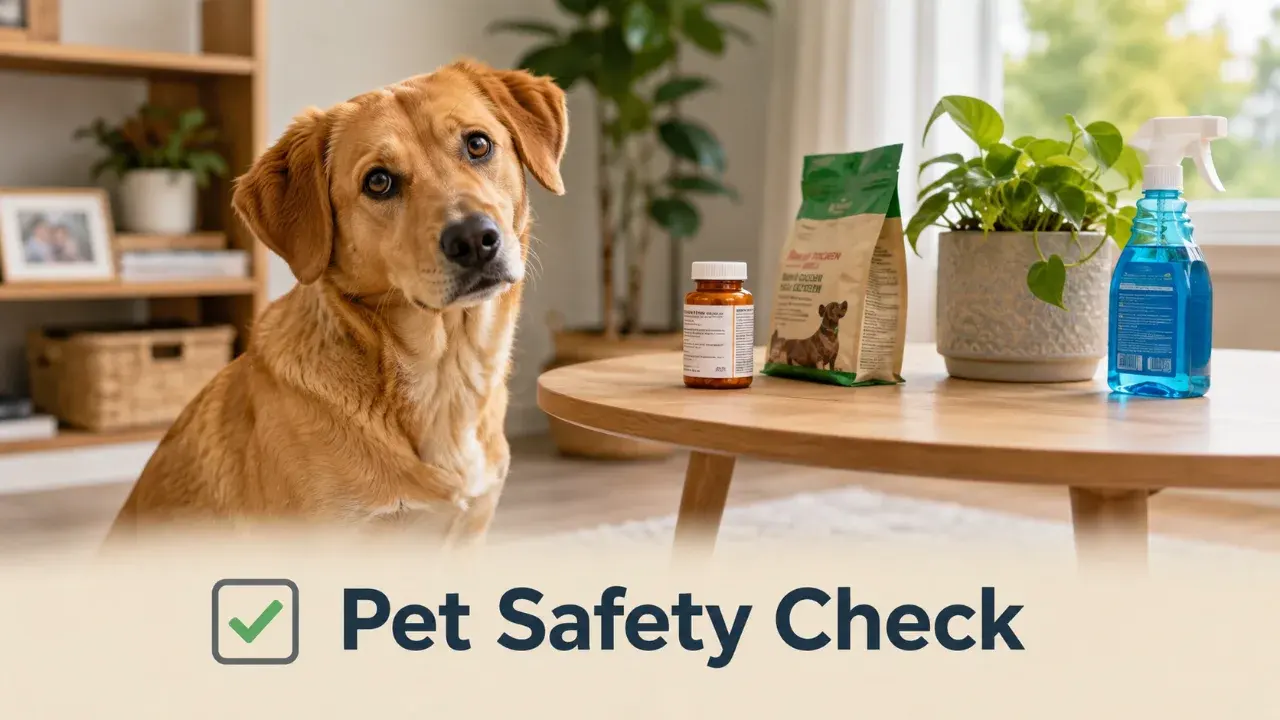
Many pet hazards are not rare poisons. They are everyday foods, medicines, plants, cleaners, and packaging that curious animals can reach before owners notice.
A pet emergency can start with something as ordinary as a dropped pill, a sugar-free gum packet, a flower vase, or an empty snack bag.
That is what makes household pet safety easy to underestimate. Most homes are arranged for human convenience, not for animals that sniff through trash, jump onto counters, chew bottles, lick spills, or explore bags left on the floor.
Pet-proofing is not about making a home feel sterile. It is about learning to see familiar rooms through a dog’s nose, a cat’s curiosity, or a puppy’s chewing instinct.
The U.S. Food and Drug Administration warns that potentially dangerous items for pets can include certain foods, human medications, pesticides, cleaners, plants, and even food bags. The risk depends on the animal, the product, the amount, and how quickly the owner responds.
The kitchen is often the easiest place to miss a hazard
The kitchen feels safe because everything there is familiar. But many common foods and ingredients are not meant for pets.
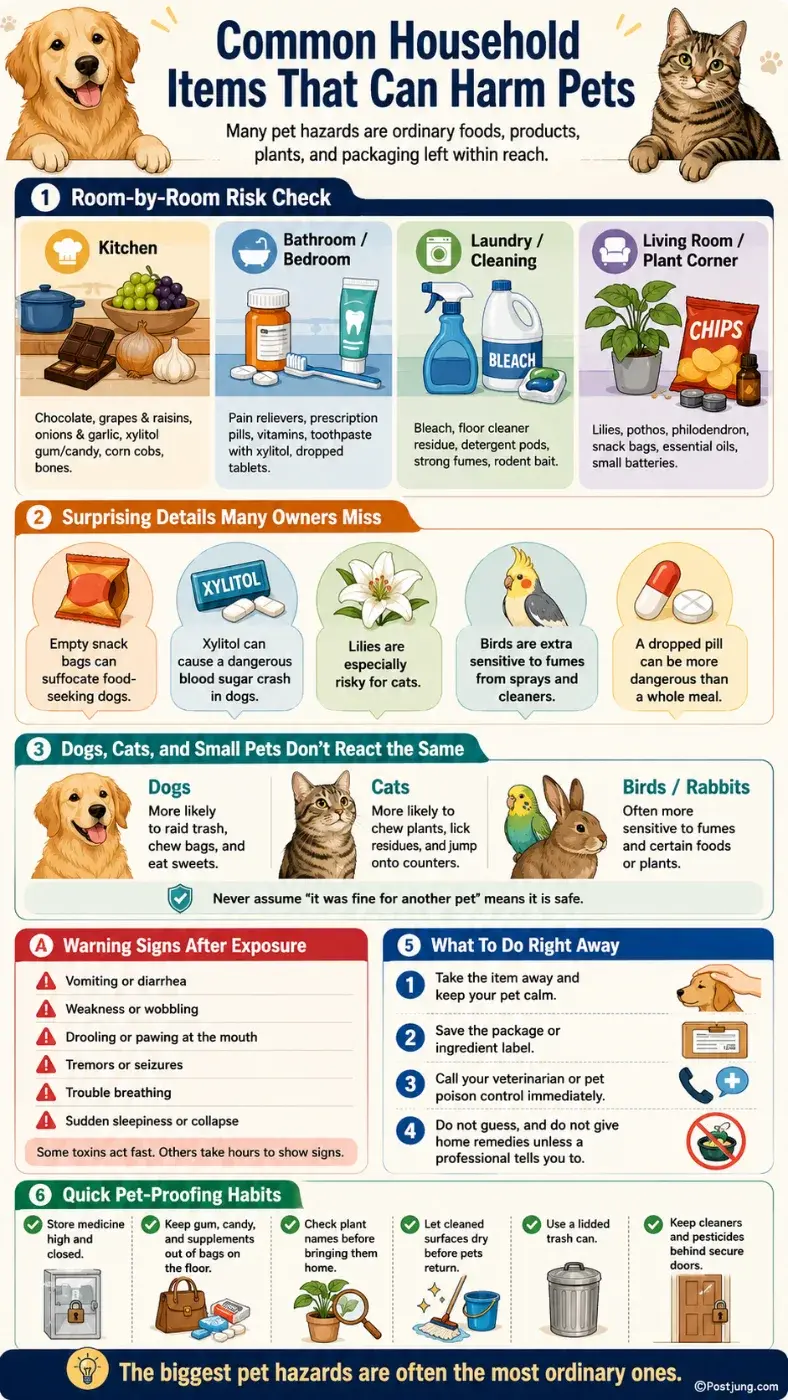
Chocolate, caffeine, grapes, raisins, onions, garlic, macadamia nuts, alcohol, raw yeast dough, and products containing xylitol are among the items veterinary poison-control resources warn owners not to share with pets. Some may cause digestive upset, while others can affect the nervous system, heart, liver, kidneys, or blood depending on the pet and the amount involved.
One of the most overlooked ingredients is xylitol, a sugar substitute used in some gum, candy, baked goods, toothpaste, mouthwash, cough syrup, and low-sugar products. The FDA says xylitol can be poisonous to dogs and may cause serious signs such as vomiting, weakness, collapse, difficulty walking, seizures, or liver problems.
That is why “just one piece” can be the wrong way to think about certain products. A small item can contain a concentrated ingredient.
Human medicine should stay out of paws’ reach
A bedside table or bathroom counter can be riskier than it looks.
Pain relievers, supplements, prescription pills, and another pet’s medication should not be given to a dog or cat unless a veterinarian specifically directs it. The FDA warns that some human medications can be harmful to pets, including common pain relievers. It also notes that acetaminophen can be fatal to cats.
Many accidents do not happen because an owner intentionally gives medicine. They happen because a pill drops, a bottle is chewed open, or a flavored tablet smells interesting enough to eat.
A useful rule is simple: store medicine the way you would store chocolate around toddlers — high, closed, and away from purses, backpacks, and nightstands.
Cleaners are about contact, fumes, and timing
Cleaning products are not all equally dangerous, and many can be used safely when owners follow the label. The risk often comes from exposure: a pet walking across a wet floor, licking residue, breathing strong fumes, or chewing a bottle.
ASPCA guidance on household products says cleaners should be used as directed, and pets should generally be kept away until surfaces are dry and fumes have cleared. Birds need extra caution because they can be especially sensitive to airborne chemicals.
Bleach is a good example of why details matter. Undiluted bleach can injure the mouth and digestive tract if swallowed. Diluted bleach may be used in some pet-care cleaning situations only when properly prepared, thoroughly rinsed, and allowed to dry before pets return.
The safer habit is practical, not complicated: close the room, ventilate, rinse pet-contact surfaces, and do not let animals walk through wet cleaner.
Houseplants can be more than decoration
A plant that looks peaceful on a shelf may look like a toy or snack to a pet.
The FDA lists several plants and flowers that may be dangerous to pets, including aloe vera, amaryllis, azalea, cyclamen, English ivy, foxglove, golden pothos, lilies, oleander, philodendron, sago palm, tulips, and yew. ASPCA also maintains a toxic and non-toxic plant database for dogs, cats, and horses.
Lilies deserve special attention in homes with cats. Even when a flower looks harmless in a vase, petals, leaves, pollen, or vase water may become an exposure risk depending on the lily type.
The best time to check a plant’s safety is before bringing it home, not after a cat has already chewed the leaves.
Not every danger is a poison
Some household items harm pets because of shape, packaging, or choking risk rather than toxicity.
The FDA warns that avocado pits, corn cobs, bones, and fruit pits may cause gastrointestinal obstruction if swallowed. It also warns that mylar-type potato chip, cereal, and snack bags can be dangerous because a dog can put its head inside and the bag may seal around the nose and mouth.
This is one of the more surprising pet-safety lessons. An empty snack bag may look like trash to a person, but to a food-motivated dog, it can smell like a reward.
For pets that raid bins, packaging is not just a mess. It can be a real hazard.
Dogs, cats, birds, and small pets do not face the same risks
A common mistake is assuming that pet safety advice applies equally to every animal.
It does not.
The FDA notes that avocado is only mildly toxic to dogs and cats, but it can be severely toxic or even deadly to birds, rabbits, horses, and ruminants. Flea and tick products made for dogs may also be dangerous or life-threatening if used on cats or other animals.
That is why “my dog ate it and was fine” is not reliable safety advice. Species, size, age, health condition, and dose can change the outcome.
A big dog, a kitten, a rabbit, and a parrot do not process risks the same way.
What owners should do if a pet gets into something risky
If a pet eats, licks, or chews something potentially dangerous, owners should not wait for dramatic symptoms. Some toxic exposures show signs quickly. Others may take longer to appear.
The FDA advises contacting a veterinarian, emergency animal clinic, or animal poison control center if a pet has eaten something potentially dangerous. ASPCA Poison Control lists its number as 888-426-4435 and says it is available 24 hours a day, 365 days a year; a consultation fee may apply.
When calling, owners should have the pet’s species, weight, age, product name, ingredient label, amount eaten, and time of exposure ready if possible.
The calmest response is often the safest one: save the packaging, call for guidance, and avoid guessing.
A safer home can still feel normal
Pet-proofing usually comes down to small habits.
Keep bags zipped. Put gum, medicine, supplements, laundry products, pesticides, rodent bait, and cleaning supplies behind secure doors. Move risky plants out of reach or out of the home. Let cleaned surfaces dry before pets return. Throw snack bags away in a sealed trash can.
This matters even more in shared homes, apartments, or busy households. Guests may leave purses on chairs. Children may drop food. A pet sitter may not know which plant is risky. A clever dog may learn how to open a bin.
The goal is not to treat every room like a danger zone. It is to notice the ordinary objects that become risky only when an animal can reach them.
A home can still be warm, relaxed, and lived-in. It just needs one extra layer of thinking: what looks boring to a person may look edible, chewable, climbable, or lickable to a pet.
KEY TAKEAWAYS:
- Many pet hazards are ordinary household items, not rare poisons.
- Xylitol, human medicines, certain plants, cleaners, and snack bags are easy risks to overlook.
- Dogs, cats, birds, rabbits, and other pets may react differently to the same item.
- If a pet gets into something risky, owners should contact a veterinarian or poison-control service quickly.
- The most useful pet-proofing habits are simple: store, seal, rinse, dry, and keep tempting items out of reach.
U.S. Food and Drug Administration, ASPCA
References:
https://www.fda.gov/animal-veterinary/animal-health-literacy/potentially-dangerous-items-your-pet
https://www.fda.gov/consumers/consumer-updates/paws-xylitol-its-dangerous-dogs
https://www.aspca.org/pet-care/aspca-poison-control

เขียนโดย Postjung Insights
 อำเภอที่มีชื่ออำเภอสั้นที่สุด 3 อำเภอเท่านั้นในประเทศไทย
 เลขขายดีงวดนี้ 1 ตุลาคม 2569 สำรวจกระแสเลขเด่นก่อนหวยออก พร้อมวิธีอ่านข้อมูลอย่างมีสติ
 โรงเรียนที่มีนักเรียนมากที่สุดในไทย
 รู้หรือไม่? เปิดรายได้พนักงานส่งพัสดุของแต่ละแอป วันหนึ่งได้เท่าไร
 5 คณะที่เรียนจบมาแล้ว มีอาชีพรองรับมากกว่าที่คิด
 แทสเมเนีย: ถอดรหัสเกาะปริศนาที่แผนที่โลกมักลืมเขียน
 แปลปกสลาก งวด 1 ต.ค. 69 ส่องตัวเลขจากภาพปกสลากกินแบ่งรัฐบาล
 โรงเรียนเพียงแห่งเดียวของประเทศไทย ที่อยู่มาตั้งแต่ยุครัชกาลที่ 4
 AI กำลังเปลี่ยนตลาดงาน เปิด 5 สาขามหาวิทยาลัยที่ไทยต้องการบุคลากรในอีก 5 ปี
 มัดรวมจับเลขชน สัตว์นำโชค 1 ตุลาคม 2569
 คุณนุชออกโรงชี้แจง ปมมีภาพถ่ายร่วมสัมภาษณ์ “หนุ่ม กรรชัย” ยอมรับผิด พร้อมขอโทษทุกฝ่าย
 Phnom Penh Post ยกประวัติศาสตร์ขอมตอบโต้ข่าวภาพหญิง ร.5 แต่ปมสำคัญยังอยู่ที่หลักฐานของภาพAI กำลังเปลี่ยนตลาดงาน เปิด 5 สาขามหาวิทยาลัยที่ไทยต้องการบุคลากรในอีก 5 ปีPhnom Penh Post ยกประวัติศาสตร์ขอมตอบโต้ข่าวภาพหญิง ร.5 แต่ปมสำคัญยังอยู่ที่หลักฐานของภาพแทสเมเนีย: ถอดรหัสเกาะปริศนาที่แผนที่โลกมักลืมเขียนเลขขายดีงวดนี้ 1 ตุลาคม 2569 สำรวจกระแสเลขเด่นก่อนหวยออก พร้อมวิธีอ่านข้อมูลอย่างมีสติ
 ทำไมคนไทยยังแห่ซื้อ"iPhone 18" ทั้งที่ราคาสูง แต่ค่าครองชีพสวนทางกับรายได้?
 จากยาพิษโบราณสู่อาณาจักรหมื่นล้าน: มหากาพย์ “อัลมอนด์” พืชเศรษฐกิจที่สร้างแคลิฟอร์เนีย
 English Edition