Why Your Dog Still Smells Bad After a Bath
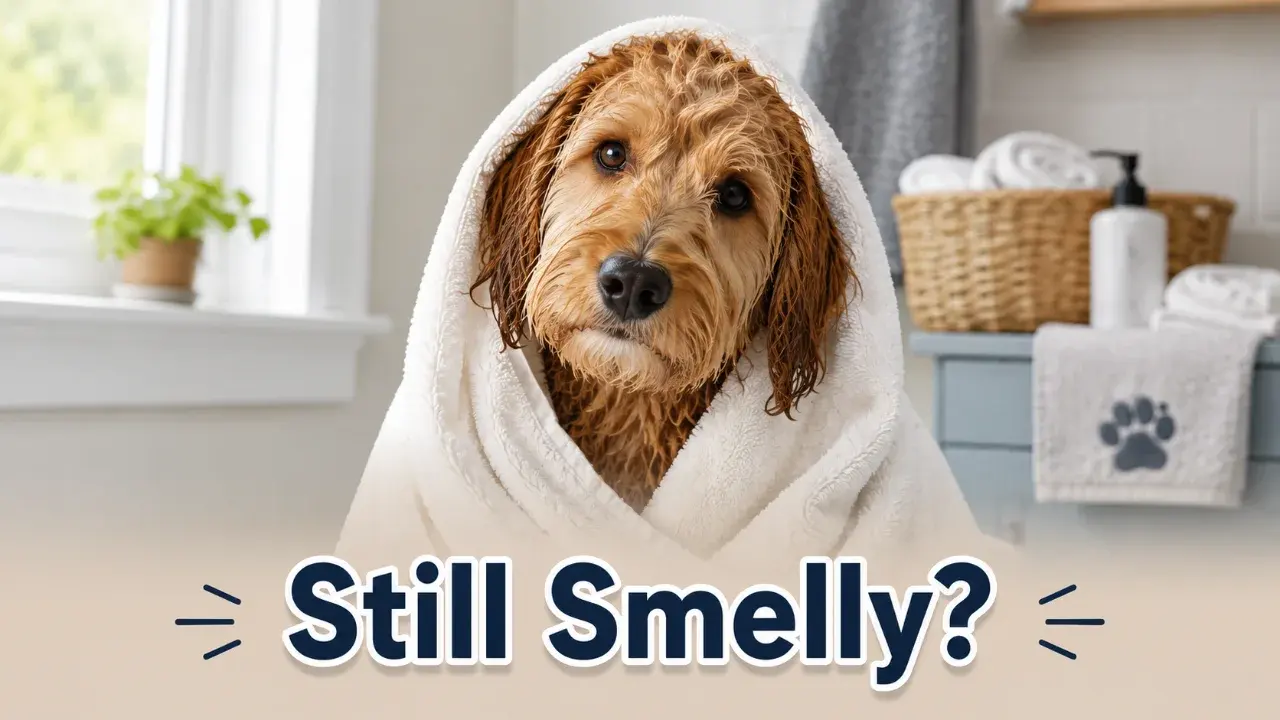
A lingering dog smell is not always a grooming failure. The real source may be damp fur, irritated skin, dirty ears, bad breath, anal glands, or the things your dog sleeps on.
A freshly bathed dog should smell clean — at least for a little while. So when that musty, sour, fishy, or “wet dog” smell comes back almost immediately, it can feel like the bath did not work at all.
In many cases, the bath did work. It cleaned the coat. It just did not reach the source of the odor.
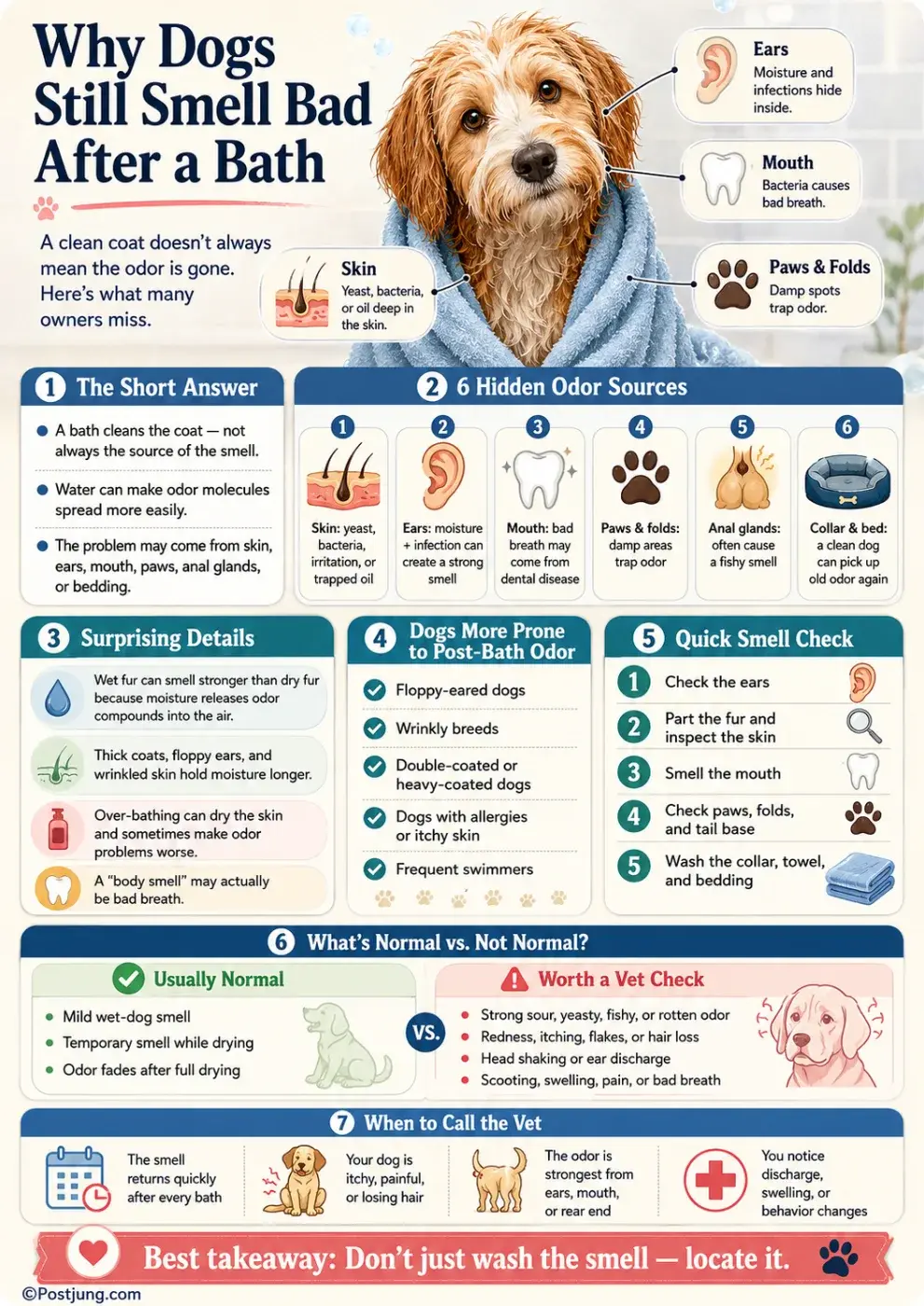
Dog smell can come from several places that shampoo barely touches: the skin, ears, mouth, paws, skin folds, anal glands, bedding, collar, harness, or even a favorite spot on the sofa. That is why a dog can look clean, feel soft, and still carry a smell that makes owners wonder what they missed.
Wet fur can make normal odor stronger
Some post-bath smell is normal. Dogs have natural skin oils and microorganisms living on their coat. When the fur gets wet, moisture can help release odor compounds into the air, which is why “wet dog smell” can seem stronger during drying than before the bath. The American Kennel Club explains that this smell is connected to moisture evaporation carrying compounds produced by microbes on the coat.
This is also why drying matters so much. A quick towel rub may not be enough for dogs with thick coats, floppy ears, wrinkles, long fur, or dense paw hair. Moisture can stay trapped close to the skin even when the outside of the coat looks dry.
That trapped dampness is especially noticeable in humid homes, rainy seasons, small apartments, and tropical climates where towels, bedding, and floors may already hold moisture. A dog that lies down damp on a musty blanket can start smelling bad again quickly.
The smell may be hiding in the skin
If the odor is sour, yeasty, greasy, or stronger in one area of the body, the skin is a good place to check.
A dog’s skin is a living barrier. When it becomes irritated by allergies, moisture, parasites, friction, wounds, or infection, odor can build up. Merck Veterinary Manual describes dermatitis as skin inflammation that may be linked to irritants, allergens, trauma, parasites, or infection.
That does not mean every smelly dog has a serious skin problem. But if the smell keeps returning after baths, owners should look for clues: redness, flakes, greasy patches, bumps, hair loss, darkened skin, licking, scratching, or rubbing against furniture.
The odor may be strongest under the neck, between the toes, around the belly, near the tail, under the armpits, or inside skin folds.
Repeated bathing may even make things worse if the shampoo dries out or irritates the skin. In that case, the answer is not simply “wash more.” It is to find out why the skin smells in the first place.
Ears can make the whole dog seem smelly
Ear odor is easy to mistake for general body odor. A dog with floppy ears, allergies, or trapped moisture after a bath may smell strongest around the head and neck.
Ear infections or inflammation can cause odor, scratching, redness, discharge, head shaking, and discomfort. VCA Animal Hospitals notes that infected ears may become red, inflamed, bad-smelling, and may have black or yellowish discharge.
Owners should not pour random cleaners or drops into a painful ear. Ear problems can have different causes, including yeast, bacteria, allergies, or foreign material. A veterinarian can check what is actually happening and recommend the right treatment.
A simple clue helps: if the smell is strongest near the head, check the ears before blaming the bath.
Bad breath can survive any shampoo
Sometimes the dog does not smell bad from the body at all. The odor is coming from the mouth.
Bad breath can spread through the room when a dog pants, licks, sleeps nearby, or jumps onto the couch. Owners may think the coat smells when the real source is dental buildup or gum disease.
Cornell University’s canine health guidance lists bad breath, drooling, difficulty eating, decreased appetite, and bleeding from the mouth as possible signs of dental disease in dogs.
A bath will not change that. If the smell is strongest when the dog opens its mouth, dental care may matter more than another wash.
A fishy smell may point to anal glands
A fishy or metallic smell near the rear end is often linked to anal glands, also called anal sacs.
Dogs have anal sacs near the anus that hold a strong-smelling fluid used for scent marking. VCA Animal Hospitals explains that these sacs can become impacted or infected, and signs may include scooting, licking, biting near the tail base, swelling, pain, or discharge.
This is one reason a dog can smell bad even after a perfect bath. The coat may be clean, but the anal gland odor remains.
Owners should avoid squeezing anal glands at home unless they have been properly taught by a veterinary professional. If there is pain, swelling, blood, pus, or repeated scooting, the dog should be checked.
The environment may be the real problem
A clean dog will not stay clean for long if everything around the dog still smells.
Collars, harnesses, beds, blankets, towels, sofa covers, car seats, and crate mats can hold old odor. A dog that goes straight from the bath onto a dirty bed may smell bad again within minutes.
This is one of the easiest fixes. Wash the dog’s bedding, clean the collar and harness, use a fresh towel, and make sure the dog dries in a clean, ventilated area.
For many owners, this step solves more than a second bath would.
A simple smell-check routine
After the dog is fully dry, check the smell by location.
Start with the ears. Smell near each ear without putting anything deep inside. Look for redness, discharge, scratching, or head shaking.
Then check the skin. Part the fur around the neck, belly, paws, armpits, groin, tail base, and skin folds. Watch for redness, flakes, oiliness, bumps, or repeated licking.
Next, check the mouth. Bad breath, tartar, red gums, drooling, or changes in chewing can point to dental trouble.
If the smell is fishy, check the rear end. Scooting or licking may be a clue.
Finally, check the dog’s environment. A clean dog lying on a smelly bed will not smell clean for long.
When the smell needs a vet check
A mild wet-dog smell after a bath is usually not alarming. A strong odor that returns quickly, keeps getting worse, or comes with itching, pain, redness, discharge, swelling, hair loss, bad breath, scooting, appetite changes, or unusual behavior deserves professional attention.
The most useful lesson is simple: do not just wash the smell — locate it.
A dog that smells bad after a bath may not be dirty. The bath may be revealing a damp spot, a skin issue, an ear problem, dental odor, anal gland trouble, or a smelly blanket that keeps bringing the problem back.
KEY TAKEAWAYS:
- A bath cleans the coat, but dog odor can come from the skin, ears, mouth, paws, anal glands, bedding, or collar.
- Wet fur can temporarily make normal dog odor stronger, especially if the dog is not dried thoroughly.
- Sour, yeasty, fishy, rotten, or persistent odor may signal something beyond ordinary dirt.
- If odor comes with itching, redness, discharge, bad breath, scooting, pain, or behavior changes, a vet check is the safer move.
- Washing bedding, collars, harnesses, and towels can help prevent a clean dog from smelling bad again.
American Kennel Club, Merck Veterinary Manual, VCA Animal Hospitals, Cornell University College of Veterinary Medicine
References:
https://www.akc.org/expert-advice/health/wet-dogs-smell-bad/
https://www.merckvetmanual.com/dog-owners/skin-disorders-of-dogs/dermatitis-and-dermatologic-problems-in-dogs
https://vcahospitals.com/know-your-pet/anal-sac-disease-in-dogs

เขียนโดย Postjung Insights
 รู้หรือไม่? เปิดรายได้พนักงานส่งพัสดุของแต่ละแอป วันหนึ่งได้เท่าไร
 ดูหนัง–ซีรีส์ฟรีอาจไม่ฟรีอย่างที่คิด! เปิดโทษละเมิดลิขสิทธิ์ เตือนคนปล่อยคอนเทนต์เถื่อน เสี่ยงทั้งคุกทั้งปรับ
 รมว.วัฒนธรรมเอาจริง! จ่อส่งหนังสือทักท้วง Miss Universe Cambodia ปมใช้ภาพหญิงกำแพงเพชร หากไม่แก้ เตรียมใช้กฎหมาย
 5 คณะที่เรียนจบมาแล้ว มีอาชีพรองรับมากกว่าที่คิด
 MRT เตาปูนกลับมาเปิดปกติแล้ว รมช.คมนาคมเผยปมไฟไหม้ พบประกายไฟจากชุดสายไฟ 750 โวลต์
 อำเภอที่มีชื่ออำเภอสั้นที่สุด 3 อำเภอเท่านั้นในประเทศไทย
 แมคาเดเมีย (Macadamia): ราชินีแห่งถั่ว กับขุมทรัพย์โภชนาการจากออสเตรเลีย
 โรงเรียนที่มีนักเรียนมากที่สุดในไทย
 เปิด 5 โรงเรียนหญิงล้วนเก่าแก่ของไทย ที่มีประวัติยาวนานกว่าศตวรรษ
 แมงป่อง: แมลงนักล่าสายพันธุ์โบราณของโลก ที่ยังคงอยู่มาจนถึงปัจจุบัน
 นักวิชาการ ม.อ.ไม่ปลื้ม! "ลิซ่า" ชวนดื่มหมดแก้ว ลั่น! เหยื่อเหล้าในไทยตายเยอะกว่าก่อการร้ายทั่วโลก
 เปิดหลักฐานเก่า 120 ปี ปมภาพหญิงเมืองกำแพงเพชร โผล่เวที Miss Universe Cambodia 2026
 English Edition