The Dog Dental Signs Owners Often Miss Until It Hurts
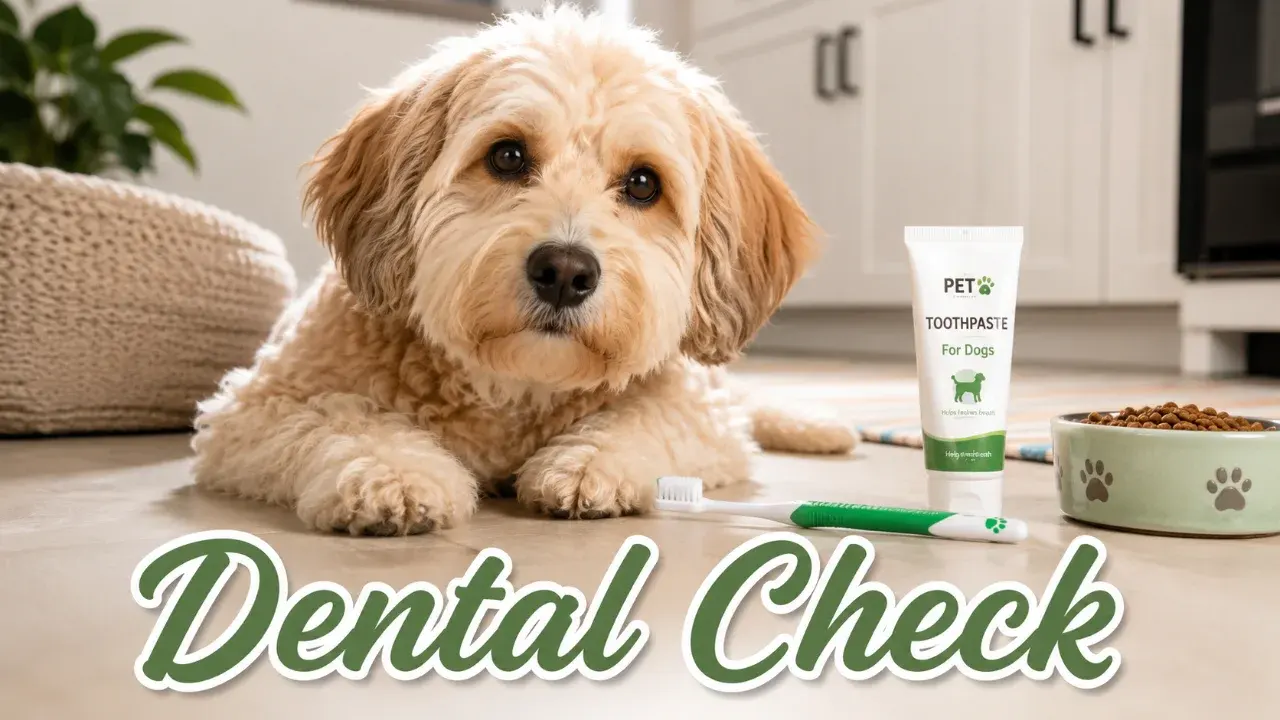
A dog with a painful mouth may still eat, play, and act cheerful. The warning signs often show up as bad breath, dropped food, slower chewing, drooling, or small behavior changes.
A dog can have a sore mouth and still act almost completely normal.
That is why dental problems are so easy for owners to miss. A dog may keep eating, wagging, and asking for walks while quietly changing the way they chew, avoiding hard treats, or pulling away when someone touches their face.
Those small clues matter. Dental disease in dogs often begins around the gums and below the visible tooth surface, where an owner cannot fully inspect it at home. Cornell University College of Veterinary Medicine explains that bad breath is often one of the first signs people notice, and that plaque can begin hardening into tartar quickly when minerals in saliva build up on the teeth.
Bad breath is not always normal
“Dog breath” is easy to joke about, but persistent foul breath should not be dismissed.
A mild food smell after dinner is one thing. Breath that smells rotten, sour, unusually strong, or suddenly worse than before can point to bacteria, gum inflammation, or other oral problems.
Cornell describes dental disease as a process that begins with plaque, a sticky bacterial buildup on the teeth. As plaque hardens into tartar and inflammation develops around the gums, the problem can progress from gingivitis to periodontitis, which may involve oral pain, trouble eating, bone loss, and eventually tooth loss.
That does not mean every case of bad breath is an emergency. It does mean bad breath is worth taking seriously when it appears with red gums, drooling, chewing changes, reduced appetite, or bleeding from the mouth.
The signs can look like picky eating
One of the most common misunderstandings is that a dog with dental pain will simply stop eating.
Many dogs do not. They may still finish meals, especially if the food is soft or if eating is part of a familiar routine. Instead, the signs may be quieter.
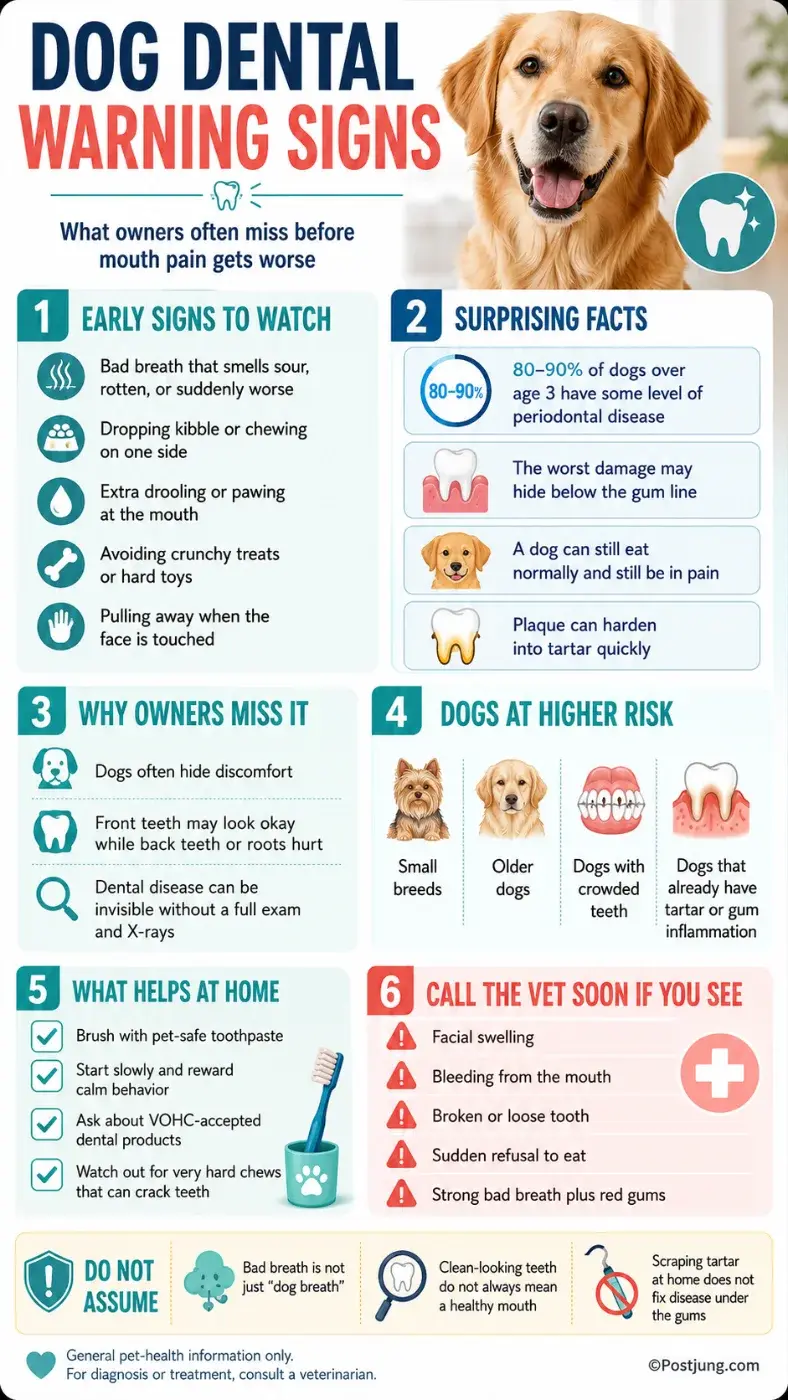
A dog may drop kibble from the mouth, chew mostly on one side, take longer to finish food, avoid hard toys, or suddenly seem uninterested in crunchy treats. Some dogs paw at their mouth, rub their face, drool more than usual, or become sensitive when touched around the muzzle.
Cornell advises contacting a veterinarian if a dog has difficulty eating or decreased appetite, bad breath, bleeding from the mouth, swelling on the jaw or face, drooling, or nasal discharge.
The American Animal Hospital Association also tells owners to schedule a dental exam if they notice bad breath, red gums, drooling, or difficulty eating.
A quick look at the teeth is not enough
Many owners check the front teeth and assume everything is fine if the mouth does not look terrible. That can be misleading.
The most painful problem may be farther back in the mouth, around the gum line, near a tooth root, or under tissue that cannot be checked properly without veterinary equipment. Cornell notes that a thorough oral exam, including dental X-rays, is only possible when a dog is anesthetized, and that professional cleaning removes plaque and calculus both above and below the gum line.
This is why anesthesia-free cleanings can be limited. AAHA explains that anesthesia-free dental cleanings remove visible tartar above the gum line but do not treat the source of dental disease under the gums, and they do not allow veterinarians to safely take dental radiographs or probe for disease.
For owners, the practical takeaway is simple: a cleaner-looking tooth is not always the same as a healthy mouth.
Small and older dogs may need extra attention
Dental risk is not the same for every dog.
Older dogs often need closer monitoring because dental problems become more common with age. Small dogs can also be more prone to dental trouble, partly because their mouths have less space and teeth may be crowded.
That does not mean large dogs are safe from dental disease. It means owners should pay attention to the dog in front of them: age, breed, chewing habits, previous dental history, and any change in eating or behavior.
A once-a-year wellness visit is a good time to ask a veterinarian to look at the teeth and gums. Cornell says veterinarians perform awake mouth exams at annual visits, or more often depending on a dog’s age, breed, dental health, and medical history.
What owners can do at home
The best time to care for a dog’s teeth is before there is obvious pain.
Brushing is still the strongest home habit for prevention. Cornell describes brushing a dog’s teeth as the most effective home-care method for helping prevent dental disease.
Start slowly. Let the dog sniff and taste pet-safe toothpaste first. Touch the lips and gums gently. Reward calm behavior. Build the routine in short sessions instead of trying to force a full brushing right away.
Human toothpaste should not be used for dogs. AAHA advises using a pet-specific toothbrush and pet-specific toothpaste, noting that human toothpaste is often toxic to pets.
Dental chews, dental diets, water additives, oral gels, sprays, and wipes may help some dogs, but they are not all equal. The Veterinary Oral Health Council says it reviews products for standards related to plaque and tartar control, and awards its Seal of Acceptance when products meet those criteria.
The American Veterinary Dental College also describes VOHC as awarding its seal to products that meet preset criteria for controlling plaque or calculus in dogs and cats.
Owners should also be careful with hard chews. Cornell warns that bones, antlers, hooves, rawhide, and hard manufactured toys can wear down or fracture teeth, and some can create gastrointestinal risks.
When a dental check should not wait
Some signs are worth scheduling soon. Others should be treated as more urgent.
A routine dental check is worth booking if a dog has ongoing bad breath, visible tartar, red gums, drooling, slower chewing, or trouble with hard food.
Call a veterinarian sooner if there is facial swelling, bleeding from the mouth, sudden refusal to eat, a broken or loose tooth, obvious pain, or swelling near the jaw, cheek, or under the eye.
This is general pet health information, not a diagnosis. A veterinarian who can examine the mouth, review the dog’s history, and decide whether X-rays or treatment are needed is the safest source of advice.
A healthy dog mouth is not about perfect white teeth. It is about comfort: eating without pain, chewing normally, and catching small problems before they become bigger ones.
Sometimes the first warning is not dramatic at all. It is the dropped food, the slower meal, the breath that suddenly smells worse, or the dog who quietly turns away when a favorite toy is too hard to chew.
KEY TAKEAWAYS:
- Dogs can have dental pain and still keep eating or acting cheerful.
- Bad breath, drooling, dropped food, red gums, and slower chewing are common warning signs.
- Dental problems can hide below the gum line, where owners cannot fully check at home.
- Brushing with pet-safe toothpaste is one of the best at-home prevention habits.
- Facial swelling, bleeding, broken teeth, or sudden refusal to eat should be checked quickly by a veterinarian.
Cornell University College of Veterinary Medicine, American Animal Hospital Association, Veterinary Oral Health Council, American Veterinary Dental College
References:
https://www.vet.cornell.edu/departments-centers-and-institutes/riney-canine-health-center/canine-health-information/dental-disease-and-home-dental-care
https://www.aaha.org/resources/your-pets-dental-care/
https://vohc.org/

เขียนโดย Postjung Insights
 อำเภอที่มีชื่ออำเภอสั้นที่สุด 3 อำเภอเท่านั้นในประเทศไทย
 เปิดรายชื่อโรงเรียนในไทยที่ “ว่ายน้ำ” อยู่ในหลักสูตร เรียนจริงตั้งแต่อนุบาลถึงมัธยม
 ตาราง “เด่นเหนือเด่นใต้” งวด 1 ต.ค. 69 เปิดข้อมูลตามโพย เลขไหนอยู่ตรงไหน
 เลขเด็ดปฏิทิน "หลวงปู่โต๊ะ" งวดวันที่ 1 ตุลาคม 69..ส่องเลย เลขไหนให้โชค!
 5 คณะที่เรียนจบมาแล้ว มีอาชีพรองรับมากกว่าที่คิด
 แปลปกสลาก งวด 1 ต.ค. 69 ส่องตัวเลขจากภาพปกสลากกินแบ่งรัฐบาล
 รู้หรือไม่? เปิดรายได้พนักงานส่งพัสดุของแต่ละแอป วันหนึ่งได้เท่าไร
 สถิติย้อนหลัง 10 ปี ออกเลขไหนบ้างมาดูกัน
 อุทยานเขาใหญ่เรียกตัว “ตีนผี” หลังขับจี้ช้างป่าพ่อลูก ลั่นระยะ 50 เมตรต้องจำให้ขึ้นใจ
 โรงเรียนที่มีนักเรียนมากที่สุดในไทย
 เปิด 5 โรงเรียนหญิงล้วนเก่าแก่ของไทย ที่มีประวัติยาวนานกว่าศตวรรษ
 จุฬาฯ มหาวิทยาลัยแห่งแรกของไทย มีจุดเริ่มต้นในสมัยรัชกาลที่ 55 คณะที่เรียนจบมาแล้ว มีอาชีพรองรับมากกว่าที่คิดเปิดรายชื่อโรงเรียนในไทยที่ “ว่ายน้ำ” อยู่ในหลักสูตร เรียนจริงตั้งแต่อนุบาลถึงมัธยม
 Google ยอมรับแล้ว! Gemini AI เข้าถึงระบบบริษัทจริง 3 แห่ง ระหว่างการทดสอบความปลอดภัยเลขเด็ดปฏิทิน "หลวงปู่โต๊ะ" งวดวันที่ 1 ตุลาคม 69..ส่องเลย เลขไหนให้โชค!
 ทำไมของพลาสติกเก่าบางชิ้นถึง “เหนียว” ขึ้นมาเอง ทั้งที่ไม่ได้เปื้อนอะไร?อุทยานเขาใหญ่เรียกตัว “ตีนผี” หลังขับจี้ช้างป่าพ่อลูก ลั่นระยะ 50 เมตรต้องจำให้ขึ้นใจ
 English Edition