Why Cats Rub Their Face on Furniture, Sofas, and Doorways
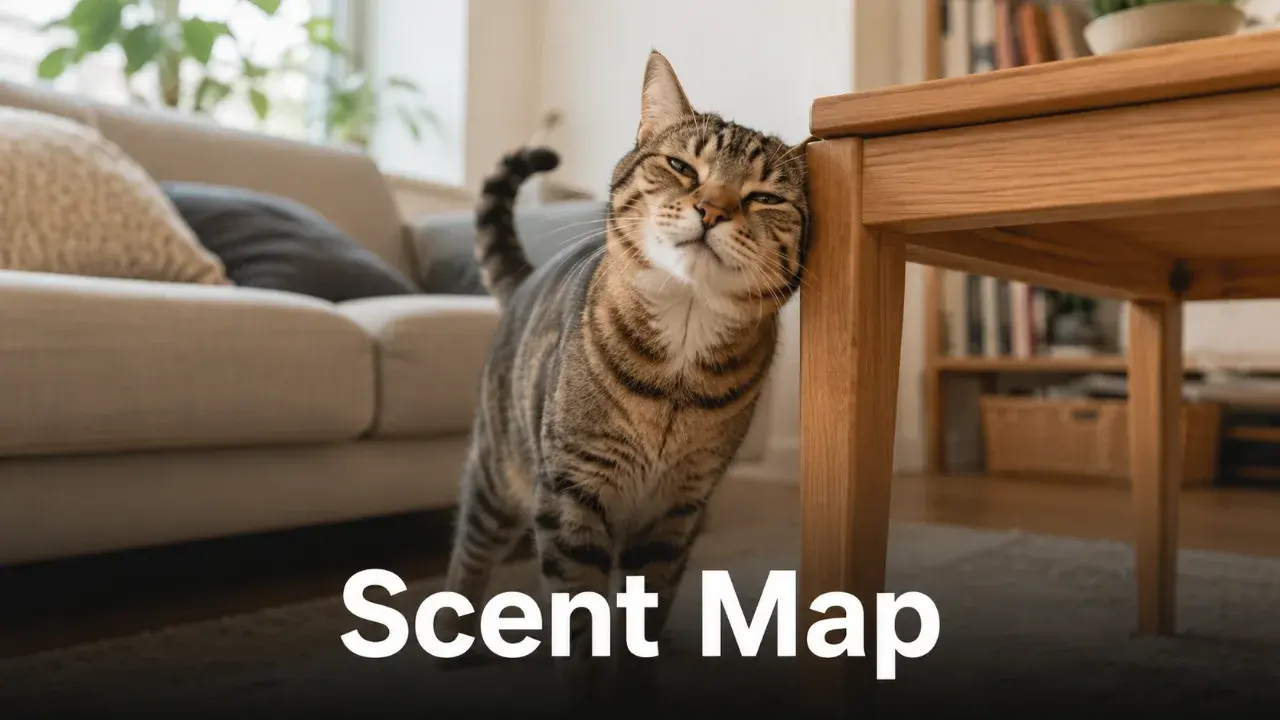
That quick cheek swipe is usually not random. For cats, rubbing furniture is a quiet way to leave scent, feel secure, and turn a home into familiar territory.
Your cat rubbing its face on the sofa is not just a cute little habit. It is one of the ways cats make sense of a home.
A doorway, couch corner, table leg, or bed frame may look ordinary to you. To a cat, those spots can work like scent markers on a private map. Each rub leaves behind information that helps the cat feel grounded in its space.
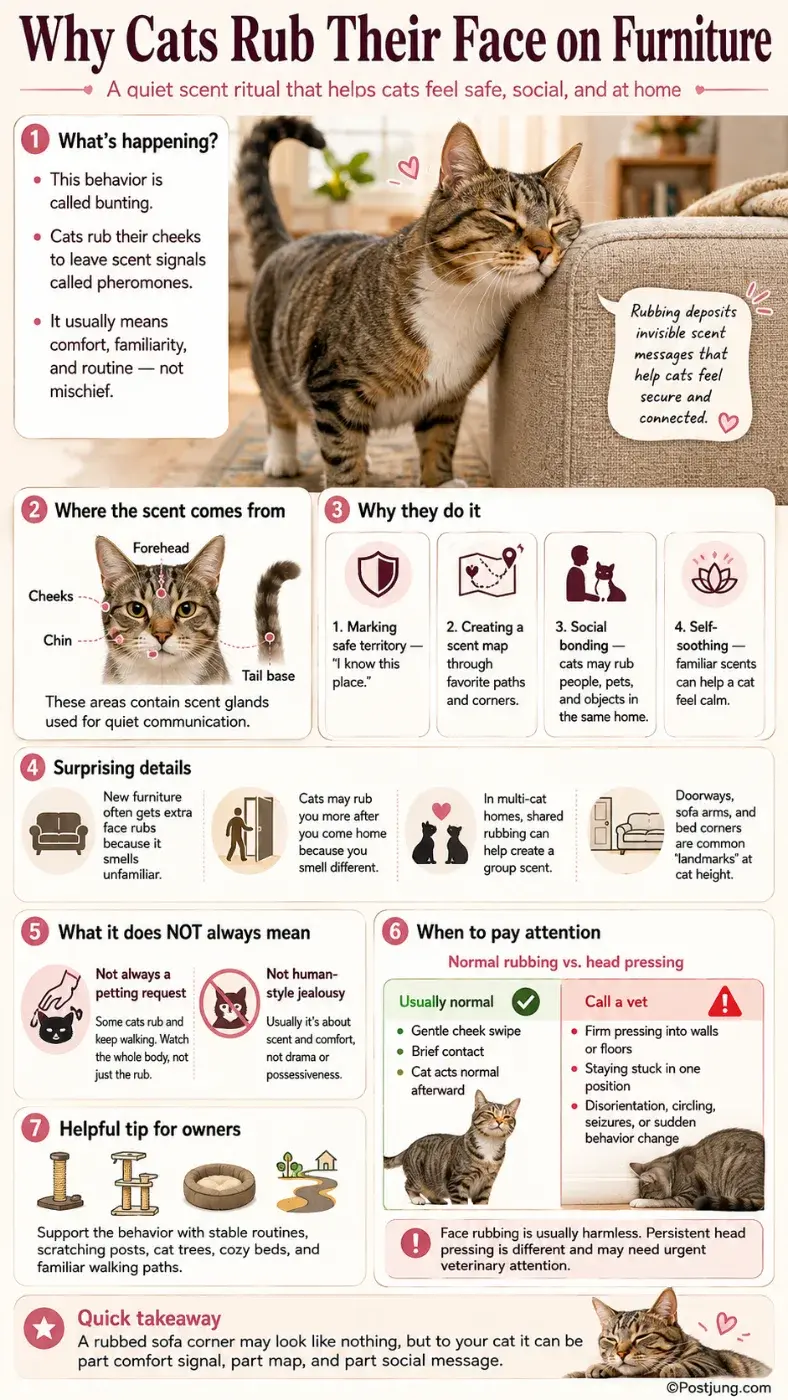
Most face rubbing is normal feline behavior. VCA Animal Hospitals explains that cats have scent glands on the face, including around the cheeks, mouth, chin, and ears, and rubbing can release pheromones used for scent communication and marking. Cornell Feline Health Center also notes that cats deposit scent from glands in their cheeks and paws when they rub or scratch.
For humans, scent may be invisible background noise. For cats, it is part of the room.
Your furniture may be part of your cat’s scent map
Cats rely heavily on smell to understand their environment. A living room that seems unchanged to you may smell different to your cat after visitors come over, laundry is moved, a new rug arrives, or another pet passes through.
That is one reason cats often return to the same rubbing spots. Couch arms, doorway edges, chair legs, and bed corners sit along routes cats use every day. They are stable, easy to reach, and often placed exactly where a cat walks.
When your cat rubs one of those spots, it may be refreshing a familiar scent marker. The message is not written for you. It is part of the cat’s own system of comfort and orientation.
In a sense, your cat is making the room smell familiar again.
That does not mean the cat is being “jealous” of the furniture or claiming ownership in the dramatic way humans might imagine. It is usually calmer than that. Face rubbing can be a way of saying, through scent, “I know this place.”
It is affection, but not only affection
Many owners read face rubbing as love. Sometimes that is exactly how it feels.
A relaxed cat rubbing its cheek against your hand, leg, or face may be showing trust, comfort, and social connection. VCA describes bunting against people and other cats as part of scent sharing, including in multi-cat households where cats may create a shared group scent.
But when the same cat rubs a bookshelf or sofa corner, it is not in love with the bookshelf. It is using the same scent-based behavior on an object that matters in its daily environment.
That is the useful nuance: face rubbing can be social, territorial, comforting, or all three at once.
This is also why some cats rub more when you come home. Your clothes may carry outdoor smells, food smells, another animal’s scent, public transportation, office air, or a friend’s house. Your cat may sniff, rub, and gently fold you back into the home’s familiar scent world.
To a cat, that may be less about drama and more about updating the household record.
Why cats choose sofas, beds, and door frames
Cats tend to rub places that are easy to reach and meaningful in their routine.
A sofa arm sits at cheek height. A bed corner smells like the people the cat sleeps near. A doorway marks the boundary between rooms. A table leg may stand near the feeding area or a favorite walking route.
New furniture can attract more rubbing because it smells unfamiliar. Deep cleaning, moving house, rearranging rooms, or bringing in a new pet can also make a cat more interested in scent marking.
That does not automatically mean something is wrong. Often, the cat is simply reintroducing its own scent into a space that has changed.
In multi-cat homes, face rubbing may become more noticeable. One cat may rub a corner. Another may pass later and rub the same area. In peaceful homes, this can be part of shared scent life. In tense homes, it may happen alongside other signs of stress, such as hiding, blocking pathways, staring, chasing, spraying, or fighting.
The rubbing alone is usually not the problem. The bigger clue is the whole pattern.
Not every rub is a request for petting
One common mistake is assuming every face rub means “touch me.”
Sometimes it does. A cat may rub a chair near you, look up, chirp, and lean into your hand. That cat may be asking for attention.
Other cats rub furniture and do not want to be touched at all. They may simply be moving through the house, refreshing their scent trail, or calming themselves with a familiar routine.
The best response is to read the cat’s body language. Soft eyes, loose posture, a relaxed tail, and slow movement usually suggest comfort. Flattened ears, a twitchy tail, tense muscles, or quick swatting suggest the cat may want space.
The rub is only one part of the message. The rest comes from timing, posture, and what the cat does next.
The health warning owners should know
Ordinary cheek rubbing is gentle and brief. The cat rubs, moves on, and behaves normally.
Head pressing is different.
PetMD describes head pressing as a compulsive act of pressing the head against a wall or object for no apparent reason, and says it can indicate nervous system damage or another underlying medical issue. It may appear with signs such as pacing, circling, disorientation, incoordination, behavior changes, or seizures.
This distinction matters because normal face rubbing is usually harmless, while persistent head pressing can be urgent.
If a cat seems confused, presses its head firmly into surfaces, circles repeatedly, has seizures, suddenly walks strangely, stops eating, or acts very unlike itself, owners should contact a veterinarian promptly.
In simple terms: gentle cheek rubbing is normal; persistent head pressing is not.
How to respond when your cat does it
Most cats do not need to be stopped from rubbing their face on furniture. It is usually a normal part of feeling at home.
You can support that comfort by keeping familiar resting places available, giving cats stable walking routes, and offering scratching posts, cat trees, window perches, or cozy beds. These objects give cats acceptable places to leave scent and settle into their environment.
Avoid suddenly removing every familiar scent at once if your cat is already stressed. Heavy cleaning may be necessary sometimes, but cats can react strongly when their familiar smell landscape disappears overnight.
If your cat rubs near you, offer a relaxed hand and let the cat decide whether to lean in. Cats often appreciate control over contact. A cat that wants petting usually makes that clear.
For global readers used to thinking about pets mainly through training, this behavior is a reminder that cats communicate in quieter ways. They are not simply being mysterious. They are using scent, routine, and body language to organize the world around them.
A rubbed sofa corner may look like nothing. To your cat, it may be one of the small signals that makes a house feel like home.
KEY TAKEAWAYS:
- Cats often rub their face on furniture to leave familiar scent markers.
- The behavior is usually normal and can signal comfort, routine, and security.
- Face rubbing can be affectionate, but it is not always a request for petting.
- New furniture, cleaning, visitors, or other pets may trigger more rubbing.
- Gentle cheek rubbing is different from persistent head pressing, which may need veterinary attention.
VCA Animal Hospitals, Cornell Feline Health Center, PetMD
References:
https://vcahospitals.com/resources/behavior-cat/why-do-cats-rub-their-faces-on-you-and-objects
https://www.vet.cornell.edu/departments-centers-and-institutes/cornell-feline-health-center/health-information/feline-health-topics/feline-behavior-problems-house-soiling
https://www.petmd.com/cat/symptoms/head-pressing-cats

เขียนโดย Postjung Insights
 รู้หรือไม่? เปิดรายได้พนักงานส่งพัสดุของแต่ละแอป วันหนึ่งได้เท่าไร
 ดูหนัง–ซีรีส์ฟรีอาจไม่ฟรีอย่างที่คิด! เปิดโทษละเมิดลิขสิทธิ์ เตือนคนปล่อยคอนเทนต์เถื่อน เสี่ยงทั้งคุกทั้งปรับ
 โรงเรียนที่มีนักเรียนมากที่สุดในไทย
 ตาราง “เด่นเหนือเด่นใต้” งวด 1 ต.ค. 69 เปิดข้อมูลตามโพย เลขไหนอยู่ตรงไหน
 อำเภอที่มีชื่ออำเภอสั้นที่สุด 3 อำเภอเท่านั้นในประเทศไทย
 แมคาเดเมีย (Macadamia): ราชินีแห่งถั่ว กับขุมทรัพย์โภชนาการจากออสเตรเลีย
 งูมัลกา (Mulga Snake): นักล่าแห่งผืนดินแห้งแล้ง ของทวีปออสเตรเลีย กับฉายา King Brown กัดคนได้ถึงตาย
 รมว.วัฒนธรรมเอาจริง! จ่อส่งหนังสือทักท้วง Miss Universe Cambodia ปมใช้ภาพหญิงกำแพงเพชร หากไม่แก้ เตรียมใช้กฎหมาย
 5 คณะที่เรียนจบมาแล้ว มีอาชีพรองรับมากกว่าที่คิด
 แมงป่อง: แมลงนักล่าสายพันธุ์โบราณของโลก ที่ยังคงอยู่มาจนถึงปัจจุบัน
 MRT เตาปูนกลับมาเปิดปกติแล้ว รมช.คมนาคมเผยปมไฟไหม้ พบประกายไฟจากชุดสายไฟ 750 โวลต์
 มัดรวมจับเลขชน สัตว์นำโชค 1 ตุลาคม 2569
 English Edition