Why Thai Night Markets Feel Different From Almost Anywhere Else
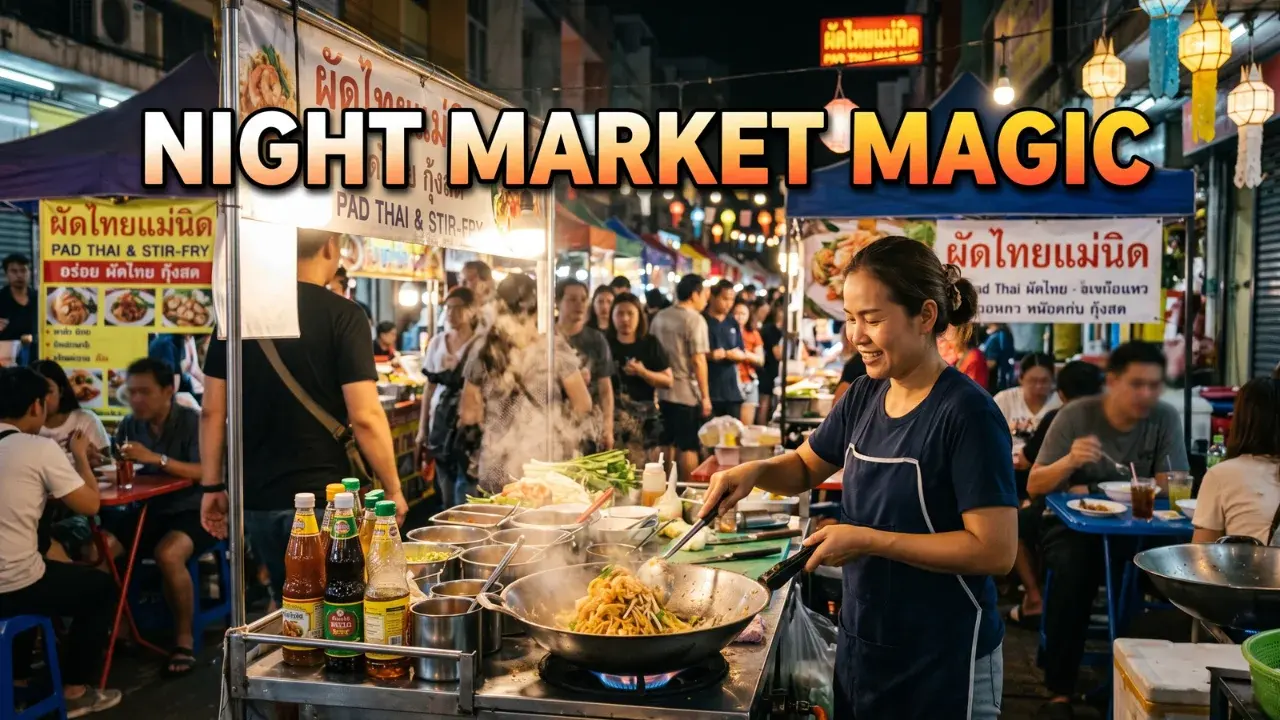
Thailand’s night markets are often described through food, lights, and crowds. But their real pull is deeper: they turn an ordinary evening into an easy, social, low-pressure way to experience everyday Thai life.
ARTICLE:
A Thai night market can feel exciting before a visitor buys a single thing.
There is food, of course. Grilled pork smoke. Woks hissing. Fruit shakes glowing under bright stall lights. Ice clattering into plastic cups. A vendor calling out an order over the sound of people moving past.
But for many first-time visitors, the magic is not only what they eat. It is how easy the whole scene feels.
You do not need a reservation. You do not need to understand every dish. You do not need to dress up, choose one restaurant, or commit to one plan for the evening. You can simply walk in, look around, point at something that smells good, sit for a while, and keep moving.
That openness is a big part of why Thai night markets stay in travelers’ memories.
They make dinner feel like discovery.
The appeal starts with freedom
In many cities, going out at night means choosing a single place: one restaurant, one menu, one table, one bill.
A Thai night market works differently. It lets the night stay flexible.
One person can start with grilled chicken and sticky rice. Another might go for noodles, fried squid, coconut ice cream, mango sticky rice, or iced Thai tea. Someone else may skip the first round of food entirely and wander through phone cases, vintage shirts, handmade jewelry, souvenirs, or small household goods.
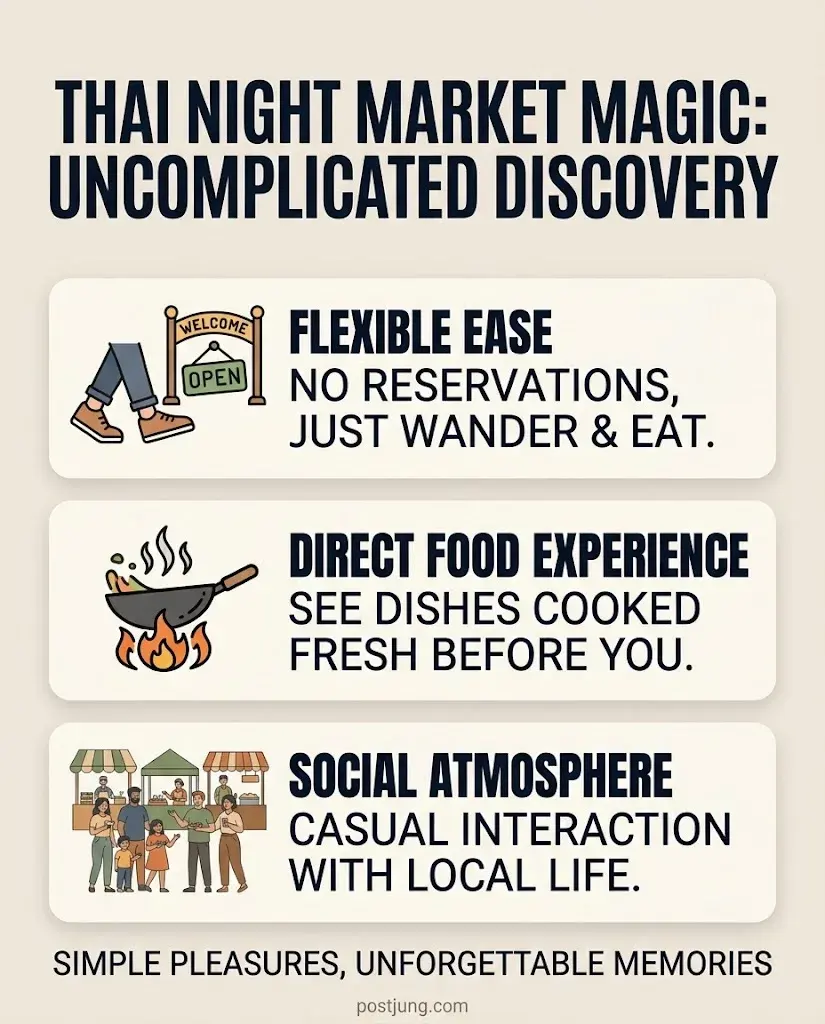
The experience is built around browsing.
That matters for first-time visitors because it removes pressure. Nobody has to make the perfect choice. You can eat a little, keep walking, change your mind, and come back later if a stall still looks tempting.
The pleasure is not only in buying something. It is in being surrounded by possibilities.
Food feels close to the person making it
Thai night markets also make food feel direct.
At many stalls, the cooking happens in front of you. Visitors can watch noodles tossed in a wok, papaya salad pounded fresh in a mortar, bananas pressed onto a hot griddle, seafood brushed with sauce, or meat turned over a charcoal grill.
That visibility creates curiosity. It can also create trust.
A traveler may not know the Thai name of a dish, but they can see what is going into it. They can watch how it is cooked. They can smell it before ordering. In a place where language may be unfamiliar, the food often explains itself visually.
This is one reason street food and market eating remain so closely tied to Thailand’s travel image. The Tourism Authority of Thailand’s official travel site lists night markets across the country, including markets known for food, drinks, desserts, souvenirs, and local shopping.
Social, but not formal
Another reason night markets work so well is that they are social without being demanding.
Families sit near office workers. Tourists stand beside students. Couples share snacks. Vendors chat with regulars. Friends split food casually and move from stall to stall.
There is no single script for the evening.
You can sit quietly with a bowl of noodles. You can browse shirts without buying anything. You can follow the smell of grilled seafood. You can stand in line for the dessert someone else is holding.
For visitors, that easy atmosphere can feel more revealing than a planned attraction. A temple may be beautiful. A mall may be comfortable. A rooftop bar may be impressive. But a night market gives people a glimpse of how food, small business, public space, and evening life come together.
At its best, it feels less like a show and more like ordinary life made visible.
Thailand’s climate helps shape the rhythm
The setting matters, too.
In Thailand, the heat of the afternoon can be intense, especially for visitors who are not used to the climate. After sunset, the air can feel more forgiving. Lights come on. Vendors get busier. People reappear after work, school, errands, or a long day of sightseeing.
For travelers who spent the afternoon in traffic, humidity, or temple-hopping fatigue, a night market can feel like the city opening up again.
This is part of the reason Bangkok, Chiang Mai, Phuket, Hua Hin, Chumphon, Surat Thani, and other destinations can offer different versions of the same basic pleasure. Some markets are food-heavy. Some are more focused on clothes, souvenirs, music, bars, or vintage goods. Some are popular with tourists. Others still mostly serve local residents.
There is no single “Thai night market.” There are many versions.
The tourist version is only part of the story
One common misunderstanding is that night markets are only tourist attractions.
Some are clearly designed with visitors in mind. They may have photo-friendly signs, English menus, international snacks, and prices shaped by their location.
But many night markets also serve local customers who are buying dinner, meeting friends, shopping after work, or taking snacks home. That local function is important. It is what keeps the experience from feeling like a staged performance.
Thailand’s night markets also continue to draw global travel attention. In 2026, TAT Newsroom reported that a Travelbag study spotlighted Thai night markets, including Bangkok’s Chatuchak Weekend Market and Jodd Fairs, among notable after-dark culinary and cultural destinations. The same report highlighted practical visitor tips such as carrying Thai baht, watching personal belongings, and planning routes at larger markets.
Those details are useful because night markets are charming, but they are still real public spaces.
Crowds can be tight. Cash is still helpful in many places. Not every stall will have English signage. Food hygiene can vary, as it can at open-air markets anywhere. Visitors should use common sense: choose busy stalls, watch how food is handled, keep valuables secure, and avoid blocking walkways while taking photos.
That does not take away from the charm. It makes the experience more honest.
Why American visitors often remember them
For many American travelers, Thai night markets feel memorable because they combine things that are often separated back home.
In the United States, food trucks may be in one place, flea markets in another, live music somewhere else, and casual public gathering spaces somewhere else again.
In Thailand, a night market can bring those pieces together in one walkable space.
A visitor can eat dinner, try dessert, buy a shirt, hear music, compare souvenirs, and people-watch within the same hour. The evening does not have to be expensive to feel full.
That mix gives first-time visitors a quick emotional introduction to Thailand: practical, food-loving, social, informal, creative, and full of small pleasures.
The real magic is how little effort it takes
Thai night markets are not perfect, and they are not frozen in time.
Some change locations. Some become more commercial. Some lose local character when they are designed too heavily around tourists. Others remain beloved because they still serve nearby communities.
But the best ones offer something many travelers crave: a sense of discovery that does not feel difficult.
You can arrive with no plan and still have a good night.
You can spend little and experience a lot.
You can misunderstand half the menu and still find something delicious.
That is the quiet power of a Thai night market. It turns dinner into exploration, shopping into people-watching, and an ordinary evening into a memory that feels warmer than expected.
For a first-time visitor, the magic is not one single thing. It is the glow, the food, the movement, the friendliness, the small surprises, and the feeling that the night is still open.
KEY TAKEAWAYS:
- Thai night markets appeal to visitors because they feel open, flexible, and easy to enter.
- Food is central, but the wider experience includes shopping, people-watching, social life, and local rhythm.
- Not all night markets are the same; some are tourist-friendly, while others mainly serve local communities.
- Visitors should carry some cash, watch belongings, choose busy food stalls, and avoid blocking walkways for photos.
- The lasting appeal comes from turning a simple evening into low-pressure discovery.
Tourism Authority of Thailand, TAT Newsroom
References:
https://www.tatnews.org/2026/02/thailand-night-markets-spotlighted-in-travelbag-global-study/
https://www.tourismthailand.org/Attraction/the-chumphon-night-market
https://www.tourismthailand.org/Shop/hua-hin-night-market

เขียนโดย Postjung Insights
 โรงเรียนที่มีนักเรียนมากที่สุดในไทย
 อำเภอที่มีชื่ออำเภอสั้นที่สุด 3 อำเภอเท่านั้นในประเทศไทย
 เลขเด็ดปฏิทิน "หลวงปู่โต๊ะ" งวดวันที่ 1 ตุลาคม 69..ส่องเลย เลขไหนให้โชค!
 รู้หรือไม่? เปิดรายได้พนักงานส่งพัสดุของแต่ละแอป วันหนึ่งได้เท่าไร
 5 คณะที่เรียนจบมาแล้ว มีอาชีพรองรับมากกว่าที่คิด
 เปิดรายชื่อโรงเรียนในไทยที่ “ว่ายน้ำ” อยู่ในหลักสูตร เรียนจริงตั้งแต่อนุบาลถึงมัธยม
 Google ยอมรับแล้ว! Gemini AI เข้าถึงระบบบริษัทจริง 3 แห่ง ระหว่างการทดสอบความปลอดภัย
 เปิด 5 โรงเรียนหญิงล้วนเก่าแก่ของไทย ที่มีประวัติยาวนานกว่าศตวรรษ
 อุทยานเขาใหญ่เรียกตัว “ตีนผี” หลังขับจี้ช้างป่าพ่อลูก ลั่นระยะ 50 เมตรต้องจำให้ขึ้นใจ
 สถิติย้อนหลัง 10 ปี ออกเลขไหนบ้างมาดูกัน
 ส่องเลข 3 สำนักพิมพ์ งวด 1 ต.ค. 69 ตัวไหนมีข้อมูลตรงกัน
 ตาราง “เด่นเหนือเด่นใต้” งวด 1 ต.ค. 69 เปิดข้อมูลตามโพย เลขไหนอยู่ตรงไหน5 คณะที่เรียนจบมาแล้ว มีอาชีพรองรับมากกว่าที่คิดเปิดรายชื่อโรงเรียนในไทยที่ “ว่ายน้ำ” อยู่ในหลักสูตร เรียนจริงตั้งแต่อนุบาลถึงมัธยมGoogle ยอมรับแล้ว! Gemini AI เข้าถึงระบบบริษัทจริง 3 แห่ง ระหว่างการทดสอบความปลอดภัยเลขเด็ดปฏิทิน "หลวงปู่โต๊ะ" งวดวันที่ 1 ตุลาคม 69..ส่องเลย เลขไหนให้โชค!
 ทำไมของพลาสติกเก่าบางชิ้นถึง “เหนียว” ขึ้นมาเอง ทั้งที่ไม่ได้เปื้อนอะไร?อุทยานเขาใหญ่เรียกตัว “ตีนผี” หลังขับจี้ช้างป่าพ่อลูก ลั่นระยะ 50 เมตรต้องจำให้ขึ้นใจ
 English Edition