Why Thai People Take Off Their Shoes Before Going Inside
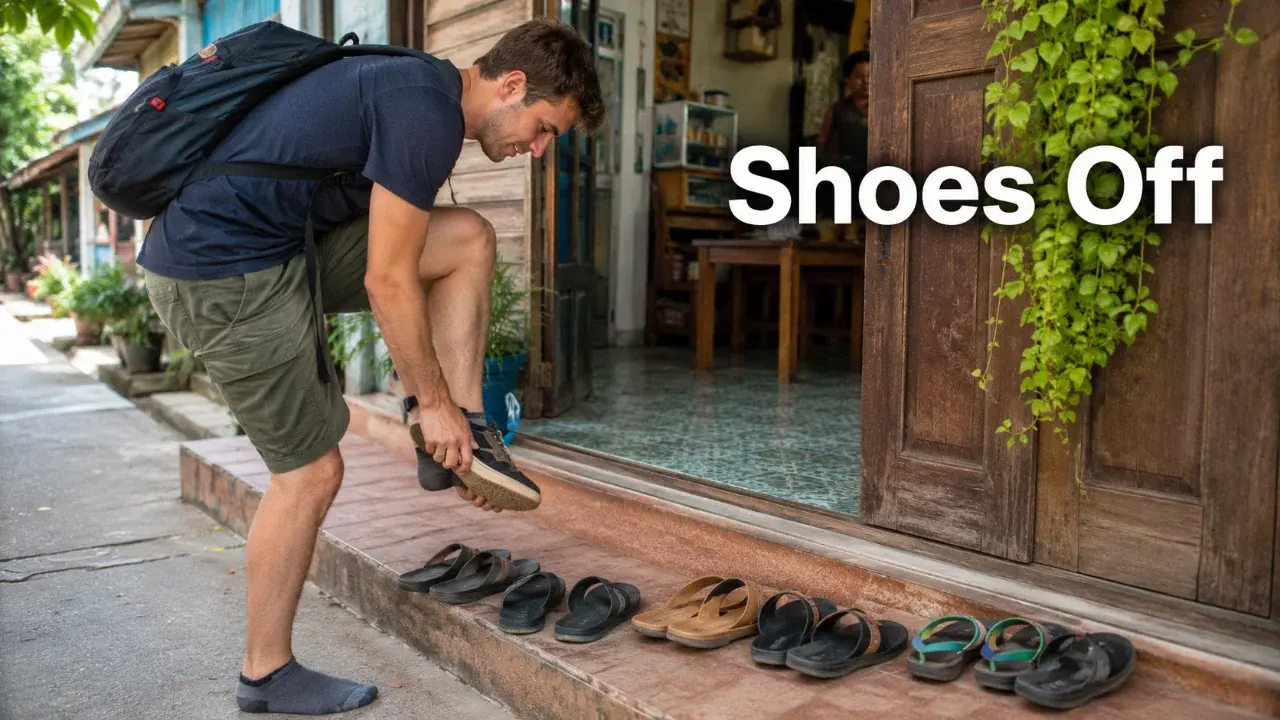
In Thailand, taking off shoes is more than a cleanliness habit. It is a quiet sign of respect for homes, temples, and indoor spaces where the outside world is meant to stay at the door.
A row of shoes outside a doorway in Thailand is usually not decoration. It is a message.
For many visitors, that message is simple: take your shoes off before stepping inside.
The custom is common in Thai homes, temple buildings, massage shops, small clinics, beauty salons, and some cafés or family-run businesses. It may look like a small household rule, but in Thailand it carries a bigger meaning. Removing shoes marks the line between the public outside world and a cleaner, more respected indoor space.
The original article provided for this rewrite frames the habit as a mix of cleanliness, comfort, respect, and cultural awareness, especially for international readers who may not know when shoes are expected to come off.
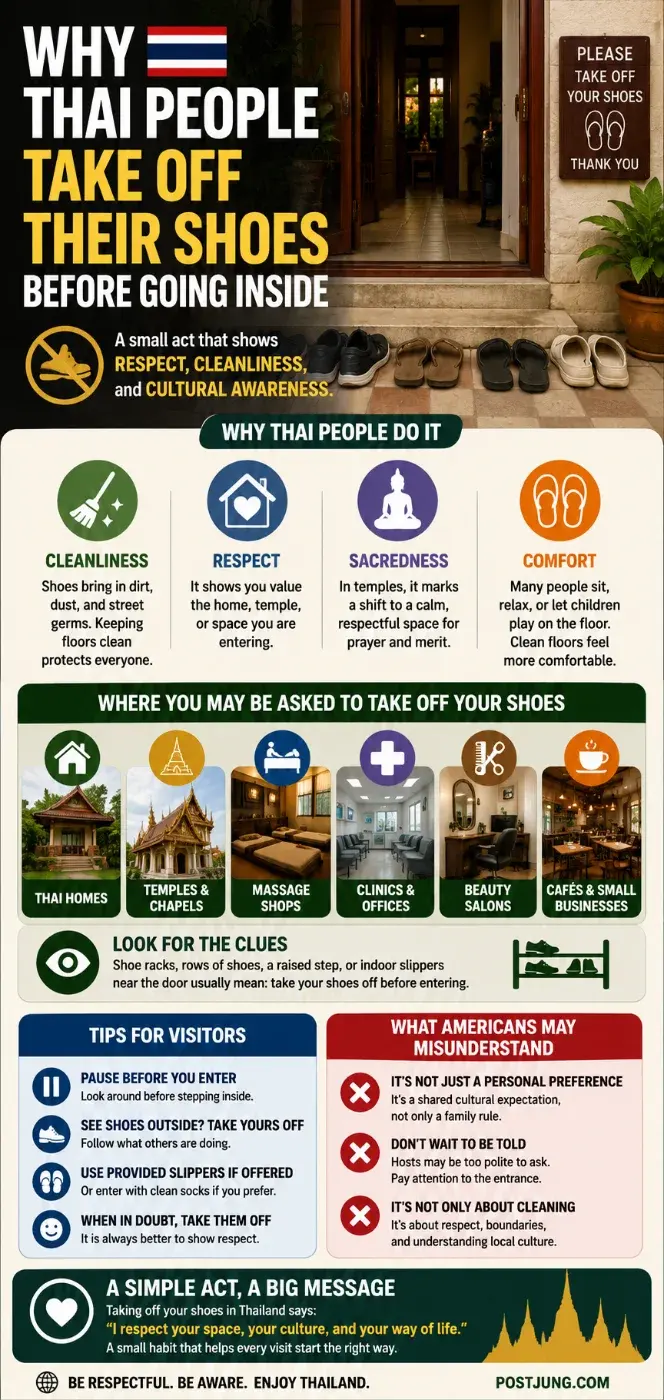
The doorway is the cultural clue
Thailand’s weather and street life make the practical reason easy to understand. The country is often hot, humid, rainy, and dusty. Shoes can quickly pick up dirt from sidewalks, markets, parking lots, and wet streets.
Inside many Thai homes, the floor is not treated as a simple walking surface. People may sit close to it, children may play on it, and families may relax in ways that make the floor part of daily living. Even in modern homes with sofas, beds, and dining tables, the indoor floor is usually expected to stay clean.
That is why outdoor shoes can feel out of place indoors. They bring the street into an area that is supposed to feel protected.
For travelers, the most useful habit is to pause before entering. If there is a shoe rack, a row of sandals, a raised step, or indoor slippers near the door, the custom is already being explained without words.
It is not only about clean floors
Cleanliness is part of the story, but not the whole story.
Taking off shoes also signals respect. When a guest removes shoes before entering a Thai home, it shows that they recognize the space as private and cared for. The act is small, but the message is clear: I am entering your place on your terms.
This matters because Thai politeness is often communicated through quiet actions rather than direct instructions. A host may not want to correct a guest openly. A shop worker may not want to embarrass a customer. A family member may smile and say it is fine, even when the household norm is to keep shoes outside.
For that reason, visitors should pay attention to the entrance rather than waiting for someone to tell them what to do.
Temples make the custom more visible
At Thai Buddhist temples, removing shoes is especially important before entering certain buildings. Official Thai government guidance for temple visits says visitors should take off their shoes before entering the chapel or other buildings and place them on a shoe rack near the doorway.
That does not mean shoes must come off everywhere on temple grounds. Outdoor courtyards, walkways, and open areas are different from prayer halls or buildings with Buddha images. The clearest signs are usually visible: racks, steps, posted instructions, or many pairs of shoes left outside.
In these spaces, removing shoes is not simply practical. It helps mark a shift in behavior. Visitors are entering a place where people may be praying, meditating, making merit, or sitting quietly. The shoe rule supports a broader expectation: be calm, respectful, and aware of the people around you.
Thailand.go.th also lists removing shoes when entering houses or places of worship among common do’s and don’ts for visitors.
Why some shops and clinics ask for it too
The part that can surprise travelers is that the custom does not always stop at homes and temples.
Some small businesses in Thailand also ask customers to remove shoes. That can include massage shops, local clinics, beauty salons, guesthouses, small offices, and cafés that feel partly domestic or have clean interior flooring.
A massage shop may use mats, treatment beds, or slippers. A family-run shop may connect directly to the owner’s living area. A clinic may want to keep the floor especially clean. In these places, shoes at the door are usually a practical and cultural cue.
The Thai Embassy’s etiquette guidance also notes that removing shoes is customary when entering temples, homes, and some businesses, and that rows of shoes outside an entrance are a cue to follow.
For visitors, the rule is not complicated: look down before walking in.
What American visitors may misunderstand
In the United States, shoes indoors are often a household preference. One family may have a strict no-shoes rule, while another may not care. Guests may wait to be told.
In Thailand, the expectation is broader and more automatic. It is less about one family’s personal preference and more about a shared understanding of what indoor spaces represent.
That difference can create awkward moments. A visitor may think, “No one told me to take off my shoes, so it must be fine.” A Thai host may think, “The shoes outside should make it obvious.”
Neither side is trying to be rude. They are reading the situation through different cultural habits.
A good traveler does not need to memorize every detail. They just need to notice the local cues.
Feet and shoes have cultural meaning
There is another layer behind the custom: feet and shoes carry cultural sensitivity in Thailand.
In Thai etiquette, the feet are generally considered the lowest and least polite part of the body, especially when compared with the head. That is why visitors are often advised not to point their feet at people, monks, or Buddha images, and not to step over people or sacred objects. Fan Club Thailand’s temple etiquette advice includes removing shoes and avoiding pointing feet at Buddha images or monks.
This does not mean Thai people think visitors are dirty or shameful. It means that body language, footwear, and spatial respect carry meaning.
Removing shoes is one of the easiest ways to show that you understand the tone of the place.
The easiest rule for travelers
If you are visiting Thailand, wear shoes that are easy to slip on and off, especially on days when you plan to visit temples, homes, massage shops, or local indoor spaces.
At someone’s home, remove your shoes unless the host clearly says otherwise. At temples, remove them before entering chapels or indoor worship areas. At shops or clinics, check for shoes outside, slippers, or a raised entry area.
If you are unsure, ask a simple question: “Shoes off?”
That small pause can prevent an awkward moment and usually comes across as polite.
A small habit that says a lot
Removing shoes in Thailand is a practical habit, but it also reflects a wider idea of respect.
It keeps indoor spaces clean. It protects homes and sacred places from the dirt of the street. It shows care for hosts, shop owners, worshippers, and shared environments.
For travelers, the custom is easy to follow once the meaning is clear. The shoes at the door are not just shoes. They are a quiet reminder that you are crossing into a space someone values.
KEY TAKEAWAYS:
- In Thailand, shoes are commonly removed before entering homes, temple buildings, and some small businesses.
- The custom is about cleanliness, respect, and the boundary between outside and inside space.
- At temples, shoes usually come off before entering chapels or buildings with Buddha images.
- Travelers should look for shoe racks, rows of sandals, raised entryways, or indoor slippers.
- When unsure, asking “Shoes off?” is simple and polite.
Thailand.go.th, Thai Embassy, Fan Club Thailand, Original provided source
References:
https://www.thailand.go.th/issue-focus-detail/009_138
https://www.thailand.go.th/issue-focus-detail/009_151
https://www.thaiembassy.com/thailand/thailand-customs

เขียนโดย Postjung Insights
 รู้หรือไม่? เปิดรายได้พนักงานส่งพัสดุของแต่ละแอป วันหนึ่งได้เท่าไร
 คุณนุชออกโรงชี้แจง ปมมีภาพถ่ายร่วมสัมภาษณ์ “หนุ่ม กรรชัย” ยอมรับผิด พร้อมขอโทษทุกฝ่าย
 โรงเรียนที่มีนักเรียนมากที่สุดในไทย
 อำเภอที่มีชื่ออำเภอสั้นที่สุด 3 อำเภอเท่านั้นในประเทศไทย
 แทสเมเนีย: ถอดรหัสเกาะปริศนาที่แผนที่โลกมักลืมเขียน
 Phnom Penh Post ยกประวัติศาสตร์ขอมตอบโต้ข่าวภาพหญิง ร.5 แต่ปมสำคัญยังอยู่ที่หลักฐานของภาพ
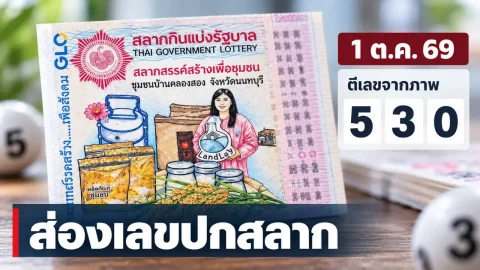 แปลปกสลาก งวด 1 ต.ค. 69 ส่องตัวเลขจากภาพปกสลากกินแบ่งรัฐบาล
 5 คณะที่เรียนจบมาแล้ว มีอาชีพรองรับมากกว่าที่คิด
 เลขขายดีงวดนี้ 1 ตุลาคม 2569 สำรวจกระแสเลขเด่นก่อนหวยออก พร้อมวิธีอ่านข้อมูลอย่างมีสติ
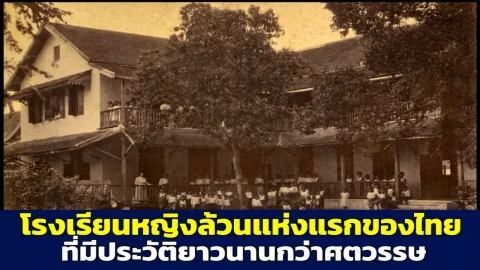 เปิด 5 โรงเรียนหญิงล้วนเก่าแก่ของไทย ที่มีประวัติยาวนานกว่าศตวรรษ
 AI กำลังเปลี่ยนตลาดงาน เปิด 5 สาขามหาวิทยาลัยที่ไทยต้องการบุคลากรในอีก 5 ปี
 โรงเรียนเพียงแห่งเดียวของประเทศไทย ที่อยู่มาตั้งแต่ยุครัชกาลที่ 4AI กำลังเปลี่ยนตลาดงาน เปิด 5 สาขามหาวิทยาลัยที่ไทยต้องการบุคลากรในอีก 5 ปีPhnom Penh Post ยกประวัติศาสตร์ขอมตอบโต้ข่าวภาพหญิง ร.5 แต่ปมสำคัญยังอยู่ที่หลักฐานของภาพแทสเมเนีย: ถอดรหัสเกาะปริศนาที่แผนที่โลกมักลืมเขียนเลขขายดีงวดนี้ 1 ตุลาคม 2569 สำรวจกระแสเลขเด่นก่อนหวยออก พร้อมวิธีอ่านข้อมูลอย่างมีสติ
 ทำไมคนไทยยังแห่ซื้อ"iPhone 18" ทั้งที่ราคาสูง แต่ค่าครองชีพสวนทางกับรายได้?
 จากยาพิษโบราณสู่อาณาจักรหมื่นล้าน: มหากาพย์ “อัลมอนด์” พืชเศรษฐกิจที่สร้างแคลิฟอร์เนีย
 English Edition