Why Bangkok Feels Chaotic at First, Then Starts to Make Sense
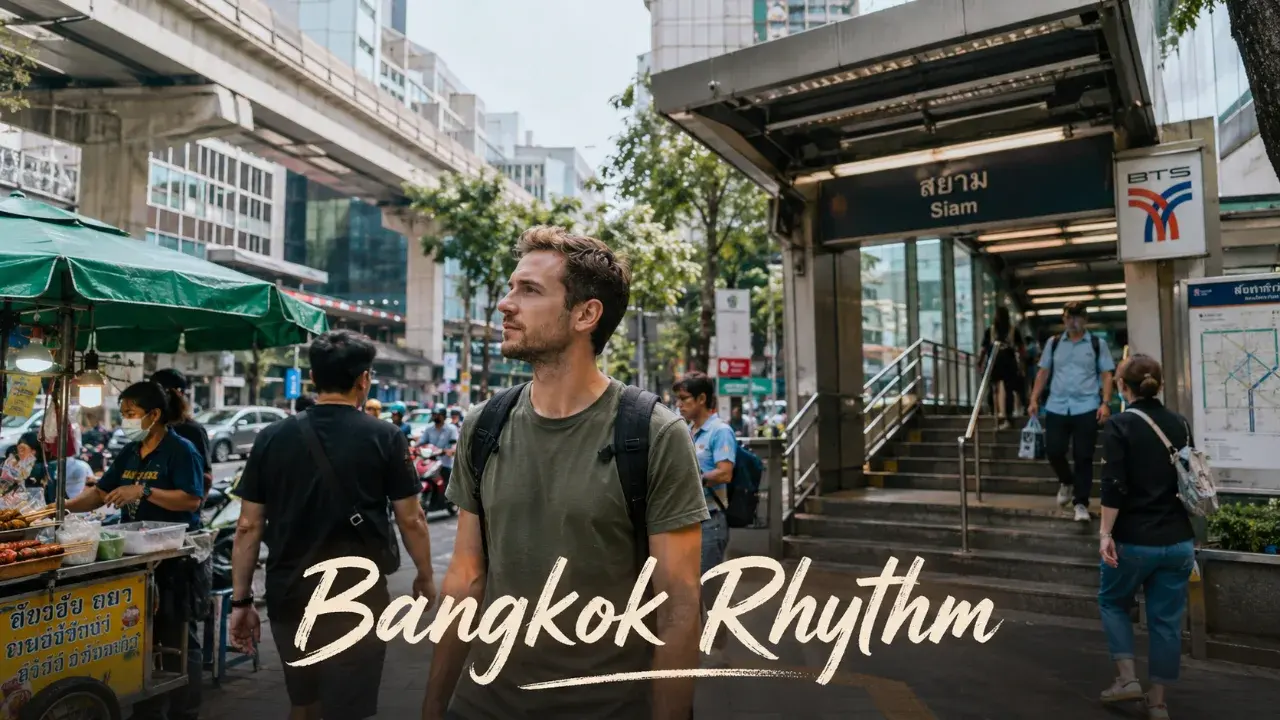
Bangkok can feel loud, crowded, and hard to read on a first visit. But the city has its own rhythm — one that becomes clearer once you stop expecting it to work like somewhere else.
Bangkok can overwhelm you before you have even left the airport.
The heat hits first. Then the traffic. Then the motorbikes, food carts, train announcements, mall escalators, temple bells, phone notifications, and the smell of grilled pork drifting across a road that looks impossible to cross.
For many first-time visitors, Bangkok does not feel like one city. It feels like several cities running at the same time.
That first impression is not wrong. Bangkok is layered, fast, crowded, practical, spiritual, commercial, and deeply local all at once. But after a few days, something changes. The city does not become quieter. You simply begin to notice its pattern.
Bangkok starts to make sense when you stop looking for perfect order and begin reading its rhythm.
A city built in layers, not straight lines
Many American cities are easier to understand from above. There is often a downtown, a grid, a freeway system, and suburbs spreading outward.
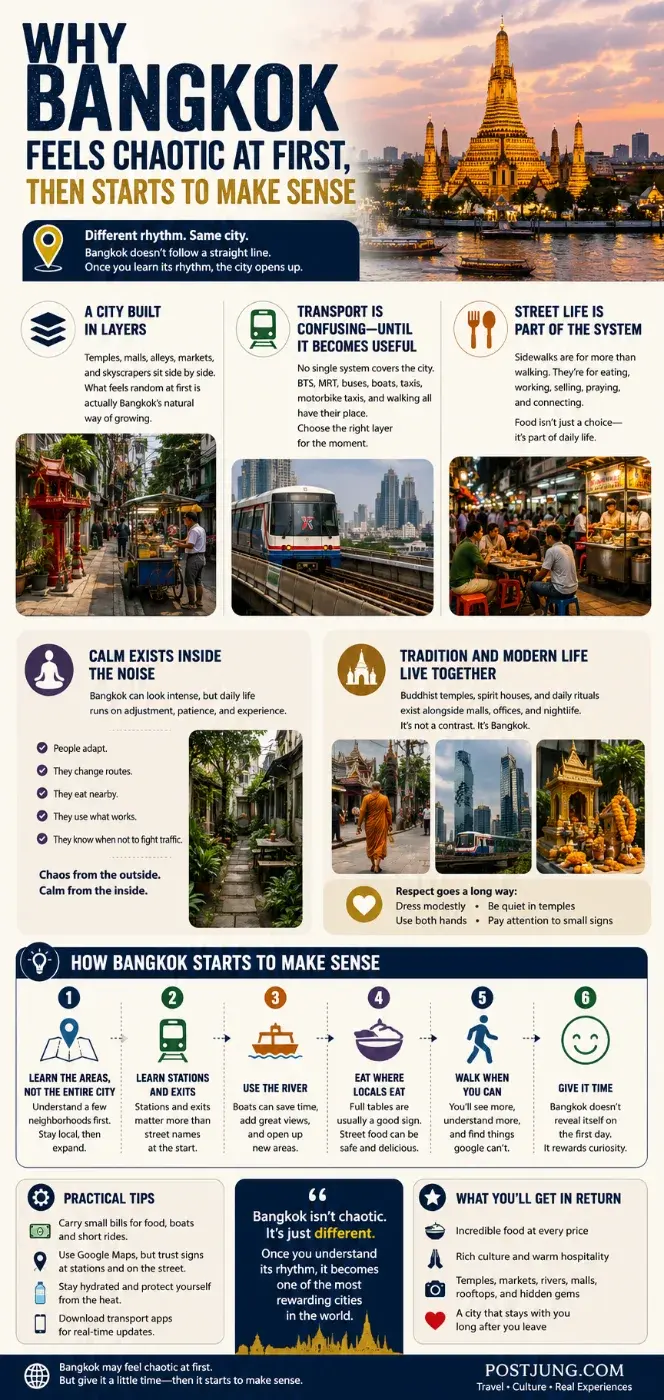
Bangkok works differently.
The city grew through canals, royal roads, markets, temples, riverside communities, expressways, shopping districts, office zones, and train lines added across different eras. That is why one street may contain a luxury mall, a spirit house, a motorcycle taxi stand, a noodle cart, a bank tower, and a narrow alley leading into a quiet neighborhood.
To a newcomer, that can feel random. To Bangkok residents, it is ordinary city life.
The Bangkok Metropolitan Administration’s Traffic and Transportation Department describes its work as including road design, traffic congestion solutions, and future mass transportation development, which gives a useful clue: movement in Bangkok is not just a tourist inconvenience. It is one of the city’s biggest daily challenges.
The transport system is confusing until it becomes useful
One reason Bangkok feels hard to read is that no single transport system explains the whole city.
The BTS Skytrain is useful for many shopping, business, and residential areas. The MRT connects other important parts of the capital. Taxis, buses, motorcycle taxis, river boats, canal boats, and walking all still matter depending on where you are going.
The official BTS website provides route and fare planning information, which matters because visitors often learn to navigate Bangkok by station, exit, and neighborhood rather than by street address alone.
That is when the city begins to click.
A short trip may be easiest by Skytrain. A riverside temple may make more sense by boat. A small lane near your hotel may be best reached by motorcycle taxi. A late-night food run may be faster on foot than by car.
Bangkok is not a city you master all at once. It is a city where you choose the right layer for the moment.
Street life is part of the system
In some cities, sidewalks are mainly for moving from one place to another. In Bangkok, they can also be places to eat, wait, work, repair, sell, talk, pray, and pause.
That makes the city feel crowded. It also makes it feel alive.
Food is a big part of that daily rhythm. The Tourism Authority of Thailand describes local food culture through everyday meals such as curries, stir-fries, soups, spicy salads, noodles, chicken rice, stewed pork leg with rice, and other quick dishes often served by small restaurants or food stalls.
For visitors, street food can be one of the first ways Bangkok becomes understandable. A cart outside an office building may serve breakfast to workers. A fruit seller near a train station may be part of someone’s commute. A plastic stool beside a busy road may look uncomfortable to a newcomer but feel completely normal to regular customers who know the food is fast, familiar, and good.
In Bangkok, the street is not just background scenery. It is part of the city’s dining room, shortcut system, workplace, and social network.
Calm exists inside the noise
One of the biggest misunderstandings about Bangkok is that chaos means panic.
The city can look intense from the outside. Motorbikes weave between cars. Rain can turn a commute into a negotiation with puddles, umbrellas, and traffic apps. Markets crowd the sidewalk. Train stations fill quickly at rush hour.
People adapt. They wait. They change routes. They eat nearby instead of crossing town. They use motorcycle taxis for the final stretch. They carry small bills. They remember which station exit saves time. They know when not to fight traffic.
That does not mean Bangkok is easy. It means the city has a culture of adjustment.
For American readers used to clearer divisions between roads, sidewalks, restaurants, transit, and private space, this can be the biggest shift. Bangkok asks you to read context. A crowded sidewalk may still have a path. A busy food stall may still move quickly. A street that looks impossible may have a pedestrian bridge nearby.
Bangkok becomes clearer when you stop expecting it to behave like somewhere else.
The old and new city are not separate
Bangkok is often described through contrasts: temples and skyscrapers, street food and luxury malls, old canals and modern trains.
That framing is easy, but it misses something important. In Bangkok, these worlds often overlap.
A shrine may stand beside a shopping complex. Office workers may eat lunch at a street stall before returning to a glass tower. A family may visit a temple in the morning and a mega-mall in the afternoon. A traveler may ride an elevated train, then step down into a market that feels completely different from the platform above.
This overlap can be disorienting. The city does not always separate tradition, commerce, religion, transport, and daily routine into neat boxes.
For locals, that overlap is normal. For visitors, it can feel like too much information at once.
The key is to see Bangkok as a city of layers rather than contradictions.
Why the first few days feel different
The first day in Bangkok is often sensory. You notice the heat, the traffic, the uneven sidewalks, the convenience stores, the temple roofs, the malls, the food smoke, and the constant movement.
By the third or fourth day, many visitors start noticing systems.
Morning food stalls appear at certain times. Motorcycle taxi drivers gather at familiar corners. Train stations become anchors. Malls become cooling stations, meeting points, and shortcuts. River piers make parts of the old city easier to understand. Certain streets are better at night than in the afternoon.
This is when Bangkok changes from overwhelming to fascinating.
Not because the city becomes less busy, but because you become better at reading it.
What outsiders often miss
Bangkok is not chaotic because people do not know what they are doing.
Much of what looks confusing is informal coordination. Drivers negotiate space. Vendors know their regulars. Commuters know which exit saves ten minutes. Office workers know which lunch stall moves fastest. Locals know when to take the train, when to avoid a road, and when to simply wait out the rain.
That kind of knowledge is hard to see from a hotel window or a taxi seat. It appears slowly, through repetition.
Bangkok teaches you by making you pay attention.
The city may never feel simple. That is not really its charm. Its appeal is that it becomes readable without becoming predictable.
After a while, what first looked random begins to feel connected. A mall becomes a shortcut. A train station becomes a landmark. A food cart becomes a daily institution. A crowded street reveals its own quiet rules.
Bangkok starts to make sense when you stop looking for one master plan and start noticing the rhythm.
KEY TAKEAWAYS:
- Bangkok can feel overwhelming at first because many parts of daily life overlap in the same spaces.
- The city is easier to understand when visitors think in layers: trains, boats, taxis, walking, malls, markets, and neighborhoods.
- Street food, motorcycle taxis, station exits, and malls are not just conveniences — they are part of Bangkok’s everyday logic.
- What looks chaotic to outsiders often reflects local routines, informal coordination, and constant adjustment.
- Bangkok becomes more readable after a few days, once visitors stop expecting it to work like a grid-based Western city.
Bangkok Metropolitan Administration Traffic and Transportation Department, BTS Skytrain, Tourism Authority of Thailand, Provided source material
References:
https://traffic.bangkok.go.th/main-eng.htm
https://www.bts.co.th/eng/routemap.html
https://www.tourismthailand.org/Experiences/Details/local-food/31

เขียนโดย Postjung Insights
 Google ยอมรับแล้ว! Gemini AI เข้าถึงระบบบริษัทจริง 3 แห่ง ระหว่างการทดสอบความปลอดภัย
 รู้หรือไม่? เปิดรายได้พนักงานส่งพัสดุของแต่ละแอป วันหนึ่งได้เท่าไร
 5 คณะที่เรียนจบมาแล้ว มีอาชีพรองรับมากกว่าที่คิด
 อำเภอที่มีชื่ออำเภอสั้นที่สุด 3 อำเภอเท่านั้นในประเทศไทย
 เปิด 5 โรงเรียนหญิงล้วนเก่าแก่ของไทย ที่มีประวัติยาวนานกว่าศตวรรษ
 จุฬาฯ มหาวิทยาลัยแห่งแรกของไทย มีจุดเริ่มต้นในสมัยรัชกาลที่ 5
 แปลปกสลาก งวด 1 ต.ค. 69 ส่องตัวเลขจากภาพปกสลากกินแบ่งรัฐบาล
 โรงเรียนที่มีนักเรียนมากที่สุดในไทย
 เปิดรายชื่อโรงเรียนในไทยที่ “ว่ายน้ำ” อยู่ในหลักสูตร เรียนจริงตั้งแต่อนุบาลถึงมัธยม
 ทำไมของพลาสติกเก่าบางชิ้นถึง “เหนียว” ขึ้นมาเอง ทั้งที่ไม่ได้เปื้อนอะไร?
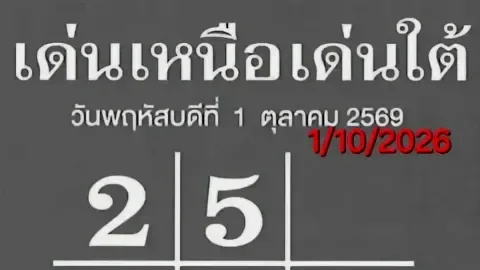 ตาราง “เด่นเหนือเด่นใต้” งวด 1 ต.ค. 69 เปิดข้อมูลตามโพย เลขไหนอยู่ตรงไหน
 เลขเด็ดปฏิทิน "หลวงปู่โต๊ะ" งวดวันที่ 1 ตุลาคม 69..ส่องเลย เลขไหนให้โชค!5 คณะที่เรียนจบมาแล้ว มีอาชีพรองรับมากกว่าที่คิดเปิดรายชื่อโรงเรียนในไทยที่ “ว่ายน้ำ” อยู่ในหลักสูตร เรียนจริงตั้งแต่อนุบาลถึงมัธยมGoogle ยอมรับแล้ว! Gemini AI เข้าถึงระบบบริษัทจริง 3 แห่ง ระหว่างการทดสอบความปลอดภัยเลขเด็ดปฏิทิน "หลวงปู่โต๊ะ" งวดวันที่ 1 ตุลาคม 69..ส่องเลย เลขไหนให้โชค!ทำไมของพลาสติกเก่าบางชิ้นถึง “เหนียว” ขึ้นมาเอง ทั้งที่ไม่ได้เปื้อนอะไร?
 อุทยานเขาใหญ่เรียกตัว “ตีนผี” หลังขับจี้ช้างป่าพ่อลูก ลั่นระยะ 50 เมตรต้องจำให้ขึ้นใจ
 English Edition