Thailand’s Green Season May Be the Smarter Time to Visit
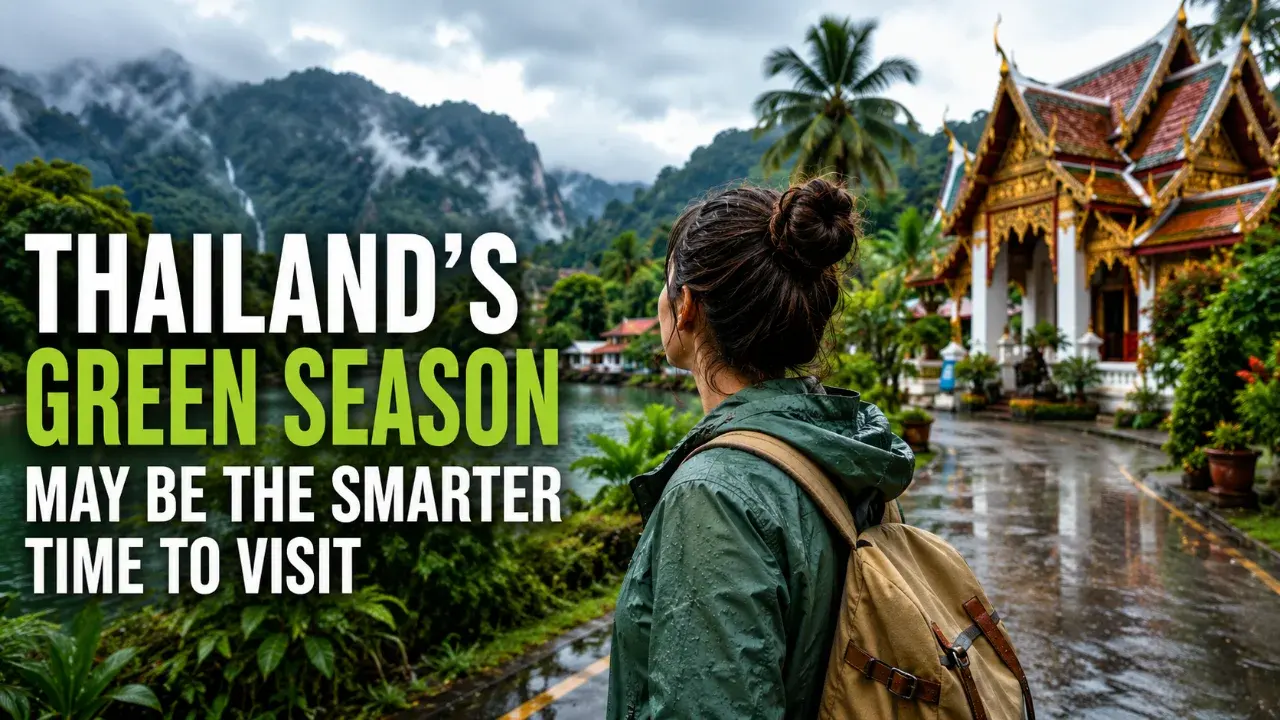
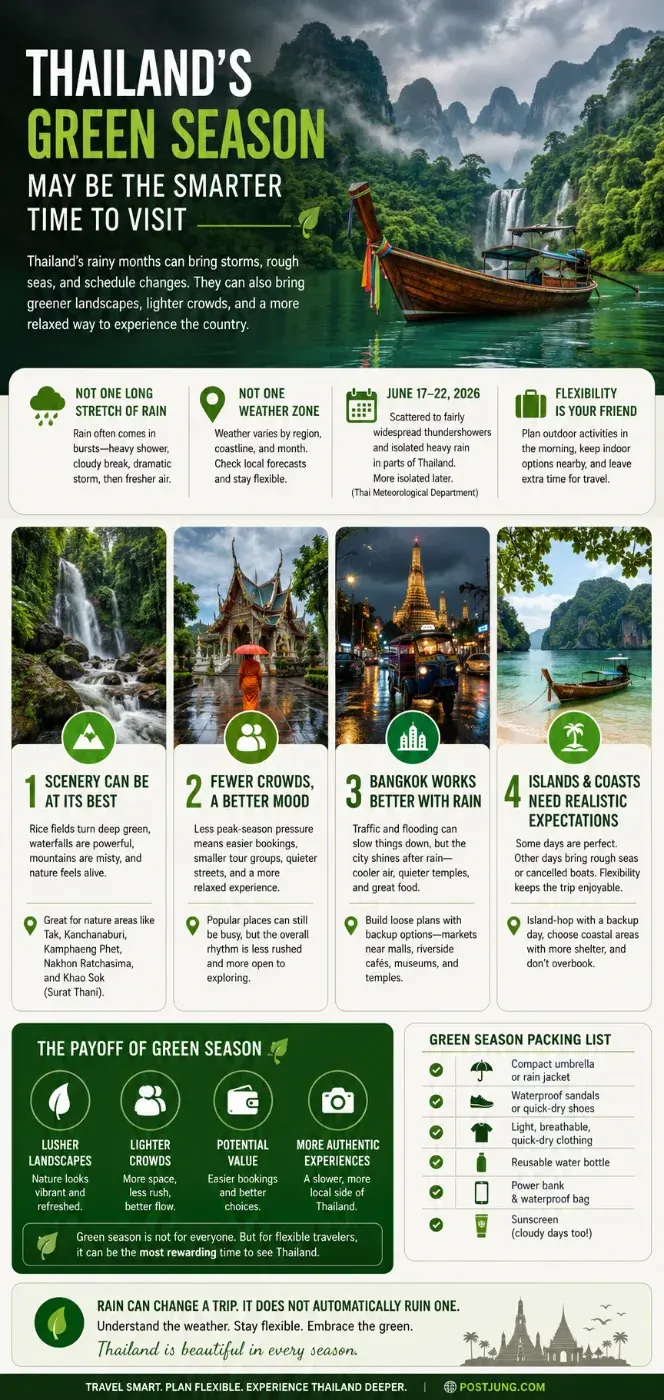
Thailand’s rainy months can bring storms, rough seas, and schedule changes. They can also bring greener landscapes, lighter crowds, and a more relaxed way to experience the country.
Rain can change a trip to Thailand. It does not automatically ruin one.
For many travelers, especially those flying in from the United States or Europe, the phrase “rainy season” sounds like a reason to delay. But Thailand’s wetter months are also known as green season, and that name tells a more complete story: the country becomes lusher, quieter, and often easier to experience without peak-season pressure.
Thailand’s official tourism information describes the country as having three broad seasons: a wet season, a cooler dry season, and a hot season. The wet season is shaped by monsoon weather, which can bring more frequent rainfall across much of the country.
That sounds inconvenient, and sometimes it is. A sudden storm can slow Bangkok traffic, cancel a boat trip, or turn a market walk into a wait under an awning. But green season is not one long stretch of nonstop rain. In many places, the weather comes in bursts: a heavy afternoon shower, a cloudy break, a dramatic evening storm, then fresher air afterward.
The key is understanding that Thailand is not one weather zone.
Green season rewards flexible travelers
The biggest mistake visitors make is treating Thailand’s rainy season as a single national condition. Weather can vary sharply by region, coastline, and month.
The Thai Meteorological Department’s seven-day forecast for June 17–22, 2026, included scattered to fairly widespread thundershowers and isolated heavy rain in parts of Thailand, followed by more isolated to scattered thundershowers later in the period. That kind of forecast is exactly why green-season travel works best with flexible plans rather than rigid daily schedules.
For a traveler, that may mean planning outdoor activities in the morning, keeping a café or museum nearby for the afternoon, or leaving an extra day before a ferry or domestic flight. It may also mean choosing destinations based on local conditions instead of assuming every beach or mountain area will feel the same.
The payoff is real. When the rain clears, Thailand often looks brighter and more alive than it does in the driest months.
The scenery can be at its best
Green season is when rice fields sharpen into deep green, mountain roads feel softer, and waterfalls become more powerful. The Tourism Authority of Thailand has promoted rainy-season travel around waterfalls, mountain scenery, and nature areas, including places such as Tak, Kanchanaburi, Kamphaeng Phet, Nakhon Ratchasima, and Khao Sok in Surat Thani.
That matters because many first-time visitors imagine Thailand as a combination of beaches, temples, and street food. Those are all part of the appeal, but the wetter months show another side of the country: reservoirs full of water, mist over hills, roadside vegetation, and rural landscapes that feel less dry and more vivid.
For travelers who want postcard-blue skies every day, green season may disappoint. For travelers who want atmosphere, texture, and a slower rhythm, the rain can become part of the experience.
Fewer crowds can change the mood of a trip
Thailand’s dry season is popular for good reasons. Weather is generally easier to plan around, beach days are more predictable, and many travelers prefer cooler conditions.
The trade-off is that popular destinations can feel crowded and more expensive. Bangkok attractions, Chiang Mai cafés, island tours, famous temples, and beach areas may all feel busier during high-demand months.
Green season can soften that. Hotels may be easier to book. Restaurants may feel less rushed. Tours may have smaller groups. Streets and viewpoints can feel more local, less staged, and less shaped around visitors moving through the same checklist.
For American travelers, this can be especially useful. U.S. summer vacation time overlaps with part of Thailand’s wetter period, which means some travelers may have time to go when Thailand is not in its classic winter peak.
That does not make green season a bargain guarantee. Prices vary, and popular places can still be busy. But the overall rhythm can feel different: less compressed, less competitive, and more open to wandering.
Bangkok works better when you leave room for rain
Bangkok during green season can be messy in the most literal sense. Sidewalks may flood. Traffic can slow. A short trip can take longer than expected. Outdoor markets may pause during heavy showers.
Still, the city can be surprisingly rewarding after rain. The heat eases. The pavement shines. Food stalls reopen. Temple courtyards feel quieter. The air can feel less punishing than it does during the hottest months.
A good Bangkok rainy-season plan is not a minute-by-minute itinerary. It is a loose route with backup options: a market near a mall, a riverside walk near a café, a temple visit with indoor time afterward, a dinner reservation that does not depend on crossing the city at rush hour.
In Bangkok, flexibility is not a compromise. It is often the smartest way to enjoy the city.
Beaches need the most careful planning
Green season becomes more complicated when beaches and boat trips are the main reason for visiting.
The Andaman side of Thailand, including Phuket, Krabi, Phang-nga, and nearby island routes, can see rougher sea conditions during the southwest monsoon. The Thai Meteorological Department’s marine forecast has warned of higher waves during thundershowers, with conditions varying between the Andaman Sea and the Gulf of Thailand.
That does not mean travelers should avoid the Andaman coast entirely. Phuket and Krabi still receive visitors during the wetter months. But island-hopping, diving, snorkeling, and ferry plans need more caution. Boat schedules can change. Sea conditions can become unsafe. Local warnings should be taken seriously.
The Gulf side, including destinations such as Koh Samui, Koh Phangan, and Koh Tao, can follow different weather patterns. This is why travelers should look at specific destinations rather than asking whether “Thailand” is rainy.
For beach-first trips, regional timing matters more than the season name.
What to pack for Thailand’s green season
Green-season packing is less about heavy gear and more about small practical choices.
A light umbrella, quick-dry clothes, waterproof sandals, a dry bag, and a phone pouch can make daily travel much easier. Travelers should protect passports, chargers, medication, and travel documents from sudden rain.
It also helps to book with flexibility when possible. Outdoor tours, ferries, hikes, rafting, and waterfall visits should be checked close to the travel date. Travel insurance may be useful for people with prepaid tours, domestic flights, or island plans, especially when weather could affect transportation.
The goal is not to fear the season. It is to respect it.
The quieter version of Thailand may be the point
The best part of green season may be the way it changes the pace of travel.
Rain asks visitors to slow down. People linger over coffee. Street vendors cover their carts and restart when the storm passes. Travelers wait beside locals under shopfronts. A city or beach town becomes less about checking off attractions and more about noticing ordinary life.
That is not the glossy version of Thailand often sold in travel ads. It may be more memorable.
Green season is not the best choice for travelers who need guaranteed sunshine, daily boat trips, or a tightly controlled beach vacation. But for people who can accept some rain in exchange for greener landscapes, fewer crowds, and a more grounded feel, it may be one of the most rewarding times to visit.
Thailand does not stop being beautiful when it rains. Sometimes, that is when it feels most alive.
KEY TAKEAWAYS:
- Thailand’s green season usually overlaps with the wetter monsoon period, but it does not mean nonstop rain everywhere.
- The season can bring greener landscapes, stronger waterfalls, fewer crowds, and a slower travel rhythm.
- Beach and boat plans need extra flexibility, especially on routes affected by rougher sea conditions.
- Bangkok can still work well during rainy months if travelers leave room for delays and indoor alternatives.
- Green season is best for flexible travelers, not those who need guaranteed blue skies every day.
Tourism Authority of Thailand, Thai Meteorological Department, Thailand.go.th
References:
https://www.tourismthailand.org/Plan-Your-Trip/Weather?province=219
https://www.tmd.go.th/en/forecast/sevenday
https://www.tourismthailand.org/Articles/rainy-season-5-place-en

เขียนโดย Postjung Insights
 ดูหนัง–ซีรีส์ฟรีอาจไม่ฟรีอย่างที่คิด! เปิดโทษละเมิดลิขสิทธิ์ เตือนคนปล่อยคอนเทนต์เถื่อน เสี่ยงทั้งคุกทั้งปรับ
 รมว.วัฒนธรรมเอาจริง! จ่อส่งหนังสือทักท้วง Miss Universe Cambodia ปมใช้ภาพหญิงกำแพงเพชร หากไม่แก้ เตรียมใช้กฎหมาย
 แมคาเดเมีย (Macadamia): ราชินีแห่งถั่ว กับขุมทรัพย์โภชนาการจากออสเตรเลีย
 รู้หรือไม่? เปิดรายได้พนักงานส่งพัสดุของแต่ละแอป วันหนึ่งได้เท่าไร
 MRT เตาปูนกลับมาเปิดปกติแล้ว รมช.คมนาคมเผยปมไฟไหม้ พบประกายไฟจากชุดสายไฟ 750 โวลต์
 แมงป่อง: แมลงนักล่าสายพันธุ์โบราณของโลก ที่ยังคงอยู่มาจนถึงปัจจุบัน
 อำเภอที่มีชื่ออำเภอสั้นที่สุด 3 อำเภอเท่านั้นในประเทศไทย
 โรงเรียนที่มีนักเรียนมากที่สุดในไทย
 5 คณะที่เรียนจบมาแล้ว มีอาชีพรองรับมากกว่าที่คิด
 ตาราง “เด่นเหนือเด่นใต้” งวด 1 ต.ค. 69 เปิดข้อมูลตามโพย เลขไหนอยู่ตรงไหน
 มัดรวมจับเลขชน สัตว์นำโชค 1 ตุลาคม 2569
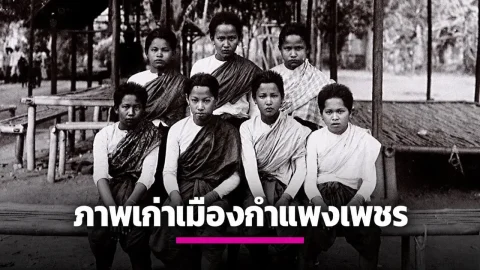 เปิดหลักฐานเก่า 120 ปี ปมภาพหญิงเมืองกำแพงเพชร โผล่เวที Miss Universe Cambodia 2026
 English Edition