Why Cats Prefer Cardboard Boxes Over Expensive Beds
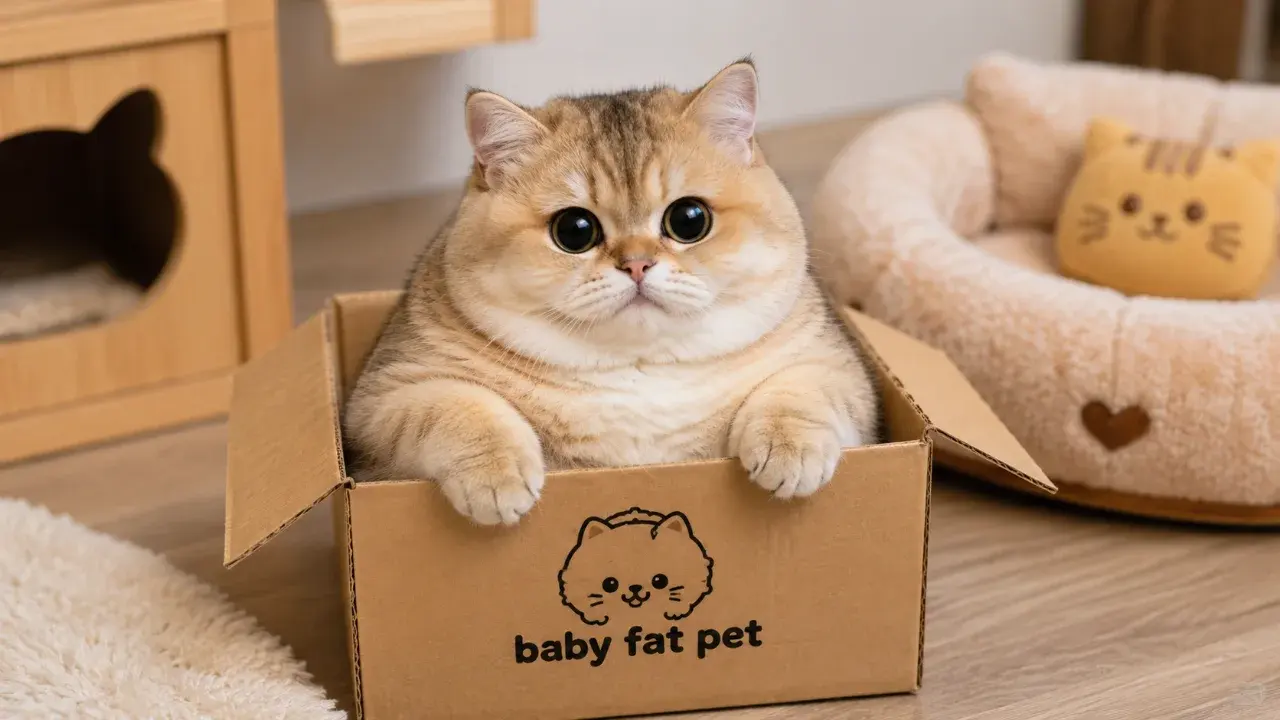
A cardboard box may look like trash to a human, but to a cat it can feel like privacy, warmth, safety, and control in one simple space.
A cat walking past a plush new bed to curl up in the shipping box beside it is one of the most familiar jokes of pet ownership.
It is also a small lesson in how cats see the world.
To people, the expensive bed looks softer, prettier, and more comfortable. To many cats, the plain cardboard box offers something more important: a protected space where they can hide, rest, watch, and feel less exposed.
That difference matters because cats do not choose resting places only by softness. They choose them by safety.
A box feels like a private room
Cats are both hunters and animals that can feel vulnerable in open spaces. Even indoor cats that live safe, comfortable lives still carry instincts shaped by cover, escape routes, scent, and control.
A cardboard box checks many of those boxes at once.
It has walls. It creates a boundary. It lets a cat tuck its body inside while still peeking out at the room. That can make a box feel less like a toy and more like a tiny private room.
Feline welfare guidance has long emphasized the importance of giving cats safe places to retreat. The AAFP and ISFM feline environmental needs guidelines describe a safe place as one of the core parts of a healthy cat environment, connecting environmental comfort with behavior and emotional well-being.
That is why the box often wins.
The bed may be soft, but the box gives control
Humans tend to buy pet beds with human comfort in mind. We look for padding, fabric, design, and how nice it will look in the room.
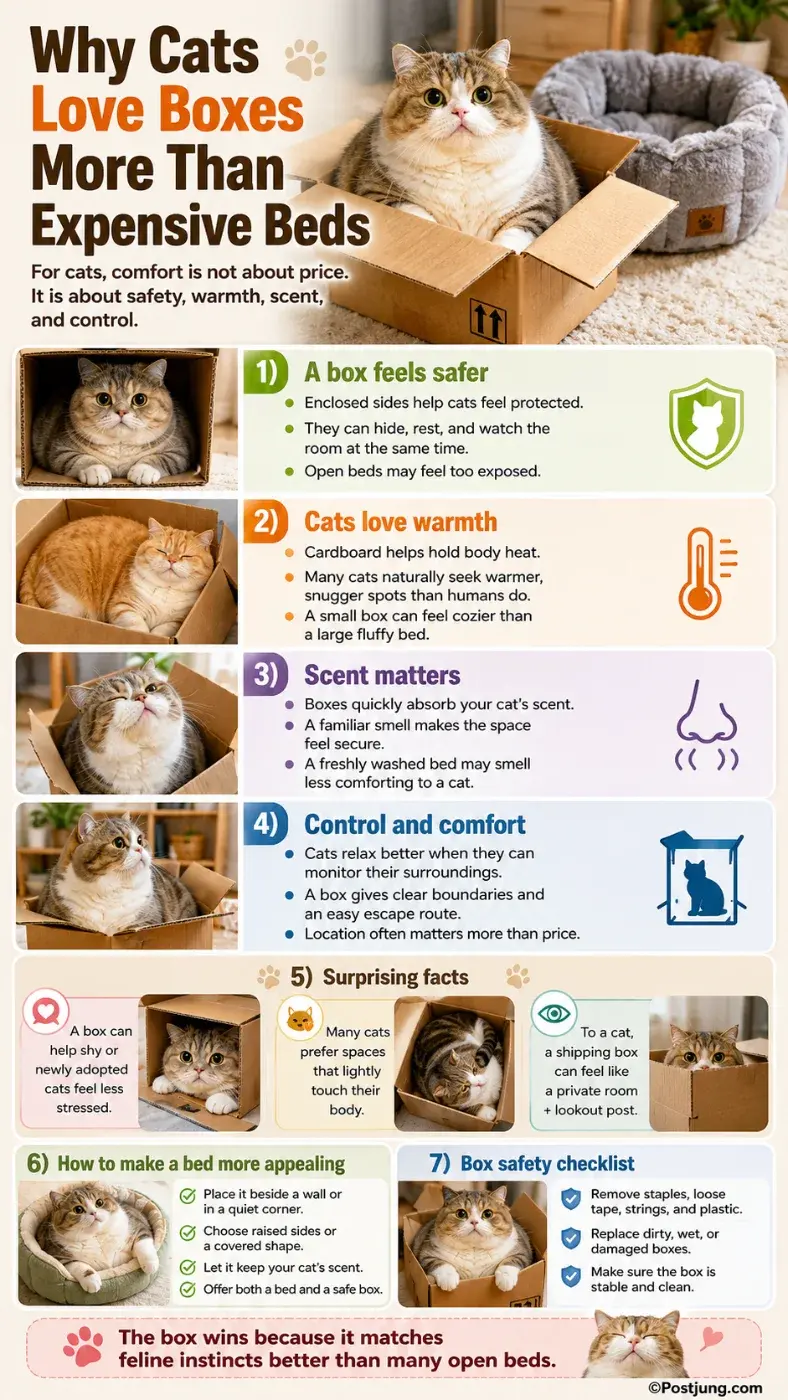
Cats may judge the same object differently.
An open bed in the middle of a busy living room can feel exposed. A cardboard box pushed against a wall may feel safer because the cat does not have to monitor every direction at once.
That sense of control can be especially useful in homes with children, visitors, dogs, loud appliances, or frequent changes in routine. When a cat goes into a box, it is not always being antisocial. It may simply be choosing a place where the room feels easier to manage.
This is one reason hiding spaces can be valuable for newly adopted cats or cats adjusting to a new environment. A study on shelter cats found that cats given hiding boxes recovered faster in a new shelter environment than cats without them, based on behavioral stress scoring.
Cardboard also has cat-friendly texture
A cardboard box is not only enclosed. It also has a texture cats can use.
Cats can scratch it, rub against it, chew the edges, press their paws into it, or curl into its corners. The material can also absorb the cat’s scent, which may make it feel more familiar over time.
For cats, scent is not a minor detail. It is part of how they understand territory.
A freshly washed bed may smell clean to a person, but unfamiliar to a cat. A slightly worn cardboard box that smells like the cat may feel more reassuring.
International Cat Care advises that cat-friendly homes should include places where cats can retreat, rest, climb, hide, and avoid pressure from other animals or people. That makes the humble box a surprisingly useful home feature, not just a funny internet image.
The common mistake owners make
The mistake is assuming that a cat rejects a bed because it is being difficult.
A cat does not know the bed was expensive. It does not care about the brand, the color, or the number of positive reviews. It only knows which space feels safer, warmer, quieter, and easier to claim.
That does not mean cat beds are pointless. Many cats love beds, especially covered beds, cave-style beds, heated beds, or beds with raised sides.
The problem is often placement.
A good bed in the wrong spot may fail. A simple box in the right spot may become the cat’s favorite place in the house.
Where should the bed or box go?
The best resting spot depends on the cat, but the basic idea is simple: give the cat choices.
Some cats like elevated places where they can watch the room. Older cats may prefer lower spaces that are easy to enter. Nervous cats may want something more enclosed. Social cats may want to be near family activity without being directly in the middle of it.
ASPCA Pro notes that hiding places can help cats feel less stressed and may even make shelter cats more willing to come forward rather than stay withdrawn.
At home, that could mean placing a box or bed beside a wall, under a table, near a quiet window, or in a calm corner away from heavy foot traffic.
The goal is not to force the cat to use the bed. The goal is to make the resting option feel safe from the cat’s point of view.
How to use the box safely
If your cat loves cardboard boxes, there is usually no reason to take them away. Just make them safe.
Remove staples, loose tape, plastic packing, strings, and small pieces that could be chewed or swallowed. Keep the box dry and clean. Replace it when it becomes dirty, damaged, or too shredded.
You can also try placing a soft towel inside, but do not be surprised if your cat prefers plain cardboard. Some cats like softness. Others prefer structure.
If you still want your cat to use a bed, choose one with sides or partial cover, place it somewhere quiet, and let it collect familiar scent. Washing it too often may make it less appealing.
A cardboard box may look cheap, but to a cat it can offer shelter, warmth, privacy, scent, texture, and control all at once.
That is why the box wins.
Not because your cat hates the bed. Because the box understands the cat better.
KEY TAKEAWAYS:
- Cats often prefer boxes because they feel enclosed, safe, and easy to control.
- Expensive beds can fail if they are too open or placed in a busy area.
- Cardboard offers texture, scent, warmth, and a sense of territory.
- Covered beds or beds with raised sides may appeal more to box-loving cats.
- Clean, safe boxes can be useful enrichment when tape, staples, and loose materials are removed.
AAFP / ISFM, International Cat Care, Utrecht University Research Portal, ASPCA Pro
References:
https://journals.sagepub.com/doi/pdf/10.1177/1098612x13477537
https://icatcare.org/articles/making-your-home-cat-friendly
https://research-portal.uu.nl/en/publications/will-a-hiding-box-provide-stress-reduction-for-shelter-cats/

เขียนโดย Postjung Insights
 อำเภอที่มีชื่ออำเภอสั้นที่สุด 3 อำเภอเท่านั้นในประเทศไทย
 เลขขายดีงวดนี้ 1 ตุลาคม 2569 สำรวจกระแสเลขเด่นก่อนหวยออก พร้อมวิธีอ่านข้อมูลอย่างมีสติ
 รู้หรือไม่? เปิดรายได้พนักงานส่งพัสดุของแต่ละแอป วันหนึ่งได้เท่าไร
 เปิด 5 โรงเรียนหญิงล้วนเก่าแก่ของไทย ที่มีประวัติยาวนานกว่าศตวรรษ
 5 คณะที่เรียนจบมาแล้ว มีอาชีพรองรับมากกว่าที่คิด
 คุณนุชออกโรงชี้แจง ปมมีภาพถ่ายร่วมสัมภาษณ์ “หนุ่ม กรรชัย” ยอมรับผิด พร้อมขอโทษทุกฝ่าย
 โรงเรียนที่มีนักเรียนมากที่สุดในไทย
 แทสเมเนีย: ถอดรหัสเกาะปริศนาที่แผนที่โลกมักลืมเขียน
 Phnom Penh Post ยกประวัติศาสตร์ขอมตอบโต้ข่าวภาพหญิง ร.5 แต่ปมสำคัญยังอยู่ที่หลักฐานของภาพ
 โรงเรียนเพียงแห่งเดียวของประเทศไทย ที่อยู่มาตั้งแต่ยุครัชกาลที่ 4
 ส่องเลข 3 สำนักพิมพ์ งวด 1 ต.ค. 69 ตัวไหนมีข้อมูลตรงกัน
 จากยาพิษโบราณสู่อาณาจักรหมื่นล้าน: มหากาพย์ “อัลมอนด์” พืชเศรษฐกิจที่สร้างแคลิฟอร์เนีย
 AI กำลังเปลี่ยนตลาดงาน เปิด 5 สาขามหาวิทยาลัยที่ไทยต้องการบุคลากรในอีก 5 ปีPhnom Penh Post ยกประวัติศาสตร์ขอมตอบโต้ข่าวภาพหญิง ร.5 แต่ปมสำคัญยังอยู่ที่หลักฐานของภาพแทสเมเนีย: ถอดรหัสเกาะปริศนาที่แผนที่โลกมักลืมเขียนเลขขายดีงวดนี้ 1 ตุลาคม 2569 สำรวจกระแสเลขเด่นก่อนหวยออก พร้อมวิธีอ่านข้อมูลอย่างมีสติ
 ทำไมคนไทยยังแห่ซื้อ"iPhone 18" ทั้งที่ราคาสูง แต่ค่าครองชีพสวนทางกับรายได้?จากยาพิษโบราณสู่อาณาจักรหมื่นล้าน: มหากาพย์ “อัลมอนด์” พืชเศรษฐกิจที่สร้างแคลิฟอร์เนีย
 English Edition