Why Thai People Take Durian So Seriously
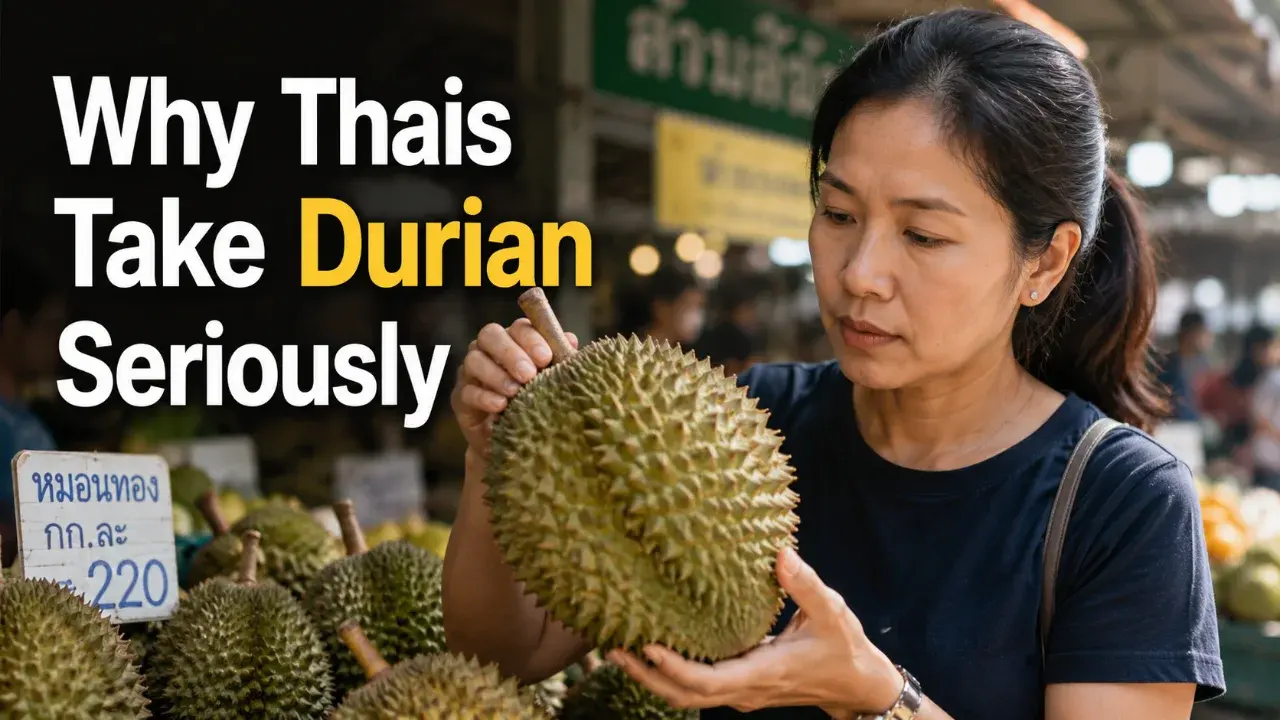
Durian is not just a fruit in Thailand. It is a seasonal obsession, a family argument, a luxury purchase, a street-market ritual, and sometimes a test of how deeply someone understands Thai food culture.
To many Americans, durian is famous for one thing: the smell. It is the spiky fruit people joke about, the one some hotels and public places do not want indoors, the one travel videos treat like a dare.
But in Thailand, that joke barely scratches the surface.
For Thai people, durian is taken seriously because it sits at the intersection of taste, timing, status, agriculture, nostalgia, and national pride. It is not just something you eat. It is something you choose carefully.
The smell is only the beginning
Outsiders often meet durian through its reputation before they ever taste it. The aroma can be strong, sweet, sulfurous, and heavy. That first impression is why durian has become one of Southeast Asia’s most misunderstood foods.
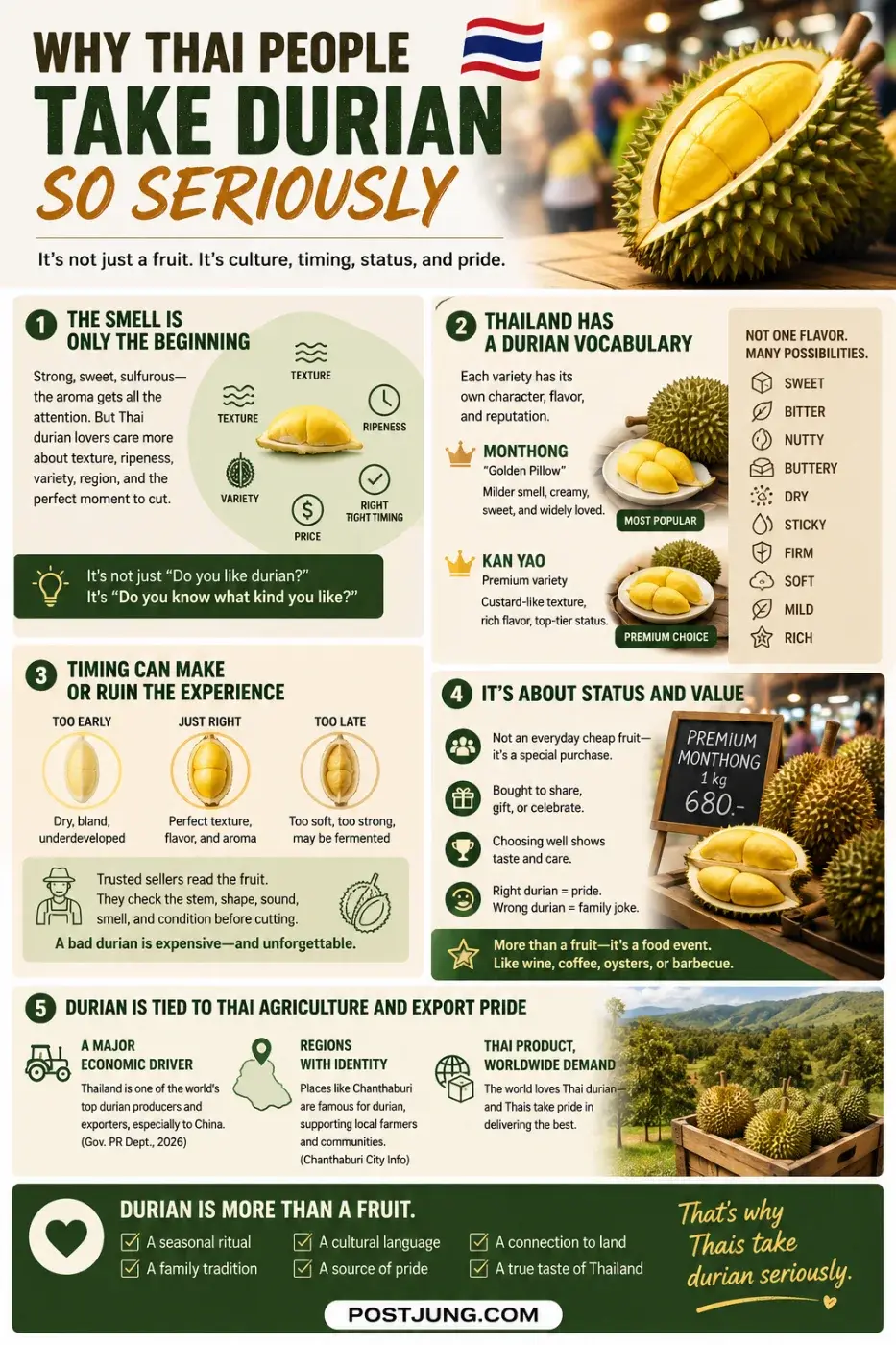
But Thai durian lovers are usually not focused on the smell alone. They talk about texture, ripeness, variety, region, price, and whether the fruit was cut at exactly the right moment.
A good durian is not simply “ripe.” It has a preferred stage. Some people like it firm, pale, and less sweet. Others want it softer, richer, and more custard-like. For serious durian fans, that difference matters.
This is one reason durian culture can feel intense. Thai people are not just asking, “Do you like durian?” They are often asking, “Do you know what kind of durian you like?”
Thailand has a durian vocabulary
In the United States, many fruits are discussed broadly. An apple may be Honeycrisp or Granny Smith, but most casual shoppers are not debating harvest timing at a fruit stall.
Durian is different.
In Thailand, names such as Monthong, Chanee, and Kan Yao carry meaning. Monthong, often translated as “golden pillow,” is widely known for its thick, creamy flesh and relatively approachable taste. Kan Yao is often treated as a premium variety, associated with higher prices and a more refined eating experience. Food & Wine describes Monthong as a popular Thai durian with a milder smell and creamy sweetness, while Kan Yao is noted for its custard-like flesh and strong reputation among enthusiasts.
That variety matters because durian is not one flavor. It can be sweet, bitter, nutty, buttery, dry, sticky, firm, soft, mild, or extremely rich.
To a first-time visitor, this may seem overly complicated. To Thai durian lovers, it is the whole point.
Timing can make or ruin the experience
Durian is one of those foods where timing changes everything.
Cut it too early and the flesh may feel dry or underdeveloped. Wait too long and it may become too soft, too strong, or too fermented for some tastes. That is why experienced buyers often rely on vendors they trust.
A good durian seller does more than sell fruit. They read the fruit.
They may check the stem, shape, sound, smell, and overall condition before opening it. In Thai markets, the relationship between buyer and vendor can matter because a bad durian is not a small disappointment. It can be expensive, and people remember.
This is part of why Thai people take durian seriously: the best version is highly rewarding, but the wrong version can be a waste of money.
It is also about status and value
Durian is not cheap in the way many everyday fruits are cheap.
Prices vary widely depending on season, variety, size, quality, and location. Premium durian can feel like a special purchase, not a casual snack. Families may buy it to share. Friends may debate where to find the best one. Some people treat it almost like a seasonal luxury.
That gives durian a social role.
Bringing home a good durian can feel generous. Choosing the wrong one can become a joke. Serving a prized variety can signal taste and care. In this way, durian behaves less like a simple fruit and more like a food event.
For American readers, the closest comparison may not be another fruit. It may be something like wine, barbecue, oysters, or coffee: a food category where people develop strong opinions, regional loyalties, and detailed preferences.
Durian is tied to Thai agriculture and export pride
Durian is also serious business.
Thailand is one of the world’s major durian producers and exporters, and the fruit plays an important role in the country’s agricultural economy. In 2026, Thailand’s official public relations department described continued efforts to promote durian exports to China, including visits by Chinese importers and media representatives to production areas in eastern Thailand.
That export story changes how durian is seen inside the country. It is not only a beloved local food. It is also a Thai product with international demand.
Places such as Chanthaburi in eastern Thailand are closely associated with durian production. The province’s official city information describes Chanthaburi as a major durian production area, linking the fruit to local agriculture and economic identity.
So when Thai people talk about durian, they may be talking about taste — but also farmers, provinces, seasonal income, export standards, and national reputation.
The outsider misunderstanding
The biggest misunderstanding is that durian is popular because Thai people simply tolerate something foreigners find strange.
That misses the point.
Thai durian culture is not about enduring a bad smell. It is about recognizing complexity where outsiders may only notice intensity.
The aroma is part of the fruit, but so are the creamy texture, the slow sweetness, the slight bitterness in some varieties, and the way different pieces can taste different even from the same fruit. For many fans, the pleasure is not instant. It is layered.
That is why jokes about durian often fall flat with people who love it. They reduce a deeply valued food to one punchline.
Why travelers should try it carefully
For travelers in Thailand, durian is worth trying — but not randomly.
A better first experience is usually a small portion from a reputable fruit vendor, ideally when the vendor can recommend a variety and ripeness level. Monthong is often a safer introduction because it is generally known for being milder and sweeter than some stronger varieties.
It also helps to try durian outdoors or in a place where it is clearly allowed. Because of the strong aroma, some hotels, buses, and public spaces may restrict it.
Most importantly, do not treat it like a stunt. Durian is not just “weird food.” It is something many Thai people genuinely love, understand, and judge with care.
What durian reveals about Thailand
Durian shows a side of Thailand that tourists sometimes miss.
Thai food culture is not only about spicy noodles, street food, or famous dishes. It is also about seasonality, texture, freshness, regional pride, vendor trust, and small details that locals notice immediately.
Durian is serious because it rewards attention.
The more you learn, the less it seems like one strange fruit and the more it becomes a window into how Thai people think about food: not just as flavor, but as timing, memory, place, and pleasure.
For some visitors, durian will never become a favorite. That is fine.
But understanding why Thai people care so much about it is still worth something. It turns a travel cliché into a cultural clue.
References: https://www.foodandwine.com/durian-fruit-7561318

เขียนโดย Postjung Insights
 รู้หรือไม่? เปิดรายได้พนักงานส่งพัสดุของแต่ละแอป วันหนึ่งได้เท่าไร
 เปิดรายชื่อโรงเรียนในไทยที่ “ว่ายน้ำ” อยู่ในหลักสูตร เรียนจริงตั้งแต่อนุบาลถึงมัธยม
 โรงเรียนที่มีนักเรียนมากที่สุดในไทย
 5 คณะที่เรียนจบมาแล้ว มีอาชีพรองรับมากกว่าที่คิด
 เลขเด็ดปฏิทิน "หลวงปู่โต๊ะ" งวดวันที่ 1 ตุลาคม 69..ส่องเลย เลขไหนให้โชค!
 อำเภอที่มีชื่ออำเภอสั้นที่สุด 3 อำเภอเท่านั้นในประเทศไทย
 Google ยอมรับแล้ว! Gemini AI เข้าถึงระบบบริษัทจริง 3 แห่ง ระหว่างการทดสอบความปลอดภัย
 ตาราง “เด่นเหนือเด่นใต้” งวด 1 ต.ค. 69 เปิดข้อมูลตามโพย เลขไหนอยู่ตรงไหน
 ทำไมของพลาสติกเก่าบางชิ้นถึง “เหนียว” ขึ้นมาเอง ทั้งที่ไม่ได้เปื้อนอะไร?
 อุทยานเขาใหญ่เรียกตัว “ตีนผี” หลังขับจี้ช้างป่าพ่อลูก ลั่นระยะ 50 เมตรต้องจำให้ขึ้นใจ
 เปิด 5 โรงเรียนหญิงล้วนเก่าแก่ของไทย ที่มีประวัติยาวนานกว่าศตวรรษ
 โรงเรียนเพียงแห่งเดียวของประเทศไทย ที่อยู่มาตั้งแต่ยุครัชกาลที่ 45 คณะที่เรียนจบมาแล้ว มีอาชีพรองรับมากกว่าที่คิดเปิดรายชื่อโรงเรียนในไทยที่ “ว่ายน้ำ” อยู่ในหลักสูตร เรียนจริงตั้งแต่อนุบาลถึงมัธยมGoogle ยอมรับแล้ว! Gemini AI เข้าถึงระบบบริษัทจริง 3 แห่ง ระหว่างการทดสอบความปลอดภัยเลขเด็ดปฏิทิน "หลวงปู่โต๊ะ" งวดวันที่ 1 ตุลาคม 69..ส่องเลย เลขไหนให้โชค!ทำไมของพลาสติกเก่าบางชิ้นถึง “เหนียว” ขึ้นมาเอง ทั้งที่ไม่ได้เปื้อนอะไร?อุทยานเขาใหญ่เรียกตัว “ตีนผี” หลังขับจี้ช้างป่าพ่อลูก ลั่นระยะ 50 เมตรต้องจำให้ขึ้นใจ
 English Edition