Why Thailand’s Fruit Culture Feels So Memorable to Visitors
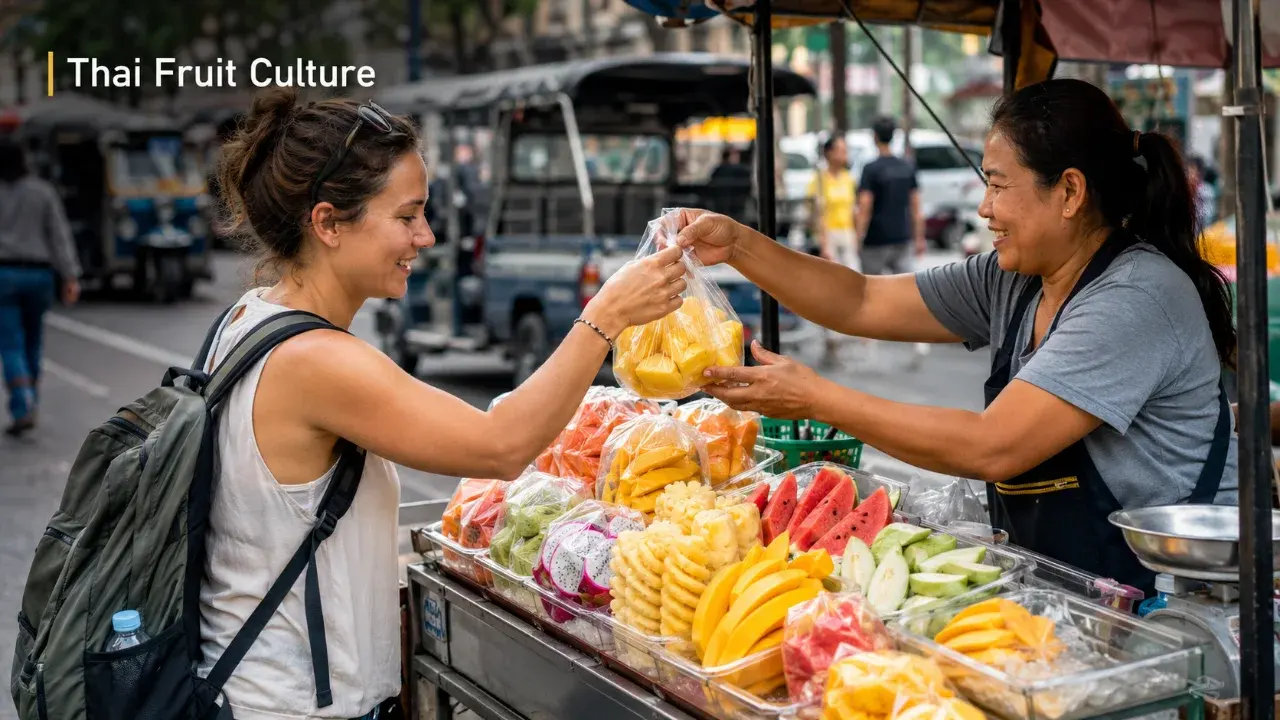
Thailand’s fruit culture is not just about tropical flavors. For many visitors, it becomes one of the easiest ways to understand the country’s markets, seasons, hospitality, and everyday rhythm.
A bag of sliced mango can explain more about Thailand than many travel brochures.
For visitors, Thai fruit is not just something sweet to eat between meals. It often appears at exactly the right moment: chilled pineapple on a hot sidewalk, guava with chili salt after a long walk, mangosteen at a market stall, or a ripe mango shared at a hotel room table after a day of exploring.
That is why Thai fruit culture feels so memorable. It is colorful and abundant, but it is also practical, social, seasonal, and deeply tied to daily life.
Thailand Treats Fruit Like an Everyday Habit
In many countries, tropical fruit can feel like a special purchase. Mangoes may be expensive. Dragon fruit may be sold as a novelty. Durian, rambutan, longan, mangosteen, and salak may be difficult to find fresh at all.
In Thailand, fruit is much closer to everyday life.
It shows up in morning markets, roadside stalls, office snack bags, supermarket fridges, beach carts, mall food courts, and neighborhood shops. The Tourism Authority of Thailand describes the country’s food scene as stretching from street food and stalls to restaurants and food centers, which helps explain why visitors encounter ready-to-eat fruit in so many ordinary places.
That everyday accessibility changes how travelers experience it. Fruit is not something they need to search for. It is simply there, already cut, packed, chilled, and ready to eat.
For a first-time visitor, that can feel surprisingly generous. A quick stop at a fruit cart becomes part of the day’s rhythm, not a planned food destination.
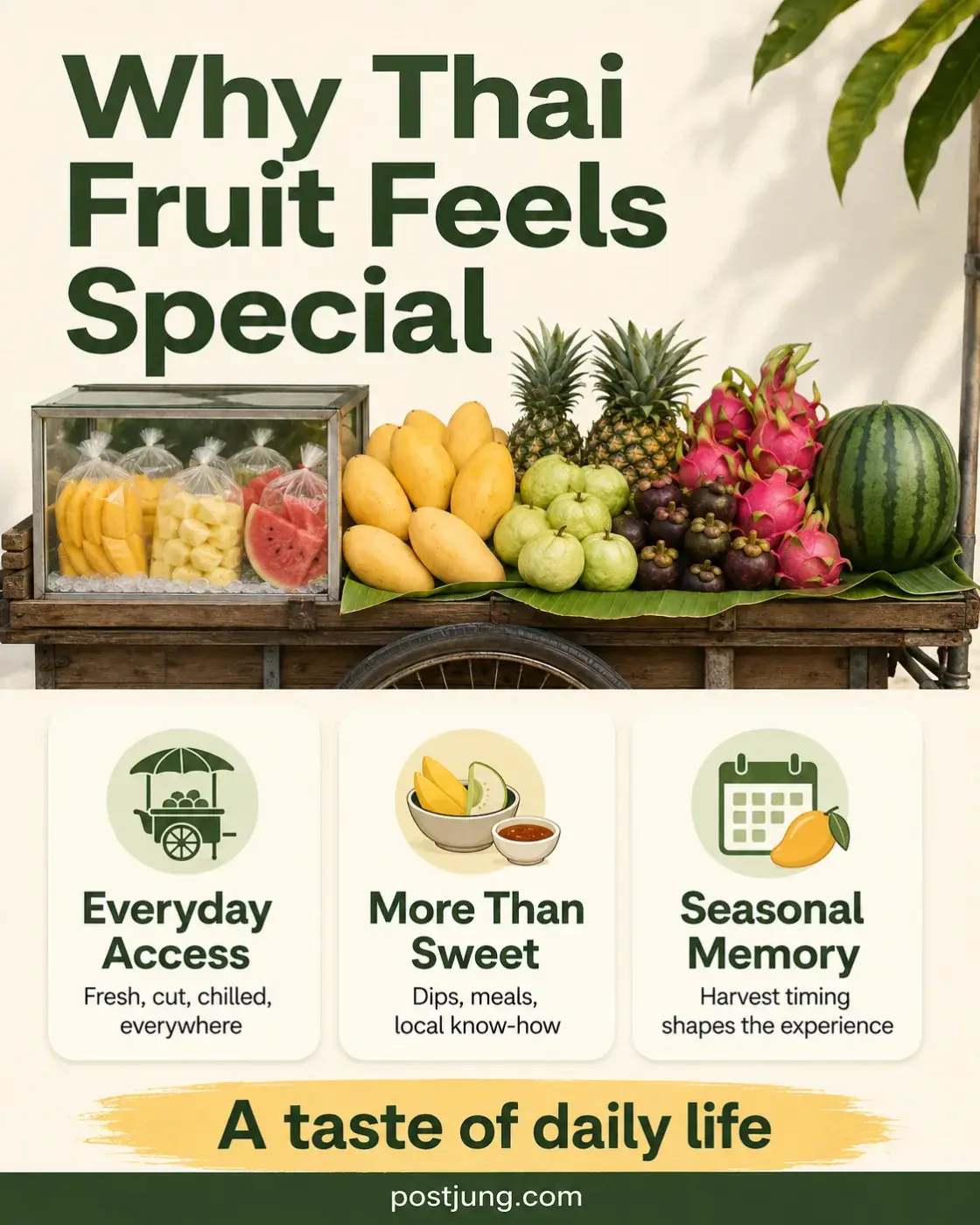
The Flavor Comes With a Local Lesson
Thai fruit culture also feels special because it invites participation.
A vendor might ask whether a mango should be sour or sweet. A Thai friend might explain why one durian variety tastes creamier than another. A market seller might hand over guava with a small packet of chili-sugar-salt seasoning. Someone may show a visitor how to open mangosteen without staining their hands.
These small moments turn fruit into a cultural exchange.
The Royal Thai Consulate-General in Shanghai’s guide to Thai fruit describes local ways of enjoying fruit, including spicy dips, fruit in syrup, coconut sticky rice, and fruit used in savory dishes such as green mango salad and pineapple curry.
That range matters. Green mango with a sweet-salty dip is a different experience from ripe mango with sticky rice. Chilled longan in syrup is different from fresh rambutan. Pineapple on a street cart is different from pineapple cooked into a curry.
For visitors, the surprise is often this: fruit in Thailand is not treated as one simple category. It can be snack, dessert, cooling relief, street food, gift, seasonal attraction, or part of a meal.
Seasonality Makes It Feel Connected to Place
Some travelers assume tropical countries have the same fruit all year. Thailand does have fruit available year-round, but many favorites still have strong seasonal patterns.
That seasonality gives fruit a sense of timing.
Chanthaburi, in eastern Thailand, is one of the country’s best-known fruit destinations. The Tourism Authority of Thailand highlights May to July as a strong time to visit local orchards, when visitors can find fruit buffets, orchard tours, and activities centered on durian and other regional fruits.
Thailand’s official government portal also notes that the eastern fruit season usually runs from April to July, bringing large amounts of produce to markets and drawing visitors to fruit farms and buffets.
For travelers used to supermarkets where global supply chains make seasons feel less visible, this can be refreshing. A fruit that appears everywhere for a few weeks, then slowly fades, feels connected to weather, farms, regions, and timing.
A basket of mangosteen or a tray of durian is not just food. It tells visitors where they are and what season they have arrived in.
The Street Fruit Cart Is Part of the Memory
Thai fruit carts are simple, but they are one of the country’s most powerful travel images.
The fruit is visible. The portions are easy to understand. The seller cuts quickly. The bags are portable. The price is usually clear enough for a casual stop. The fruit is often cold, which matters in Thailand’s heat.
There is also a visual pleasure to it. Yellow mango, red watermelon, pale guava, orange papaya, white coconut, purple mangosteen, and pink dragon fruit create a display that feels naturally photogenic without needing decoration.
For many visitors, the experience is low-pressure. They do not need to understand a full Thai menu or commit to a long meal. They can point, smile, pay, and taste.
That simplicity is part of the appeal. It makes local food culture feel accessible even to someone who has just arrived.
What Outsiders Often Miss
A common misunderstanding is that Thai fruit culture is mainly about “exotic” fruit.
From a visitor’s point of view, that word may feel natural. But it can also flatten the subject. To many Thai people, these fruits are not exotic. They are familiar, seasonal, nostalgic, regional, or simply convenient.
Durian is a good example. Visitors often talk about the smell because it is the easiest thing to notice. In Thailand, the conversation is often more detailed: variety, ripeness, texture, region, price, and personal preference. Some people like durian firm. Others prefer it soft and custardy.
Mango works the same way. A visitor may think of mango as one fruit with one flavor. In Thailand, sour green mango and ripe nam dok mai mango can feel like completely different foods.
The hidden context is that Thai fruit knowledge is practical knowledge. It is about knowing what is in season, what tastes better sour, what should be eaten ripe, what dip belongs with which fruit, and which vendor has good produce that day.
Why It Connects With Global Travelers
Thai fruit culture works so well for visitors because it gives quick access to something local.
A traveler may not yet understand Thai language, regional history, or social customs. But they can understand sweetness, sourness, cold fruit in hot weather, and the surprise of a flavor they have never tried before.
It also fits many kinds of travel. Budget travelers can buy fruit from carts. Families can find it in malls and supermarkets. Food-focused travelers can visit orchards. Health-conscious visitors can use fruit as a lighter snack between richer meals.
The Food and Agriculture Organization tracks major tropical fruits such as mango, mangosteen, guava, papaya, pineapple, and avocado in its market reviews, showing that these fruits are also part of a larger global food economy.
Still, the memory is usually personal. It is the first mangosteen opened by hand. The first bite of sour mango with chili salt. The first realization that chilled pineapple tastes different when eaten on a hot Thai sidewalk.
Thailand’s fruit culture feels special because it combines abundance with ease. It is fresh, informal, seasonal, and close to the way people actually live.
For visitors, the best way to understand it is simple: buy what looks fresh, ask what is in season, try the dip before judging it, and let one small snack reveal something bigger.
In Thailand, fruit is not just a colorful detail. It is one of the easiest ways to taste daily life.
KEY TAKEAWAYS:
- Thai fruit culture feels memorable because fruit is part of everyday life, not only a tourist experience.
- Street fruit carts make fresh tropical fruit easy, affordable, portable, and low-pressure for visitors.
- Seasonality matters, especially in fruit-growing regions such as Chanthaburi and eastern Thailand.
- Outsiders often focus on “exotic” fruit, but Thai fruit culture is also about ripeness, dips, timing, and local knowledge.
- For global travelers, fruit is one of the simplest ways to connect with Thai daily culture.
Tourism Authority of Thailand, Royal Thai Consulate-General in Shanghai, Food and Agriculture Organization of the United Nations, Thailand Government Portal, Provided source material
References:
https://www.tourismthailand.org/Articles/chanthaburi-rayong
https://thaishanghai.thaiembassy.org/th/content/enjoy-the-best-thai-fruit-the-thai-way-a-local-gui?cate=5f0d67e59cc17760ab1a99c8
https://openknowledge.fao.org/handle/20.500.14283/cc7108en

เขียนโดย Postjung Insights
 อำเภอที่มีชื่ออำเภอสั้นที่สุด 3 อำเภอเท่านั้นในประเทศไทย
 โรงเรียนที่มีนักเรียนมากที่สุดในไทย
 รู้หรือไม่? เปิดรายได้พนักงานส่งพัสดุของแต่ละแอป วันหนึ่งได้เท่าไร
 คุณนุชออกโรงชี้แจง ปมมีภาพถ่ายร่วมสัมภาษณ์ “หนุ่ม กรรชัย” ยอมรับผิด พร้อมขอโทษทุกฝ่าย
 5 คณะที่เรียนจบมาแล้ว มีอาชีพรองรับมากกว่าที่คิด
 เลขขายดีงวดนี้ 1 ตุลาคม 2569 สำรวจกระแสเลขเด่นก่อนหวยออก พร้อมวิธีอ่านข้อมูลอย่างมีสติ
 แทสเมเนีย: ถอดรหัสเกาะปริศนาที่แผนที่โลกมักลืมเขียน
 เปิด 5 โรงเรียนหญิงล้วนเก่าแก่ของไทย ที่มีประวัติยาวนานกว่าศตวรรษ
 Phnom Penh Post ยกประวัติศาสตร์ขอมตอบโต้ข่าวภาพหญิง ร.5 แต่ปมสำคัญยังอยู่ที่หลักฐานของภาพ
 AI กำลังเปลี่ยนตลาดงาน เปิด 5 สาขามหาวิทยาลัยที่ไทยต้องการบุคลากรในอีก 5 ปี
 แปลปกสลาก งวด 1 ต.ค. 69 ส่องตัวเลขจากภาพปกสลากกินแบ่งรัฐบาล
 จากยาพิษโบราณสู่อาณาจักรหมื่นล้าน: มหากาพย์ “อัลมอนด์” พืชเศรษฐกิจที่สร้างแคลิฟอร์เนียAI กำลังเปลี่ยนตลาดงาน เปิด 5 สาขามหาวิทยาลัยที่ไทยต้องการบุคลากรในอีก 5 ปีPhnom Penh Post ยกประวัติศาสตร์ขอมตอบโต้ข่าวภาพหญิง ร.5 แต่ปมสำคัญยังอยู่ที่หลักฐานของภาพแทสเมเนีย: ถอดรหัสเกาะปริศนาที่แผนที่โลกมักลืมเขียนเลขขายดีงวดนี้ 1 ตุลาคม 2569 สำรวจกระแสเลขเด่นก่อนหวยออก พร้อมวิธีอ่านข้อมูลอย่างมีสติ
 ทำไมคนไทยยังแห่ซื้อ"iPhone 18" ทั้งที่ราคาสูง แต่ค่าครองชีพสวนทางกับรายได้?จากยาพิษโบราณสู่อาณาจักรหมื่นล้าน: มหากาพย์ “อัลมอนด์” พืชเศรษฐกิจที่สร้างแคลิฟอร์เนีย
 English Edition