Why Older Dogs Sleep More—and When to Pay Attention
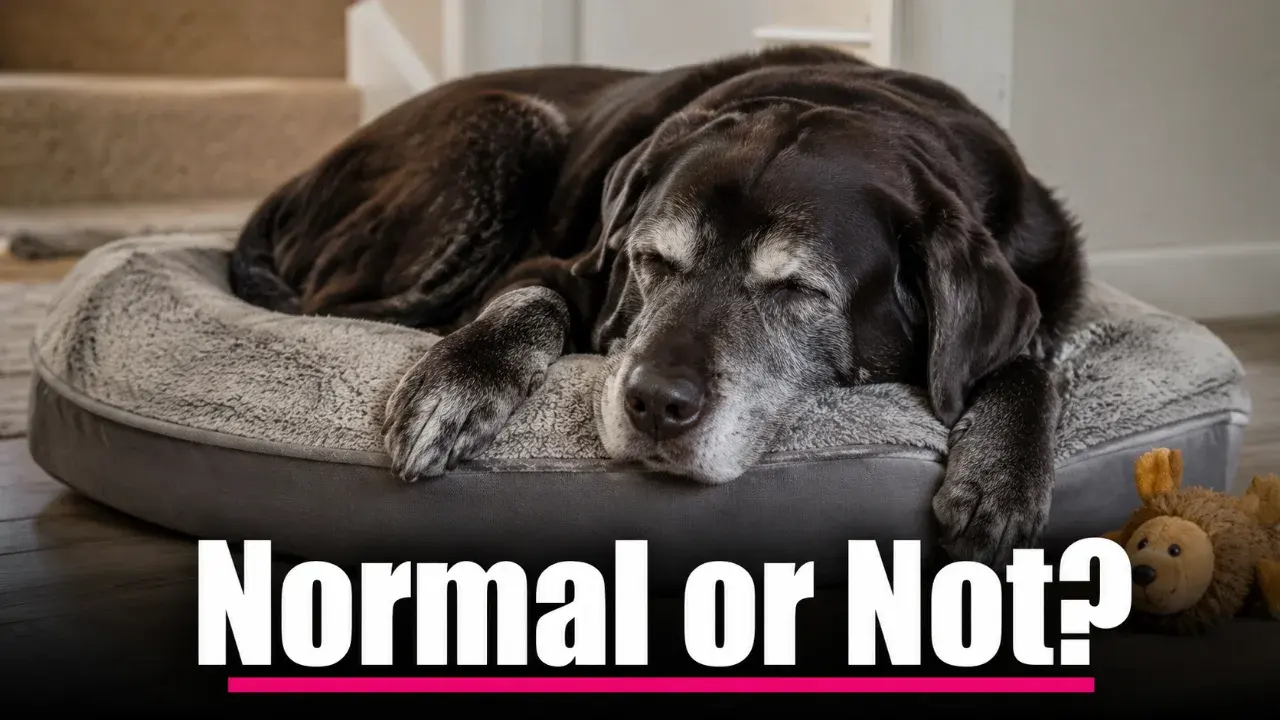
Extra sleep is often a normal part of aging, but a sudden shift in your dog’s routine can also point to pain, illness, or cognitive changes.
An older dog who sleeps through the afternoon may simply be resting. But when a dog who once followed every snack, sound, and footstep suddenly spends most of the day in bed, it is natural for owners to wonder what has changed.
The answer is usually not one thing.
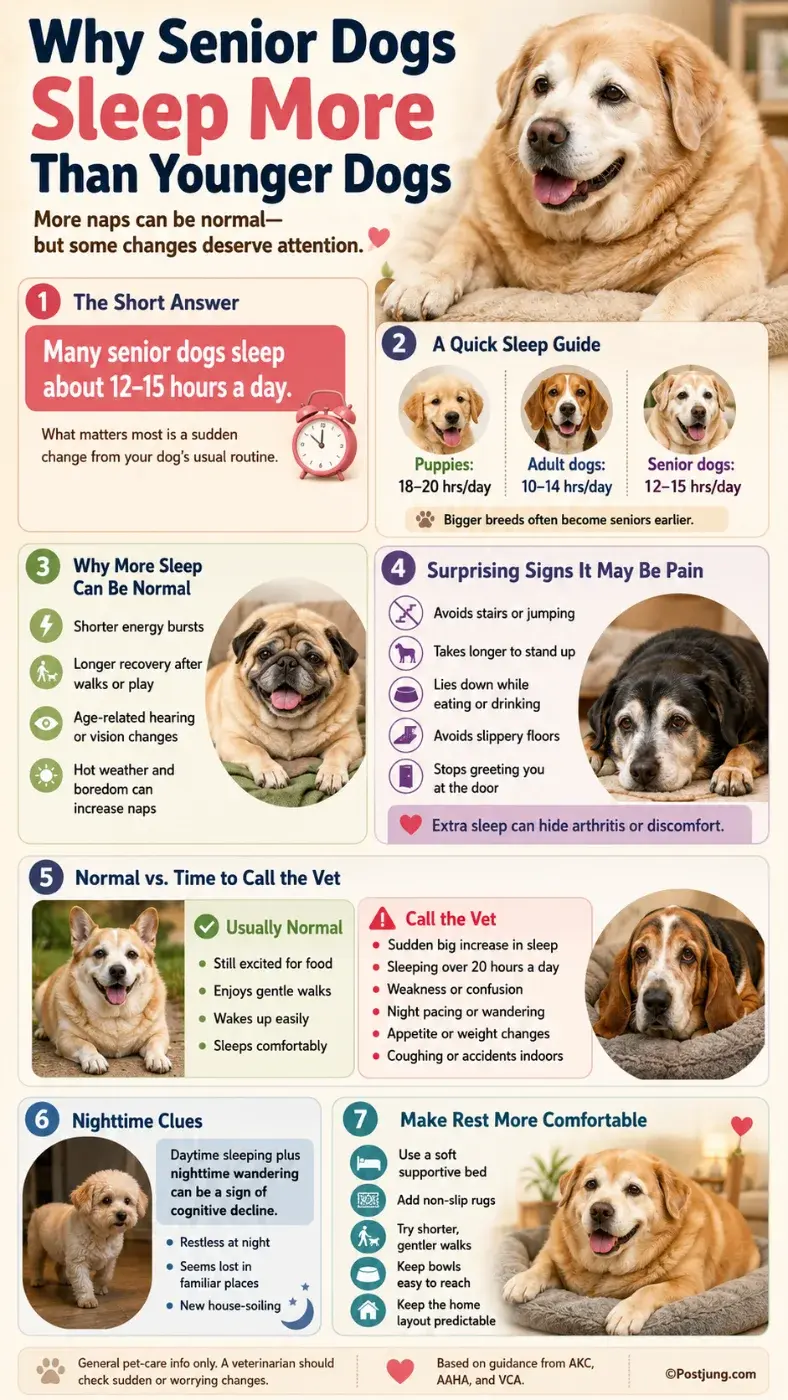
Senior dogs often sleep more because their bodies tire faster, their energy comes in shorter bursts, and recovery takes longer. The American Kennel Club says many geriatric dogs need about 12 to 15 hours of sleep a day, and changes in sleeping habits can sometimes point to an underlying medical issue.
The key question is not only “How many hours is my dog sleeping?” It is also “Is this different from my dog’s normal pattern?”
More sleep can be normal aging
Dogs do not all become seniors at the same age. Size, breed, and overall health matter. The American Animal Hospital Association notes that large dogs may reach senior status as early as 7 or 8 years old, while smaller breeds may not be considered seniors until around 12.
That helps explain why one 8-year-old dog may still act playful and energetic, while another of the same age may move more slowly and sleep more often.
A young dog may bounce between walks, toys, food, barking at noises, and checking every room in the house. A senior dog may still enjoy those things, but in smaller doses. A short walk may replace a long hike. Ten minutes of play may be enough. After that, a nap may be exactly what the body needs.
For many older dogs, this is not laziness. It is adjustment.
The change matters more than the number
A senior dog who sleeps more but still eats well, responds to family, enjoys gentle walks, and moves comfortably may simply be aging normally.
A different picture appears when sleep comes with other changes.
VCA Animal Hospitals notes that senior dogs do slow down, but some behavior changes are abnormal and may come from pain. Possible pain signs include difficulty getting up, reluctance to climb stairs, limping, avoiding slippery floors, lying down while eating or drinking, restlessness at night, and reduced stamina.
That can be easy to miss because dogs often do not show pain in obvious ways. They may not cry. They may not refuse food. They may simply stop doing things that used to be effortless.
A dog who no longer greets people at the door may not be “less loving.” A dog who avoids the couch may not be “less playful.” The dog may be protecting sore joints or trying not to move in a way that hurts.
Pain can look like tiredness
One of the biggest misunderstandings about older dogs is that every slowdown is just old age.
Sometimes it is. But pain can disguise itself as extra sleep.
If standing up is uncomfortable, a dog may choose to stay lying down. If stairs hurt, the dog may avoid moving between rooms. If a long walk causes soreness, the dog may sleep more afterward.
That is why owners should watch the full routine: appetite, thirst, bathroom habits, walking, mood, social interest, comfort at night, and how easily the dog rises from rest.
A senior dog does not need to act young to be healthy. But the dog should still seem comfortable when awake.
The brain can affect the sleep clock
Some older dogs sleep more during the day because they are not sleeping well at night. Cognitive changes can affect senior pets, and VCA describes sleep-wake cycle changes as one sign of senior pet cognitive dysfunction, including increased daytime sleeping and nighttime pacing or restlessness.
That pattern is different from peaceful napping.
A dog who sleeps during the day and wanders at night, seems lost in familiar places, becomes unusually anxious, forgets routines, or has new accidents indoors should be evaluated by a veterinarian. These signs do not automatically mean dementia, but they are important enough to discuss.
What owners should watch at home
A helpful way to judge sleep changes is to compare your dog with their recent normal self, not with the dog they were five years ago.
Ask:
Is my dog still interested in food and family?
Can my dog get up without struggling?
Does my dog seem comfortable while resting?
Is my dog sleeping more after activity, or sleeping because activity has become difficult?
Has nighttime behavior changed?
Are there new signs such as coughing, weight loss, weakness, confusion, accidents, or withdrawal?
If the answer points to a clear change, it is safer to ask a veterinarian than to assume it is just age.
AAHA also advises that senior pets often need more veterinary care, lifestyle changes, and home adjustments, including low-impact activity and environmental support to help maintain quality of life.
How to help a senior dog rest well
Senior dogs need rest, but they also need connection.
That may mean shorter walks, more sniffing time, softer bedding, non-slip rugs, easier access to food and water, and fewer sudden changes in the home. Dogs with hearing or vision changes may feel safer when the layout stays familiar and lighting is gentle.
The goal is not to keep an older dog busy all day. The goal is to keep the dog’s life comfortable, predictable, and quietly engaging.
This article is general pet-care information, not a diagnosis. If a senior dog’s sleep changes suddenly, or if extra sleep comes with pain signs, appetite changes, weakness, coughing, confusion, weight loss, restlessness, house-soiling, or withdrawal, a veterinarian should evaluate the dog.
Sometimes an old dog sleeping in the afternoon is simply enjoying a well-earned rest. Other times, that extra sleep is the first soft signal that something needs attention. The difference comes from watching not just how long the dog sleeps, but how the dog feels when awake.
KEY TAKEAWAYS:
- Senior dogs often sleep more because they tire faster and need longer recovery.
- A sudden change in sleep matters more than the exact number of hours.
- Extra sleep with stiffness, weakness, confusion, appetite changes, or nighttime restlessness should be discussed with a veterinarian.
- Pain can look like laziness or tiredness in older dogs.
- Gentle routines, soft bedding, low-impact movement, and a predictable home can help senior dogs rest better.
American Kennel Club, American Animal Hospital Association, VCA Animal Hospitals
References:
https://www.akc.org/expert-advice/health/senior-dog-sleep-too-much/
https://www.aaha.org/resources/senior-status-understanding-your-senior-pets-life-stage/
https://vcahospitals.com/know-your-pet/behavior-changes-and-pain-in-aging-dogs

เขียนโดย Postjung Insights
 โรงเรียนที่มีนักเรียนมากที่สุดในไทย
 อำเภอที่มีชื่ออำเภอสั้นที่สุด 3 อำเภอเท่านั้นในประเทศไทย
 รู้หรือไม่? เปิดรายได้พนักงานส่งพัสดุของแต่ละแอป วันหนึ่งได้เท่าไร
 แมคาเดเมีย (Macadamia): ราชินีแห่งถั่ว กับขุมทรัพย์โภชนาการจากออสเตรเลีย
 ดูหนัง–ซีรีส์ฟรีอาจไม่ฟรีอย่างที่คิด! เปิดโทษละเมิดลิขสิทธิ์ เตือนคนปล่อยคอนเทนต์เถื่อน เสี่ยงทั้งคุกทั้งปรับ
 รมว.วัฒนธรรมเอาจริง! จ่อส่งหนังสือทักท้วง Miss Universe Cambodia ปมใช้ภาพหญิงกำแพงเพชร หากไม่แก้ เตรียมใช้กฎหมาย
 ส่องเลข 3 สำนักพิมพ์ งวด 1 ต.ค. 69 ตัวไหนมีข้อมูลตรงกัน
 ตาราง “เด่นเหนือเด่นใต้” งวด 1 ต.ค. 69 เปิดข้อมูลตามโพย เลขไหนอยู่ตรงไหน
 MRT เตาปูนกลับมาเปิดปกติแล้ว รมช.คมนาคมเผยปมไฟไหม้ พบประกายไฟจากชุดสายไฟ 750 โวลต์
 สถิติย้อนหลัง 10 ปี ออกเลขไหนบ้างมาดูกัน
 เปิดหลักฐานเก่า 120 ปี ปมภาพหญิงเมืองกำแพงเพชร โผล่เวที Miss Universe Cambodia 2026
 โรงเรียนเพียงแห่งเดียวของประเทศไทย ที่อยู่มาตั้งแต่ยุครัชกาลที่ 4
 เปิด 5 สินค้าเกษตรจากลาวที่เข้าสู่ตลาดไทย สินค้าไหนมีบทบาทสำคัญที่สุดดูหนัง–ซีรีส์ฟรีอาจไม่ฟรีอย่างที่คิด! เปิดโทษละเมิดลิขสิทธิ์ เตือนคนปล่อยคอนเทนต์เถื่อน เสี่ยงทั้งคุกทั้งปรับรมว.วัฒนธรรมเอาจริง! จ่อส่งหนังสือทักท้วง Miss Universe Cambodia ปมใช้ภาพหญิงกำแพงเพชร หากไม่แก้ เตรียมใช้กฎหมายแมคาเดเมีย (Macadamia): ราชินีแห่งถั่ว กับขุมทรัพย์โภชนาการจากออสเตรเลียMRT เตาปูนกลับมาเปิดปกติแล้ว รมช.คมนาคมเผยปมไฟไหม้ พบประกายไฟจากชุดสายไฟ 750 โวลต์
 เปิด 5 สินค้าส่งออกของลาวที่คนไทยอาจคาดไม่ถึง หนึ่งในนั้นทำเงินเกือบ 1 พันล้านดอลลาร์
 English Edition