How Thailand’s Temple Bells Still Shape Daily Life
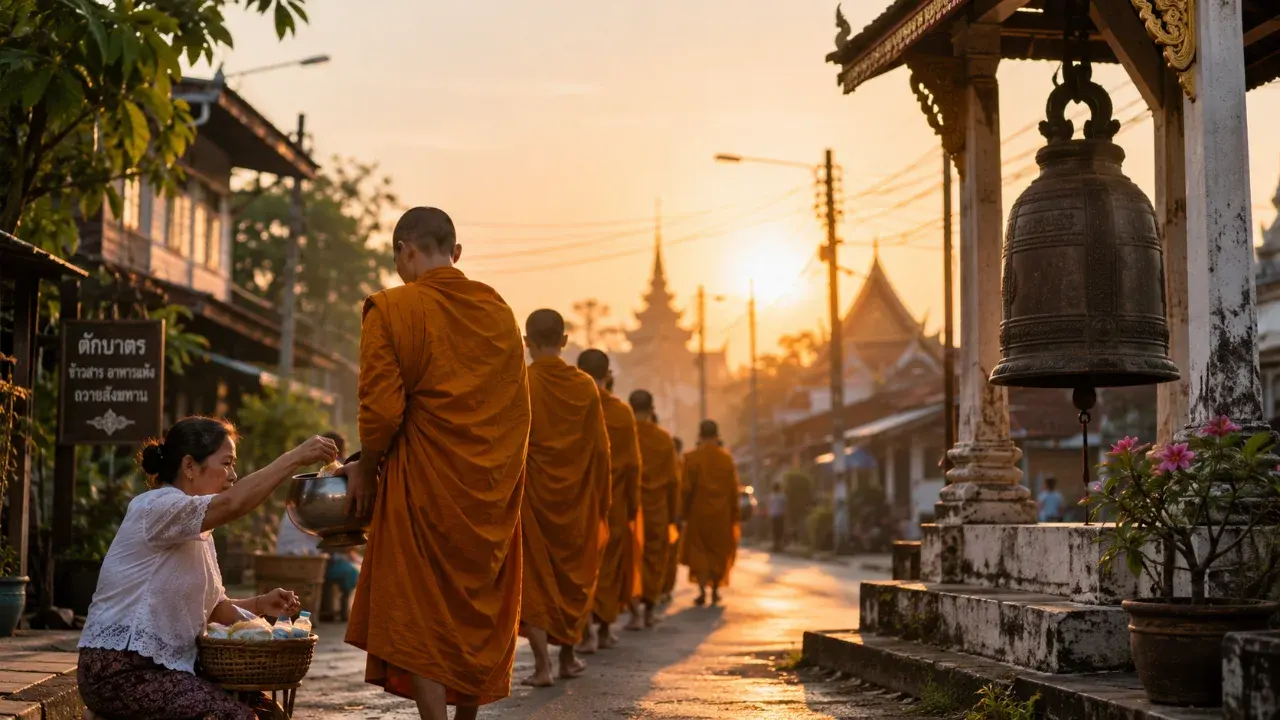
Before sunrise, many Thai neighborhoods begin with a sound rather than a screen. A bell, drum, or gong rolls out from a nearby temple, telling monks to prepare, families to start cooking, and the street to slowly wake. For visitors, it may sound atmospheric. For many locals, it is part of the day’s working rhythm.
Across Thailand, temple sounds are not only religious decoration. They help connect the monastery, the market, the home, and the street in a routine that has shaped community life for generations.
The bell once worked like a village clock
Traditional Thai temples often have a ho rakhang, or bell tower. Before clocks became common, bells, drums, and gongs helped villagers mark the passing of the day. A temple was not only a place for worship. It was also a local center for learning, gathering, and timekeeping.
That old function has not completely disappeared. In many places, the early sound from the temple still tells people that monks are preparing for the morning alms round. Later in the day, another bell or amplified chanting may signal evening practice.
BuddhaNet describes a common daily routine in Thai monasteries: monks wake around 4am, meditate, chant, then walk barefoot through nearby streets at around 6am to receive food from laypeople. They return to eat together later in the morning.
Exact timing varies by temple. Some forest monasteries begin even earlier. Wat Pah Nanachat in Ubon Ratchathani, for example, lists a 3am wake-up bell, a 3.30am meeting for chanting and meditation, and an alms round at dawn.
Morning chanting is not just ceremony
To an outsider, temple chanting can sound like a performance. Inside the monastic routine, it has a more practical purpose. Chanting gives shape to attention. It gathers the community into the same rhythm before the day’s work begins.
Wat Pah Nanachat describes chanting as a practice connected with mindfulness in the Thai Buddhist tradition. The point is not simply to repeat words, but to stay present with sound, breath, meaning, and shared attention.
That is why chanting can feel so powerful even to people who do not understand Pali or Thai. The sound marks a change in atmosphere. A quiet street becomes a place of practice. A home near a temple becomes part of a wider daily routine.
For Thai families, chanting may also be heard during house blessings, funerals, merit-making events, ordinations, and temple festivals. The sound is tied not only to belief, but to life stages.
The alms round connects temple and street
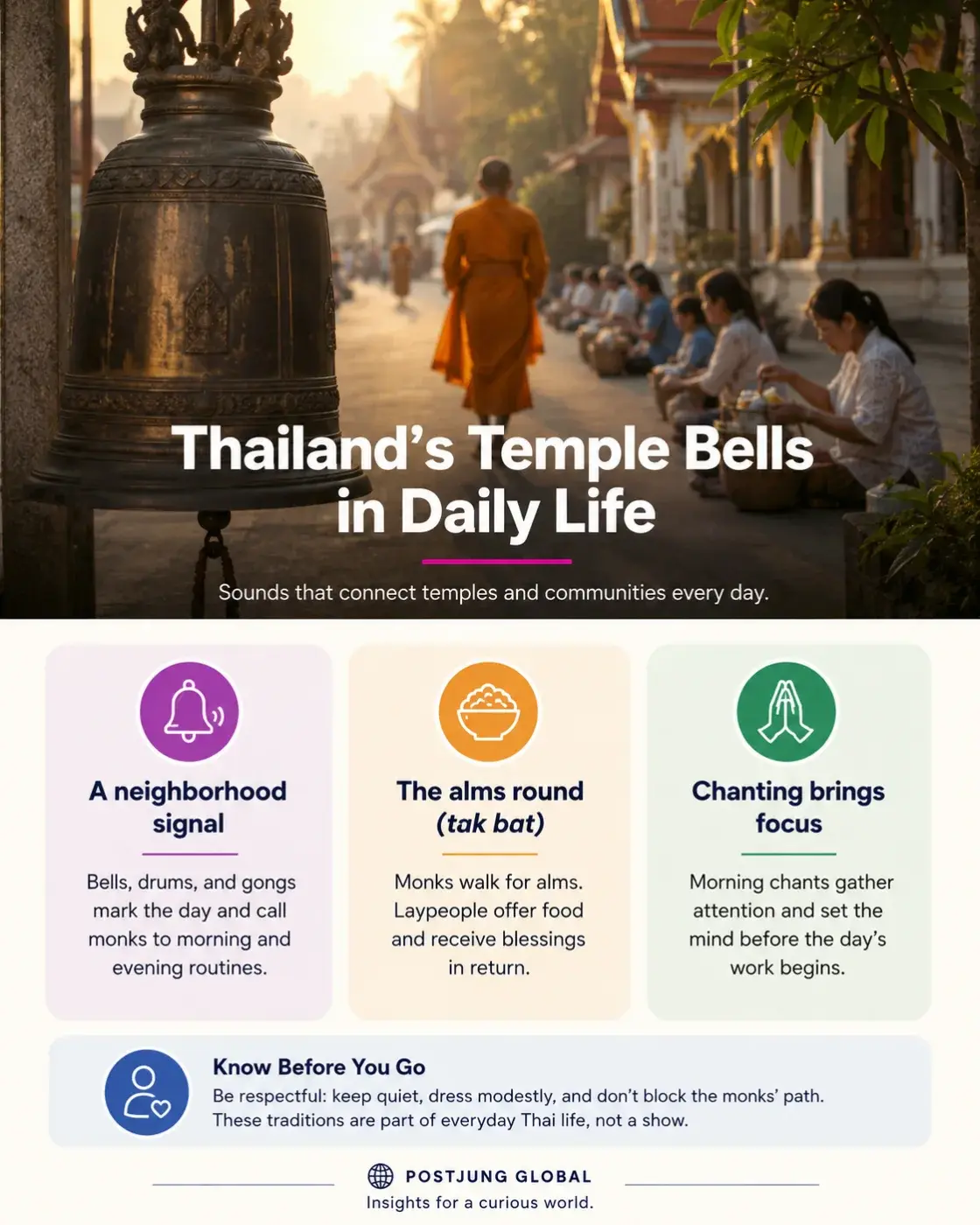
After the morning bell and chanting, monks usually leave the temple for the alms round, known in Thai as tak bat. Laypeople offer rice, cooked dishes, water, or daily necessities. Monks receive the offerings silently and may offer a short blessing.
This is often misunderstood as ordinary charity. It is closer to a reciprocal relationship. Laypeople make merit by giving. Monks continue their discipline by depending on what is offered rather than buying or choosing food freely.
That exchange explains why the alms round remains visible in cities, villages, markets, and residential sois. It is not a tourist show. It is a daily link between people who live in the neighborhood and the monastic community that shares it.
For visitors, the most respectful approach is simple: watch quietly, do not block the monks’ path, dress modestly if participating, and avoid turning the moment into a photo performance.
Why the sound can still cause debate
Temple bells are meaningful, but they are also loud. In modern Bangkok, where condominiums stand close to old temples, tradition and urban comfort sometimes collide.
One well-known case involved Wat Sai in Bangkok’s Bang Kholaem district, where a resident complained about early-morning bell ringing. The issue became a public debate over whether old temple sounds should adapt to newer residential life.
That tension is important because it shows the bell is not a museum object. It still affects real people. Some hear it as culture, memory, and spiritual rhythm. Others hear it as noise before dawn. Both reactions belong to the reality of modern Thai city life.
How to read the sounds as a newcomer
If you hear a low bell or gong before sunrise, it usually means the temple is beginning its morning routine. If you see monks walking quietly through the street soon after, the alms round has started. If chanting comes through speakers in the evening, the temple may be holding evening prayers or a special observance.
The key is to understand that these sounds are part of a living system. They coordinate people, food, time, merit, memory, and neighborhood space.
Thailand’s temple bells and morning chants are not just beautiful background sounds. They are one of the clearest ways to notice how daily life can still move around a temple, even in a city filled with traffic, phones, and concrete towers.
References:
https://www.bangkokpost.com/life/social-and-lifestyle/1565922/the-sweet-sounds-of-thailand
https://www.bangkokpost.com/thailand/general/1552158/wat-sai-bells-can-keep-ringing-loud-and-clear
https://www.buddhanet.net/e-learning/buddhistworld/wat_m5/
https://www.watpahnanachat.org/about
https://www.watpahnanachat.org/chanting-as-a-practice

เขียนโดย Postjung Insights
 อำเภอที่มีชื่ออำเภอสั้นที่สุด 3 อำเภอเท่านั้นในประเทศไทย
 5 ไอเทมป้องกันความร้อนให้บ้านแบบโบราณ! ภูมิปัญญาเก่าที่ช่วยบ้านเย็นลงได้ 3-5 องศา
 โรงเรียนที่มีนักเรียนมากที่สุดในไทย
 7 บทเพลงไวรัลยุคโบราณ! เพลงงานวัดที่เปิดเมื่อไหร่ คนก็ลุกขึ้นรำวงเมื่อนั้น
 ตาราง “เด่นเหนือเด่นใต้” งวด 1 ต.ค. 69 เปิดข้อมูลตามโพย เลขไหนอยู่ตรงไหน
 เช็กด่วน ! ข่าวบัตรสวัสดิการแจก 10,000 บาท ก.ย. 69 จริงหรือ ? ก่อนเชื่อควรรู้อะไร
 รู้หรือไม่? เปิดรายได้พนักงานส่งพัสดุของแต่ละแอป วันหนึ่งได้เท่าไร
 7 คันเบ็ดตกปลาโบราณ สายเรโทรยอมทุ่มเงินซื้อ! ยิ่งเก่า ยิ่งหายาก ยิ่งมีเรื่องราว
 รู้หรือไม่? ความทรงจำวัยเด็กอาจไม่ได้เหมือนที่เราเคยจำ! สมองสามารถ “เติมเรื่อง” ให้เราได้
 ทำไมหนังสือบางเล่มถึงมีหน้าว่างทั้งหน้า? มันอาจไม่ได้พิมพ์พลาด
 เปิด 5 โรงเรียนหญิงล้วนเก่าแก่ของไทย ที่มีประวัติยาวนานกว่าศตวรรษ
 ส่องเลข 3 สำนักพิมพ์ งวด 1 ต.ค. 69 ตัวไหนมีข้อมูลตรงกันอำเภอที่มีชื่ออำเภอสั้นที่สุด 3 อำเภอเท่านั้นในประเทศไทย
 English Edition