Why Thai Street Food Still Feels Deeply Personal
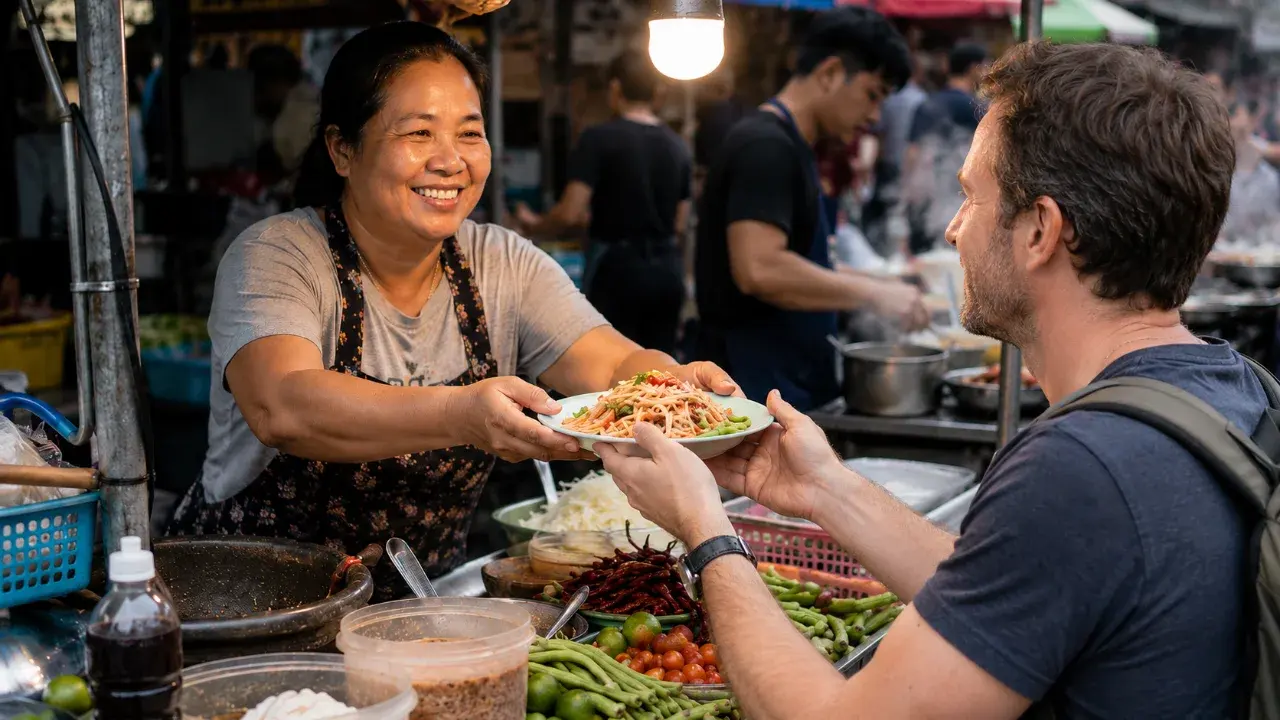
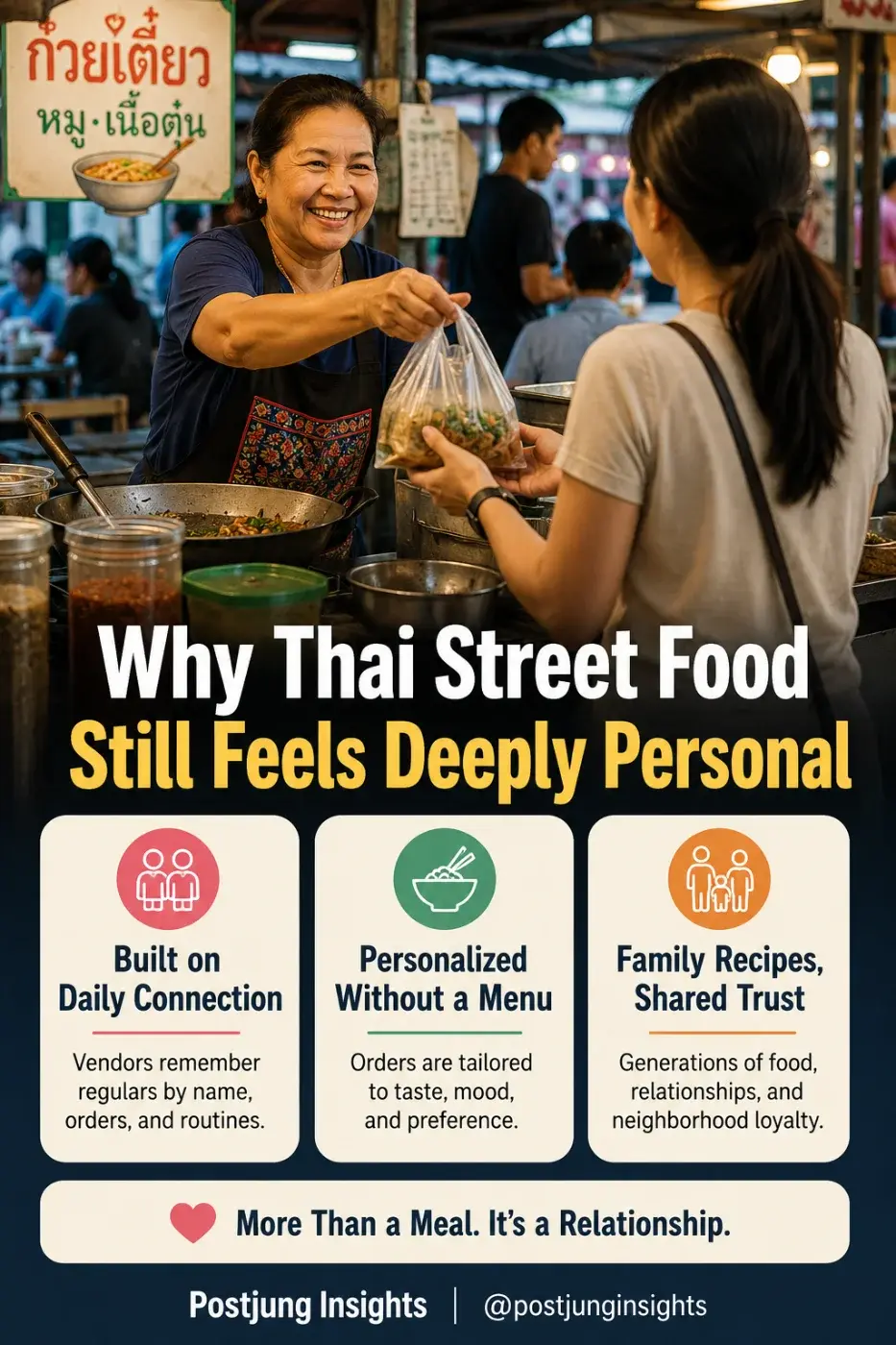
A Thai street food stall can remember you before you remember its name. That is the quiet reason Thai street food still feels so personal. Beyond the smoke, chili, grilled pork, noodle broth, and low prices, many stalls work like small neighborhood memory banks. They know who wants extra lime, who eats less spicy, who comes after school, and who looks tired after work.
For visitors, this can be easy to miss. Street food in Thailand is often described from the outside: cheap, fast, colorful, photogenic, delicious. All of that can be true. But for many local people, the deeper value is not only the meal. It is the familiar face behind the wok.
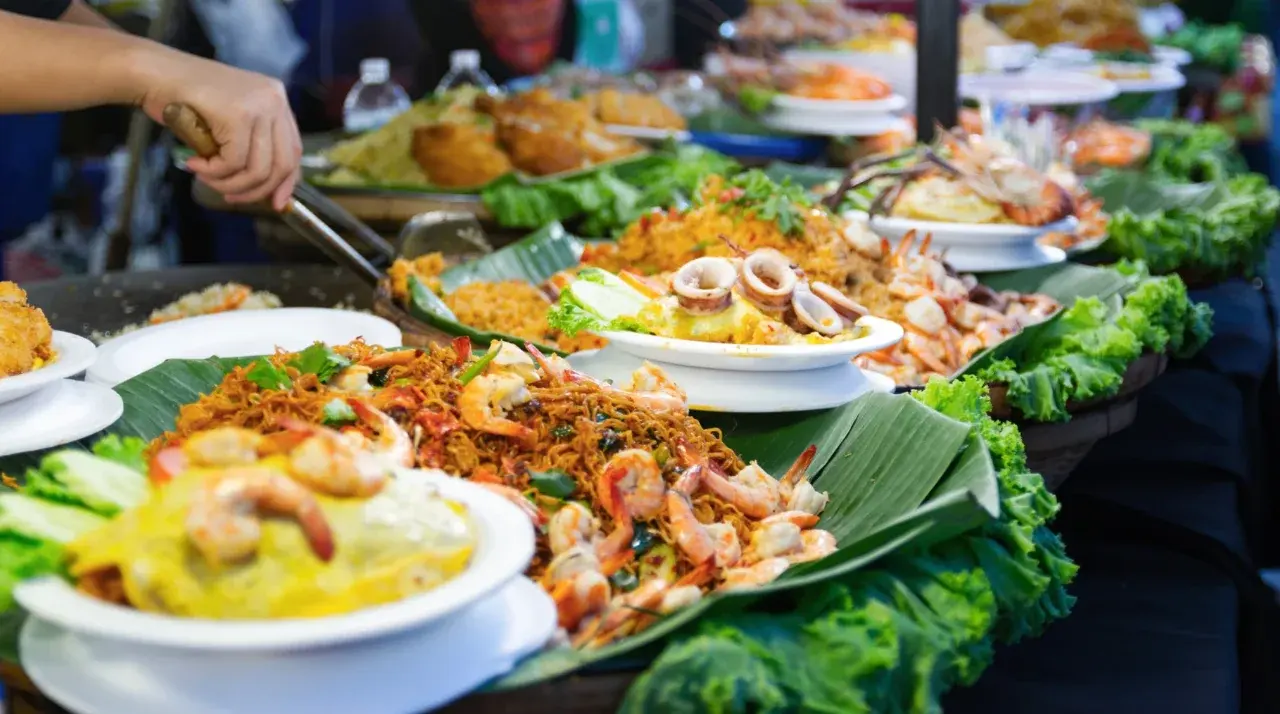
A stall is often part of the daily route
In Bangkok, Chiang Mai, Khon Kaen, Hat Yai, and countless smaller towns, food stalls are woven into the rhythm of ordinary life. They sit near office buildings, schools, markets, apartment blocks, bus stops, temples, and the mouths of narrow sois.
A morning moo ping vendor may see the same office workers every weekday. A noodle seller may know which schoolchildren need a quick bowl before tutoring. A som tam cart may understand a customer’s exact version of “spicy,” which can mean wildly different things from one person to another.
This is why the stall becomes part of the neighborhood clock. It tells people what time of day it is. Grilled pork smoke in the morning. Curry bags in the late afternoon. Noodles and stir-fry after work. Dessert carts at night.
To a newcomer, a cart may look temporary. To a regular customer, it can feel more reliable than many fixed restaurants.
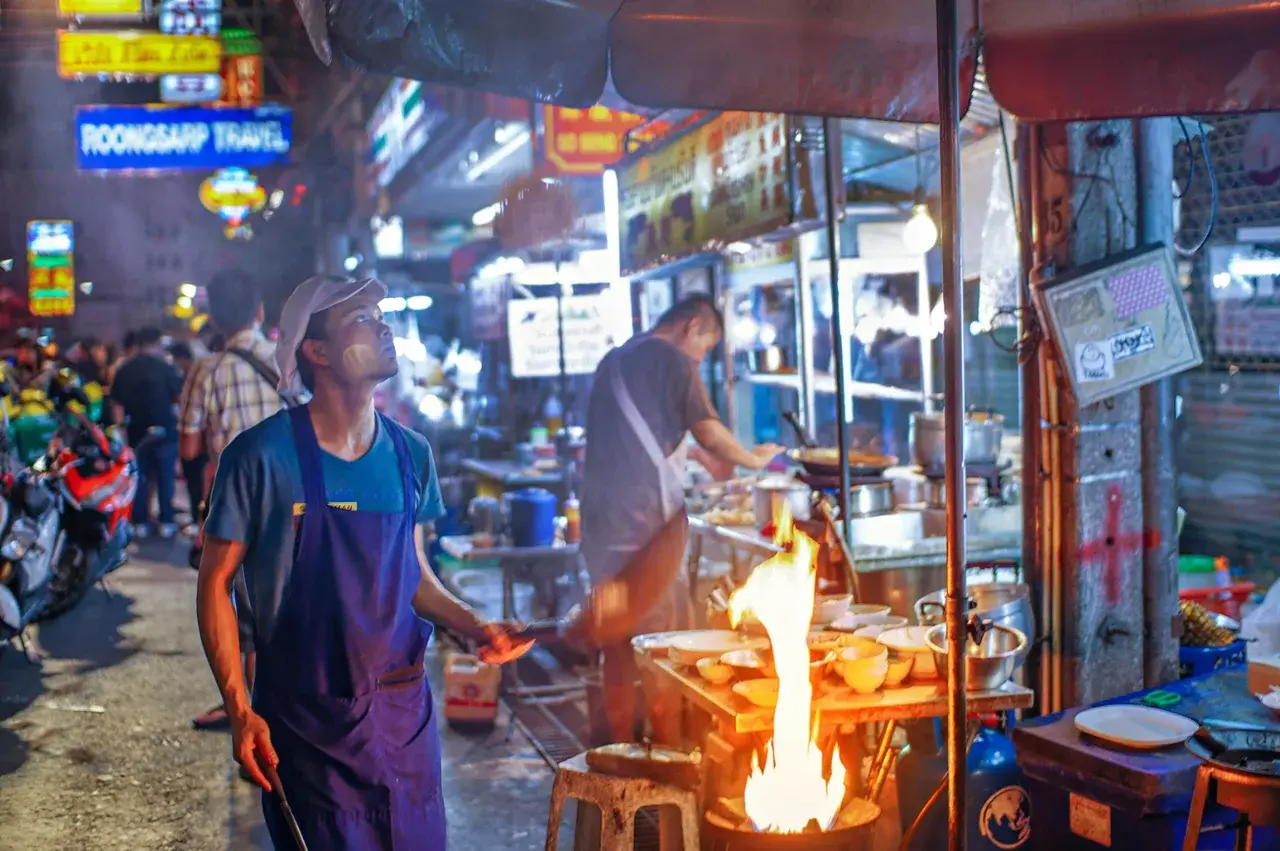
Customization is not a feature. It is the culture.
Modern food apps give customers buttons and checkboxes. Thai street food has been doing personalization long before that, but in a more human way.
At a busy som tam stall, the order is rarely just “papaya salad.” It may be less sugar, more lime, two chilies, no crab, extra fermented fish sauce, more peanuts, or not too salty. At a noodle cart, the small decisions multiply: thin rice noodles or egg noodles, soup or dry, extra vegetables, no liver, more garlic, less sweet, chili on the side.
The important part is not only that the food can be adjusted. It is that a good vendor remembers.
That memory can feel surprisingly intimate. The cook may reach for your usual noodles before you speak. The vendor may ask why you came later than normal. A regular customer may not need to explain every detail again because the relationship has already done the work.
For travelers, this is a useful way to understand Thai street food: it is not always built around a printed menu. It is built around repetition, trust, and small adjustments.
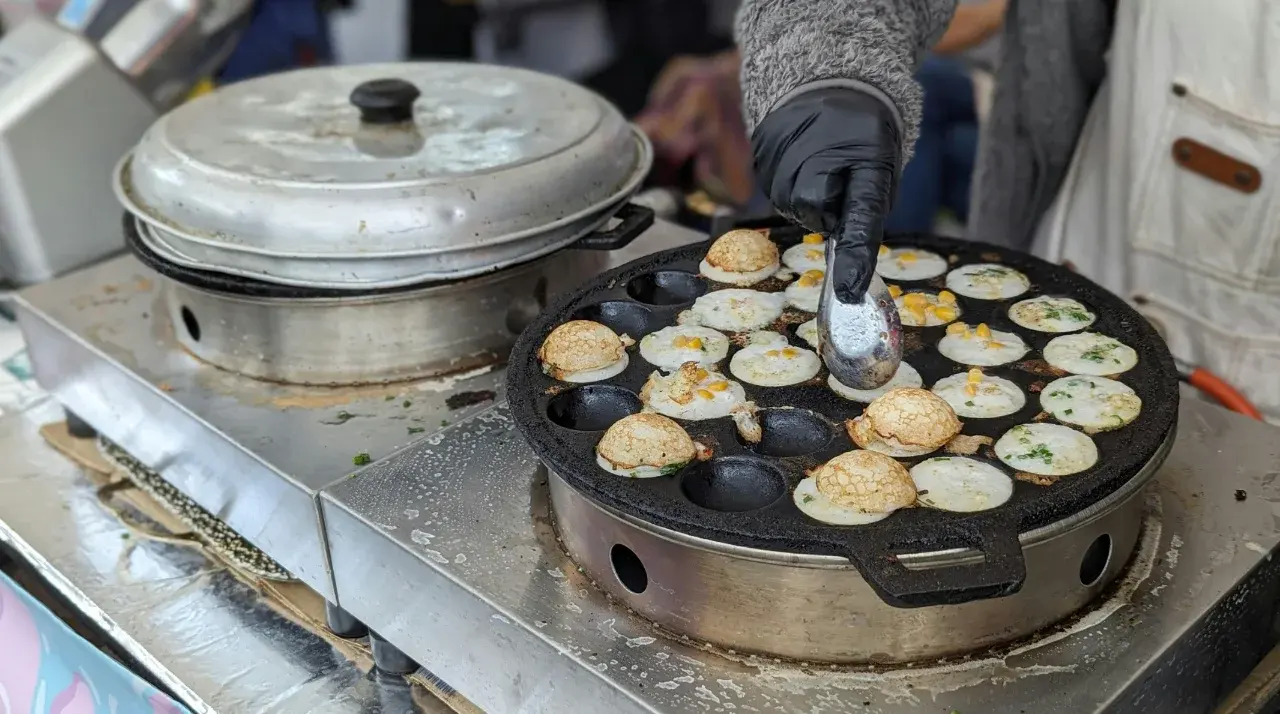
The personal side also carries responsibility
Because street food is so informal and close to daily life, safety and cleanliness matter. Thailand has long treated food sanitation as a public issue, including programs that involve restaurants and street vendors. For readers, the practical takeaway is simple: enjoy the culture, but pay attention to the basics.
A good stall usually gives visible clues. The food turns over quickly. Cooked items are covered or handled carefully. Utensils look clean. Ice and drinking water are stored properly. The vendor keeps raw and cooked ingredients separate. The cooking area looks cared for, even if the setting is simple.
This should not make visitors anxious. It should make them more observant. Busy does not automatically mean safe, and simple does not automatically mean unsafe. The best approach is to look for a stall that feels active, clean, and trusted by local customers.
Family recipes carry more than flavor
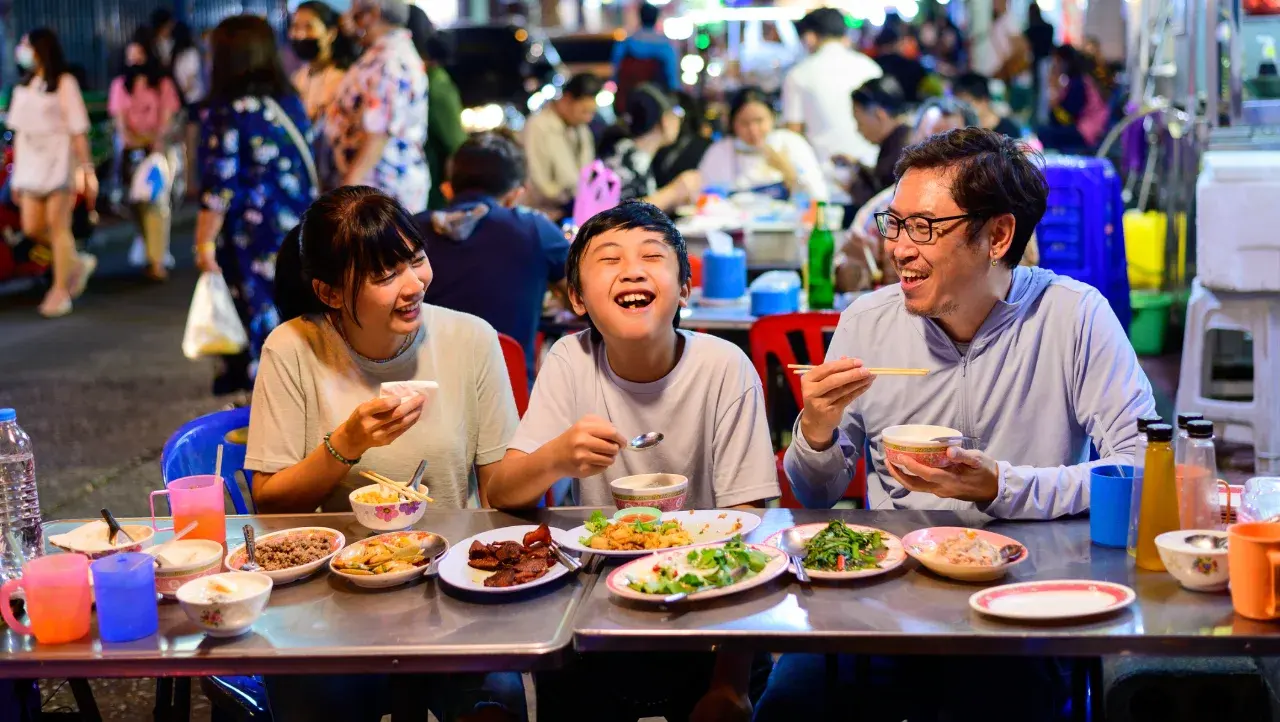
Many beloved Thai food stalls are family businesses. Recipes pass from parents to children, but so do customer relationships. A daughter taking over a noodle cart may inherit not only the broth recipe, but also the regulars who have been eating there for years. A son may learn which customer wants rice packed separately, which office group always orders together, and which elder prefers softer noodles.
That is why a familiar stall can feel emotional when it changes hands. Customers are not only asking whether the taste stayed the same. They are asking whether a small piece of their daily life survived.
This is one reason some people remain loyal to a stall even when newer, cleaner, or more convenient options appear nearby. They are returning to a flavor, but also to a relationship.
Why it survives in a delivery-app world
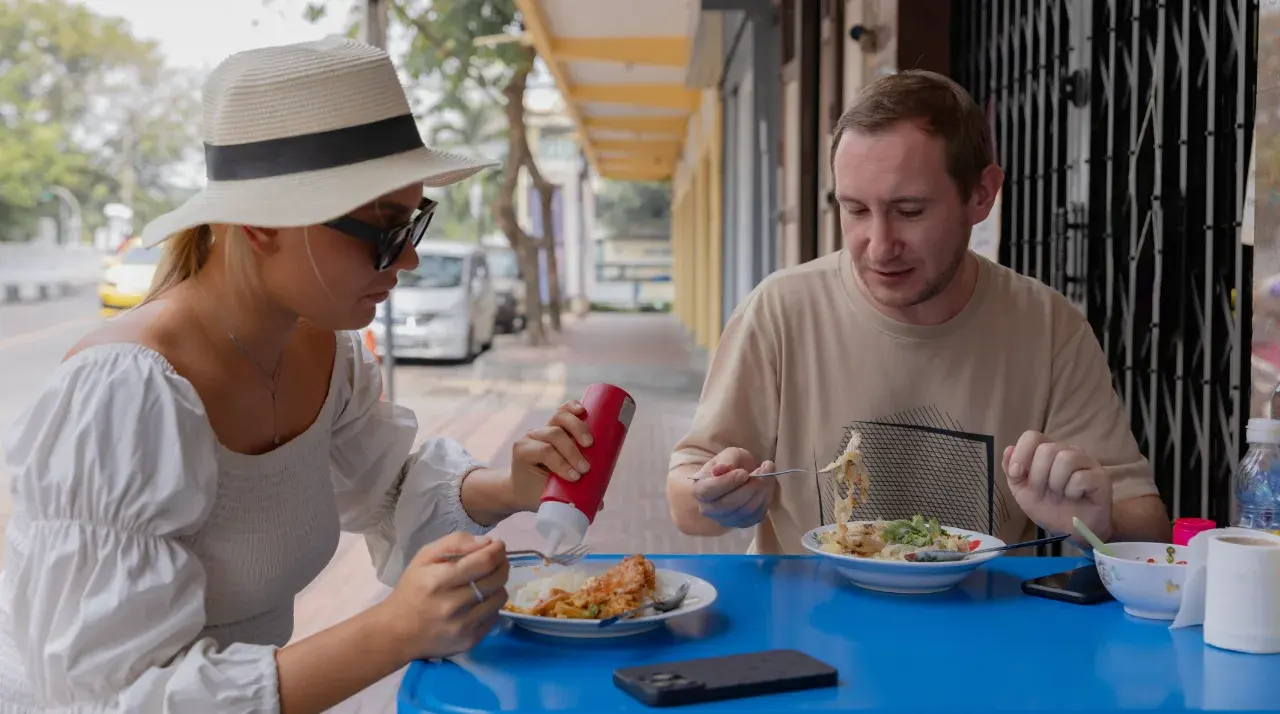
Thailand has fully entered the age of delivery apps, convenience stores, air-conditioned malls, and fast digital ordering. Yet street food remains deeply relevant because it offers something technology cannot fully replace.
It offers recognition.
A delivery app can remember your previous order, but it cannot notice your mood. A kiosk can process your payment, but it cannot tease you gently for choosing fewer chilies today. A convenience store can sell a quick meal, but it cannot become the person you greet every morning on your way to work.
That is the human difference. Thai street food is fast, but not faceless.
For visitors, the best way to experience it is not to treat every stall like a checklist item. Watch how local customers order. Notice the rhythm. See who gets greeted by name. Listen for the tiny negotiations: more broth, less sugar, extra chili, one more skewer for a child waiting nearby.
Then order simply, politely, and with curiosity. You do not need to understand every rule to appreciate what is happening.
A plastic stool beside a wok may not look like a cultural institution. But in Thailand, it often holds something important: the daily exchange between people who cook, people who eat, and a neighborhood that keeps moving because both sides remember each other.
References:
https://www.who.int/publications/i/item/sea-nut-201
https://www.fao.org/4/ab523e/ab523e.htm

เขียนโดย Postjung Insights
 7 บทเพลงไวรัลยุคโบราณ! เพลงงานวัดที่เปิดเมื่อไหร่ คนก็ลุกขึ้นรำวงเมื่อนั้น
 โรงเรียนที่มีนักเรียนมากที่สุดในไทย
 เปิด 5 โรงเรียนหญิงล้วนเก่าแก่ของไทย ที่มีประวัติยาวนานกว่าศตวรรษ
 หญิงไทยถูกแฟนหนุ่มรัดคอดับในไต้หวัน โดยศพถูกซ่อนไว้ในตู้แช่แข็งของบริษัท
 รู้หรือไม่? เปิดรายได้พนักงานส่งพัสดุของแต่ละแอป วันหนึ่งได้เท่าไร
 ใบมีดโกน ของถูกที่ผลิตยาก เบื้องหลังเหล็กพิเศษ–ความร้อน–เจียร–เคลือบผิว
 อำเภอที่มีชื่ออำเภอสั้นที่สุด 3 อำเภอเท่านั้นในประเทศไทย
 รู้หรือไม่? ความทรงจำวัยเด็กอาจไม่ได้เหมือนที่เราเคยจำ! สมองสามารถ “เติมเรื่อง” ให้เราได้
 ตาราง “เด่นเหนือเด่นใต้” งวด 1 ต.ค. 69 เปิดข้อมูลตามโพย เลขไหนอยู่ตรงไหน
 เช็กด่วน ! ข่าวบัตรสวัสดิการแจก 10,000 บาท ก.ย. 69 จริงหรือ ? ก่อนเชื่อควรรู้อะไร
 แปลปกสลาก งวด 1 ต.ค. 69 ส่องตัวเลขจากภาพปกสลากกินแบ่งรัฐบาล
 สถิติย้อนหลัง 10 ปี ออกเลขไหนบ้างมาดูกันอำเภอที่มีชื่ออำเภอสั้นที่สุด 3 อำเภอเท่านั้นในประเทศไทย
 English Edition